Hairdressing and beauty therapy RPL are not the same pathway: Make sure you apply for the right one
Hairdressing and beauty therapy RPL lead to different qualifications. Discover which pathway matches your work history to avoid a costly application mistake.
By RPL it Australia8 min read
The myth: Hairdressing and beauty therapy RPL are the same thing
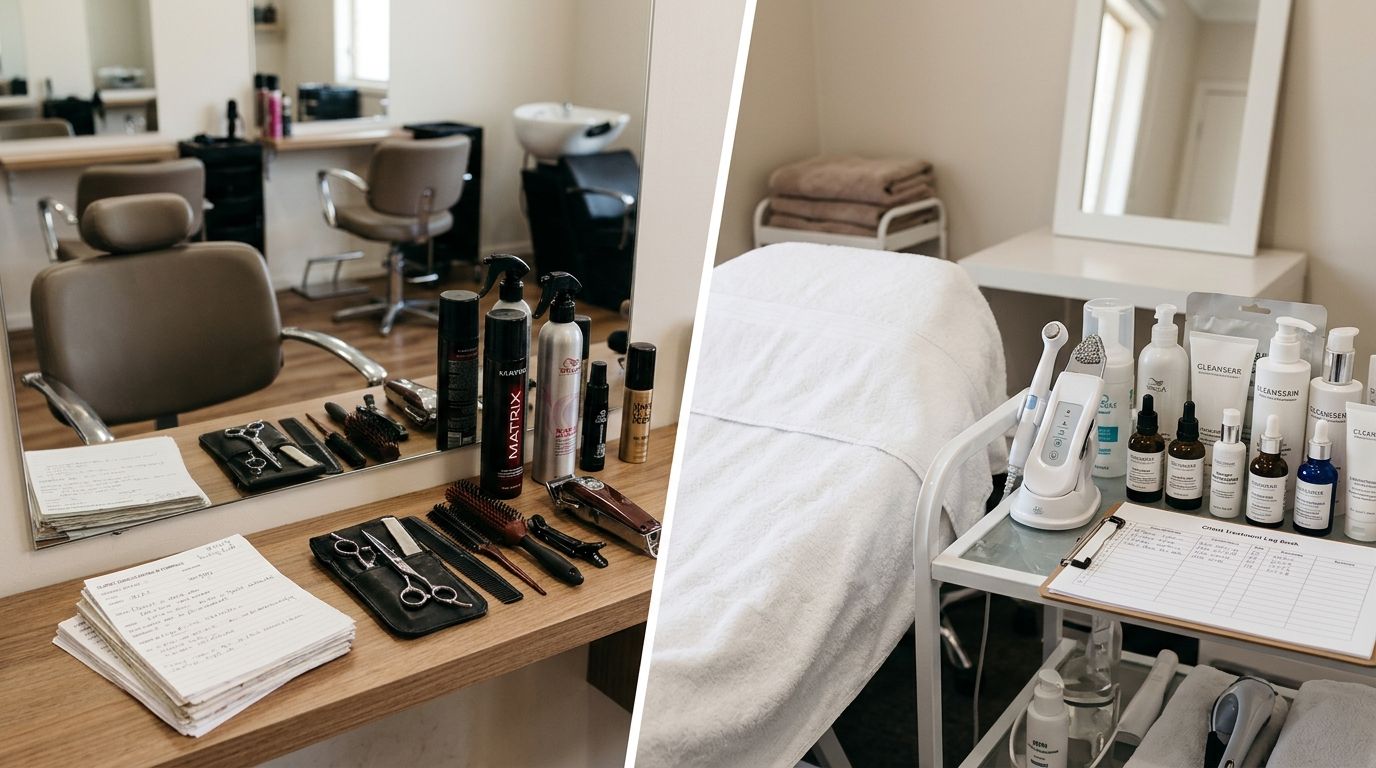
Hairdressing RPL and beauty therapy RPL are separate pathways. They lead to different qualifications, are assessed against different competency standards, and have distinct evidence requirements. If you apply for the wrong one, your real and hard-won experience will not align with what the assessor needs to see. The application will stall or fail. This does not happen because your skills lack value, but because they are being measured against the wrong framework.
This confusion is common. The salon industry frequently combines these two fields, with many businesses offering both hairdressing and beauty services under one roof. Many professionals have worked across both disciplines at different times. While marketing often treats 'hair and beauty' as a single category, the Australian qualifications framework treats them as separate sectors. Each has its own qualification structure, units of competency, and practical RPL requirements.
Identifying which pathway fits your specific work history is a critical step before you start your RPL application. This guide acts as a diagnostic tool to help you make the right choice.
Why the confusion happens and why it matters
The confusion is structural rather than personal. In most Australian salons, hairdressing and beauty services operate side by side under a single brand name, with the same desk booking both. Many experienced professionals have spent different parts of their careers performing both sets of tasks, such as cutting and colouring in one job, and providing facials and waxing in another.
However, national training packages do not mirror the salon floor layout. The Certificate III in Hairdressing and the Certificate IV in Beauty Therapy are separate qualifications with different unit clusters. Each qualification outlines the specific skills a candidate must prove. An RPL assessor maps your evidence directly against those units. If your evidence demonstrates hairdressing skills but you applied for beauty therapy, the assessor cannot approve the application, and the same applies in reverse.
The difference in qualification levels is also important. The Certificate III in Hairdressing is an AQF Level 3 qualification, while the Certificate IV in Beauty Therapy is at AQF Level 4. A Certificate IV qualification requires you to demonstrate a broader and more complex range of competencies. Consequently, the evidence requirements for beauty therapy RPL are typically more extensive, reflecting the higher educational level of the qualification rather than the difficulty of the physical work. Understanding this standard helps you prepare your evidence more effectively.
What hairdressing RPL covers and who it is for
The Certificate III in Hairdressing is the benchmark qualification for professionals whose primary career history lies in hairdressing. If you have spent your career at the styling chair performing cuts, colours, chemical services, styling, and client consultations, this is your appropriate pathway.
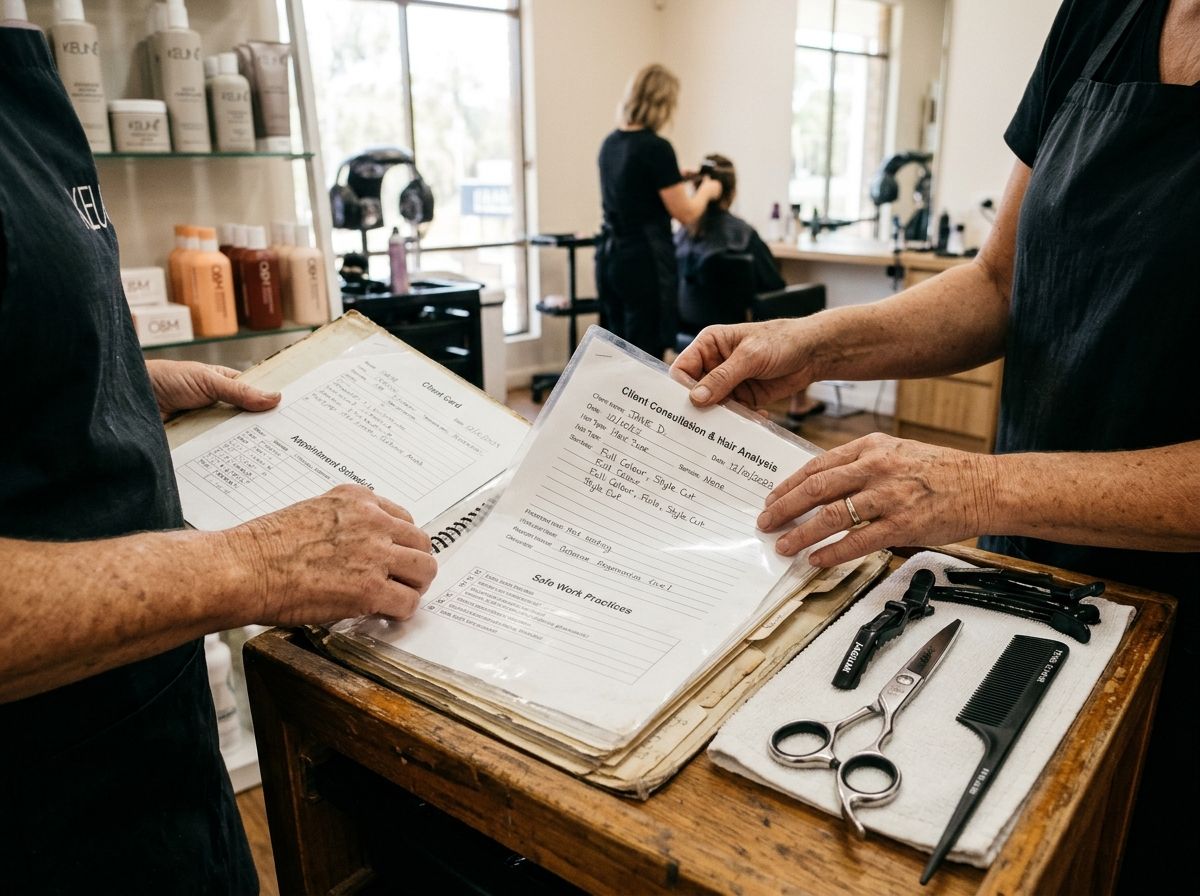
Hairdressing RPL evaluates your competence across the core practical areas of the trade. This standard includes client consultation, hair analysis, cutting techniques for diverse styles and hair types, colouring, chemical treatments like perming, styling, and salon business skills. These units are defined by official training packaging rules, and your evidence must directly match these individual units rather than simply showing general industry experience.
Evidence for hairdressing RPL is drawn from your practical work history. This includes records of services you have performed, third-party verification from employers, a portfolio of your work, and sometimes a practical demonstration. The assessor reviews this material to confirm you can perform these tasks to the required national standard consistently and across the different contexts described in the units.
If you trained as a hairdresser through an apprenticeship, on-the-job training, or an overseas program, and your career has focused on hairdressing services, the Certificate III in Hairdressing is the correct qualification for your RPL application.
What beauty therapy RPL covers and who it is for
The Certificate IV in Beauty Therapy is designed for professionals whose main work history is in the beauty industry. If your career has been focused within the treatment room, performing skincare, facials, body treatments, waxing, and lash or brow services, this is your appropriate pathway.
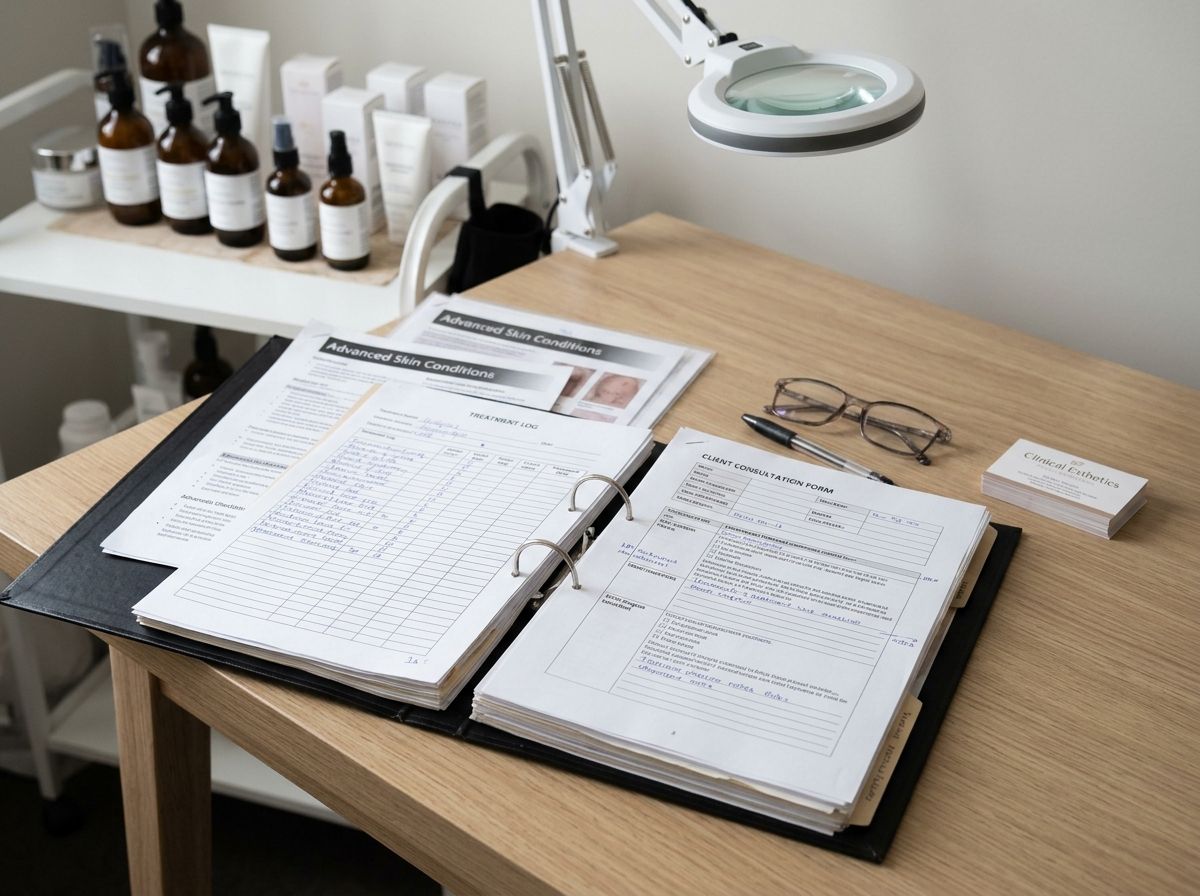
Beauty therapy RPL assesses your practical skills across the primary areas of the profession. This standard covers skin analysis, facial treatments, body treatments, hair removal services like waxing, lash and brow services, and salon business operations. As with hairdressing, the specific units are defined by national qualification packaging rules, and your compiled evidence must demonstrate direct competency against these specific units.
Because the Certificate IV in Beauty Therapy sits at a higher AQF level than the Certificate III in Hairdressing, the evidence requirements are broader. You will need to demonstrate your skills across a wider variety of client situations and treatment contexts. This benchmark is not an obstacle for experienced beauty therapists; it is a reflection of the qualification's professional scope.
Evidence for beauty therapy RPL typically includes client records, treatment logs, product sheets, third-party verification from employers, and portfolio materials showing the scope of services you have provided professionally.
The Certificate IV in Beauty Therapy details page outlines what the qualification covers and how the RPL process works for this sector.
The diagnostic: Which pathway matches your work history?
The correct pathway is determined by your daily practical work, rather than the general industry category or the sign above the salon door. The primary question is: where does the majority of your documented, demonstrable professional experience lie?
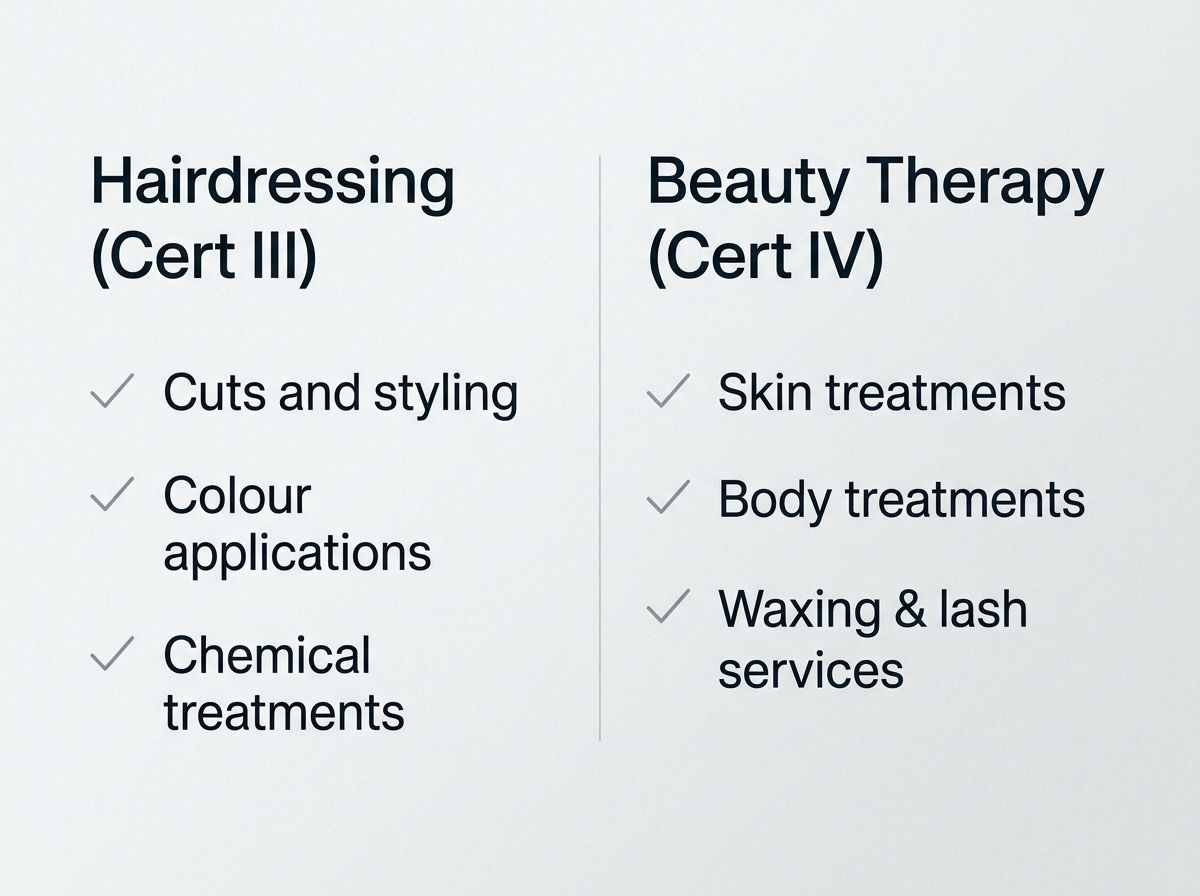
Consider these questions about your career history:
- Have most of your client appointments involved cutting, colouring, or chemical services? This points to the hairdressing pathway (Certificate III in Hairdressing).
- Have most of your client appointments involved skincare, facials, body treatments, or waxing? This points to the beauty therapy pathway (Certificate IV in Beauty Therapy).
- Do you hold a current hairdressing registration or have you completed a hairdressing apprenticeship? This aligns with the hairdressing pathway.
- Have you worked primarily in a private treatment room rather than at an open cutting station? This aligns with the beauty therapy pathway.
- Can you produce records like appointment books, client files, and employer references that document the specific services you performed? The pathway matching those services is the correct choice.
Your specific daily duties determine your pathway, rather than the broad industry sector you work within.
What if your experience spans both fields? This is a very real situation for many professionals and requires a practical approach. If you have substantial, documented experience in both hairdressing and beauty therapy, you may be able to pursue RPL for both qualifications. However, this is a more complex process, and the best strategy depends on your specific work history. The most practical step is to have your experience reviewed against the unit requirements of both qualifications before starting. This review will identify where your evidence is strongest and which pathway you should prioritise first.
What happens if you apply for the wrong pathway
Applying for the wrong RPL pathway is more than a minor administrative delay. It creates a direct mismatch between your evidence and the competency framework. Assessors cannot recognise skills that were not demonstrated in the correct professional context. Your hairdressing experience cannot satisfy beauty therapy units, and your beauty therapy experience cannot satisfy hairdressing units. Choosing the wrong qualification means your genuine experience goes unrecognised.
In practice, your evidence portfolio will not align with the units being assessed. Your application may stall during the review stage, and you may be asked to provide extra evidence you do not have because those competencies do not match your day-to-day work. In the worst case, the application fails entirely, leaving you with the frustrating impression that your experience is not valued, when the actual issue was simply applying for the wrong qualification.
There is also the issue of cost. RPL applications involve assessment fees, which are generally non-refundable once the process begins. Starting over with a different qualification means paying those fees again. The most efficient approach is to confirm the correct qualification before you submit your portfolio, rather than after a failed application.
These details are not meant to discourage you. Your skills and experience are highly valuable, and the RPL pathway is designed to recognise them. The goal is simply to ensure you are on the correct path from day one.
How to confirm you are on the right pathway before starting
The most reliable way to confirm your pathway is to have your work history reviewed against the actual unit requirements before you commit to an application. A Free Skills Review performs this check by mapping your experience to the qualification's competency requirements to provide an honest assessment of fit.
The review costs nothing and carries no obligation to proceed. You will find out clearly whether your experience matches the hairdressing pathway or the beauty therapy pathway. If your experience spans both sectors and there are dual options worth exploring, we will discuss those details too. The choice is entirely yours.
You have the practical experience. The next step is ensuring it is assessed against the correct framework.
General information only, current at the date shown. Licensing rules change, so check the current requirements with the relevant regulator before you rely on them. RPL it Australia is a student support service, not a Registered Training Organisation; qualifications are assessed and issued by our partner RTOs.