What counts as 'retail experience' when you've never had a formal retail job title
Worked in gym sales, equipment advice, or membership sales? Find out how your experience can count as retail evidence for a qualification without the title.
By RPL it Australia9 min read
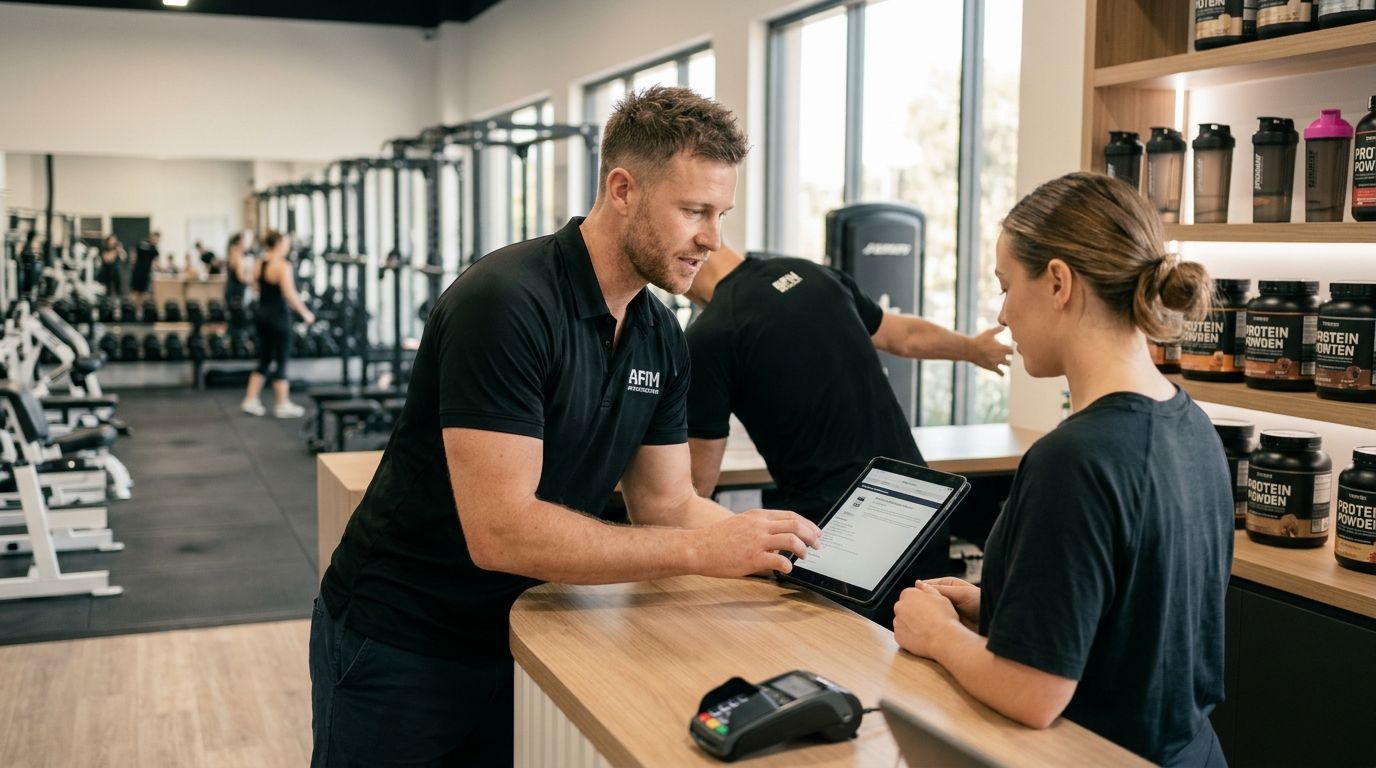
The job title problem: Why 'retail experience' is harder to prove than it sounds
You have sold products. You have advised customers. You have closed deals. Your job title just never said retail.
That is the problem most fitness-adjacent workers run into when they look at retail qualifications. The work is real, and the competency is certainly there. But the paperwork, including the job title, the employment category, and the industry classification, points somewhere else. Unfortunately, formal systems tend to read the paperwork rather than looking at the actual person.
Here is what most people do not know: retail qualifications in Australia are assessed against demonstrated competencies, not job titles. An RPL assessor is not looking at what your badge said. They are looking at what you actually did, such as whether you engaged customers, advised on products, managed sales processes, and handled complaints. The context in which you did those things matters much less than the fact that you did them.
This perspective shift changes everything for people who have spent years doing retail work inside a gym, a fitness equipment showroom, or a supplement store without ever being called a retail worker.
What RPL assessors actually look for (and it is not a job title)
Recognition of Prior Learning (RPL) is a formal assessment pathway. It exists within the Australian Qualifications Framework, and it works by evaluating evidence of competency against the specific units that make up a qualification. The qualification you receive through RPL is the identical qualification someone earns through traditional study. The pathway is different, but the outcome is equivalent.
What that means in practice is that an assessor asks a specific question: does this person's experience demonstrate the skills and knowledge required by this qualification's units? They do not ask if you worked in a traditional shop, nor does your CV need to say 'retail'.
Evidence in an RPL assessment can take several forms. This includes statements from supervisors or employers who can speak to your work, records of sales performance or customer interactions, and product knowledge you can demonstrate. It also includes references from colleagues and documentation of your role and responsibilities. The evidence needs to be valid, meaning it actually relates to the competency being assessed. It must be sufficient to make a judgement, authentic to you, and current enough to reflect skills you still hold.
For fitness-adjacent workers, this is often highly encouraging news. Years of customer-facing sales work generate exactly the kind of evidence an assessor needs. The main challenge is recognising that your experience qualifies as evidence at all, which is what the rest of this article is designed to help you work out.
Self-diagnostic: Does your gym sales experience count?
Gym membership sales is retail work. That statement is less obvious than it sounds, because the environment—a gym floor, a reception desk, or a sales office behind the front counter—does not look like a traditional shop. But the competencies involved are recognisably retail.
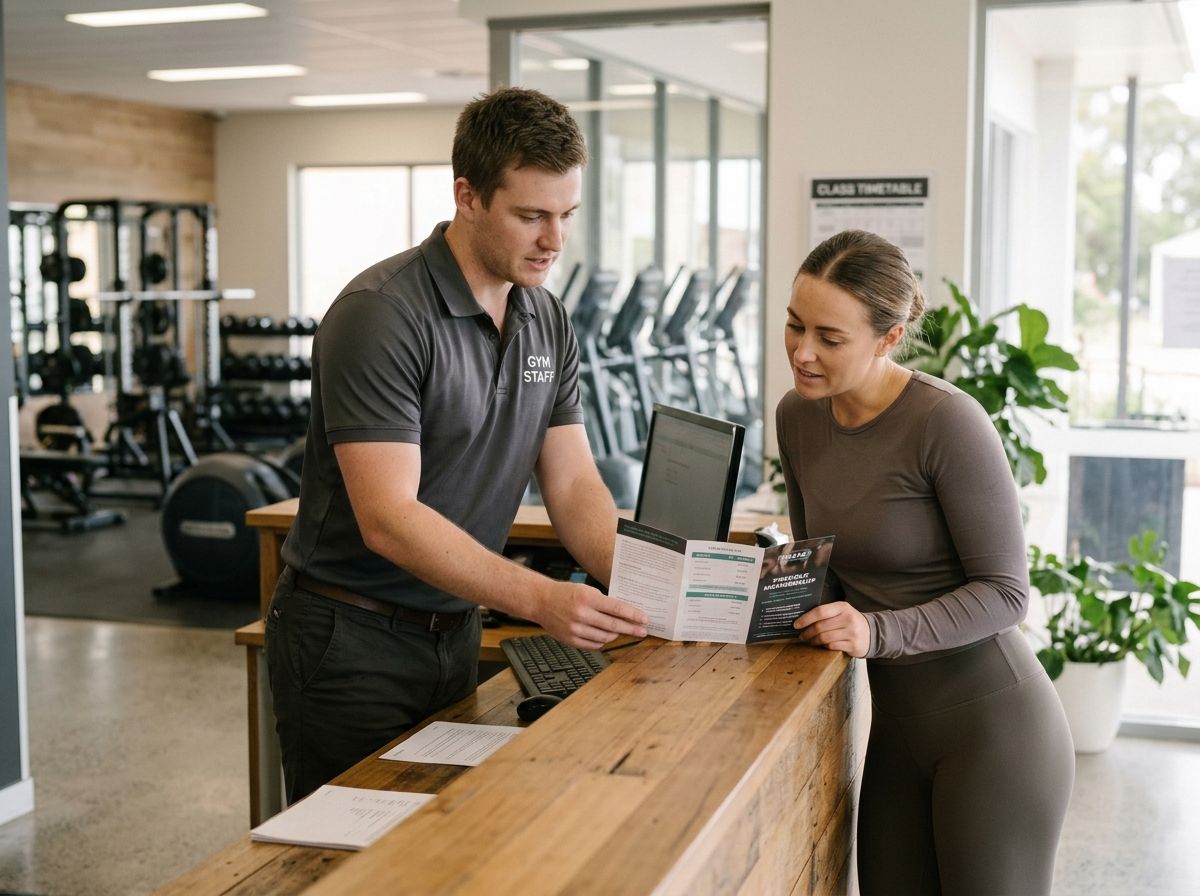
Selling memberships requires you to understand what a prospective member needs, match them to the right product, explain the difference between options at different price points, handle objections, and close the sale. Managing a membership portfolio requires you to retain customers, respond to complaints, and maintain relationships over time. These are core retail competencies, including customer engagement, product knowledge, sales processes, and complaint handling, regardless of the setting.
Work through these questions honestly:
- Have you explained the difference between membership types, such as casual, short-term, annual, or premium, to a customer who was not sure what they needed?
- Have you handled a situation where a member wanted to cancel, and worked to understand their concern and offer an alternative?
- Have you followed up with prospective members after an initial conversation by phone, email, or in person?
- Have you explained pricing, inclusions, and terms to someone who had questions or concerns?
- Have you recommended a specific membership or package based on what a customer told you about their goals or schedule?
- Have you processed a sale, taken payment, or managed a membership agreement?
If you answered yes to most of these questions, your gym sales experience is likely generating evidence that maps to retail competencies. That does not mean a qualification is guaranteed, as that is for an assessor to determine, but it does mean the experience is worth examining formally.
Self-diagnostic: Does your fitness equipment advice experience count?
Consultative fitness equipment advice is a form of retail selling. Whether you have worked in a dedicated equipment showroom, advised gym members on purchases, or helped customers in a fitness retail store choose between products, the underlying competency is the same: you assessed a customer's needs and matched them to a product.
This kind of work often involves a higher level of product knowledge than typical retail. Customers asking about equipment are frequently comparing specific features, asking about compatibility with existing setups, or seeking advice based on a training goal or physical limitation. That depth of knowledge is a strength in an RPL context, not a complication.
Work through these questions:
- Have you recommended a specific piece of equipment, such as a treadmill, a set of weights, a resistance band system, or a recovery tool, based on what a customer told you about their training goals or physical needs?
- Have you explained the difference between two products at different price points, including the practical implications of choosing one over the other?
- Have you helped a customer understand how a product works, including demonstrating it or walking them through its features?
- Have you handled a situation where a customer was unhappy with a product or wanted to return or exchange something?
- Have you built ongoing relationships with customers who returned to you for advice on additional purchases?
Fitness equipment advice generates evidence across multiple retail competency areas, such as product knowledge, needs assessment, consultative selling, and customer relationship management. If this describes your work, it is worth a formal assessment of how it maps to qualification units.
Self-diagnostic: Does your supplement or nutrition product sales experience count?
Selling supplements, protein powders, and nutrition products in a gym or health store context is retail work, and it is often more demanding than typical retail because the product knowledge required goes further. You have had to know your products well enough to advise without overclaiming, which is a higher bar than most retail environments set.
Supplement sales involves customer needs assessment, where you understand what someone is trying to achieve and recommend a product that supports that goal. It involves product knowledge, such as understanding ingredients, dosages, and the differences between competing products. It also involves managing repeat customers who return because they trust your advice, and navigating the line between helpful advice and therapeutic claims.
Work through these questions:
- Have you recommended a specific supplement or nutrition product based on a customer's training goals, dietary preferences, or health considerations?
- Have you explained the difference between products, such as different protein sources, different formulations, or different price points, in a way that helped a customer make an informed decision?
- Have you managed a situation where a customer had a complaint about a product, or wanted to return something that had not worked as expected?
- Have you built a regular customer base of people who return to you specifically because of the advice you have given them?
- Have you been careful about the line between product advice and health claims, knowing what you can and cannot say?
If this describes your work, your supplement sales experience is likely generating evidence that maps to retail competencies. The depth of the product knowledge involved is an asset to your application, not a barrier.
The grey areas: What might not count (and why that is worth checking)
Honest suitability guidance matters here. Not all fitness-adjacent work maps cleanly to retail competencies, and it is worth being clear about where the lines are.
If your role was primarily coaching or training delivery, such as running group fitness classes, delivering personal training sessions, or designing programs, with no sales, advisory, or customer engagement component, your evidence base for a retail qualification may be thin. Coaching competency and retail competency are different things. The fact that you are excellent at one does not automatically generate evidence for the other.
Similarly, if your role was primarily facility management, including scheduling, maintenance, or administration, without a customer-facing sales or advisory function, the retail competency evidence may not be there.
That said, the line is often less clear than people assume. Many roles in fitness environments involve a mix of coaching, sales, and advisory work, and the retail-relevant components of a mixed role can still generate meaningful evidence. A personal trainer who also sells memberships, advises on supplements, and manages client relationships is doing retail work alongside their coaching work.
The honest answer is that if you are not sure, a formal review will tell you. That is exactly what a Free Skills Review is for. It is not designed to sell you something, but to give you an honest assessment of whether your experience is a match before you commit to anything.
What happens after you identify your experience as relevant?
Recognising that your experience is likely relevant is the first step. The next step is having it formally assessed, which is a different process from self-assessment.

In an RPL assessment, you work with a guide to gather and organise your evidence. That evidence is then reviewed by a qualified assessor from a registered training organisation (the RTO that delivers the qualification). The assessor determines which competency units your evidence supports and identifies any gaps where additional evidence or gap training may be needed.
Gap training is a normal part of the RPL process. It does not mean your experience was not valuable. Instead, it means there are specific competency areas where your evidence base needs to be strengthened. Where gap training is required, it is provided as part of the process.
The qualification you receive at the end of this process is nationally recognised. It is the same qualification as one earned through traditional study, because the assessment is genuine and conducted by a qualified assessor against the same standards.
If you have worked through the diagnostic sections above and believe your experience might be relevant, the next step is a Free Skills Review. It is free, and there is no obligation to proceed. It gives you an honest, informed view of where your experience stands before you make any decisions.
If you want to understand more about how the fitness retail RPL pathway works before taking that step, this article covers the broader picture.
Your experience has a name, it just has not been formally recognised yet
You have been doing retail work. The title just never said so.
That is the gap RPL closes. It does not work by lowering the bar, as the assessment is rigorous and conducted by qualified assessors against national standards. Instead, it looks at what you have actually done, rather than what your job description said you were doing.
Gym sales, equipment advice, and supplement retail are real retail contexts. The competencies they develop are real retail competencies. The experience you have built is real evidence; it just needs to be presented in the right form.
Your skills speak for themselves. We help them be heard.
See the retail and fitness qualifications available through RPL and find the one that matches where your experience sits.
General information only, current at the date shown. Licensing rules change, so check the current requirements with the relevant regulator before you rely on them. RPL it Australia is a student support service, not a Registered Training Organisation; qualifications are assessed and issued by our partner RTOs.