You Can Rebuild the Engine. You Just Don't Have the Automotive Ticket.
Mechanics from mining or heavy vehicle sectors are often blocked by credentials. Here is how RPL automotive assessment translates your skills.
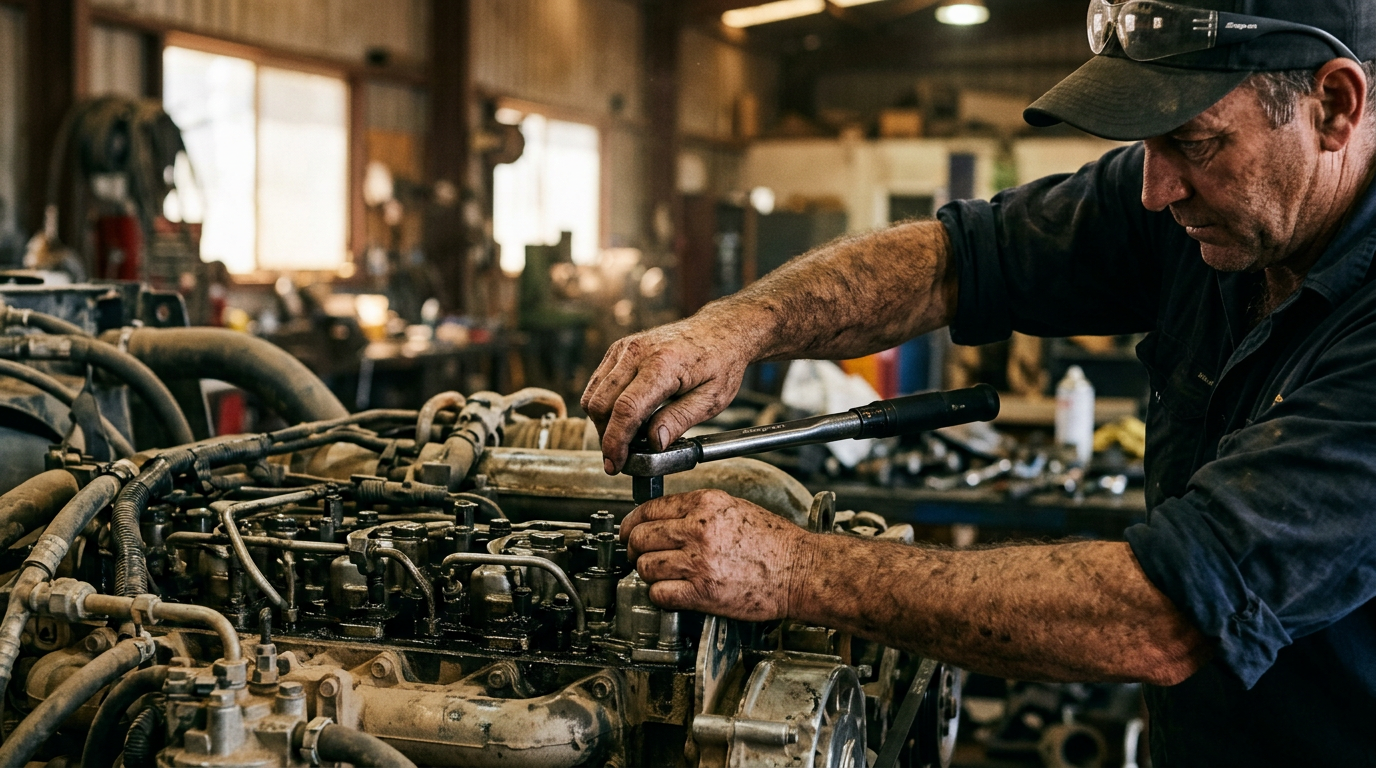
The moment you realise the problem is credentials, not skills
You have spent years working on complex machinery. Engines, hydraulics, fuel systems, and electrical diagnostics: you have done it all, often in environments that would challenge any workshop. Then you apply for a role at an automotive dealership or independent workshop, and you are told you need a Certificate III in Light Vehicle Mechanical Technology. This qualification covers skills you have been performing daily for a decade.
The problem is not your competence. You know that. The problem is that the formal system does not recognise it.
This is the experience of mechanics who built their careers in mining, agriculture, heavy commercial vehicles, or marine mechanical technology. The work is real and the skills are deep. But when you transition to the standard automotive sector, you face a credential system your experience was never formally mapped against.
Why the automotive industry uses specific credential frameworks
The Australian automotive industry operates under the AUR Training Package, a nationally recognised framework that codes qualifications to specific vehicle types, systems, and roles. Qualifications like the Certificate III in Light Vehicle Mechanical Technology (AUR30620) or the Certificate III in Automotive Electrical Technology (AUR30320) are structured around specific competency units that employers and licensing bodies use as benchmarks.
Within the AUR Training Package, many qualifications are open to direct entry with no formal prerequisites required. However, some post-trade qualifications impose mandatory entry requirements. For example, the Certificate IV in Automotive Mechanical Diagnosis requires candidates to have completed an automotive mechanical Certificate III qualification, or to demonstrate equivalent competency. This is because these post-trade qualifications are designed to build on an existing trade-level foundation.
Employers are not being unreasonable when they ask for AUR-coded credentials. They operate within a compliance framework built around the apprenticeship pathway, which was not designed with cross-sector mobility in mind. A diesel mechanic from a mining context may have performed every practical task covered by AUR30620, but without the formal qualification, the system has no way to recognise that overlap. Your practical skills are established, but the industry requires formal codes. An RPL assessment translates your on-the-job experience into these formal standards.
Five challenges cross-sector mechanics face
If you have tried to move from another mechanical sector into standard automotive work, you have probably encountered these barriers. They are not failures of competence. Instead, they show where the formal credential system fails to keep pace with practical skill development.
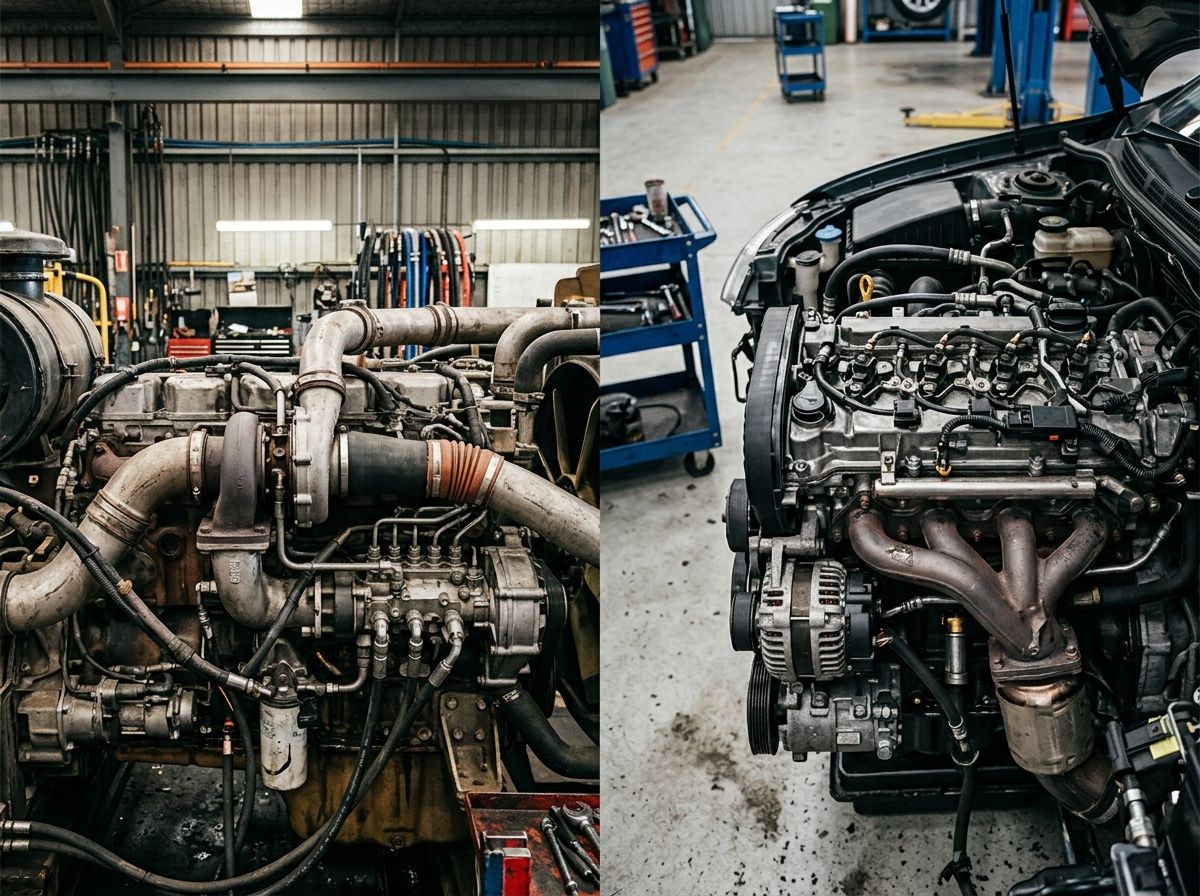
- The Apprentice Paradox. You are told to complete an apprenticeship you have already lived. The tasks are familiar and the hours are familiar. The only thing missing is the paperwork, and the system treats that missing paperwork as if your skills do not exist.
- The Code Wall. AUR qualification codes are the benchmark your experience does not officially show. You know what you can do, but without a credential mapped to those codes, employers cannot formally recognise your capability, regardless of your actual on-the-job performance.
- The Interview Knockout. Your application is screened out before you can speak to anyone. The job ad lists a Certificate III as a requirement, and without it, your resume does not pass the first filter, even if your experience exceeds the qualification.
- The Invisible Decade. You have years of mechanical work recorded in logbooks, job sheets, and references, but none of it appears on a formal register. To the automotive sector, that decade is invisible. You start from zero on paper, even though you are highly skilled in practice.
- The Lateral Demotion. You are offered a junior role despite having senior capabilities. The employer acknowledges your experience but, without the formal credential, cannot justify hiring you at the appropriate level. You take a step backward to get a foot in the door.
If these scenarios sound familiar, you are not starting from zero. Your experience is real. The question is how to get it formally recognised.
What an RPL automotive assessment evaluates
An RPL assessment evaluates your existing competence, comparing your practical skills and knowledge against the competency units of the target qualification. According to Australia's national training regulator, ASQA, RPL recognises skills gained through previous training, work, or life experience. A qualified assessor from a registered training organisation (RTO) compares your evidence against the qualification requirements to determine if you have demonstrated the required competence.
For a mechanic from another sector, this means the assessment is built around your existing capability rather than classroom learning. Evidence requested in an RPL process typically includes work samples, training records, and employer references. RTOs may also request job sheets, logbooks, photos or videos of work performed, employment contracts, and reports from supervisors.
An RPL assessment is a genuine, rigorous evaluation, not a rubber stamp. A qualified assessor maps your evidence against the specific units of competency in the target AUR qualification. If your evidence demonstrates competency across all required units, you may receive full credit. If gaps are identified, the RTO may offer gap training to address those specific areas. This ensures the resulting qualification is credible and nationally recognised.
ASQA also advises candidates to watch for poor RPL practices, such as inadequate assessment processes and misleading marketing. A quality RPL process involves genuine engagement with a qualified assessor, not a tick-box exercise.
ASQA's guidance on recognition of prior learning outlines what candidates should expect from a quality RPL process, including the role of the assessor and the evidence required.
Automotive qualifications available for RPL assessment
RPL is available for a range of AUR-coded automotive qualifications through registered training organisations in Australia. The specific qualifications available depend on the RTO's scope of registration and the evidence you provide. Some RTOs specialise in automotive RPL and offer assessments across multiple Certificate III pathways.
For example, one automotive-focused RTO lists the following Certificate III qualifications as available via RPL assessment: Certificate III in Light Vehicle Mechanical Technology (AUR30620), Certificate III in Heavy Commercial Vehicle Mechanical Technology (AUR31120), Certificate III in Automotive Electrical Technology (AUR30320), Certificate III in Agricultural Mechanical Technology (AUR30420), Certificate III in Motorcycle Mechanical Technology (AUR30820), and Certificate III in Automotive Underbody Technology (AUR32518). These are examples from one provider's scope. Program availability varies by RTO, and outcomes depend on the evidence you provide and the assessor's evaluation.
If your background is in agricultural machinery, heavy commercial vehicles, mining equipment, or marine mechanical technology, there is usually an AUR-coded qualification that matches your work. The first step is identifying which qualification aligns with your experience and reviewing your evidence.
Translating your practical trade experience into a formal qualification
Your trade experience is not irrelevant; it is the evidence. The RPL assessment is the mechanism that makes your history visible to the formal system, aligning what you have achieved with the qualifications the automotive industry expects.
This is not a shortcut, but a formal recognition process. Experienced workers who developed genuine competence outside the apprenticeship pathway deserve to have their skills formally acknowledged.
If you have the experience, find out if it maps to an automotive qualification. The choice is yours.
Ready to Get Recognised?
Start with a free skills review to find out if RPL is right for you.