Panel Beaters: The Certificate Gap That's Quietly Capping Your Rate
Experienced panel beaters without AUR32120 often earn less and miss insurance repairer networks — not because of skill, but a certificate gap. Here's what that means.
By RPL it Australia6 min read
You Know the Work. The Rate Doesn't Know You.
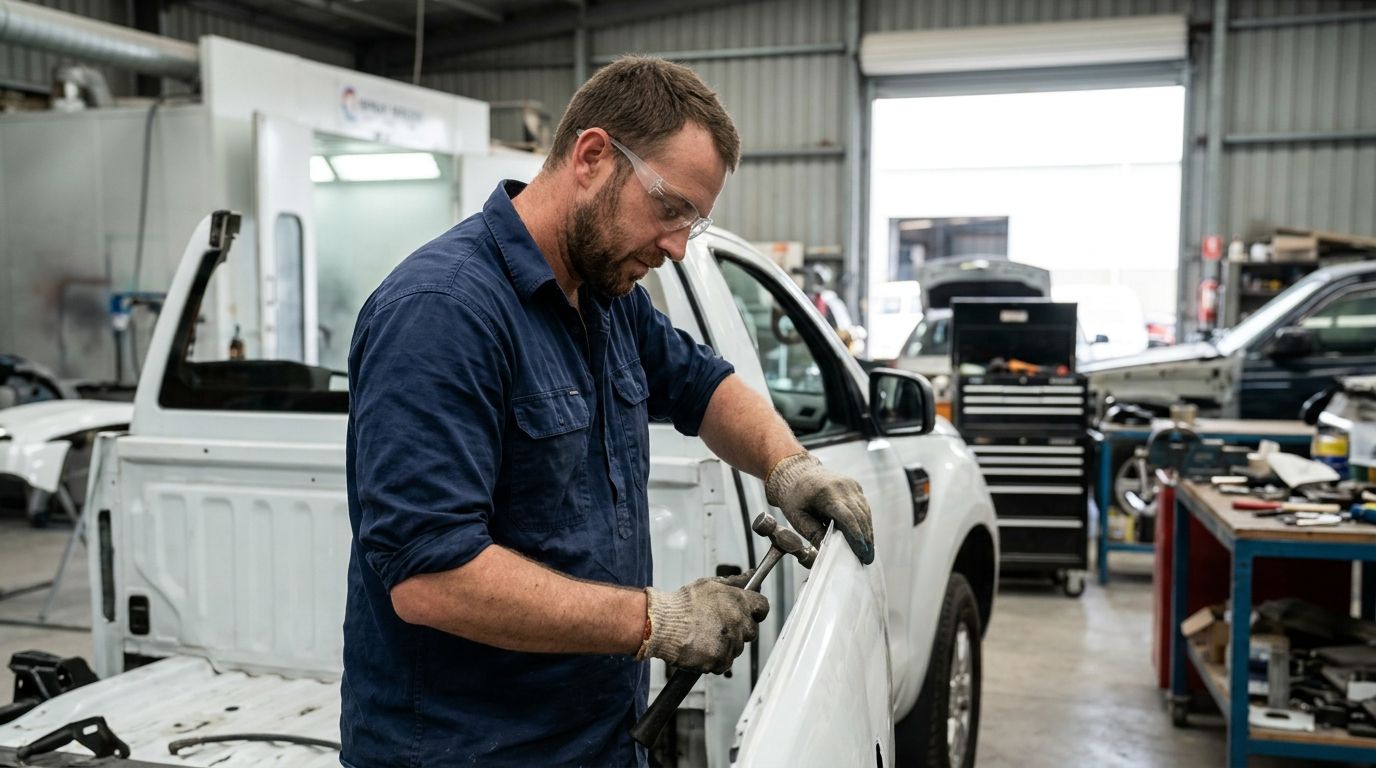
You have the experience. Years of it. Panel replacements, structural repairs, dent work, paint preparation — the full scope of what automotive body repair actually demands. You know what a good repair looks like, and you know when someone else's work isn't up to standard.
But the rate you're being paid — or the work you're being offered — may not reflect any of that. Not because your skill is in question. Because a piece of paper is.
This is the certificate gap. It is not a skills gap. It is a recognition gap. And for experienced panel beaters across Australia, it is quietly capping earning power and closing doors that should be open.
What the Certificate Gap Actually Is
The certificate gap is the distance between what a panel beater can do and what the formal system will acknowledge they can do. It exists when demonstrated competency — built through years of hands-on automotive body repair work — has not been formally assessed and recognised through the nationally accredited qualification: the Certificate III in Automotive Body Repair Technology (AUR32120).
AUR32120 is the qualification that formally recognises panel beating competency within the Australian Qualifications Framework. It covers the core tasks of the trade: panel replacement and repair, dent removal, welding, paint preparation, and structural repair work. When an employer, an insurance repairer network, or a rate negotiation asks about qualifications, AUR32120 is what they are looking for.
Without it, the experience exists. The capability is real. But in formal systems — employment, accreditation, rate-setting — invisible expertise counts for nothing.
How the Gap Shows Up in Real Money
The certificate gap is not abstract. It has specific commercial consequences that experienced panel beaters run into in practice.
The first is repairer network access. Many insurance companies in Australia operate preferred repairer programs — networks of accredited panel shops that receive directed work from insurers. These programs typically set standards for the shops they accredit, and formal qualifications for panel beating staff are commonly part of those standards. A panel shop without certificated staff may find itself ineligible for preferred repairer status, or unable to maintain it. That means less directed work, lower volume, and reduced negotiating leverage on labour rates.
The second is the labour rate itself. When a panel shop quotes for insurance repair work, the labour rate it can justify is partly a function of the qualifications its staff hold. Shops with formally qualified panel beaters can make a stronger case for higher labour rates. Shops without that formal evidence are in a weaker position — regardless of the actual quality of the work.
The third is employment and advancement. Panel beaters seeking roles at larger shops, dealerships, or specialist repairers will often encounter AUR32120 as a requirement or strong preference. Without it, the field of available roles narrows — not because the skill is absent, but because the credential is.
The commercial impact of the certificate gap varies by market, location, and the specific repairer networks operating in a given area. But the pattern is consistent: formal qualifications open doors that experience alone cannot.
Why Experience Alone Doesn't Close the Gap
This is the part that frustrates experienced panel beaters most. The work is real. The skill is demonstrable. The repairs speak for themselves. And yet the formal system does not automatically acknowledge any of it.
Under the Australian Qualifications Framework, nationally recognised qualifications require formal assessment through a Registered Training Organisation. Informal experience — however extensive, however skilled — does not automatically translate into an AQF-recognised credential. The system requires that competency be formally assessed and documented, not simply demonstrated through years of work.
This is not a judgment on the quality of the work. It is a structural feature of how formal recognition operates in Australia. The gap will not close on its own. It requires a deliberate step: formal assessment of the experience that already exists.
The same pattern plays out across automotive trades — experienced mechanics, auto electricians, and body repair specialists all reach the point where years of hands-on work run into a formal qualification requirement. The experience is not the problem. The absence of formal recognition is.
What RPL Does With the Experience You Already Have
Recognition of Prior Learning — RPL — is a formal pathway under the Australian Qualifications Framework that allows existing skills and experience to be assessed against the requirements of a qualification. For panel beaters, this means the work already completed can be presented as evidence toward AUR32120, rather than requiring a return to classroom study.
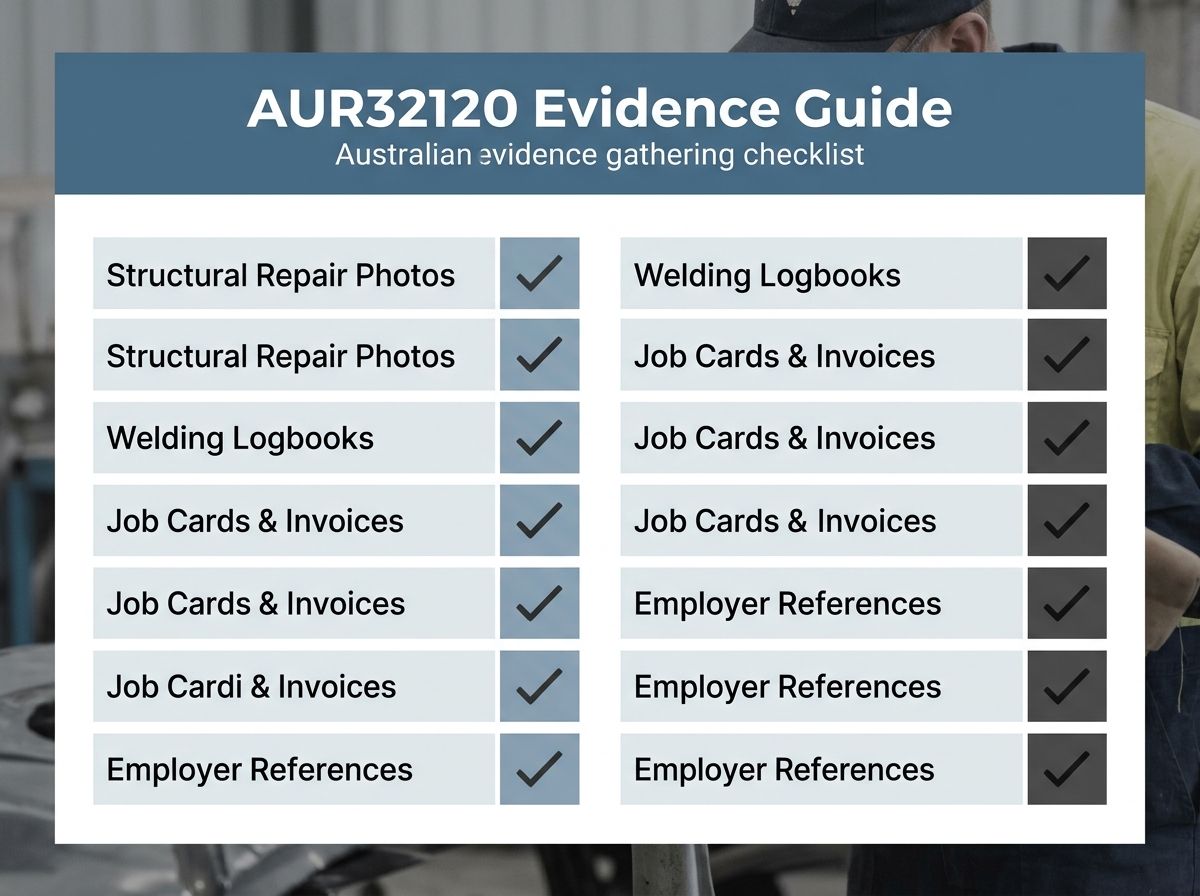
RPL is not re-training. It is assessment. A qualified assessor from a Registered Training Organisation evaluates whether the candidate's existing experience demonstrates the competencies required by the qualification. The evidence base is the work already done: photographs of completed repairs, records of jobs undertaken, employer or supervisor references, and demonstrated skills.
For a panel beater with substantial experience across the core tasks of the trade — panel replacement, structural repair, welding, paint preparation — the evidence is likely already there. It may not be organised or presented in a way that a formal assessor can evaluate, but it exists. RPL is the process of making that evidence visible and assessable.
It is worth being honest about what RPL involves. It is a genuine assessment process, not a formality. A qualified assessor determines whether the evidence demonstrates the required competencies. If gaps are identified during assessment, gap training is provided to address them. The qualification is nationally recognised precisely because the assessment is genuine.
RPL it guides candidates through this process — helping organise evidence, navigate the assessment pathway, and work with a partner Registered Training Organisation. The RTO conducts the assessment and issues the qualification. RPL it's role is to guide, support, and advocate for the candidate throughout.
Who This Pathway Is Actually For
RPL for AUR32120 suits panel beaters with substantial hands-on experience across the core competencies of the qualification. That means experience spanning the breadth of automotive body repair work — not just one narrow specialisation.
If your experience has been primarily in one area — dent repair only, or paint preparation only, without exposure to structural repair or panel replacement — there may be gaps that require additional training before or during assessment. That is not a barrier to the pathway, but it is something to understand before beginning.
If you have worked across the full scope of panel beating — taking vehicles through the repair process from assessment to completion — the RPL pathway is likely well-suited to your situation. The honest way to find out is through a Free Skills Review, which gives you an assessment of your experience against the qualification requirements before any commitment is made.
RPL it's approach is straightforward: we would rather guide someone to the right pathway than enrol them in the wrong one. If RPL is not the right fit for your situation, we will tell you that.
The Free Skills Review: Finding Out Where You Stand
The certificate gap is a real commercial problem for experienced panel beaters. The RPL pathway is a real response to it. But the right first step is not enrolment — it is finding out whether your specific experience maps to AUR32120.
A Free Skills Review does exactly that. It is a no-obligation conversation about your experience, your background, and whether the RPL pathway for the Certificate III in Automotive Body Repair Technology is a genuine fit for where you are now.
You can find full details about the Certificate III in Automotive Body Repair Technology (AUR32120) and the RPL pathway on the qualification page.
The decision is yours. Start with a Free Skills Review — it costs nothing and commits you to nothing. Find out where your experience stands before you decide anything else.
General information only, current at the date shown. Licensing rules change, so check the current requirements with the relevant regulator before you rely on them. RPL it Australia is a student support service, not a Registered Training Organisation; qualifications are assessed and issued by our partner RTOs.