AUR32120 explained: What panel beaters actually need to know about this qualification code
AUR32120 is the Certificate III in Automotive Body Repair Technology. Learn what it covers and how your panel beating experience maps to the trade code.
By RPL it Australia7 min read
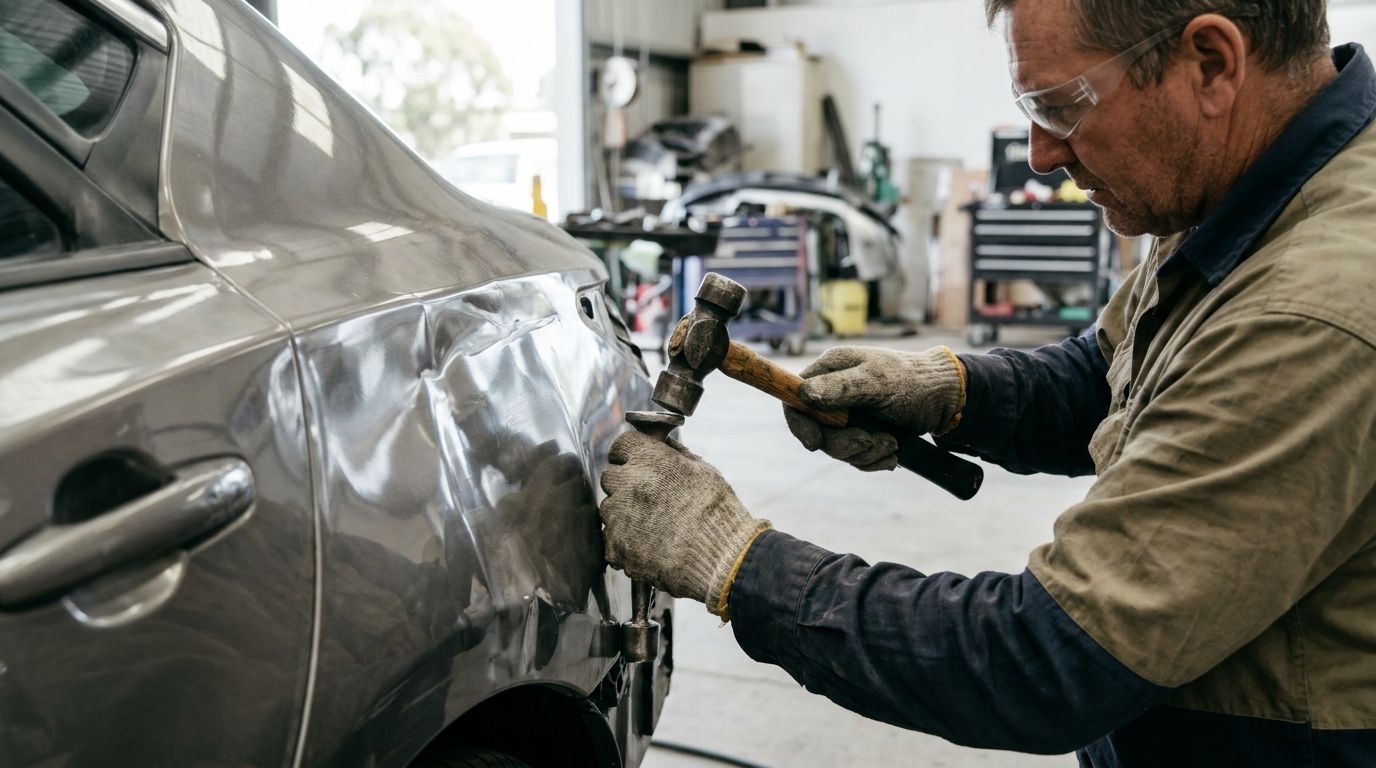
You have been doing this trade for years. The code is new, but the work is not. AUR32120 is the Certificate III in Automotive Body Repair Technology, which is the national qualification representing panel beating as a formal trade in Australia. Most experienced panel beaters know their daily work inside out and have never had a reason to track the specific qualification code. Until now.
What AUR32120 actually is
AUR32120 is a qualification code. These letters and numbers are how the Australian national training system identifies this specific trade credential. The prefix AUR stands for the Automotive Industry Retail, Service and Repair Training Package, while 32120 identifies this specific qualification. Together, they refer to the Certificate III in Automotive Body Repair Technology.
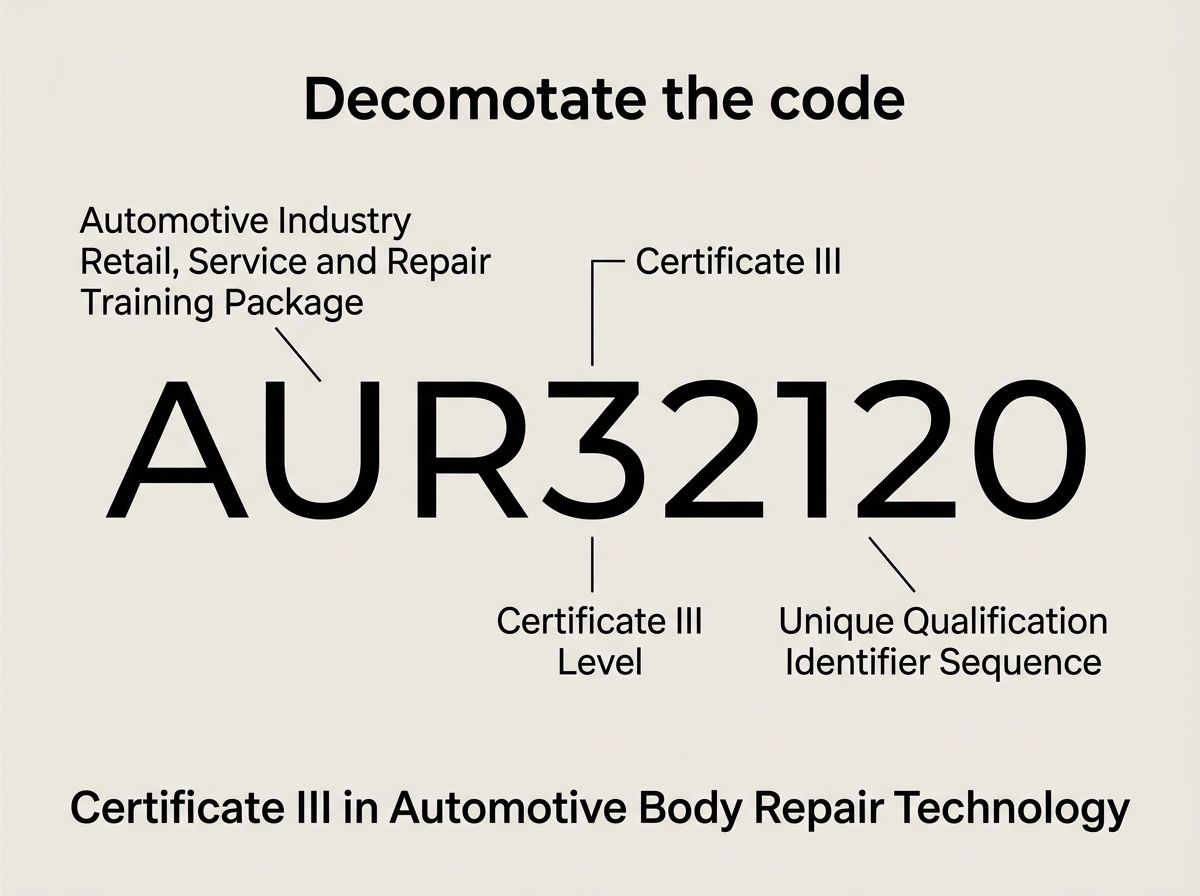
The Certificate III in Automotive Body Repair Technology is a national qualification under the Australian Qualifications Framework (AQF). This is the formal credential that covers panel beating as a recognised trade in Australia. When an employer, an insurance provider, or a state licensing authority requests AUR32120, they are looking for this qualification.
This code and the qualification are the same thing. If you see AUR32120 listed in a job advertisement, a tender document, or an insurance requirement, it simply refers to the Certificate III in Automotive Body Repair Technology.
Why you are hearing this code now
Panel beaters generally encounter the AUR32120 code in a few specific situations. A job advertisement lists it as a requirement. An employer asks for it before offering a senior workshop role. An insurer requests evidence of a formal qualification, or a licensing authority in your state lists it. In each case, the trigger is identical: a formal system requires the trade credential, not just your practical ability.
Licensing requirements for automotive body repair technicians vary by state and territory in Australia. Some states have specific licensing frameworks for motor vehicle repairers, while others rely on employer and insurance rules to set the standard. Because these state-specific licensing rules change and vary significantly, you should check directly with the relevant authority in your state if you are unsure whether you need a formal licence for your work.
Employer and insurance requirements are consistent across Australia. Workshops, dealerships, and fleet operators increasingly require formal qualifications for senior roles. Insurers working with repair shops on insurance-funded work often require evidence of qualified technicians. These requirements point directly to the AUR32120 code because it is the standard, recognized credential for the trade.
What the qualification actually covers
The Certificate III in Automotive Body Repair Technology is built around core practical skills for automotive body repair work. This qualification covers the knowledge required to restore damaged vehicles to their pre-accident condition, focusing on structural, mechanical, and cosmetic standards.
In practical terms, the qualification covers several main work areas: assessing and measuring vehicle damage; straightening and reshaping panels using hand tools and specialist equipment; welding and cutting for body repair; preparing surfaces for paint; applying body fillers and sealants; removing and refitting vehicle components; working safely with workshop materials; and understanding vehicle construction and repair standards.
This qualification includes both core units, which all candidates must complete, and elective units, which allow for some specialisation. The specific unit list, showing current core and elective requirements, is published on training.gov.au, the official source for AUR32120 qualification details. Because training packages are updated periodically, you should confirm the current unit requirements directly on training.gov.au if you are preparing for an assessment.
For experienced panel beaters, the central point is that the work described in the qualification is the work you already do. The units are not theoretical. They describe the actual tasks of automotive body repair, the same work you perform daily in workshops, on insurance jobs, and for private customers.
Does your panel beating experience cover this?
Consider the work you do regularly in the workshop. If you have straightened panels after collision damage by pulling dents, reshaping metal, and restoring panel lines, that counts as core body repair work. If you have used welding equipment to repair structural damage or replace panels, that is welding and cutting competency. If you have prepared surfaces for paint by grinding, filling, and priming, that counts as surface preparation. If you have removed and refitted bumpers, guards, doors, and trim to complete a repair, that is component removal and refitting.
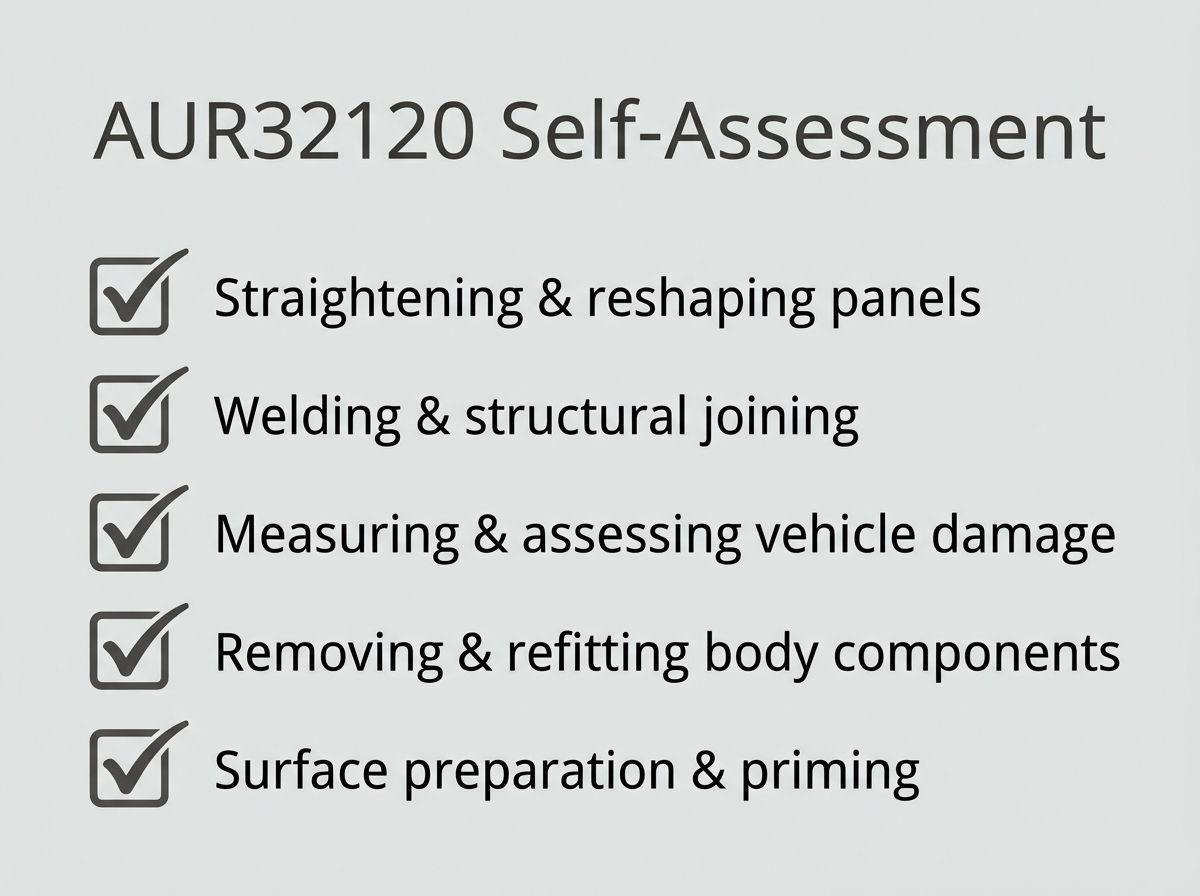
Most experienced panel beaters working in professional repair shops will recognise their daily work in these descriptions. The qualification does not ask you to learn new skills. It asks for evidence that you already have them.
This distinction is practical. The gap for most experienced panel beaters is not competence, but documentation. The qualification requires that your skills be assessed and recorded, not that you acquire new ones. For trade professionals who have been working for years, the question is not whether you can do the job, but whether you can prove it.
Through the Recognition of Prior Learning (RPL) pathway, experienced panel beaters can have their existing skills assessed against the qualification requirements. RPL assessors review proof such as your employment history, references from employers, records of work completed, and sometimes practical demonstrations. The exact evidence requirements vary depending on the Registered Training Organisation (RTO) conducting the assessment.
What AUR32120 does not require you to do
The Certificate III in Automotive Body Repair Technology does not require you to attend a classroom, complete a new apprenticeship, or start from scratch. For experienced panel beaters, the RPL pathway is an assessment of what you already know, not a course teaching you the trade.
RPL is a recognized assessment pathway under the Australian Qualifications Framework. It is not a shortcut. It is a detailed process that evaluates your existing skills against the formal qualification requirements. The outcome of that assessment is determined by a qualified assessor from an RTO, not by the support service helping you compile your paperwork.
RPL assessments sometimes identify gaps where an experienced worker's background does not cover a specific unit. When this happens, target training is available to address those areas. This is not a failure of the process. It is simply the system identifying what is already there and addressing what is missing.
For most experienced panel beaters with a solid background in professional body repair, the RPL pathway is a realistic option. A direct assessment of your experience will determine whether it is the right option for your specific background.
The difference between having the skills and holding the qualification
Practical skills and formal qualifications are treated differently by industry systems. You know how to do the work, but the system needs to see the paperwork.
Employers, insurers, and licensing authorities respond to the formal qualification rather than the capability behind it. AUR32120 is the formal record that makes your existing trade expertise visible to systems that cannot see it otherwise. A decade of quality panel beating work is real, but without the credential, it remains invisible to the systems that require it.
This is not a criticism of those systems. It is simply how formal recognition works. The qualification does not create your skills; it records them. For experienced panel beaters, the RPL pathway is the mechanism that converts your demonstrated competence into a formal trade record, which employers, insurers, and licensing authorities can see and recognize.
What happens next if you decide to formalise your experience
If your panel beating experience matches what AUR32120 covers, the next step is finding out whether the RPL pathway is a realistic option for you. A Free Skills Review can clarify this.
A Free Skills Review is not an enrolment and carries no commitment. It is an assessment of whether your background fits the AUR32120 RPL pathway before you make any decisions. The review evaluates your work history, the specific tasks you have performed, and how those activities align with the qualification requirements.
If your skills match, you will see exactly what the process involves. If there are gaps, you will learn what is needed to address them. Either way, you get the clear information required to make an informed choice.
You can find more detail about the AUR32120 RPL process on the qualification page.
Your skills are real and your experience is extensive. The qualification is the formal record that makes your competence visible to employers and regulators. The choice to pursue it is entirely yours.
General information only, current at the date shown. Licensing rules change, so check the current requirements with the relevant regulator before you rely on them. RPL it Australia is a student support service, not a Registered Training Organisation; qualifications are assessed and issued by our partner RTOs.