Stop Treating Hospitality as a Fallback (And Start Treating It Like a Profession)
Hospitality isn't a fallback — it's a high-stakes operational profession. Here's what hospitality qualifications actually certify, and why your experience already counts.

The fallback myth and who it hurts
You have heard it before. Maybe from a parent, a former colleague, or someone at a dinner party who asked what you do. The implication is always the same: hospitality is what you do when you could not make it somewhere else. It is the safety net. The backup plan. The industry you fall into, not the one you choose.
That assumption is wrong. And it costs people — professionals who have built real careers in hospitality, and career pivoters who have chosen it deliberately — more than most people realise. It shapes how they are perceived in job interviews, how their experience is valued by employers, and how seriously their qualifications are taken by people outside the industry.
This article is not a defence of hospitality. It does not need defending. It is a correction of the record — for the people who live with the fallback myth every day, and for the people who have been told their cross-industry experience does not count in a sector they are more than capable of leading.
What hospitality management actually involves
Consider what a hospitality manager actually does on a given Tuesday. Before the first customer arrives, they have reviewed the previous day's revenue against forecast, adjusted the roster to account for a last-minute call-out, confirmed a supplier delivery that was running late, and checked that the food safety records are current and compliant. By mid-morning, they are managing a performance conversation with a team member, coordinating with an events client about a booking that has grown beyond its original scope, and reviewing a liquor licensing condition that affects how late they can serve.
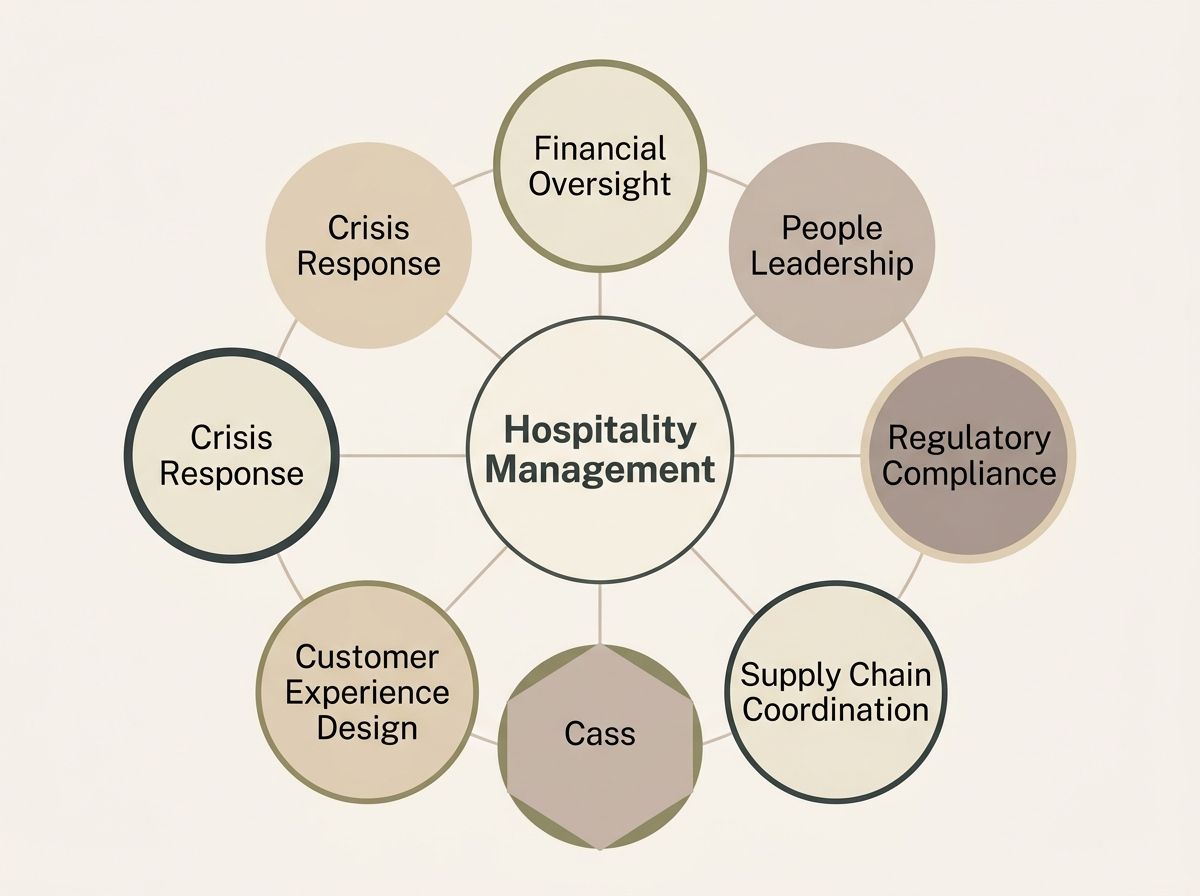
This is not a fallback career. This is operations management — financial oversight, people leadership, regulatory compliance, supply chain coordination, and client relationship management, running simultaneously, under pressure, with real consequences for failure.
The compliance burden alone is substantial. Hospitality operators in Australia are subject to food safety legislation that varies by state, liquor licensing conditions that carry personal liability for managers, workplace health and safety obligations, and employment law requirements that apply across a workforce that often includes casual, part-time, and full-time staff simultaneously. A manager who does not understand these obligations is not just professionally underprepared — they are a legal and financial risk to the business they lead.
None of this is captured by the fallback myth. The myth imagines hospitality as a collection of service tasks — taking orders, making coffee, cleaning tables. The reality is an operational discipline that demands the same cross-functional competence as management roles in retail, logistics, healthcare administration, or corporate operations. The difference is that hospitality does it in real time, in public, with no margin for error.
Why the 'anyone can do it' assumption is expensive
The belief that hospitality requires no formal expertise has consequences that extend well beyond individual careers. When businesses treat hospitality management as a role that anyone can step into without preparation, the results are predictable: high staff turnover, inconsistent service quality, compliance failures, and financial losses that are entirely avoidable.
Staff turnover is one of the most visible symptoms. Hospitality is widely understood to have higher turnover than most industries — not because the work is inherently unstable, but because poorly managed venues create environments that experienced people leave. The cost of replacing a single team member — recruitment, onboarding, lost productivity during the transition — is significant. Multiply that across a team and across a year, and the financial case for qualified, capable management becomes straightforward.
Compliance failures carry a different kind of cost. A food safety incident at a venue is not just a reputational problem — it can result in prosecution, licence suspension, and closure. Liquor licensing breaches carry personal liability for the responsible manager. These are not theoretical risks. They are the predictable outcomes of treating compliance as something that manages itself, rather than as a core operational responsibility that requires genuine expertise.
The businesses that treat hospitality management as a profession — and invest in qualified leadership — tend to outperform those that do not. That is not a claim about any specific study. It is the logical outcome of having people in leadership roles who understand what they are managing. Qualified does not mean credentialled for its own sake. It means capable of operating at the level the role demands.
What hospitality qualifications actually certify
Hospitality qualifications certify operational management competence, not service delivery skills. This distinction matters, and it is the one most commonly misunderstood by people outside the industry.
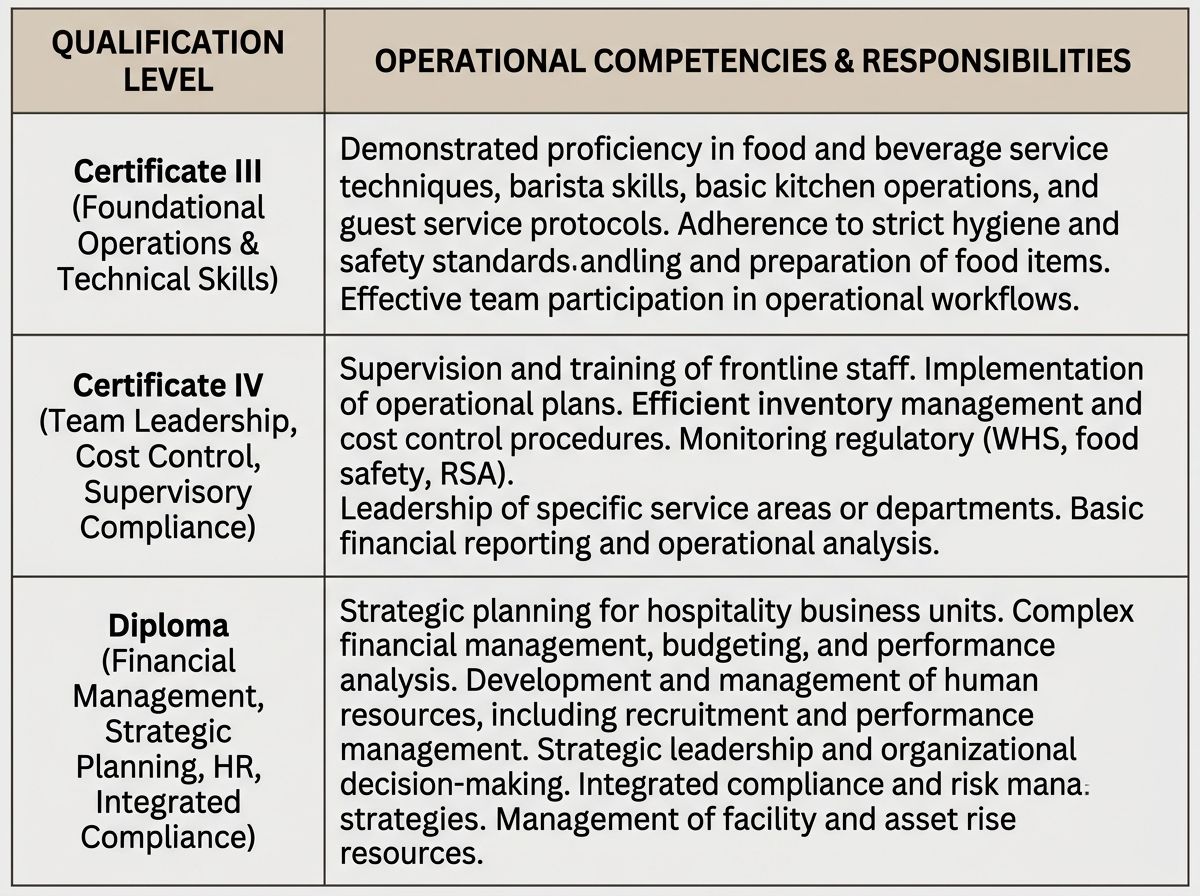
At the Certificate III level, qualifications in hospitality and commercial cookery address the foundational operational and technical skills of the industry — food preparation, service delivery, workplace safety, and communication. These are the building blocks of a professional career, not the ceiling of it.
At the Certificate IV level — in kitchen management, hospitality, or catering management — the focus shifts to operational leadership: managing teams, controlling costs, coordinating service delivery, and applying compliance requirements in a supervisory context. This is the level at which the qualification begins to certify management capability, not just task performance.
The Diploma of Hospitality Management sits at the top of the vocational qualification framework for this industry. It covers the full scope of operational management: financial management, human resources, strategic planning, marketing, and the integration of compliance across all operational domains. A person who holds a Diploma of Hospitality Management has been formally assessed as competent to manage a hospitality operation at a senior level. That is not a service credential. That is a management credential.
The Australian Qualifications Framework (AQF) provides the structure within which these qualifications sit. Each level of the AQF describes the knowledge, skills, and application expected of a person who holds a qualification at that level. A Diploma-level qualification requires the holder to demonstrate broad knowledge, cognitive and communication skills, and the ability to apply judgement in complex, specialised contexts. That is the standard hospitality qualifications are held to. It is not a low bar.
The cross-industry advantage: why your other experience counts
Here is what the fallback myth misses entirely: the professionals most likely to succeed in hospitality management are often the ones who have already developed the core competencies elsewhere.
A retail operations manager who has overseen multi-site P&L, managed a team of thirty, negotiated with suppliers, and handled compliance audits has already demonstrated the financial, people, and regulatory competencies that hospitality management demands. An events coordinator who has managed complex logistics, client relationships, and on-the-day operational pressure has already demonstrated the planning, communication, and problem-solving skills that a senior hospitality role requires. A corporate operations professional who has managed budgets, led teams, and navigated organisational compliance has a competency profile that maps directly to what hospitality qualifications certify.
The challenge is not competence. The challenge is translation. Hospitality employers and qualification frameworks use specific language, specific unit descriptors, and specific evidence requirements. Cross-industry professionals often have the substance but not the vocabulary. Their experience is real. The question is whether it has been formally recognised in the language the new industry understands.
This is precisely the problem that Recognition of Prior Learning (RPL) exists to solve. RPL is not a shortcut or a workaround. It is a formal assessment pathway that evaluates existing competence against the units of a qualification — and it is the appropriate pathway for professionals who already operate at the level the qualification certifies.
How RPL turns operational experience into hospitality qualifications
Recognition of Prior Learning (RPL) is a nationally recognised assessment pathway under the Australian Qualifications Framework. It allows a qualified assessor from a registered training organisation (RTO) to evaluate your existing competence against the units of a qualification — without requiring you to repeat training you do not need.
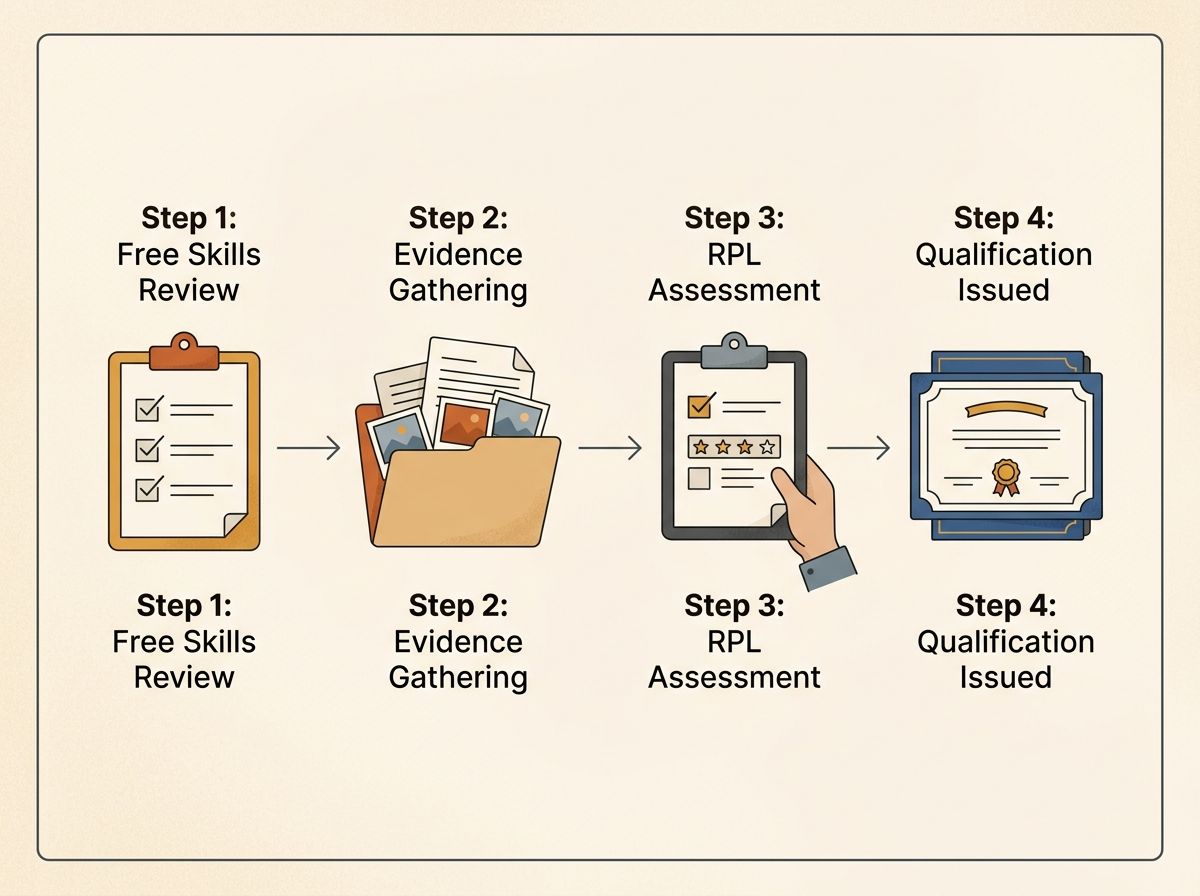
The process is evidence-based, not classroom-based. Rather than sitting through units covering skills you already demonstrate at work, you compile evidence that shows you can perform those skills to the required standard. That evidence might include employment records, position descriptions, performance reviews, references from supervisors or clients, work samples, or records of relevant projects and responsibilities. The assessor reviews that evidence against the qualification's unit requirements and determines where competency is demonstrated and where gaps may exist.
If gaps are identified — areas where your evidence does not fully demonstrate the required competency — gap training is provided to address those specific areas. This is a normal part of the RPL process, and it is worth understanding clearly: RPL is a rigorous assessment, not a rubber stamp. The qualification you receive at the end is nationally recognised precisely because the assessment is genuine.
For hospitality qualifications, the RPL pathway is available across a range of levels — from Certificate III in Commercial Cookery through to the Diploma of Hospitality Management. The specific qualifications available through RPL, and the evidence requirements for each, vary by RTO. A Free Skills Review is the right first step to understand which qualifications your experience may support and what the assessment process would involve for your specific situation.
The full range of hospitality qualifications available through RPL is outlined on the RPL it hospitality and tourism page.
Is your experience enough? What assessors look for
RPL assessors evaluate evidence of competence against specific qualification units — not job titles, years of service, or industry labels. What matters is whether the evidence demonstrates that you can perform the required tasks to the required standard, in the context the qualification describes.
For cross-industry professionals, this means identifying which of your existing experiences map to which qualification units — and being honest about where gaps may exist. A retail manager with strong financial and people management experience may find that their evidence maps well to the operational management units of a Diploma of Hospitality Management, but that they have limited evidence for units specific to food safety supervision or liquor service compliance. Those gaps are addressable through targeted training — they do not invalidate the rest of the application.
Common evidence types that assessors consider include: employment records and position descriptions that demonstrate the scope of your responsibilities; references or third-party reports from supervisors, clients, or colleagues who can speak to your competence; records of projects, events, or operational outcomes that demonstrate your capability in practice; and any relevant licences, certificates, or training records from your existing career. The specific evidence requirements vary by qualification and by RTO, so it is worth understanding what is expected before you begin gathering materials.
The honest answer to 'is my experience enough?' is: it depends on what the evidence shows. Some cross-industry professionals will find that their experience maps comprehensively to the qualification they are targeting. Others will find that their experience covers most of the required competencies with a small number of gaps. A Free Skills Review is designed to give you an honest, no-commitment answer to that question — based on your specific background, not a generic assessment.
Ready to Get Recognised?
Start with a free skills review to find out if RPL is right for you.