Stop Risking Your Business: The NSW Glazing Certificate Compliance Check
NSW glazing certificate requirements are stricter than most business owners realise. Find out what's mandatory, what the penalties are, and how RPL can close the gap.
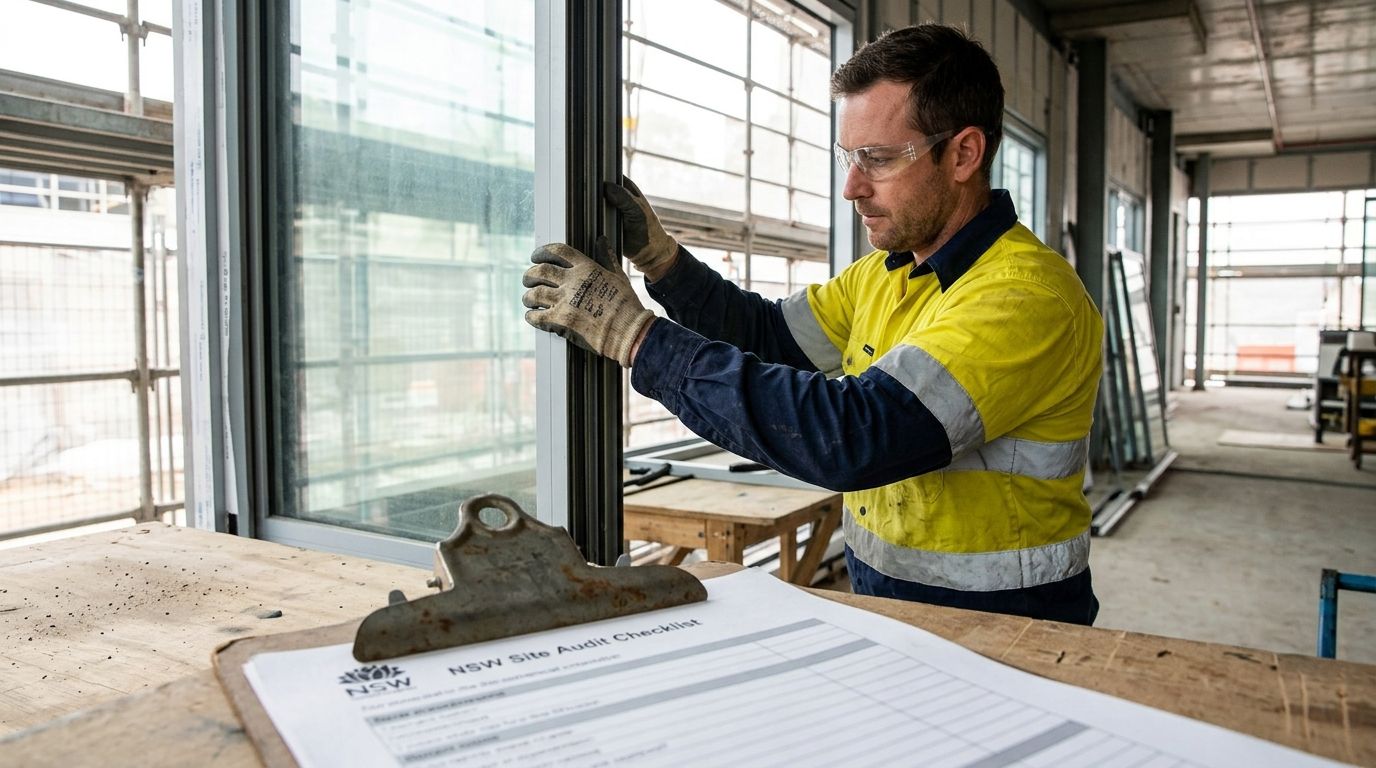
The assumption that's putting your glazing business at risk
Your glaziers know what they're doing. Years on the tools, hundreds of jobs completed, glass cut and fitted to spec every time. That experience is real. The problem is that the formal system — NSW regulators, principal contractors, site auditors — cannot see what you can see. They see paperwork. And if the paperwork isn't there, the experience doesn't count.
This is the assumption that catches glazing businesses off guard: that demonstrated competence is the same as documented compliance. It isn't. In NSW, glazing is classified as trade work, and a licence or certificate is required to carry out that work. The regulator doesn't distinguish between a glazier who has been cutting and fitting glass for two years and one who has been doing it for twenty. Without the formal credential, both are in the same position.
Site compliance requirements are tightening. The question isn't whether your team is capable. The question is whether your business can prove it — and what happens if it can't.
What a glazing certificate NSW actually means (and what it doesn't)
When people search for 'glazing certificate NSW', they're often looking for three different things at once — and the confusion is understandable. Here's what the terms actually mean.
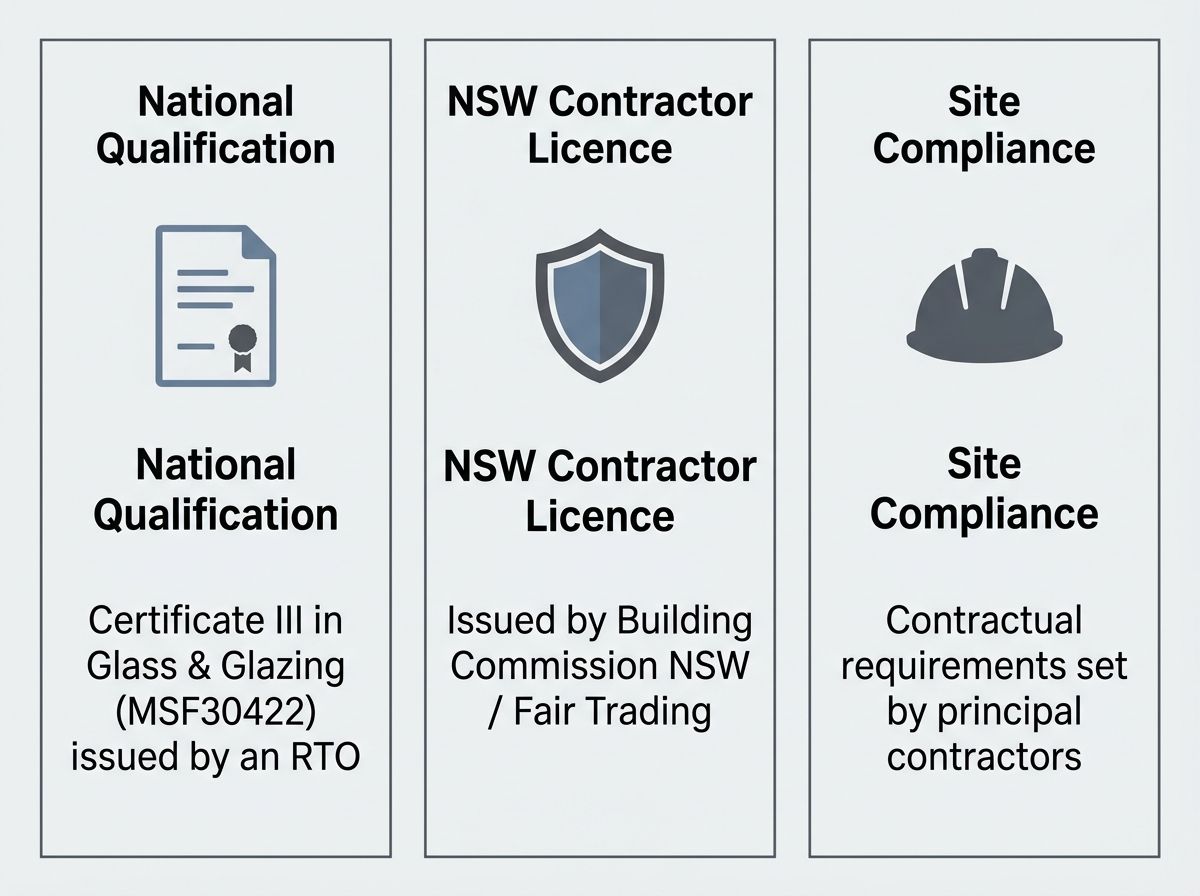
The Certificate III in Glass and Glazing (national code MSF30422) is a nationally recognised vocational qualification. It covers the skills and knowledge required for glazing work across residential and commercial settings — including glass processing, installation, and fabrication. It is listed on the National Training Register as a current qualification, having superseded the earlier MSF30418 code.
The NSW contractor licence (or qualified supervisor certificate) is the credential issued by the NSW Government that authorises a person or business to carry out, advertise, or contract for glazing work. According to the NSW Government, glazing work is classified as trade work, and a contractor licence is required for residential building or trade work valued at more than $5,000 in labour and materials (including GST). The licence types available include an individual contractor licence, an endorsed contractor licence, a company or partnership contractor licence, and a qualified supervisor certificate. These can be applied for on a one, three, or five year basis.
To obtain one of these credentials, applicants must complete a listed qualification — such as the MSF30422 or MSF30418 Certificate III in Glass and Glazing — along with several older accepted codes. Individual applicants must also provide a National Police Check no older than four months from the date of application. The NSW Government notes that some listed qualifications and units may no longer be available, and advises confirming availability with a registered training organisation (RTO) and checking the National Training Register before commencing training or recognition of prior learning.
There is no separate 'glazing certificate of compliance' issued for specific jobs or work types in the NSW licensing framework. The 'certificate' referenced in NSW glazing licensing is the qualified supervisor certificate — a person-level credential, not a job-specific compliance document. Structural and commercial glazing skills are covered as units within the Certificate III qualification itself, not through separate certificates.
Understanding this distinction matters. If your workers hold the qualification but the business hasn't applied for the contractor licence, you may still be exposed. If the business holds a licence but individual supervisors don't hold the qualified supervisor certificate, that's a separate gap. The compliance picture is more layered than most business owners realise.
The business consequences of getting this wrong
The consequences of unlicensed glazing work in NSW fall on the business — not just the worker. According to the NSW Government, doing unlicensed work can attract a fine of $22,000 for an individual or $110,000 for a company under the Home Building Act 1989. These are not hypothetical figures. They are the penalties published by the regulator for carrying out, advertising, or contracting for work without the required licence.
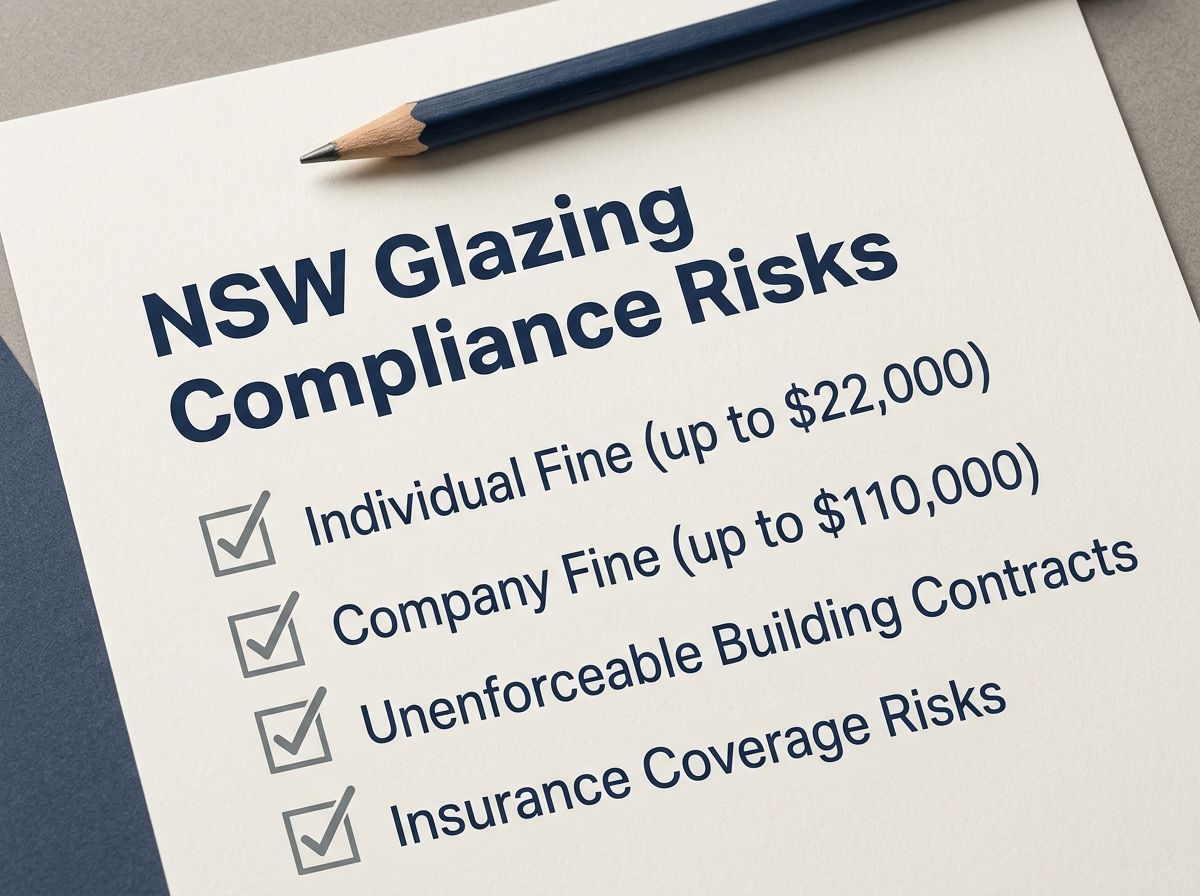
The NSW Government's glazing work licensing page sets out the full requirements, including the penalty provisions under the Home Building Act 1989.
Beyond the direct penalties, there are insurance and contract risks to consider. SafeWork NSW advises that before engaging a contractor, you should verify whether their insurance is current — by asking for a certificate of currency or contacting the issuing insurer directly. Workers compensation, public liability, and professional indemnity cover are all relevant considerations when glazing work is being performed on a site.
A NSW construction law firm notes that commencing residential building work without valid home warranty insurance can breach the Home Building Act 1989 and may affect the enforceability of the building contract. Whether your specific policy responds — or is affected — when unlicensed subcontractors are involved depends on your policy wording. This is a risk to investigate with your insurer, not assume away.
The licensing requirement also has a direct operational consequence. In NSW, glazing is classified as trade work — not specialist work. This means the contractor licence threshold applies to residential building or trade work valued above $5,000. Specialist work categories (such as electrical or plumbing) require a licence regardless of the value of the work. Glazing sits in the trade work category, so the $5,000 threshold applies — but that threshold is crossed on most commercial glazing jobs before the first panel is installed.
Why 'they've been doing it for years' is no longer a defence
There's a version of this conversation that happens in every trade. The business owner knows their glaziers are good. They've watched them work. They've seen the results. The idea that a regulator or a site auditor could question that competence feels almost offensive.
But the formal system doesn't assess competence the way you do. It assesses evidence. A site audit doesn't observe your glaziers at work and make a judgement call. It checks whether the right credentials are held, whether the licence is current, and whether the documentation is in order. Years of experience on the tools is not the same as formal recognition of that experience. The audit cannot see what you can see.
This is the gap that creates compliance exposure. The worker's capability is real. The business owner's confidence in that capability is justified. But the formal system requires documented evidence of competency — not demonstrated performance. Until that evidence exists in a form the system recognises, the gap remains open.
The NSW Government's own guidance notes that apprentices and trainees cannot currently be issued with a licence or certificate — they must apply for a contractor licence after completing the apprenticeship or traineeship. This reflects the broader principle: demonstrated work is not the same as formal recognition. The credential comes after the assessment, not in place of it.
The fastest path to compliance: what RPL means for your glazing team
Recognition of Prior Learning (RPL) is the formal assessment pathway that allows experienced glaziers to have their existing skills assessed against the Certificate III in Glass and Glazing (MSF30422) — without repeating training they don't need. The assessment is conducted by a registered training organisation (RTO). If the assessor determines that the candidate's existing skills and knowledge meet the requirements of the qualification, the RTO issues the nationally recognised certificate.
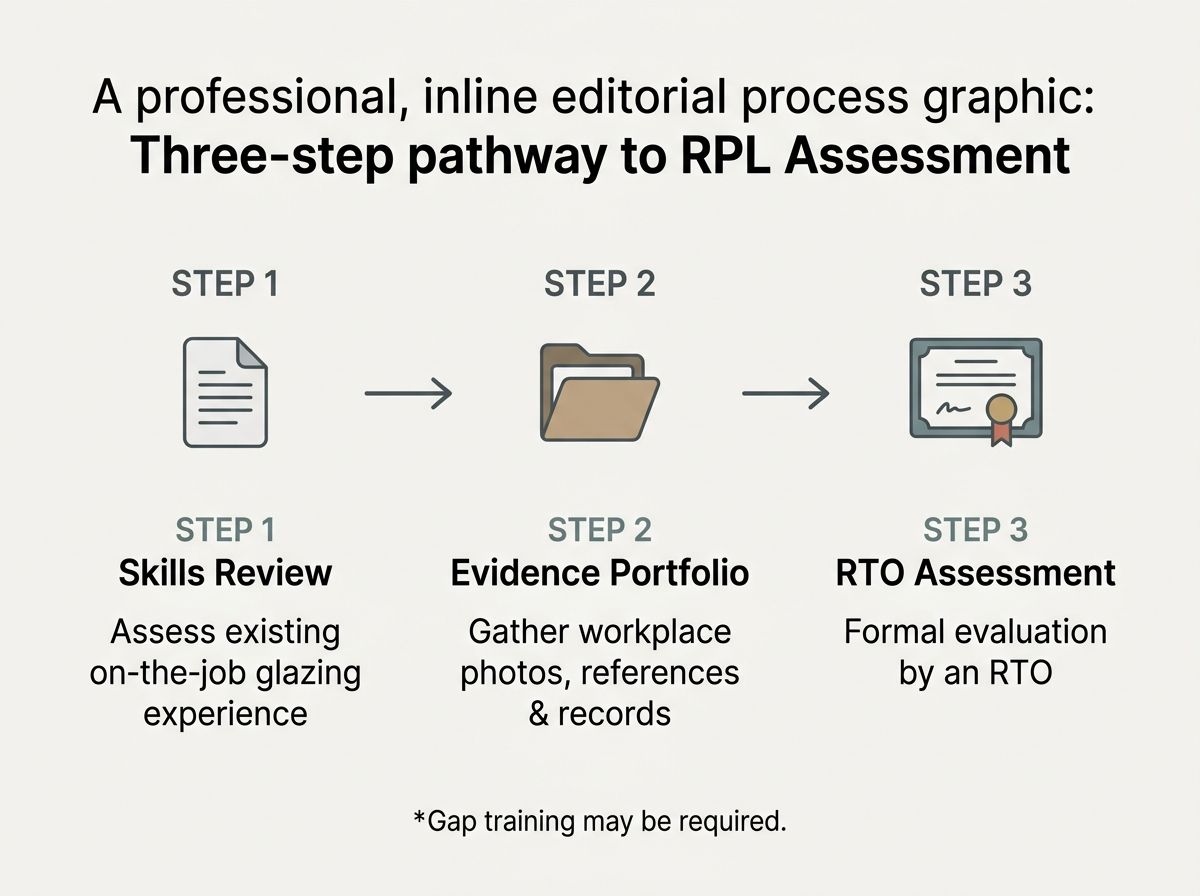
For business owners, this means workers can be assessed while remaining on site. RPL is evidence-based and workplace-based. At one RTO, Career Skills Australia, the RPL process for MSF30422 is described as usually taking around three months — though this is an indicative, provider-specific figure that will vary depending on the candidate's evidence, the RTO's assessment process, and workplace verification requirements. It is not a guaranteed timeframe, and actual duration will differ between candidates and providers.
To be eligible for RPL, candidates generally need to demonstrate relevant industry experience. At that same provider, a minimum of two years' industry experience is listed as a typical entry requirement, along with employer or supervisor support and a workplace support agreement. Entry requirements vary between RTOs, so experienced glaziers should confirm requirements with their chosen provider.
It's important to be clear about what RPL is and isn't. RPL is a rigorous assessment pathway — not a shortcut. The qualification is nationally recognised because the assessment is genuine. Gap training may be required if the assessor identifies areas where the candidate's existing skills don't fully meet the qualification requirements. That gap training is part of the process, not a failure of it. And the RTO — not RPL it — conducts the assessment and issues the qualification.
TAFE NSW notes that the Certificate III in Glass and Glazing (MSF30422) provides eligibility to apply for a glazing contractor or minor trades licence. Completing the qualification is a step toward the licence — the licence application itself is a separate process with the NSW Government, and licensing outcomes are determined by the regulator.
The national training register confirms MSF30422 is the current active qualification code for the Certificate III in Glass and Glazing, having superseded MSF30418.
What to do before your next site audit
Acting before an audit is the difference between a compliance gap and a compliance crisis. Here's a practical starting point for glazing business owners.
- Confirm which workers are performing glazing work and whether they hold a current NSW contractor licence or qualified supervisor certificate.
- Check whether your business holds the appropriate contractor licence for the glazing work being performed — including the licence type, scope, and expiry date.
- Verify that any subcontractors you engage hold current licences. SafeWork NSW advises asking for a certificate of currency or contacting the issuing insurer to confirm cover.
- Review your insurance policy to understand how it responds when subcontractors are involved — and confirm with your insurer if you're uncertain.
- Identify which workers have significant glazing experience but no formal qualification, and consider whether RPL assessment is appropriate for them.
Not every experienced glazier will be suitable for RPL. Suitability depends on the nature and depth of their experience, the evidence they can provide, and the assessment requirements of the RTO. A Free Skills Review is the honest first step — it's designed to give you a clear picture of who may be eligible before any commitment is made.
The NSW Government also notes that previous holders of an unrestricted endorsed contractor licence or qualified supervisor certificate in glazing may not need to show qualifications when reapplying. Holders from the last five years with restrictions or conditions are assessed and reissued a credential reflecting their previous scope. If this applies to any of your workers, it's worth confirming directly with Building Commission NSW.
Your glaziers have the experience. The question is whether that experience is visible to the formal system. Recognition of Prior Learning exists to bridge that gap — to convert what your team has already achieved into formal recognition, through a genuine assessment process that the system accepts.
The decision is yours. Start with a Free Skills Review — it costs nothing and commits you to nothing. We'd rather point someone toward the right pathway than enrol them in the wrong one.
Ready to Get Recognised?
Start with a free skills review to find out if RPL is right for you.