The Hidden Cost of Undocumented Subbies: Why Principal Contractors Demand Valid Trade Licenses
Undocumented subbies aren't just their own problem in WA. Principal contractors carry real insurance, legal, and tender risk. Here's what trade licenses actually cost you.
The assumption that's costing WA principals money
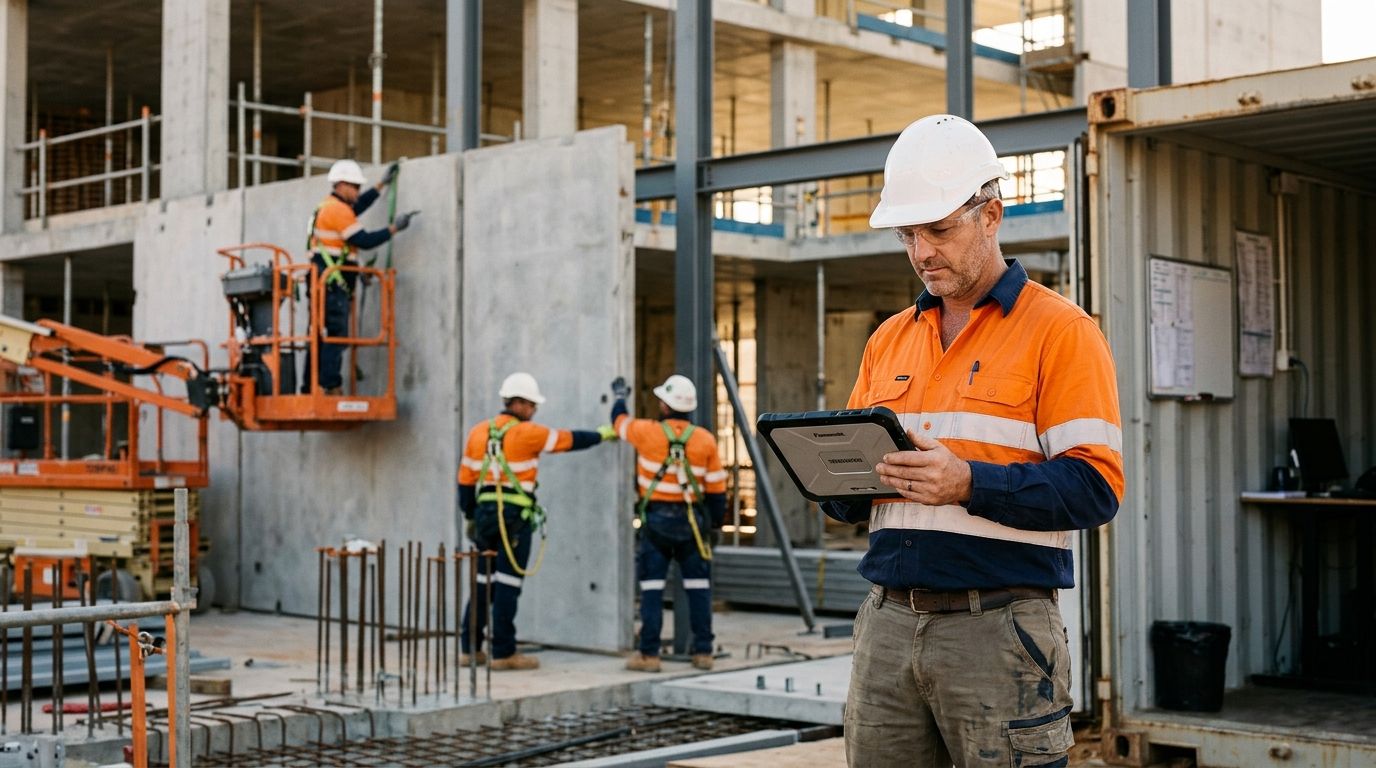
'We can't afford to let our most experienced guys get walked off site because of missing paperwork.' If you've said something like that — or heard it from a site manager — you already understand the tension. Skilled, experienced tradespeople. Real work getting done. And somewhere in the background, a compliance gap that nobody wants to deal with until it becomes a crisis.
The common assumption on WA construction sites is that trade license compliance is the subcontractor's problem. They hold the licence. They're responsible for keeping it current. If something goes wrong, it's on them.
That assumption is worth examining carefully. In practice — through insurance policy conditions, WHS obligations, and tender pre-qualification requirements — the principal contractor's exposure doesn't stop at their own credentials. The licence status of every trade on your site has implications for your position, not just theirs.
This article is about that reframe. Trade licenses aren't just a personal credential. On a WA construction site, they function as a site-access mandate — and the principal contractor is the one accountable for enforcing it.
What trade licenses actually mean in WA
In Western Australia, trade licensing is administered across several regulatory frameworks depending on the type of work. Building and Energy, within the Department of Energy, Mines, Industry Regulation and Safety (DEMIRS), is the primary body responsible for licensing and registration across electrical, plumbing, gas fitting, and building services work.
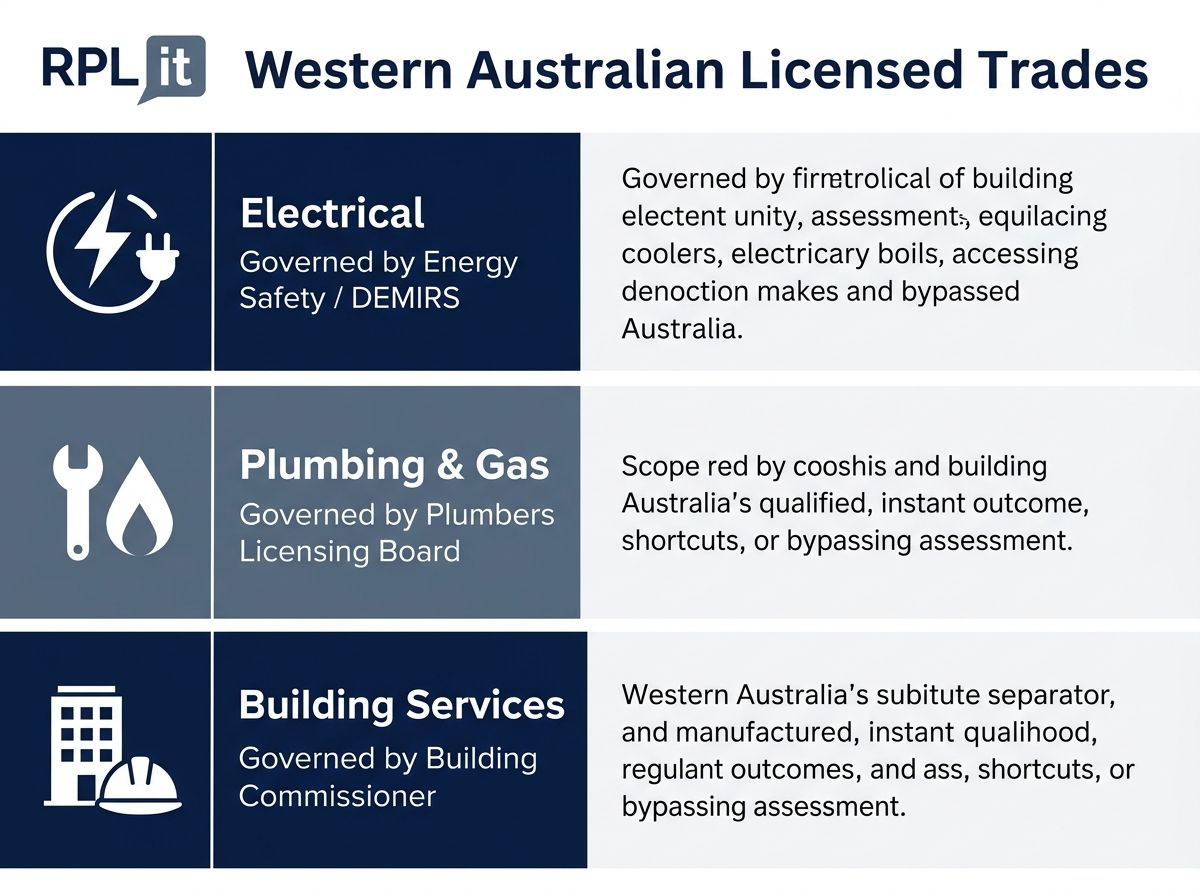
A trade licence in WA is not a single thing. The framework distinguishes between contractor licences — which allow a business to contract for licensed work — and individual tradesperson registrations or certificates, which authorise a person to carry out that work. Both matter. A licensed electrical contractor, for example, must employ licensed electricians. The contractor licence alone doesn't authorise the individual to perform the work.
Building and Energy states clearly that all electrical work in WA must be carried out by a person holding the relevant electrical licence, and that only licensed electricians meet the required competency standards. Similarly, only a plumber holding a licence issued by the Plumbers Licensing Board can legally carry out water supply, sanitary and drainage plumbing work in WA. For building services — builders, building engineers, building surveyors, painters — it is illegal for an individual, partnership or company to contract for or carry out a building service without first obtaining the appropriate licence or registration.
The Electricity (Licensing) Regulations 1991 (WA) govern the licensing of electrical contractors and in-house electrical installing work. Licence holders are required to display their licence document and certificate of registration prominently at their principal place of business, and to include their licence number in any advertisement for their electrical contracting business.
Why the principal contractor carries the risk — not just the subbie
WA construction operates under a framework where a project has one principal contractor — the entity engaged by the client who has management or control of the workplace. That position comes with broad obligations. Under WA WHS regulations applicable to construction projects, the principal contractor is required to put in place arrangements for ensuring compliance with specified regulatory requirements and to manage risks associated with the work being carried out on site.
A note on precision here. The WHS regulations reviewed for this article — specifically the Work Health and Safety (Mines) Regulations 2022 (WA) — apply to mining operations, not general commercial or residential construction. The equivalent provisions for general construction are expected to sit in the Work Health and Safety Act 2020 (WA) and Work Health and Safety (General) Regulations 2022 (WA). The principle, however, is consistent: the principal contractor carries a general compliance-arrangements duty that extends to the conduct of all persons working on the site. This general duty may be relevant to how a principal contractor manages subcontractor compliance, including licence status.
What this means in practice is that the licence on the subbie's van is your compliance problem too. Not because you issued it. Not because you're responsible for renewing it. But because the work being performed under your management, on your site, under your principal contractor obligations, is work that WA law requires to be carried out by a licensed person. If it isn't, the consequences don't stop with the unlicensed tradesperson.
Those consequences can include stop-work orders, exposure to regulatory penalties, and complications with insurance coverage. The specific penalty provisions under WA building services legislation — including the Building Services (Registration) Act 2011 — attach fixed fines to specific offences. For example, as at April 2023, a registered building service contractor who advertises without including their registration number faces a fine of $5,000. The Act uses fixed dollar fines at various levels for different offences. Readers should verify current penalty provisions directly against the authorised version of the relevant legislation, as amounts are subject to amendment.
To illustrate how penalties can flow through subcontracting layers: in Victoria, the Supreme Court imposed a total of $759,674 in penalties on five construction companies and three company directors for involvement in unlicensed labour hire operations across multiple subcontracting layers. That case involved Victoria's Labour Hire Licensing Act regime — not WA building services law — but it shows that liability in multi-layer subcontracting arrangements is not confined to the party that directly performed the unlicensed work.
Insurance industry commentary notes that general contractors may be liable for subcontractors' actions in certain situations, including through vicarious liability, duty of care, and contractual obligations, and that contractors should ensure subcontractors are qualified and follow safety standards. Public liability insurance requirements vary by trade and jurisdiction.
The three moments when missing paperwork becomes a crisis
Licence gaps don't surface during normal operations. They surface at the worst possible moments — when the stakes are highest and the options are fewest. Three scenarios stand out.
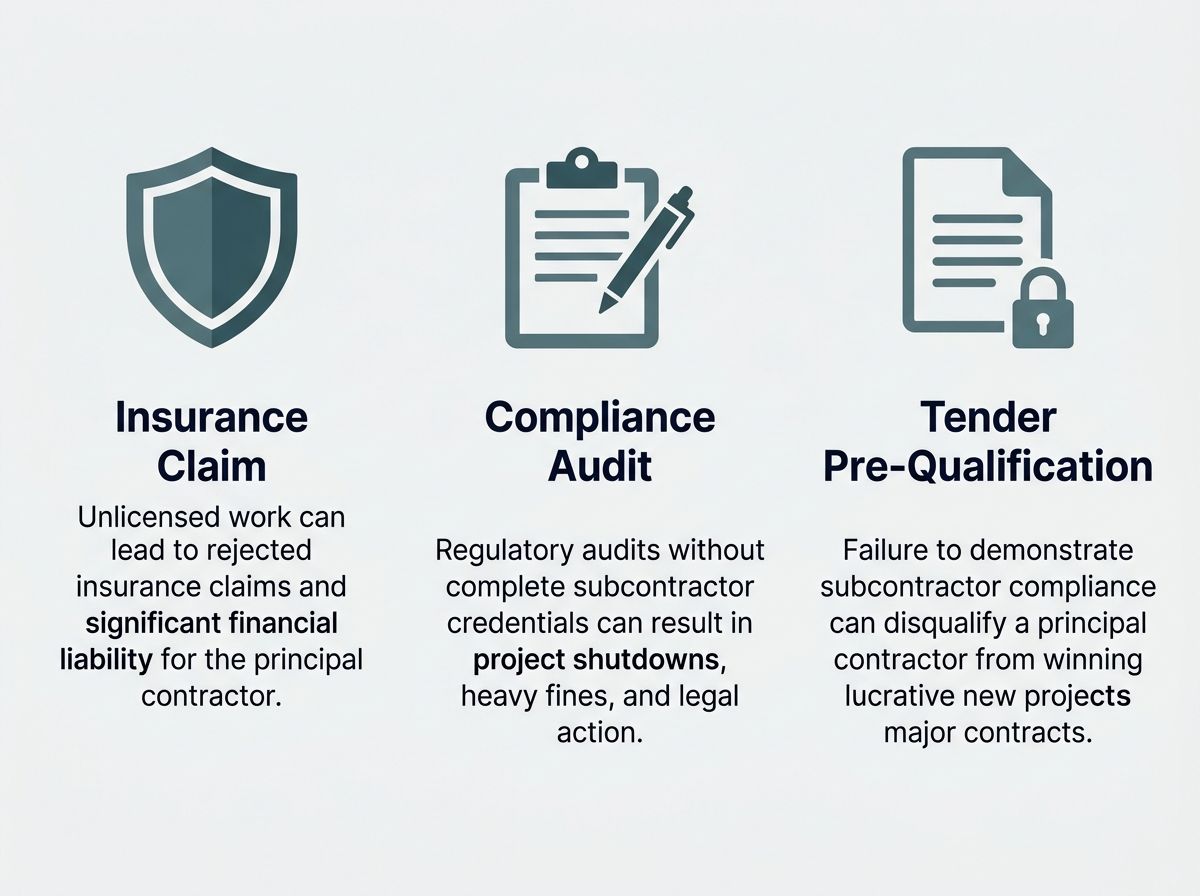
**Scenario 1: An insurance claim.** When something goes wrong on site — an injury, a defect, a third-party claim — insurers examine the circumstances of the work. Some insurance guidance suggests that a principal contractor's failure to verify appropriate subcontractor credentials can affect their coverage position. The specific policy language varies between insurers, and no universal rule applies. What is consistent is the advice: check your policy wording, and if you're uncertain, speak to your broker before you need to make a claim. Don't assume coverage extends to work carried out by unlicensed trades.
**Scenario 2: A compliance audit or site inspection.** WA's regulatory bodies have powers to inspect construction sites and verify that work is being carried out by appropriately licensed persons. An unlicensed tradesperson on site isn't a paperwork inconvenience — it's a regulatory event. The work may be required to stop. The principal contractor's compliance arrangements come under scrutiny. The cost of remediation — both financial and reputational — typically exceeds whatever was saved by not verifying credentials upfront.
**Scenario 3: Tender pre-qualification.** WA government works tenders commonly specify a pre-qualification level for the principal contractor. Agencies such as Main Roads WA publish formal prequalification registers with road, bridge, specialist and financial categories — and prequalification status can lapse, be conditional, or be restricted. Maintaining that status requires demonstrating that your operations meet the required standards. A workforce compliance gap — including unlicensed subcontractors — is the kind of issue that surfaces during pre-qualification reviews and can affect your ability to bid for the work you want.
The verification gap: why 'he said he was licensed' isn't enough
Most principals rely on self-declaration from subcontractors. It's fast, it's easy, and it works right up until it doesn't. The minimum standard of due diligence — the one that actually protects your position — is verification against the official register.
Building and Energy advises people to use the Online Licence Search or view the public registers to make sure they are engaging a tradesperson with the required licence or registration.
The WA Online Licence Search, hosted at ols.demirs.wa.gov.au, is an official DEMIRS tool for verifying current occupational licences in Western Australia. The search interface carries the branding of Building and Energy, Consumer Protection and WorkSafe Western Australia.
The search operates on exact matches by licence number. Users must enter the record prefix where applicable — for example MD00000, EC00000 or BSP00000 — and where multiple records are needed, they must be entered one at a time.
Building and Energy groups verification into four areas: electrical, plumbing, gas fitting, and building services (which covers builders, building engineers, building surveyors and painters). For building services, Building and Energy also maintains public registers that are updated daily.
One caution from Building and Energy itself: registered practitioners and contractors may share the same registration number, so users should check the name, registration number and licence type together to confirm they have the correct person or entity.
If you need a formal written record, a certified copy or extract from the registers can be requested by completing the relevant form. For general enquiries, Building and Energy can be contacted on 1300 489 099, and the Department's licensing applications and enquiries line is 1300 424 091. Contact details are correct as at the time of writing — check the Building and Energy website for current information.
One further consideration: Building and Energy does not publish business or trading names. If you're searching for a subcontractor by their company name rather than their licence number, you'll need to use the Australian Securities and Investments Commission's national register for business and trading name information first, then cross-reference the individual licence number.
Building and Energy's licence and registration search page provides the starting point for verifying electrical, plumbing, gas fitting and building services credentials in WA.
When your best subbies don't have the paper: the RPL option
Here's the situation that many WA principal contractors actually face. The most experienced tradespeople on site — the ones who know the work, who train the newer crew, who you'd trust with the complex jobs — are sometimes the ones without current formal licences. Not because they lack skill. But because their experience was acquired informally, overseas, or before licensing requirements tightened. Or because they've simply never had an employer who required them to formalise it.
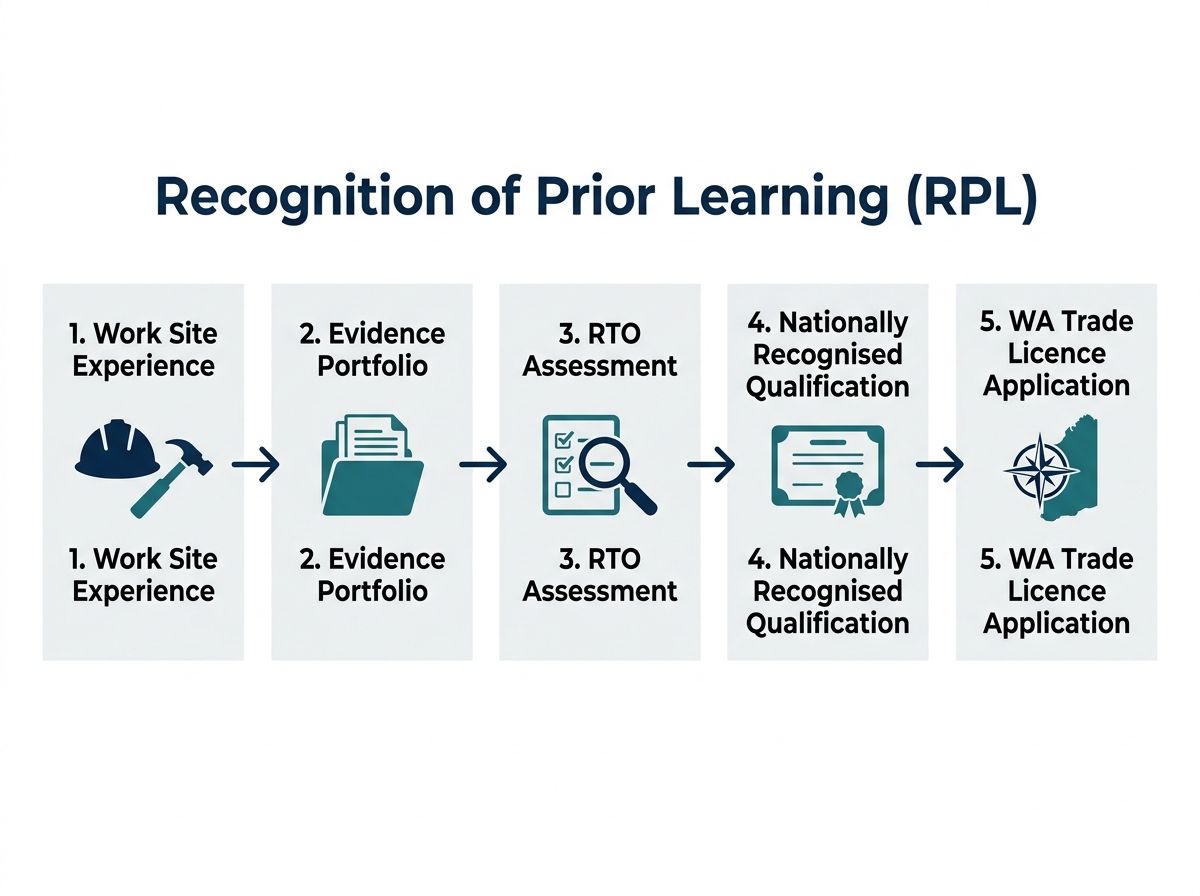
Recognition of Prior Learning — RPL — is a formal assessment process within Australia's VET system that evaluates existing skills, knowledge and experience against the units of competency in a nationally recognised qualification. The result, when competency is demonstrated, is the same AQF qualification as would be issued through classroom study. The qualification itself carries no indication of how it was achieved.
Commercial providers in the RPL space assert that licensing bodies across Australia assess the qualification against their published requirements rather than the study method used to achieve it. This is consistent with how the AQF operates. However, the specific requirements for WA trade licence applications — including which qualifications are accepted as the underpinning credential for each licence class — should be confirmed directly with Building and Energy (DEMIRS) for each trade. Requirements vary by licence class, and the evidence reviewed for this article did not include a primary-source confirmation from WA Building and Energy on this point. Verify before relying on it.
What RPL does not do is bypass genuine assessment. It is a rigorous process. A qualified assessor from a registered training organisation reviews evidence of real work — logbooks, references, site records, practical demonstrations — against the competency standards. Where gaps are identified, gap training is typically provided. The qualification is nationally recognised because the assessment is genuine.
For a principal contractor, the practical implication is this: if you have experienced tradespeople who need to formalise their credentials to meet site-access requirements, RPL may provide a pathway that doesn't require them to leave the site for extended periods of classroom study. The assessment is built around evidence of what they already do.
For more on how experience maps to WA licence requirements, see our article on
For a closer look at how this works in practice for specific trades, see our piece on
What a compliant WA subcontractor workforce actually looks like
Compliance is not a one-time check. It's an ongoing workforce management practice. The principal contractors who manage this well aren't the ones who scramble before a tender submission or a site audit. They're the ones who've built licence verification into their subcontractor onboarding — so the question of 'are they licensed?' is answered before the first day on site, not after something goes wrong.
In practical terms, that means verifying licence numbers against the Building and Energy Online Licence Search before engagement; checking name, number and licence type together (not just the number); keeping records of verification; and establishing a process for re-verification when licences are due for renewal.
It also means having a clear view of which experienced tradespeople in your regular subcontractor pool are working without current formal credentials — and understanding what options exist to address that gap. For some, RPL may be the most practical pathway. For others, the situation may be more complex. The point is to know, rather than to assume.
Your workforce has the experience. The question is whether that experience is formally recognised. What you do with that information is your call.
For employers who have navigated similar compliance questions in other trades, our article on
is worth reading alongside this one.
You can also explore WA trade licence requirements in more detail on our
product page.
Ready to Get Recognised?
Start with a free skills review to find out if RPL is right for you.