Why a Certificate III in Glass and Glazing Is the Only Way Off the Subbie Treadmill
Experienced glaziers in NSW can't hold a contractor licence without the Certificate III in Glass and Glazing. Here's how RPL recognises years of cutting and installing.
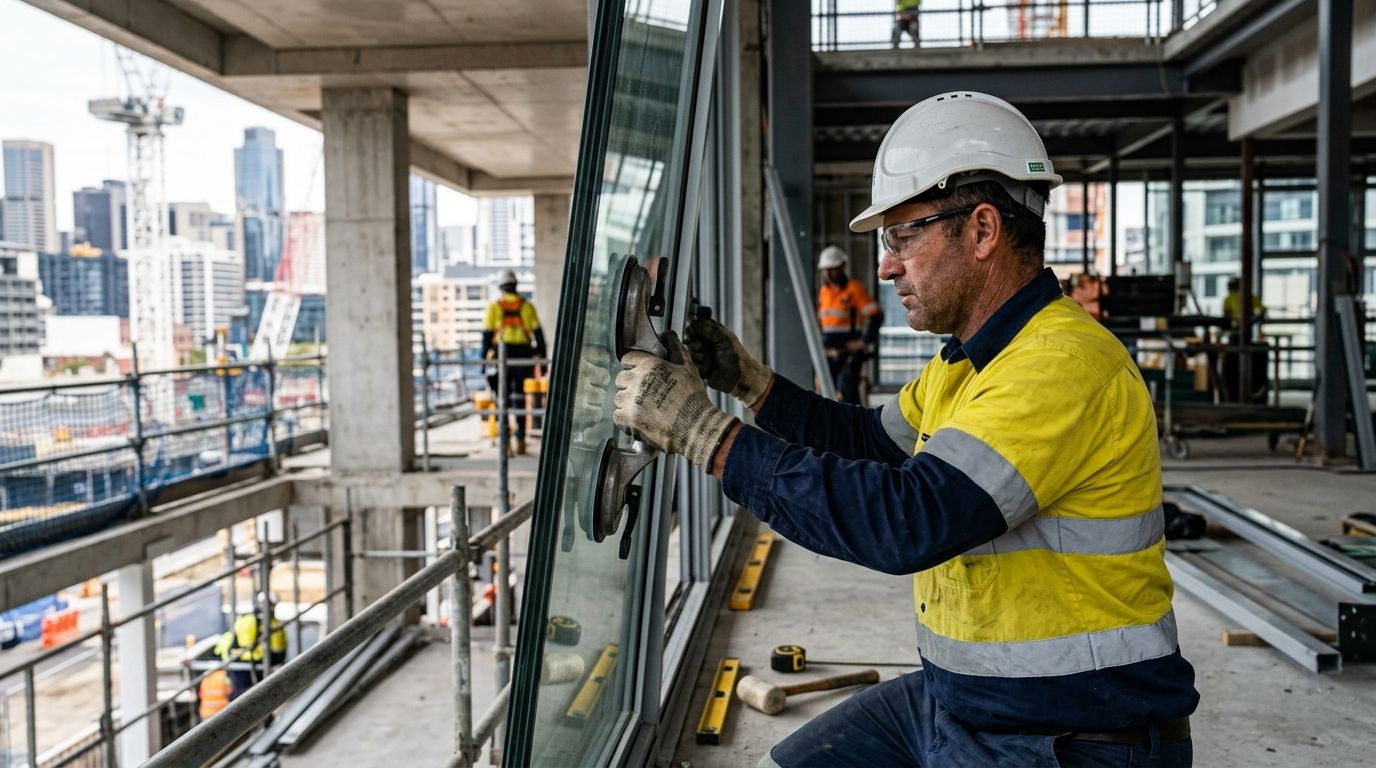
The subbie treadmill is a real thing — and it has a name
You have the experience. You know how to read a site, cut to tolerance, handle structural glazing, and manage a job from measure-up to sign-off. You've been doing it for years — probably longer than some of the people whose name is on the licence.
And yet, every job you walk onto, you're working under someone else's ticket. Every invoice goes through someone else's business. Every contract is signed by someone who may know less about glass than you do.
That's the subbie treadmill. Effort without progress. Skill without independence. Experience that the formal system refuses to see — because it exists in the wrong form.
The reason isn't that you lack competence. In NSW, operating a glazing business independently requires a contractor licence, and that licence requires a formal qualification: the Certificate III in Glass and Glazing (MSF30422). Without it, the gate stays closed — regardless of how many years you've spent on the tools.
Why NSW won't let you run your own glazing business without it
In NSW, glazing work that involves installation, replacement, or repair of glass in buildings is regulated under the home building licensing framework administered by NSW Fair Trading. To legally contract directly with clients for this work — to run your own glazing business — you need a contractor licence in the relevant category.
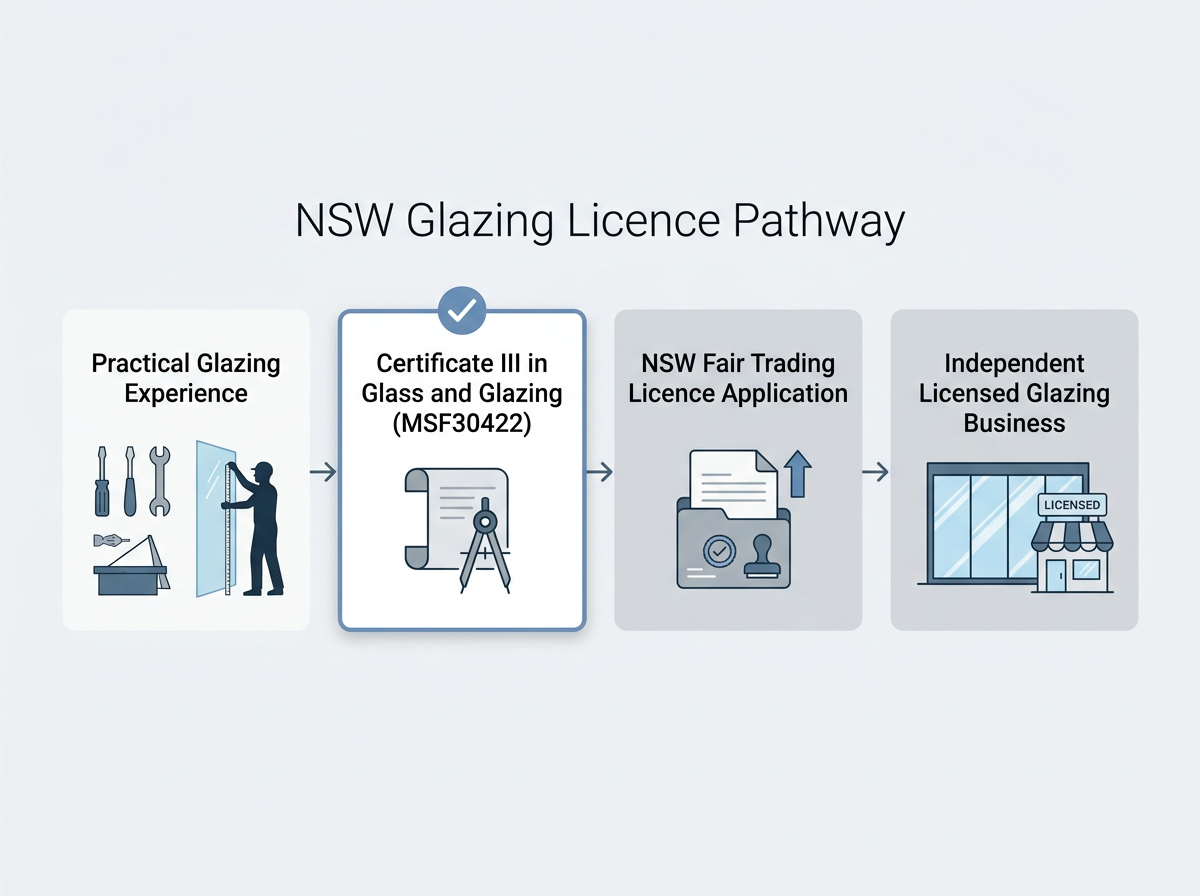
That licence is not issued on the basis of experience alone. NSW Fair Trading requires applicants to hold a recognised qualification. For glazing, the Certificate III in Glass and Glazing (MSF30422) is the qualification that underpins the licensing pathway.
This is not a technicality. It is the structural gate between being a skilled subcontractor and being an independent glazing business owner. The qualification is not optional — it is the credential that gives you permission to operate.
If you want to understand the full NSW glazing contractor licence requirements, including what NSW Fair Trading looks for in an application, see our dedicated page on this topic.
The frustrating reality is that the work itself doesn't change. You're already doing it. The difference is whether you can do it under your own name, on your own terms, with your own clients — or whether you keep feeding someone else's business with your skills.
What the Certificate III in Glass and Glazing actually covers
The Certificate III in Glass and Glazing (MSF30422) is the nationally recognised qualification for glaziers in Australia. It covers the competencies that experienced glaziers perform as a matter of course: measuring and cutting glass to specification, installing glass in various framing systems, working safely with glass and glazing materials, understanding different glass types and their applications, and managing the quality and compliance of glazing work.
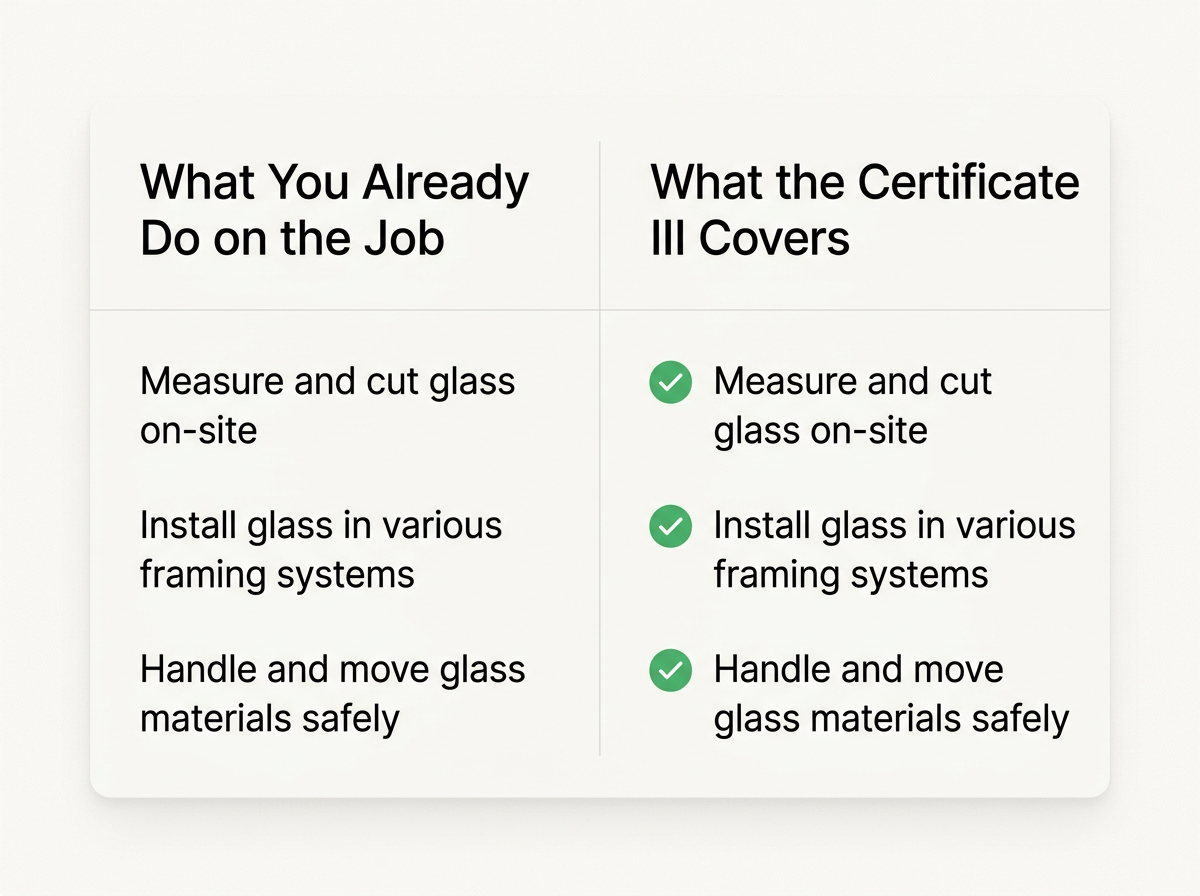
For someone who has spent years in the trade, this is not a list of things to learn. It is a list of things you already do. The qualification exists to formally assess and recognise those competencies — not to teach them from scratch.
That distinction matters. The Certificate III in Glass and Glazing is not a course designed for people entering the trade. It is a framework that defines what a competent glazier knows and can do. If your experience maps to that framework — and for most experienced glaziers, it does — then the question is not whether you have the skills. The question is whether those skills have been formally assessed and recognised.
Recognition of Prior Learning is the process that answers that question.
How RPL turns years of cutting and installing into a formal qualification
Recognition of Prior Learning — RPL — is a formal assessment pathway under the Australian Qualifications Framework. It allows a registered training organisation (RTO) to assess your existing skills and knowledge against the requirements of a qualification, without requiring you to sit through training you don't need.
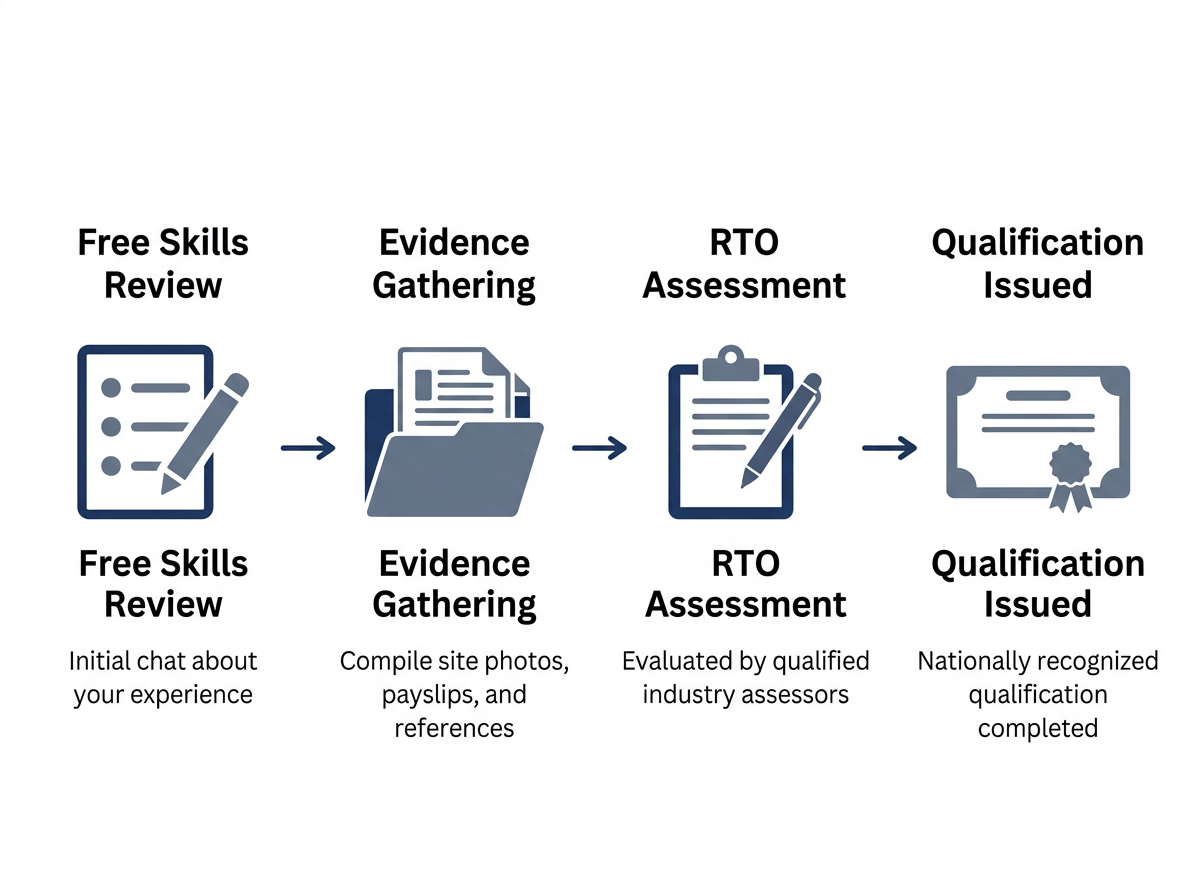
For an experienced glazier, RPL means this: instead of enrolling in a course and repeating what you already know, you work with an assessor to document and demonstrate what you've already learned on the job. The assessment is genuine — conducted by a qualified assessor from the delivering RTO, and rigorous. But it starts from where you are, not from zero.
The evidence that supports an RPL assessment for a glazing qualification typically includes things like employment records and references from supervisors or clients, photographs or documentation of completed glazing work, records of the types of glass and framing systems you've worked with, and in some cases a practical demonstration of your skills. The specific requirements will vary depending on the RTO conducting the assessment.
What RPL does not do is bypass the assessment. The qualification is nationally recognised precisely because the assessment is genuine. What it does do is recognise that your experience is evidence — and guide you through presenting that evidence in a form the formal system can assess.
RPL it guides candidates through this process. We help you understand what evidence is needed, how to gather and organise it, and what to expect from the assessment. We work with registered training organisations who conduct the assessment and issue the qualification. Our role is to guide — not to assess or award.
The crisis moment: when staying a subbie stops being a choice
For many experienced glaziers, the subbie arrangement has been tolerable — not ideal, but workable. The money comes in. The work is there. The licence question gets pushed to later.
Then something changes.
A principal contractor on a commercial project asks for proof of your own contractor licence before they'll engage you directly. A client wants to deal with a licensed glazing business, not a subcontractor. An insurance broker tells you that your public liability cover has limitations without a formal licence. A compliance inspection on a site raises questions about who is legally responsible for the glazing work.
These are the moments when staying a subbie stops being a choice and starts being a risk. The treadmill isn't just frustrating anymore — it's a liability.
The same pattern plays out across licensed trades. Experienced workers who have tolerated the qualification gap for years find themselves at a breaking point when the regulatory or commercial environment shifts around them. The glazing trade is no different.
The qualification gap that felt manageable becomes urgent. And the question shifts from 'should I get the Certificate III?' to 'how do I get it without stopping work for a year?'
That's where RPL becomes relevant — not as a shortcut, but as a recognition pathway that respects the experience you've already built.
What happens after the Certificate III: the contractor licence pathway
The Certificate III in Glass and Glazing (MSF30422) is the qualification that underpins the NSW glazing contractor licence pathway. Once you hold the qualification, you are in a position to apply to NSW Fair Trading for the relevant contractor licence class.
The licence application process involves more than the qualification alone. NSW Fair Trading will typically require evidence of relevant experience, appropriate insurance coverage, and payment of the applicable fees. There may also be requirements around a Qualified Supervisor Certificate, depending on the specific licence class and how your business will operate. The exact requirements should be confirmed directly with NSW Fair Trading, as licensing frameworks are subject to change.
What the Certificate III does is open the gate. Without it, the licence application cannot proceed. With it, the pathway becomes navigable — and the decision about when and how to apply is yours to make.
Our NSW glazing contractor licence page provides an overview of the licensing pathway and what the process involves.
Is RPL right for your glazing experience? What to expect from a skills review
RPL is not suitable for everyone. It requires genuine, demonstrable experience across the competency units that make up the Certificate III in Glass and Glazing. If your experience is narrow — limited to one type of glazing work, or to a short period in the trade — an RPL assessment may identify gaps that require some additional training before the qualification can be issued.
That's not a failure of the process. It's the process working as it should. An honest assessment of your suitability before you commit to anything is worth more than an enrolment that leads to a difficult assessment outcome.
A Free Skills Review is the starting point. It's a no-obligation conversation about your experience, your work history, and whether RPL is likely to be a suitable pathway for you. If gaps are identified, we'll tell you — and if gap training is required as part of the assessment process, it is provided at no additional cost.
The decision about whether to proceed is always yours. The skills review exists to give you the information you need to make it.
Ready to Get Recognised?
Start with a free skills review to find out if RPL is right for you.