Do landscapers need a licence in Victoria? The rules for career-changers
The answer is rarely simple. Here is exactly when Victorian landscapers need a licence, and what it means if you already have the experience.
By RPL it Australia6 min read
The short answer: it depends on your specific work
Most people expect a straightforward yes or no answer, but the reality is that it depends entirely on the specific work you perform, not on your job title. Basic garden maintenance, such as planting, lawn care, pruning, and mulching, does not require formal registration in Victoria. However, once landscaping work crosses into structural tasks, or is done in connection with building or renovating a residential home, the regulations change. This is the boundary many people miss, and it is where experienced tradespeople often work without realising they have crossed into regulated territory.
Victoria does not issue a standalone landscaper's licence like some other states. Instead, landscaping that qualifies as domestic building work falls under the registration framework of the Building and Plumbing Commission (BPC). Knowing which side of this boundary your work falls on is essential for operating legally.
Landscaping work that does not require registration in Victoria
Soft landscaping, including planting gardens, laying turf, maintenance, pruning, mulching, and general grounds care, does not require BPC registration in Victoria. You can operate professionally in these areas without holding a domestic builder registration. Standard business obligations like business registration and public liability insurance still apply to your operation, but there is no trade-specific registration required for this category of work.
This is the work most people picture when they think of landscaping, and for many businesses, it makes up the majority of their projects. If your day-to-day work remains within this scope, with no structural components, no major earthworks, and no connection to a home construction or renovation project, you do not need registration.
When landscaping becomes regulated work
This is where the rules require closer attention, and where many career changers face unexpected requirements. Consumer Affairs Victoria explains that work including landscaping, paving, retaining structures, driveways, and fencing can count as domestic building work if it is carried out in association or conjunction with the construction or renovation of a home. However, the same guidance states that a contract solely for soft landscaping, such as planting a lawn, is generally not classified as domestic building work.
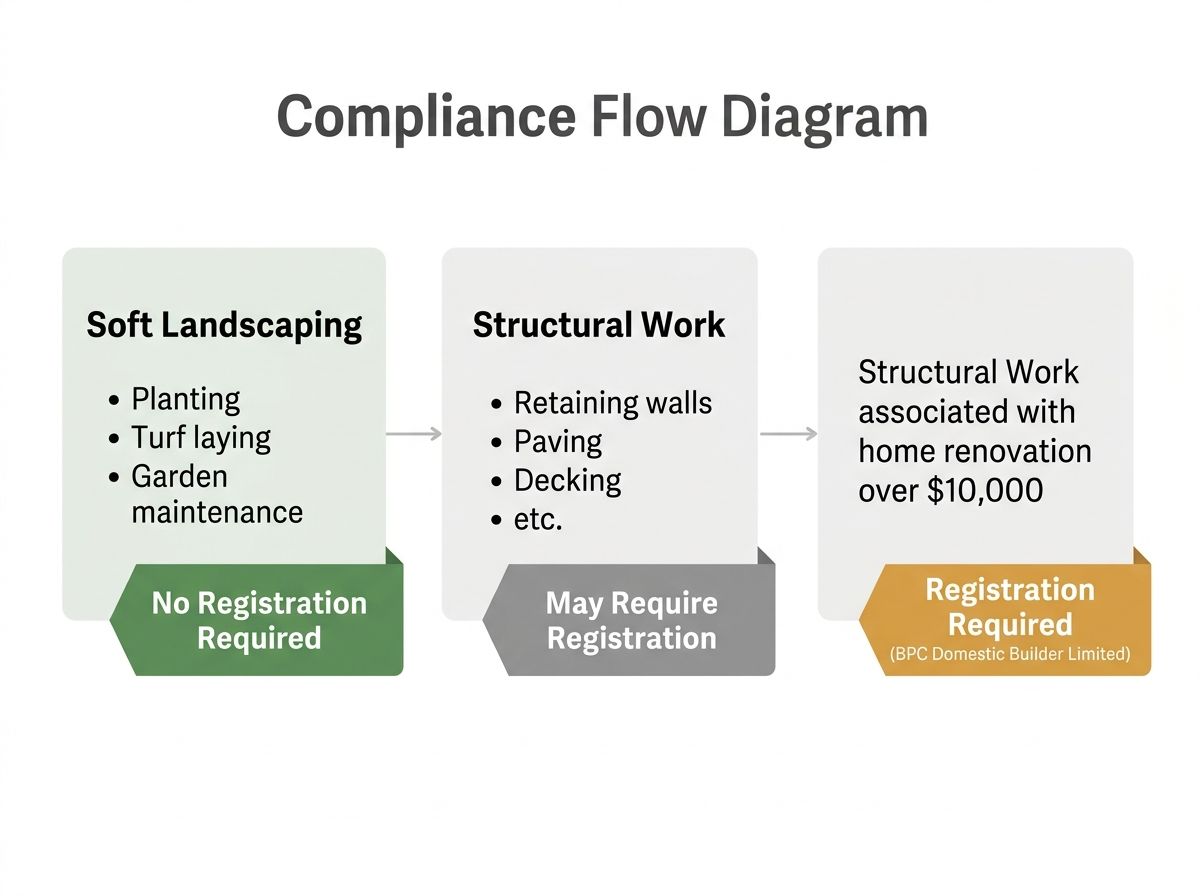
The requirement depends on both the structural scope and the project context. When landscaping is part of a broader home construction or renovation project, and the total value of that work exceeds $10,000 including labour, materials, and GST, it is likely classified as domestic building work. This means it must be carried out by a registered builder.
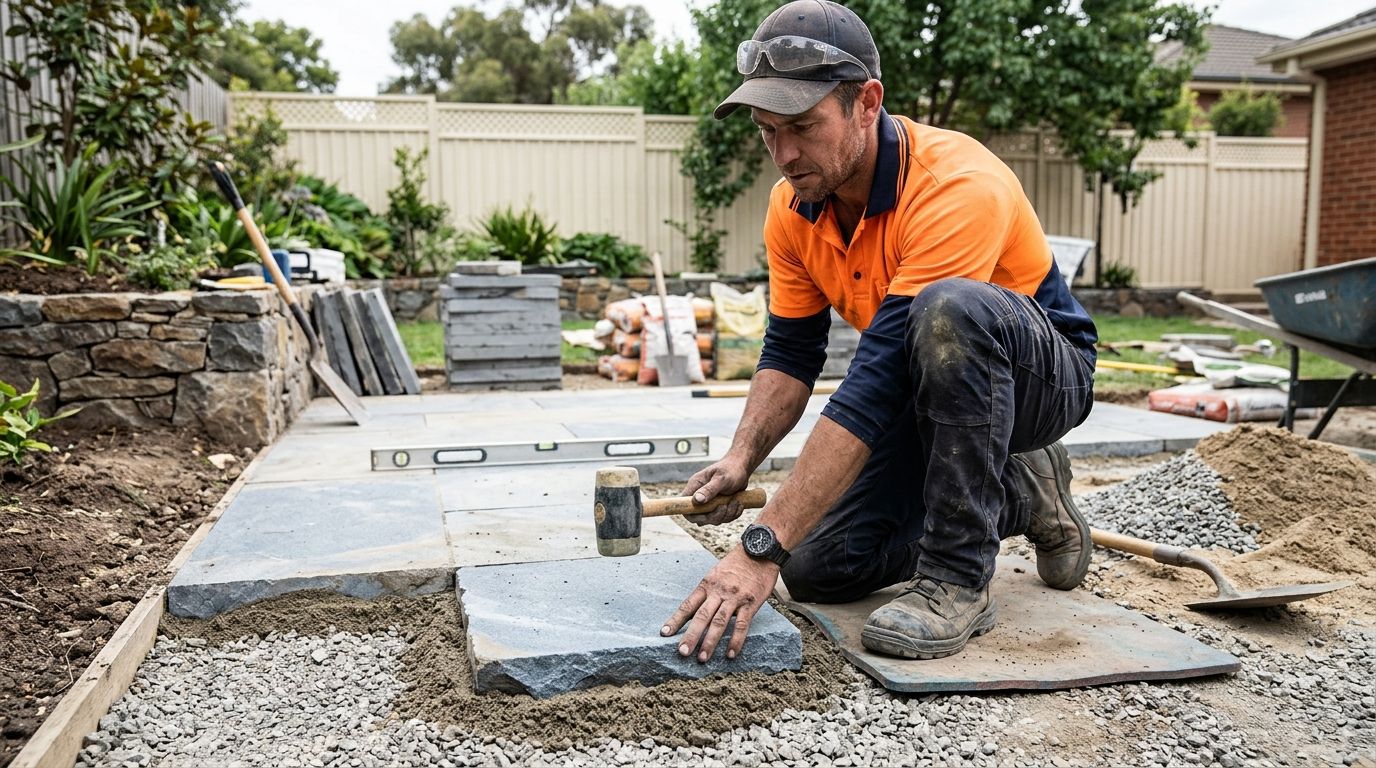
Victoria's Building and Plumbing Commission provides a specific registration class: Domestic Builder (limited to the construction of structural landscaping). This registration covers planning, designing, constructing, and installing external landscape features such as fences, pergolas, gazebos, retaining walls, decking, ornamental structures, and paving. This class exists because structural landscaping is a recognised category of domestic building work under Victorian regulations.
The BPC warns that using an unregistered tradesperson for work that requires registration carries risks for clients. The work may not be covered by domestic building insurance, and the BPC can investigate and prosecute unregistered practitioners who carry out regulated work.
There is also a separate plumbing boundary to consider. If your landscaping projects involve irrigation connected to a mains water supply, or drainage work, you may need a plumbing licence. In several Australian jurisdictions, urban irrigation connected to a water main is classified as licensed plumbing work. Whether this applies to your work in Victoria depends on the exact scope of the project, so you should verify current requirements directly with the Building and Plumbing Commission.
Consumer Affairs Victoria refers practitioners to the Building and Plumbing Commission for detailed guidance on landscaping scenarios, including when a major domestic building contract is required. If you are unsure whether your projects cross this threshold, the BPC is the appropriate authority to consult.
Consumer Affairs Victoria provides information on major domestic building contracts, detailing the $10,000 threshold and associated landscaping work.
The Building and Plumbing Commission outlines registration requirements for domestic building work and explains the $10,000 project threshold.
The Building and Plumbing Commission details the structural landscaping registration class and the specific external features it covers.
Why experienced landscapers may already qualify for registration
Many experienced landscapers do not realise that their years of hands-on work in structural projects can count directly toward a formal qualification. Recognition of Prior Learning (RPL) is a formal assessment pathway under the Australian Qualifications Framework. It assesses the skills you can already demonstrate on the job, rather than requiring you to study material you already understand through your career.
Relevant trade qualifications include the Certificate III in Landscape Construction (AHC30921) and the Certificate IV in Landscape Construction Management (AHC42021). Both are nationally recognised. The Certificate IV in Landscape Construction Management is a current qualification on the national training register. The register notes that candidates should check with their local regulatory authority, as state and territory licensing rules may apply.
Whether an RPL qualification satisfies Victorian registration standards depends on the specific class and current BPC requirements. You should verify these details directly with the Building and Plumbing Commission before applying. RPL provides a nationally recognised qualification, assessed by a registered training organisation (RTO), which can support your registration application. RPL it assists you in gathering and organizing your evidence, while the assessment is completed by the issuing RTO.
How the RPL process works for landscapers
RPL is a formal, rigorous assessment of your existing trade skills. For landscapers, this process involves documenting your project history, including the types of jobs you have finished, project scopes, and any structural elements. Your evidence portfolio can include project photographs, client references, site records, work orders, plans, drawings, and statutory declarations from supervisors or colleagues who can verify your work.
The assessment is carried out by a qualified assessor from the issuing RTO. The role of RPL it is to help you prepare your evidence portfolio, clarifying what documents are required and how to present them. If the assessor identifies any knowledge gaps during the process, you may need to complete targeted gap training. This is a standard part of the process and is provided at no extra cost, ensuring your resulting qualification is fully valid and respected.
The timeframe depends on the RTO and how quickly you can compile your evidence. Candidates with well-organised, complete documentation generally complete the assessment faster than those who need to source records from past projects. You should confirm expected timeframes with the RTO before starting.
Is RPL the right pathway for your career?
RPL is designed for experienced landscapers who have spent years doing structural or project-based landscaping in connection with residential building. It allows you to gain formal recognition without sitting through classrooms to learn skills you already use daily. It is not for everyone. If your work focuses entirely on garden maintenance and soft landscaping, registration may not be necessary for your business.
We focus on honest suitability from the start. RPL it prioritises directing you to the correct pathway over enrolling you in a program that does not fit your goals. This practical approach ensures you do not waste time or money. A Free Skills Review provides a direct conversation about your trade experience, the work you have completed, and whether RPL is a viable option for your specific situation.
You can review the specific licensing requirements in Victoria to see what the registration process involves for your business.
Read our detailed guide on the Victorian landscaper trade licence pathway and registration steps.
The choice to take the next step is yours. Your practical trade skills are valuable, and your experience deserves formal recognition. A Free Skills Review costs nothing, carries no obligation, and gives you a clear, honest answer about whether RPL fits your goals before you make any financial commitment to a program.
General information only, current at the date shown. Licensing rules change, so check the current requirements with the relevant regulator before you rely on them. RPL it Australia is a student support service, not a Registered Training Organisation; qualifications are assessed and issued by our partner RTOs.