You've tiled more roofs than most apprentices will in a career: here is the gate keeping you stuck
Experienced roof tilers subcontracting under another licence know the work. The Cert III is the gate keeping you back. Here is what RPL means for you.
By RPL it Australia8 min read
The pattern every experienced subcontracted tiler knows
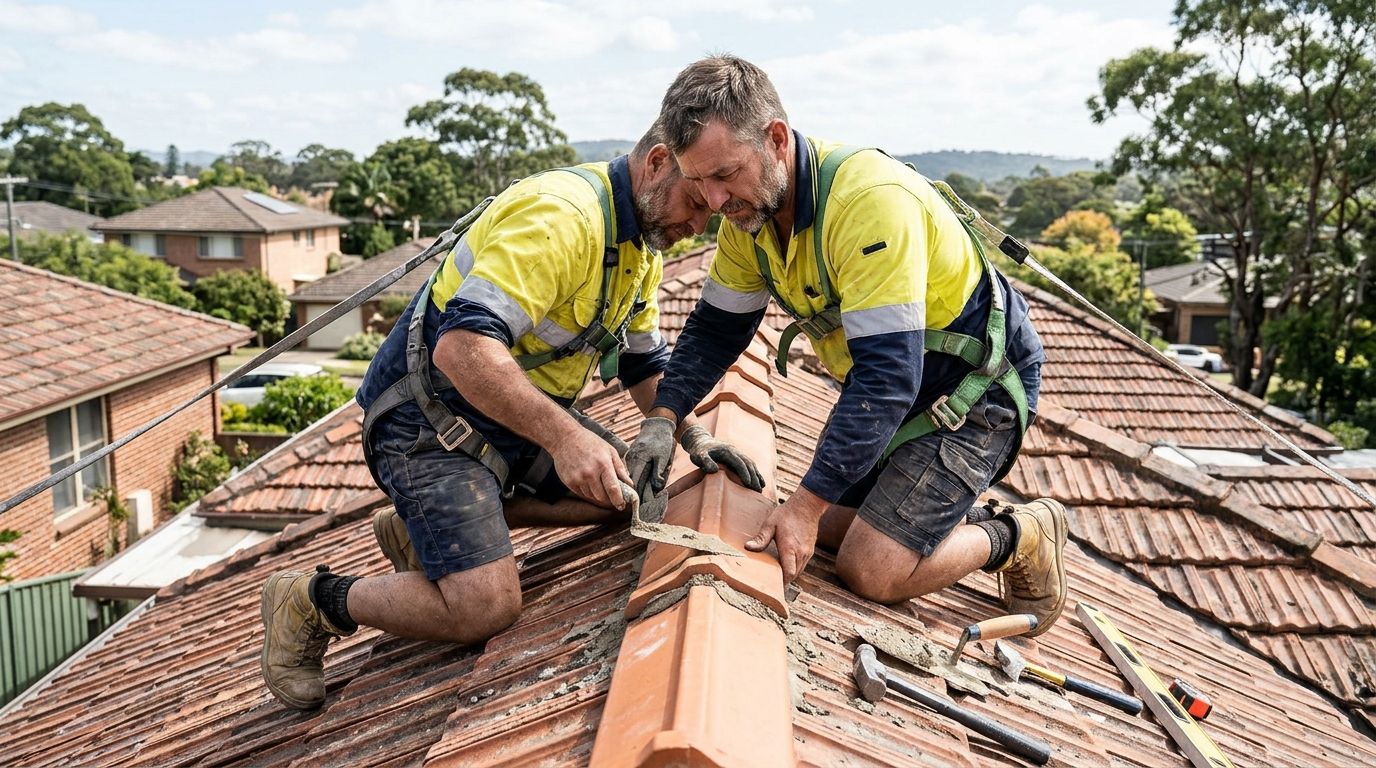
You show up. You read the pitch. You lay the battens, set the tiles, flash the valleys, and leave a roof that will outlast the bloke whose name is on the licence. You have done it hundreds, maybe thousands of times. The work is yours, but the qualification is not.
This is not a personal failure. It is a structural pattern that repeats across the roofing industry. Experienced tilers subcontract under licensed operators, do the skilled work, and remain invisible on the paperwork. The licence holder takes the contract, the tiler does the job, and the certificate stays with someone else.
If you have been in this position for a year, it is inconvenient. If you have been in it for five or ten years, it starts to feel like a ceiling with no clear way through. The work has not changed and your skill has not changed, but the gate, which is the formal qualification that would let you operate independently, remains closed.
That gate has a name: it is the Certificate III in Roof Tiling (CPC30820). For experienced tilers who have never held it, Recognition of Prior Learning may be the pathway that was always there, though perhaps never explained to you.
Why the gate exists (and why it has nothing to do with your skill)
The Certificate III in Roof Tiling is not a test of whether you can tile a roof. You have already proven that repeatedly on real roofs and in real conditions. The qualification is a formal recognition mechanism. It exists because licensing bodies, insurers, and principal contractors require documented evidence of competency rather than just demonstrated competency.
Licensing requirements for roof tiling vary across Australian states and territories. In several states, performing roof tiling work above certain thresholds, or operating as a contractor, requires a formal trade licence or registration, and the Certificate III in Roof Tiling (CPC30820) is the qualification underpinning that licence. These requirements differ by jurisdiction. We recommend checking directly with the relevant authority in your state, whether that is the QBCC in Queensland, NSW Fair Trading, Consumer and Business Services in South Australia, or the equivalent state body.
The point is that the gate is bureaucratic, not technical. The licensing system requires a specific form of evidence. Your experience is real, but it currently exists in the wrong format for formal recognition until you take steps to change that.
The subcontracting bind: working under someone else's ticket
Here is how the bind works. A licensed roofing contractor holds the ticket. They take on jobs, sign the contracts, and carry the public liability insurance. You, the experienced tiler, do the work and might even run the crew. However, you cannot quote directly to a builder, you cannot take on your own residential jobs above the threshold, and you cannot operate as an independent contractor without someone else's name on the paperwork.
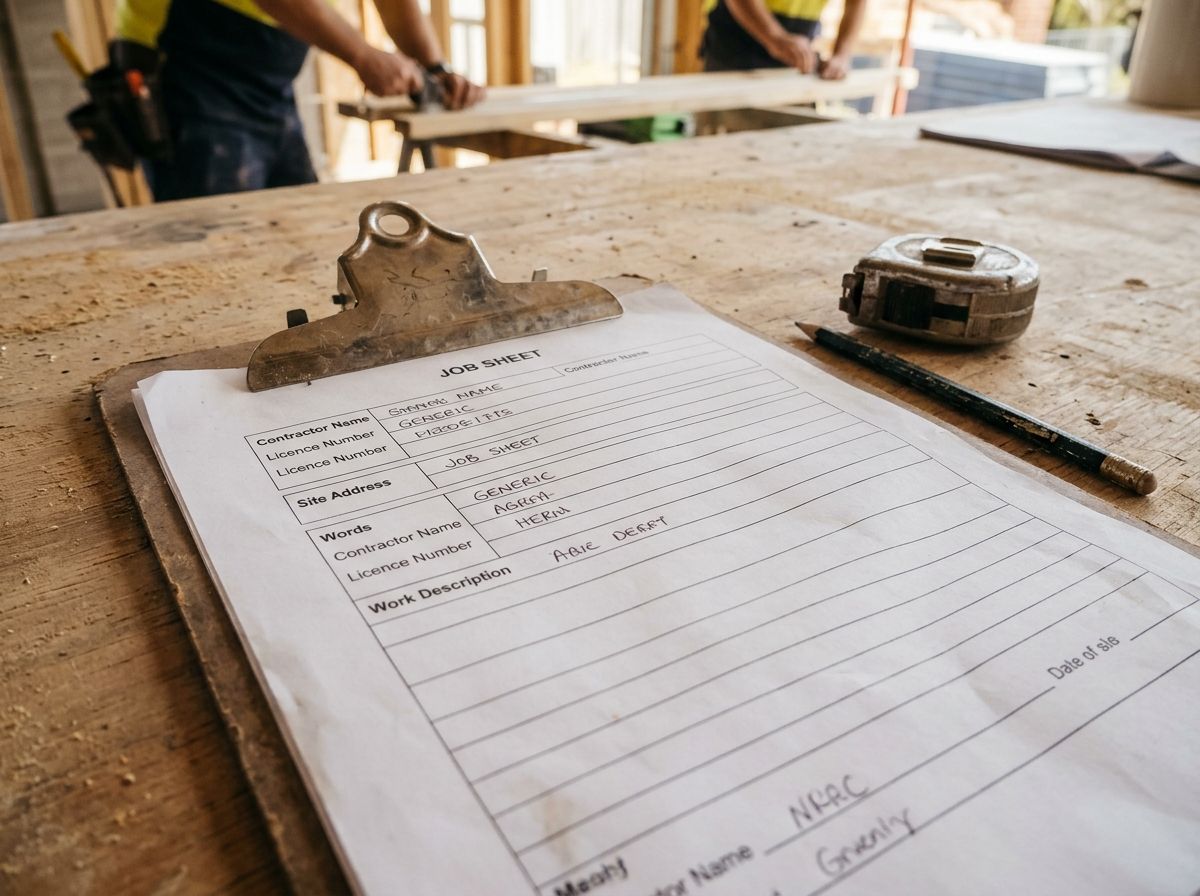
Every year you stay in this arrangement, the gap between what you can do and what you are formally permitted to do widens. You are not building towards independence; you are building someone else's business.
The bind is not about competence. It never was. It is about whose name is on the licence.
Working without the required licence or registration can also expose you to regulatory risk and insurance complications. While the specifics vary by state, the general principle is consistent: unlicensed work creates vulnerability, both for you and for the clients whose roofs you are working on. That is not a reason to panic, but it is a strong reason to resolve the situation.
The subcontracting arrangement is common in the roofing industry, and it is not inherently wrong. However, it was never meant to be permanent. The pathway out has always existed, but most experienced tilers simply have not been pointed towards it.
What the Certificate III in Roof Tiling (CPC30820) actually covers
The Certificate III in Roof Tiling (CPC30820) is a nationally recognised qualification on the Australian Qualifications Framework. It covers the competencies required to perform roof tiling work to a professional standard, which are the same competencies an experienced tiler demonstrates every day on the job.
The qualification assesses whether you can plan and prepare for roof tiling work, select and use appropriate materials and tools, install roof tiles to specification, apply weatherproofing and flashing, work safely at heights, and meet the relevant Australian standards for the work. These are not abstract concepts; they are the practical skills that experienced tilers apply on every job.
For someone who has been tiling for years, the qualification is not a description of what you need to learn. It is a description of what you already do. The gap, if there is one, is not in your capability, but rather in the formal documentation of that capability.
We recommend verifying the current qualification details, including any recent updates to units of competency, directly on training.gov.au, which is the National Register of VET. This is the authoritative source for qualification information in Australia.
Recognition of Prior Learning: what it means for experienced tilers
Recognition of Prior Learning, or RPL, is a formal assessment pathway within the Australian VET system. It allows a qualified assessor from a Registered Training Organisation (RTO) to evaluate your existing competency against the requirements of a qualification, rather than requiring you to re-learn what you already know.
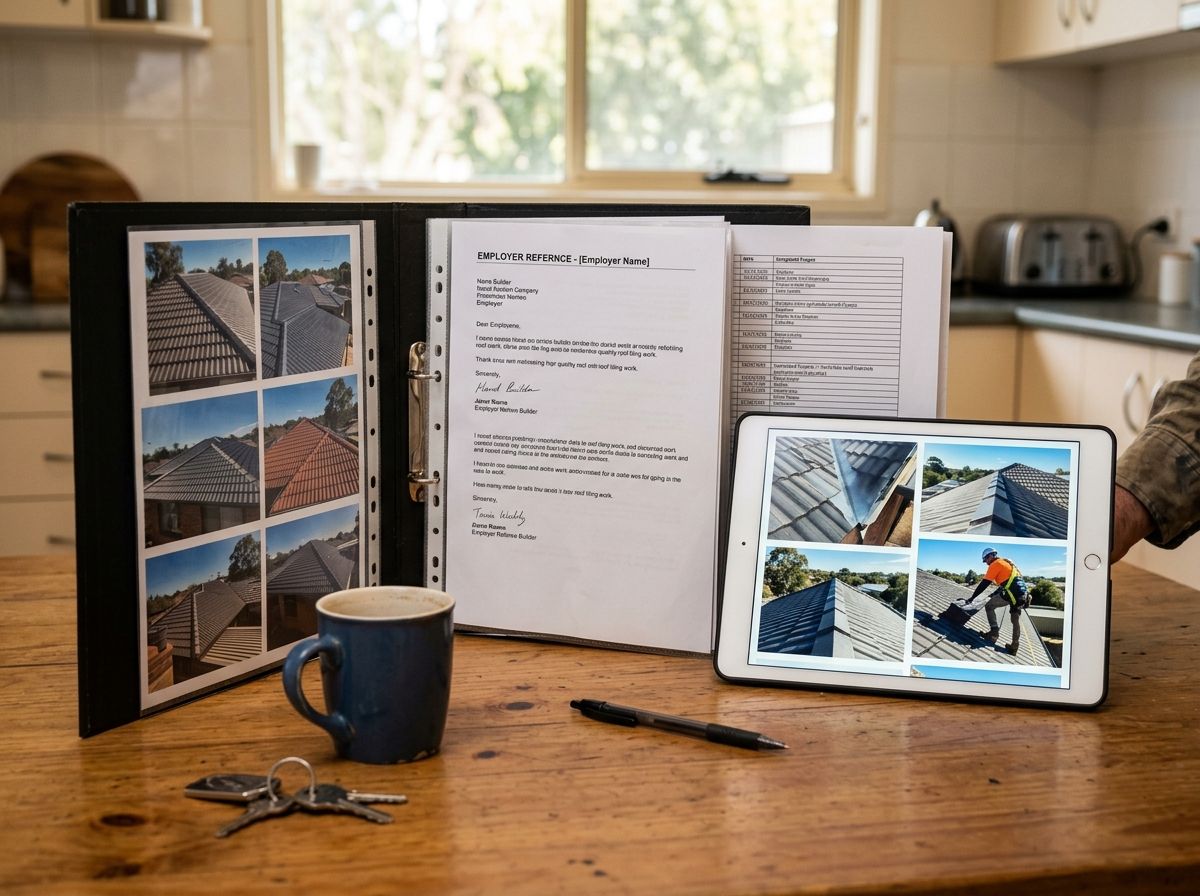
For an experienced roof tiler, RPL means presenting evidence of what you already do and having that evidence assessed against the units of competency in the Certificate III in Roof Tiling (CPC30820). If the evidence demonstrates that you meet the standard, the qualification can be awarded without classroom study.
The evidence that experienced tradespeople typically present in construction RPL assessments includes items like site photographs showing completed work, employment records and payslips demonstrating time in the trade, referee statements from supervisors or contractors who can speak to your competency, and in some cases, a practical observation or structured conversation with the assessor. The specific evidence requirements will depend on the RTO conducting the assessment.
RPL is a rigorous assessment process. It is not a shortcut, and it does not bypass the assessment standard. The assessor's job is to determine whether your experience meets the competency requirements. That determination is theirs to make, not ours to guarantee. If gaps are identified during the assessment, gap training is typically provided to address them.
What RPL does is give your experience a fair hearing. It means that the years you have spent on roofs count as evidence, provided they can be documented and assessed properly.
The tilers who have already walked through the gate
The subcontracting bind is not unique to roof tiling. The same pattern plays out across the construction trades with concreters, carpenters, mechanics, and plasterers who have spent years doing the work under someone else's licence, then used RPL to formalise their qualification and move to independent operation.
The pathway is well-worn. Experienced tradespeople across Australia have used Recognition of Prior Learning to convert years of demonstrated competency into formal qualifications without returning to full-time study, without repeating training they have already completed through experience, and without starting over.
The experience you have built on the roof is real. The question is whether that experience, when presented, meets the assessment standard. That is what the RPL process is designed to determine.
If you have been working under someone else's trade licence and want to understand the broader pattern, this article on working under someone else's trade licence in Queensland covers the same bind from a different trade angle.
The same pattern plays out across the trades where concreters, mechanics, and others have navigated it through RPL.
Is RPL the right pathway for you?
RPL suits experienced tilers who have a substantial, demonstrable work history in the trade. If you have been tiling for several years across different roof types, conditions, and job scales, and you can document that experience, RPL is worth exploring seriously.
RPL may be less suitable if your experience is very narrow, very recent, or difficult to document. The assessment requires evidence, and evidence requires records. If your work history is largely informal or undocumented, that is worth discussing honestly before you commit to anything.
The practical starting point is a Free Skills Review. It is designed to give you a real answer about whether your experience is likely to support an RPL application before you make any commitment. It costs nothing and commits you to nothing. If RPL is the right pathway, you will know. If it is not, you will know that too.
The next step: finding out where you stand
You have the experience. The question is whether that experience, properly presented, meets the assessment standard for the Certificate III in Roof Tiling (CPC30820). That is not a question we can answer for you; it is a question the RPL assessment process is designed to answer.
What we can do is help you find out where you stand before you commit to anything. The Free Skills Review is that first step. It is a no-obligation conversation about your background, your work history, and whether RPL is a realistic pathway for your situation.
Your skills speak for themselves. The question is whether they have been formally assessed and recognized yet.
The decision is yours. If you want to know where you stand, start with a Free Skills Review. It costs nothing and commits you to nothing.
You can also explore the Certificate III in Roof Tiling (CPC30820) product page for more details on the qualification and the RPL pathway.
General information only, current at the date shown. Licensing rules change, so check the current requirements with the relevant regulator before you rely on them. RPL it Australia is a student support service, not a Registered Training Organisation; qualifications are assessed and issued by our partner RTOs.