Your joinery work has been speaking for itself for years: time to put it on paper
Blocked from tenders without CPC31920? Use your years of experience as evidence. Learn how to get your Certificate III in Joinery through RPL.
By RPL it Australia8 min read
The joinery trade doesn't ask for certificates until it does
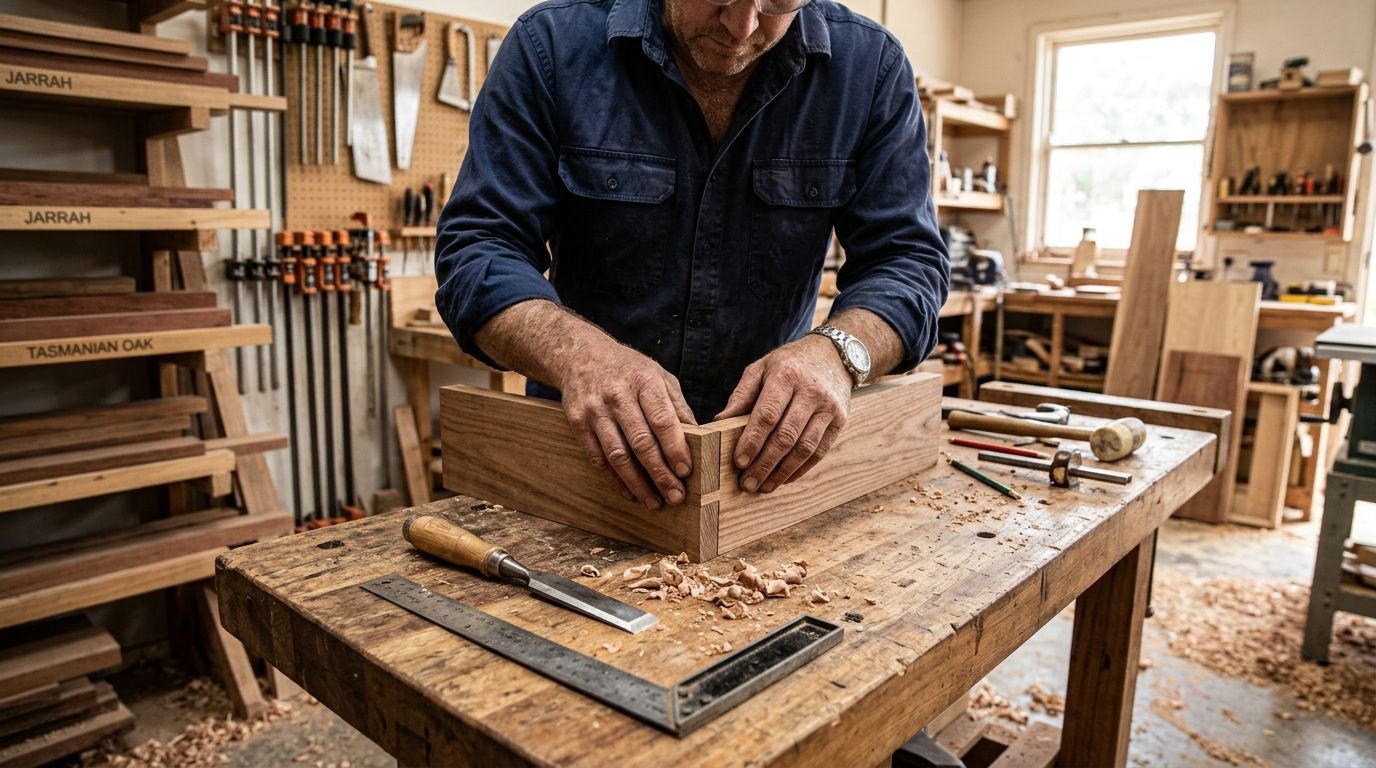
You have built kitchens, fitted out commercial shopfronts, and installed detailed timber staircases. Your clients refer you and builders call you back. Your joinery work speaks for itself.
Then a commercial tender opportunity lands. Or perhaps a larger builder wants to bring you on directly as a subcontractor. Or a licensing requirement surfaces that nobody mentioned when you started out. Suddenly, the question is not about your craft or skill. It is about a piece of paper you have never needed to hold before.
This is the situation that experienced joiners across Australia are currently facing. It is not because your skills are in question. It is because the formal qualification system, which was invisible for years, has become unavoidable. The Certificate III in Joinery (CPC31920) is the credential that stands between where you are now and where you want to go.
The frustrating part is that the daily work you have already completed is exactly what the qualification is designed to assess. The gap is not in your hands-on skill. The gap is simply in the official paperwork.
What the Certificate III in Joinery (CPC31920) actually covers
The Certificate III in Joinery, qualification code CPC31920, is the nationally recognised qualification for joinery tradespeople in Australia. It covers all the core skills of the trade: setting out and planning joinery work, cutting and shaping timber and manufactured boards, constructing and installing joinery components, applying finishing processes, and working safely on construction sites.
If you have spent years building and fitting kitchens, wardrobes, doors, windows, staircases, shopfitting, or bespoke furniture, you will recognise your own work in that list. The qualification does not describe a different trade. It describes yours.
The units of competency that make up CPC31920 are drawn from the Construction, Plumbing and Services Training Package. They cover the technical skills of joinery manufacture and installation, along with the daily workplace practices like reading plans, managing materials, and working to precise tolerances. Before publishing, verify the current unit list at training.gov.au to confirm the version in effect.
The opportunities that open when you hold CPC31920
The Certificate III in Joinery is not an abstract credential. It is a practical trade qualification. There are specific commercial opportunities that are currently closed to experienced joiners who do not hold it.
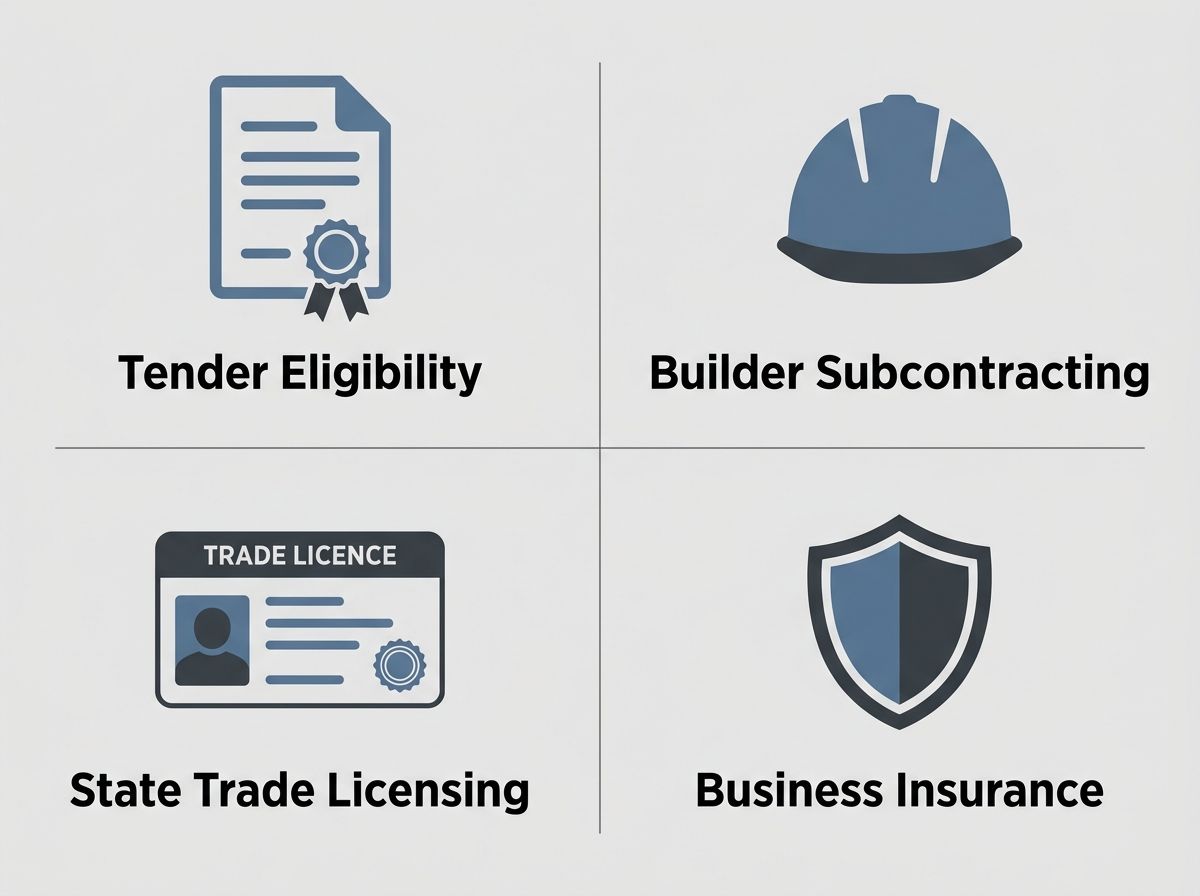
Tender eligibility is the most immediate business benefit. Government and commercial construction projects frequently require that all active tradespeople hold formal qualifications or operate under a licensed contractor. Without CPC31920, or a trade licence that requires it, your quote may not make it past the first assessment round, regardless of your track record.
Employment with larger commercial builders and head contractors is another factor. Many of these companies have strict internal policies or insurance requirements that specify formally qualified tradespeople. An experienced joiner without the certificate may be passed over for roles they are entirely capable of performing.
Trade licensing is another practical area, and the requirements vary by state. In some Australian states, joinery work above certain contract values requires a trade licence, and holding CPC31920 is typically a prerequisite for that licence application. The classification of joinery work, whether it falls under a joinery-specific licence or under carpentry, differs across jurisdictions. The relevant licensing bodies include QBCC in Queensland, NSW Fair Trading, the Victorian Building Authority, Consumer and Business Services in South Australia, and equivalent bodies in other states and territories. Check directly with your state licensing body for the requirements that apply to your situation, as these can change and vary significantly.
Insurance eligibility is a less obvious but highly real factor. Some public liability and professional indemnity insurers factor formal qualifications into their assessment of tradespeople. Holding CPC31920 can affect the insurance terms and rates available to you.
Why experienced joiners are exactly who RPL was designed for
Recognition of Prior Learning (RPL) is the formal assessment pathway that allows experienced tradespeople to have their existing skills and knowledge assessed against the units of competency in a qualification. Instead of studying what you already know, RPL asks you to demonstrate that you can already do the work.
RPL is not a workaround or a shortcut. It is a rigorous, nationally recognised assessment process that sits within the Australian Qualifications Framework. The assessment is conducted by a qualified assessor from a Registered Training Organisation (RTO). The qualification, if awarded, is the exact same nationally recognised credential as one earned through a traditional apprenticeship. The difference is in how competency is demonstrated: through evidence of existing skill, rather than through classroom hours.
For experienced joiners, this is a highly practical option. If you have spent years doing joinery work, including setting out, cutting, fitting, finishing, and working to plans, you have already developed the skills that CPC31920 assesses. The question RPL asks is not whether you can learn this. It is whether you can show that you already know it.
For most experienced joiners, the answer is yes. The work you have done is the evidence. The RPL process is simply how that evidence gets formally assessed and recognised.
It is important to be clear: RPL it guides candidates through the recognition process. The assessment itself is conducted by a qualified assessor from the delivering RTO. We do not award qualifications ourselves; RTOs do. Our role is to help you prepare and present your evidence so that the assessment can proceed on the strongest possible footing.
What joinery RPL evidence actually looks like
The most common reason experienced joiners hesitate to start RPL is uncertainty about what evidence actually means. It sounds formal, as if you need to prepare everything from scratch.
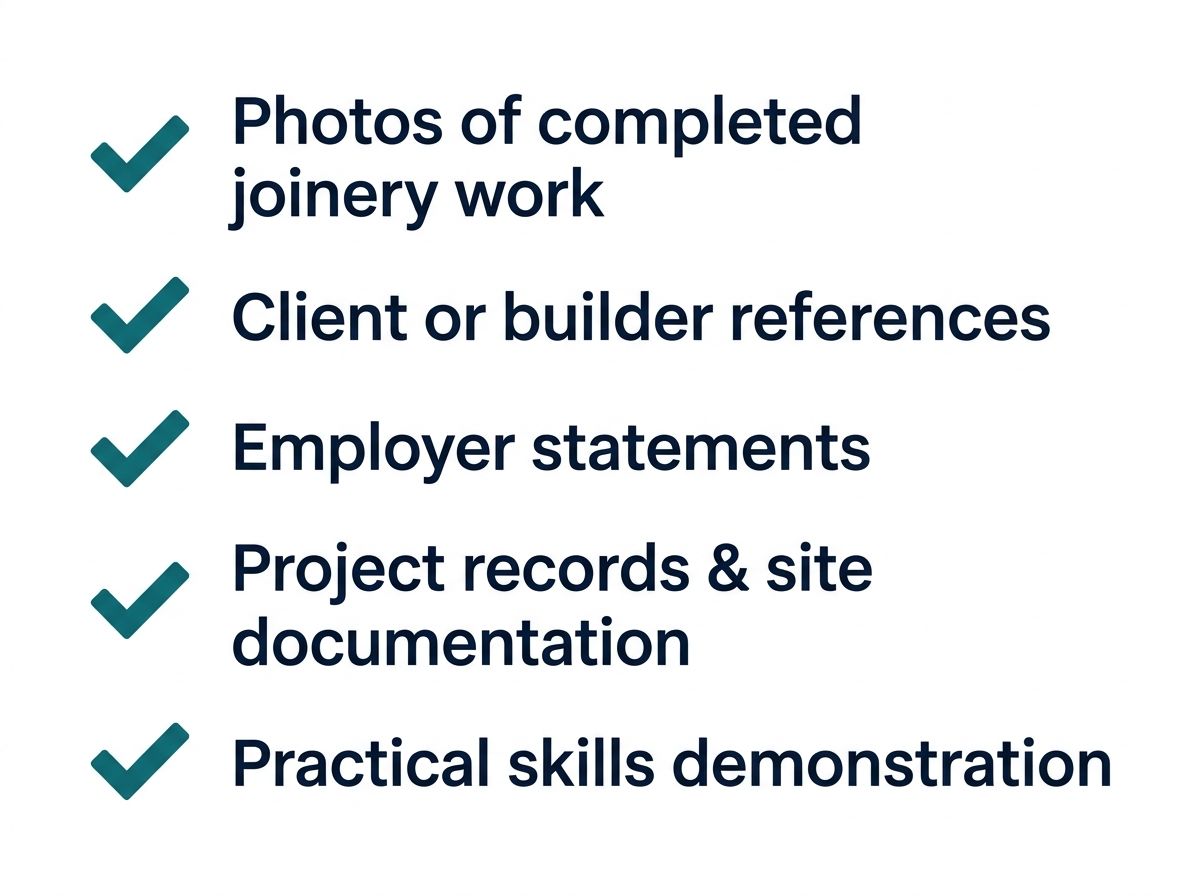
In practice, evidence for a joinery RPL assessment is built from the work you have already done. The specific requirements vary by RTO, but evidence typically includes photographs of completed joinery work like kitchens, shopfitting, staircases, doors, and windows, along with documentation of the projects. This includes client details, the scope of work, and your role in the job. Reference letters from employers, builders, or clients who can verify your work are commonly used. Records of materials ordered, plans read, or measurements taken can also form part of the evidence portfolio.
Some RTOs require a practical skills demonstration as part of the assessment. This is an opportunity to show your competency directly, rather than solely through portfolio evidence. This varies by RTO and by the specific units being assessed.
The evidence-gathering process can feel overwhelming at first. It becomes manageable when you approach it systematically, project by project and unit by unit. RPL it guides candidates through this process so you do not have to navigate it alone.
Regarding timeframes, how long the RPL process takes depends on how quickly your evidence can be assembled and the RTO's assessment schedule. We do not publish guaranteed timeframes because the process is genuinely individual. What we can say is that for candidates with strong, well-documented evidence, the process moves much more efficiently than for those starting from scratch.
RPL is not for everyone in joinery
RPL requires demonstrated competency across the units of CPC31920. If your joinery experience is broad, covering manufacture, installation, finishing, and site work across different projects, you will likely have strong evidence for most of the required units.
If your experience is narrow, such as working in only one highly specialised area of joinery, or working primarily as a labourer rather than as a tradesperson making and installing joinery, there may be units where your evidence is thin. This is not a disqualification. It is simply a gap that can be addressed through targeted gap training, which is provided at no additional cost as part of the RPL pathway.
The direct answer to whether RPL is right for you is that it depends on your specific experience. That is exactly what the Free Skills Review is for. It is a straightforward, no-obligation conversation that looks at your background against the requirements of CPC31920 and tells you where you stand before you commit to anything.
Your work has already done the hard part
The Certificate III in Joinery is not a new course you have to study. For experienced joiners, it is the formal recognition of skills you already use every day.
Your skills speak for themselves. The RPL process helps them be recognised formally and officially, opening up business and career options that experience alone cannot.
Your experience is your evidence. That is the basis of Recognition of Prior Learning and the core of what we do. We help you turn your years of work into a formal qualification.
The decision is yours. If you want to find out whether your years of joinery work can be formally recognised through the Certificate III in Joinery (CPC31920), the Free Skills Review is the best place to start. It is free and there is no commitment. It is simply the first step toward getting your experience recognised.
Learn more about the Certificate III in Joinery RPL pathway.
General information only, current at the date shown. Licensing rules change, so check the current requirements with the relevant regulator before you rely on them. RPL it Australia is a student support service, not a Registered Training Organisation; qualifications are assessed and issued by our partner RTOs.