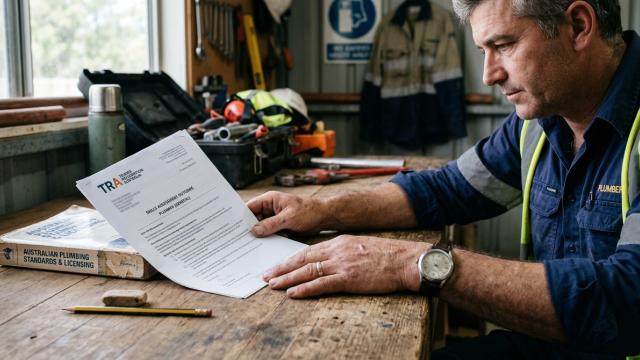
Site supervisor qualifications in the ACT: What the regulator actually wants to see
The ACT Construction Supervisor licence is an evidence assessment. Here is what the regulator looks for when reviewing your qualification and experience.
By RPL it Australia9 min read
The ACT Construction Supervisor licence is an evidence assessment, not a form
Most applicants approach the Construction Supervisor licence as a paperwork exercise. The regulator treats it as a competency assessment. That distinction is important, and it changes how you should prepare your application.
Construction licensing in the ACT is administered under territory legislation, with Access Canberra acting as the licensing authority for construction occupations. This licence exists to protect the public by ensuring that individuals who supervise building work hold both a formal qualification and practical experience to do so safely and competently. The regulator does not just check whether you filled in the form correctly; they assess whether your evidence actually proves your case.
If you have been supervising construction work in the ACT for years, you already have the practical skills. This guide explains how to present your experience so the regulator can assess it easily, and outlines the common gaps to address before submission.
What licence class covers site supervision in the ACT
The ACT construction licensing framework covers several occupations and licence classes. For site supervision, the relevant category is the Construction Supervisor licence. This is a specific licence class that authorises the holder to supervise construction work on building projects across the territory.
It is essential to confirm with Access Canberra directly which licence class applies to your specific role and the type of construction work you supervise. Requirements can differ depending on whether your work is primarily residential, commercial, or civil. Applying for the wrong class, or applying under a class that does not match your actual supervisory responsibilities, is a straightforward way to delay your application.
Before compiling your evidence portfolio, confirm the exact licence class you need. The Access Canberra website is the official source for active licence classes and their scope of work. Avoid relying on secondhand descriptions of what the licence covers; review the current guidelines directly.
The qualification requirements: What the ACT regulator accepts
A formal qualification is a baseline requirement for the Construction Supervisor licence in the ACT. This qualification must be at an appropriate level—typically a Certificate IV in Building and Construction or its equivalent—and must be issued by a Registered Training Organisation (RTO) operating under the Australian Qualifications Framework (AQF).
The specific qualification code accepted by the ACT regulator should be confirmed directly with Access Canberra before you submit your application. Qualification codes are updated as training packages are revised, and the regulator's list reflects current national standards. Submitting a qualification under a superseded code, or one that does not map to the required competency units, can result in your application being returned.
One point worth clarifying is that a qualification obtained through Recognition of Prior Learning (RPL) carries the exact same national recognition as one obtained through traditional classroom study. The AQF does not distinguish between assessment pathways. If your qualification was issued by a registered RTO via RPL, it is a nationally recognised qualification and is accepted by licensing authorities on the same basis as any other AQF qualification. The licence application process does not ask how you obtained your qualification; it asks whether you hold one.
Work experience evidence: What the regulator actually reviews
This is where most applications succeed or fail. The qualification proves you have the formal technical knowledge, while your work experience shows you have done the job. These two elements are assessed separately, meaning a valid qualification cannot make up for a weak work experience statement.
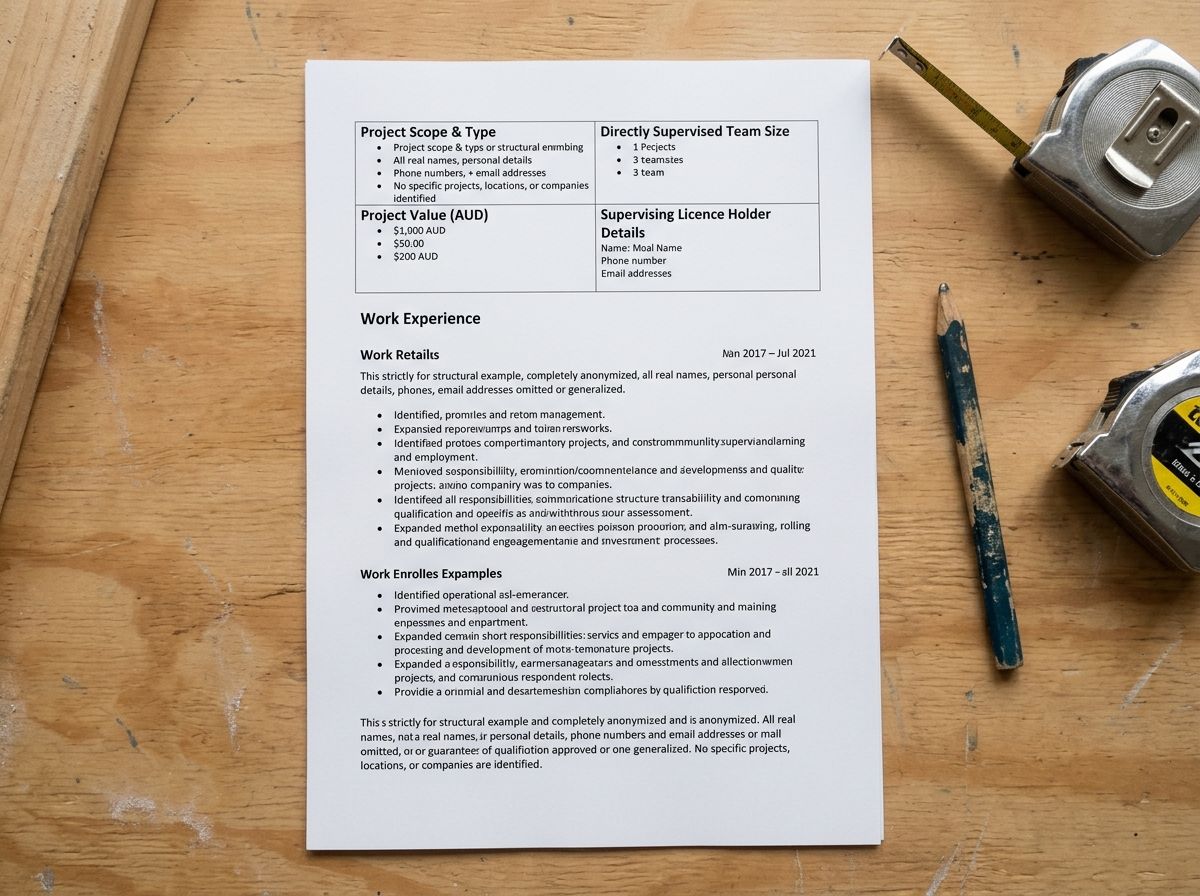
The regulator does not read your experience statement just to see if you worked in construction. They look for answers to specific operational questions. What projects did you supervise? How many workers were under your direct control? What construction methods were used? What was the financial scale of the projects? How long did your supervisory role last, and is that experience recent?
Vague experience descriptions are the most common reason applications are delayed or returned. Consider the contrast between these two ways of describing the same role:
- Weak: 'Supervised workers on residential and commercial builds for about five years.'
- Strong: 'Directly supervised a team of 6–10 tradespeople and subcontractors on residential construction projects valued between $800,000 and $2.4 million over five consecutive years. Responsible for daily site safety, quality control, and trade coordination, reporting to a licensed builder.'
The second version provides clear evidence for the regulator to assess. The first version gives them too little detail. Every claim in your experience statement must be specific enough that a regulator could easily verify it if required.
When it comes to documentation, Australian construction licensing frameworks typically accept a combination of employer references, statutory declarations from licensed builders or direct supervisors, project records, and employment records such as payslips or contracts. The ACT regulator's specific documentation requirements should be confirmed directly with Access Canberra, as the accepted formats and minimum standards are set out in their application guidelines.
If your supervisory experience was gained interstate, check with Access Canberra to ensure it is accepted for your ACT application. Most Australian jurisdictions recognise interstate experience, but the documentation and evidence requirements can vary.
Referee and employer declarations: What makes them credible
Not all referee statements carry the same weight. A statutory declaration from a licensed builder who directly supervised your work, detailing your role, tasks, projects, and employment duration, is far stronger than a brief letter of support or a general character reference.
This distinction matters because the regulator uses your referee declarations to corroborate your experience statement. If your experience statement says you supervised a team of eight on a $2 million residential development, your referee declaration should confirm those details. If the declaration is vague or does not address the specific claims in your experience statement, it weakens your application instead of strengthening it.
A general reference simply confirms you worked at a company. A statutory declaration from a licensed builder details exactly what you did, your level of responsibility, and how long you did it. These documents hold different evidentiary weight.
When preparing your declarations, confirm with Access Canberra whether the referee must hold a current licence, and if there is a minimum number of declarations required. The format and content requirements for statutory declarations in ACT licensing applications are set out in the application guidelines. Do not assume a standard employment reference will meet the requirement; check the specific format before you ask your referees to sign.
Fit and proper person requirements: The check many applicants overlook
Fit and proper person assessments are standard across Australian construction licensing systems, including the ACT. This part of the review is separate from your qualification and work experience; it is a character and background check.
Generally speaking, fit and proper person requirements in construction licensing cover criminal history, previous licensing history across all Australian jurisdictions, and in some cases financial probity. If you have had a licence refused, suspended, or cancelled in any state or territory, you will typically be required to disclose that history. If you have relevant criminal convictions, you must disclose those as well.
For most experienced supervisors, this part of the process is straightforward. The key is to prepare for it in advance. Confirm the exact criteria with Access Canberra before applying, and ensure your disclosure is complete. Providing incomplete information is often treated as a more serious issue than the background details you failed to declare.
Insurance requirements before your licence is granted
Insurance is a mandatory requirement for the Construction Supervisor licence in the ACT, not an afterthought. Applicants who delay setting up their insurance until after approval often face avoidable delays at the final stage of the licensing process.
Construction licensing in Australia typically requires evidence of public liability insurance as a minimum, with some licence classes also requiring professional indemnity coverage. The specific insurance types and minimum coverage amounts required for the ACT Construction Supervisor licence must be confirmed directly with Access Canberra. The timing of the insurance requirement—whether it must be in place before submission or before the licence is issued—should also be confirmed.
To find a policy that meets these requirements, consult an insurance broker who specialises in construction. The regulator sets the rules, and a broker helps you find a policy that matches them.
How RPL fits into the ACT licensing application
If you earned your qualification through RPL instead of classroom study, the application process remains the same. A qualification issued by an RTO through RPL is a nationally recognised AQF credential. The licensing authority does not evaluate your study path; they check whether you hold a valid qualification that meets the standard.
This is worth stating clearly because it is a common source of uncertainty. Some applicants assume that an RPL-issued qualification is treated differently by the regulator, or that they will need to provide additional evidence of how the qualification was assessed. That is not the case. The qualification certificate issued by the RTO is the document the regulator needs. The assessment pathway that produced it is not part of the licensing application.
If you do not hold the required qualification and want to pursue RPL, an RTO will assess your existing skills against the unit requirements of the qualification. If your experience covers these competencies, the RTO issues the certificate. You then use that qualification in your licence application just like any other.
Confirm with Access Canberra whether they have rules regarding the qualification date, such as whether it must have been issued within a specific timeframe. If you want to find out if your work history supports an RPL assessment, starting with a free skills review is a practical first step.
Building a stronger application: What separates approvals from returns
Unsuccessful applications share common patterns. Identifying these details before you submit can make the difference between a direct approval and months of back-and-forth correspondence with the regulator.
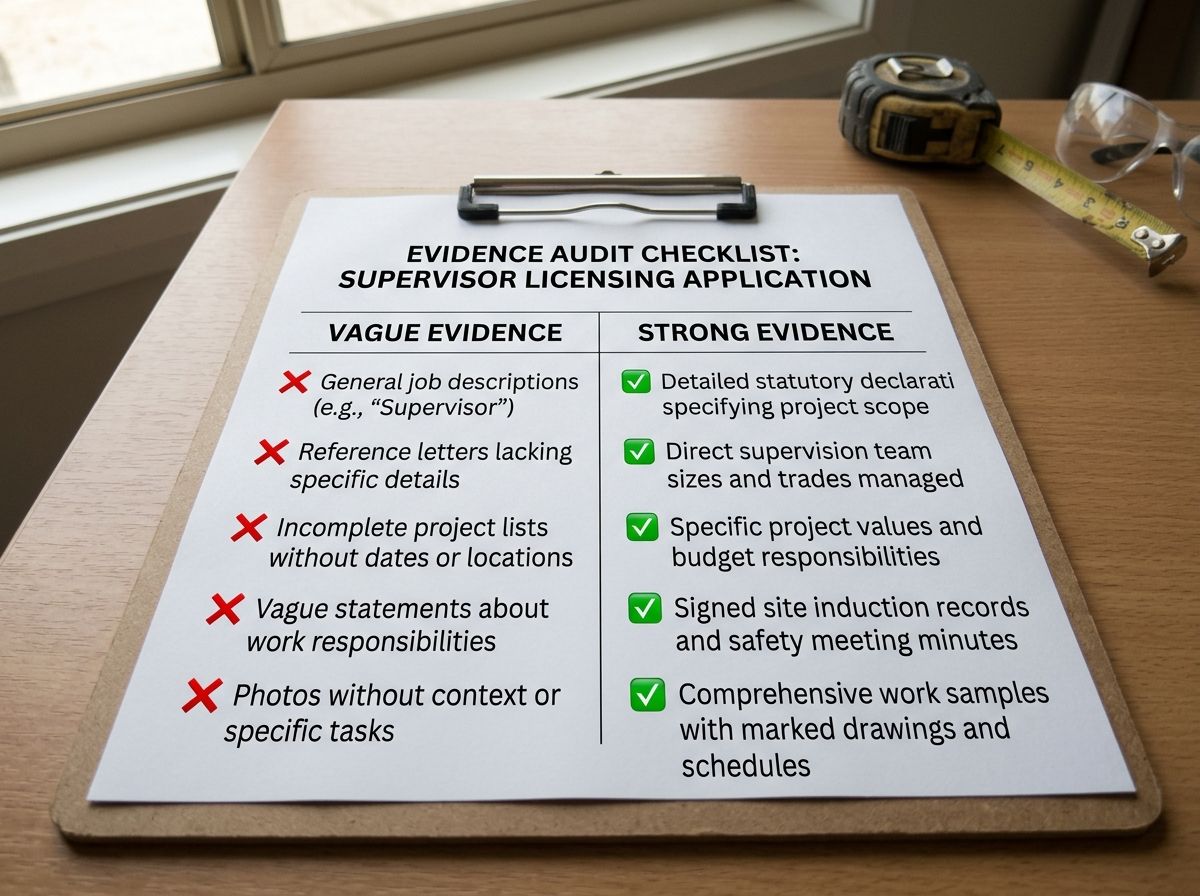
The most common issues in supervisor licence applications are:
- Vague experience statements detailing job titles instead of tasks, project scale, team size, or duration.
- Referee declarations that are too general and fail to back up the specific claims in your experience statement.
- Qualifications that do not match the required code, come from an unaccredited provider, or lack a transcript showing completed units.
- Missing or incorrect insurance proof, including coverage below the required minimums or policies arranged after submitting.
- Incomplete background disclosures, such as failing to declare your licensing history in other states.
- Submitting an application without confirming the right licence class for your specific work and role.
The underlying issue across these points is simple: applicants often know their own trade history but fail to translate it into the objective evidence the regulator requires. The regulator cannot approve an application they cannot verify.
Before submitting, check your application package against these common mistakes. If your experience statement lacks project names, team sizes, project values, or durations, revise it. If your referee declarations do not match your experience claims, update them. If you are unsure if your qualification code is accepted, confirm it with Access Canberra.
You have the experience. Your application simply makes that work visible to the assessment team. A successful submission does not require more years on site; it requires your existing experience to be presented with the clarity the licensing system demands.
General information only, current at the date shown. Licensing rules change, so check the current requirements with the relevant regulator before you rely on them. RPL it Australia is a student support service, not a Registered Training Organisation; qualifications are assessed and issued by our partner RTOs.