The Site Induction That Stops You Dead: Why Plumbing Experience Isn't Enough Anymore
Stopped because you do not hold a Cert 4 plumbing ticket? Here is why it happens and how RPL helps you get recognised for what you already know.
By RPL it Australia7 min read

The Moment Everything Stops
You have been doing this work for years. Drainage systems, water supply, gas fitting—you have handled it all. You know how to read a site, manage a crew, and solve problems that less experienced tradespeople would not even recognise. Then someone asks for your Certificate IV plumbing ticket. And you do not have it. The work stops. The conversation stops. And you are left standing there, knowing exactly what needs to be done, but unable to legally do it.
This is not a skills problem. It is a credentials problem. And for experienced plumbers across Australia, it is becoming a more frequent and more costly one.
Why Basic Plumbing Experience Has a Ceiling
The Australian plumbing qualification framework has a clear threshold. The Certificate III in Plumbing (CPC30220) covers trade-level work, which is the foundation of the profession. The Certificate IV in Plumbing and Services (CPC40920) is the qualification that reflects advanced technical skills, responsibility for project design, and the capacity to supervise others.
According to the national qualification register, CPC40920 is designed for roles including plumbing contractor, plumbing supervisor, and hydraulic designer. It is a licensed occupation in some jurisdictions, and licensing requirements vary by state and territory, meaning the specific threshold differs depending on where you work.
What does not vary is the underlying rule: experience alone, no matter how deep, does not cross this threshold in the eyes of regulators, insurers, and principal contractors. The system does not assess what you can do. It assesses whether you hold the credential that formally says you can do it. That is the ceiling.
Three Moments When Certificate IV Becomes Non-Negotiable
There are three situations where the credential gap stops being theoretical and becomes a work-stopping problem.
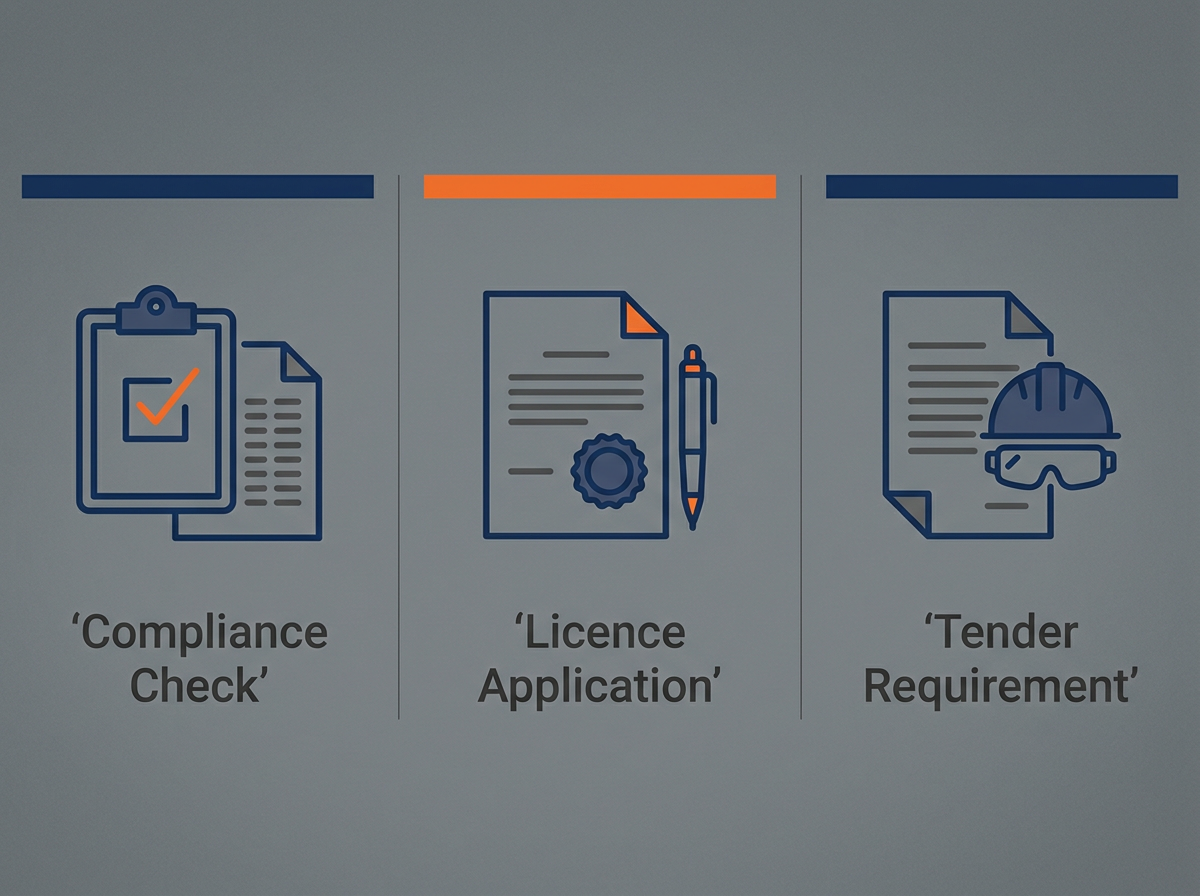
- A compliance check or audit on a commercial or civil project. The principal contractor or regulator reviews the qualifications of anyone performing supervisory or specialised plumbing work. Your experience is not in question. Your ticket is. Without the Certificate IV, you cannot legally perform or supervise that work—regardless of how long you have been doing it.
- A licence application. In many Australian states and territories, a plumbing contractor licence or qualified supervisor certificate requires evidence of the appropriate qualification. The Certificate IV in Plumbing and Services is commonly associated with these advanced licensing pathways. Requirements vary by jurisdiction—always confirm with your state or territory licensing authority.
- A tender or insurance requirement. Clients and insurers increasingly specify qualification evidence as a condition of contract or coverage. If your Certificate IV is missing from the documentation, the tender fails or the policy is at risk.
Each of these is a different version of the same wall. The trigger is different. The consequence is the same: you cannot proceed.
What the Certificate IV Actually Covers—And Why You Probably Already Know Most of It
The Certificate IV in Plumbing and Services (CPC40920) comprises 15 units: 10 core units and 5 electives. The core units cover plumbing systems, drainage, gas fitting, sanitary plumbing, and water treatment, alongside business and supervisory competencies. The qualification is structured across two streams: an Operations stream for experienced plumbers moving into supervisory or contractor roles, and a Hydraulic Services Design stream for those moving into design and consulting.
For the Operations stream, the entry requirement is a Certificate III in Plumbing or authorisation to undertake plumbing work from an Australian regulator. If you hold a Cert III and have been working in the trade, you already meet the entry threshold for this stream.
Here is what that means in practice: if you have been doing supervisory plumbing work, managing drainage systems, overseeing gas fitting, and running jobs, you have likely been performing the competencies that CPC40920 formally recognises. The question is not whether you can do the work. The question is whether the formal system knows you can do it.
RPL Is Not a Shortcut—It's the Right Pathway for Experienced Plumbers
Recognition of Prior Learning (RPL) is a form of assessment that determines whether a person has acquired skills and knowledge through formal or informal learning that match the competency standards of a qualification. Skills must be current and must match the elements and performance criteria of each unit. It is a genuine assessment process, not a paperwork exercise.
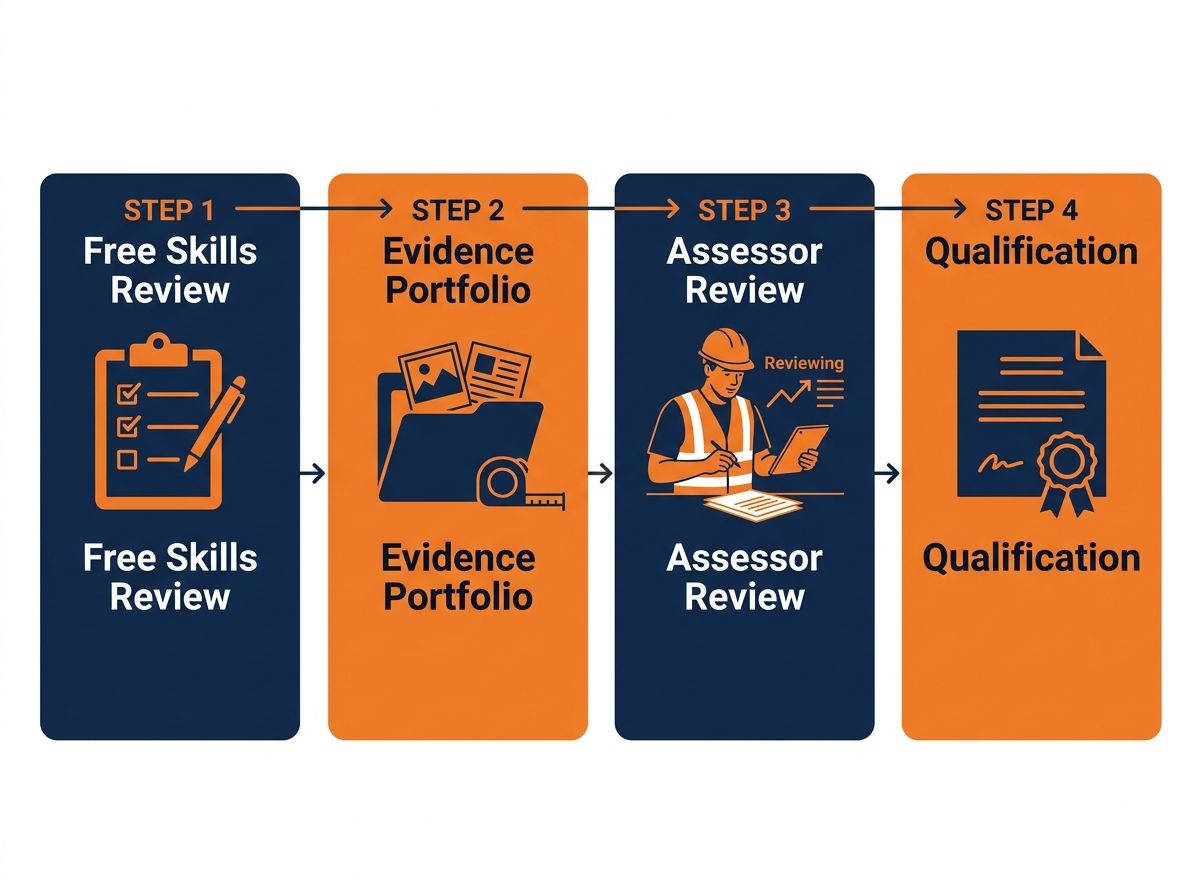
For CPC40920, an RPL assessment may include a portfolio of evidence—documents such as resumes, references from employers or colleagues, work samples, photographs of completed projects, certifications, and training records. It may also involve interviews, portfolio reviews, and practical demonstrations, with a qualified assessor reviewing the evidence you provide.
RTOs may require a minimum period of relevant industry experience before accepting an RPL application, and requirements vary between providers. Some RTOs may also require a Language, Literacy, Numeracy and Digital Literacy (LLND) evaluation and a valid White Card (CPCWHS1001) as part of the process.
If gaps are identified during assessment, gap training may be required. This is not a failure—it is the process working as intended. The point of RPL is to assess what you already know and fill only what is missing. Recognition, not repetition.
The alternative—completing the full qualification through traditional study—requires learning things you already know. RPL honours the investment you have already made. It is the appropriate pathway for experienced workers, not because it is easier, but because it is designed to assess existing competence rather than teach it from scratch.
If you have been told that an apprenticeship is the only option, that advice does not account for what experienced tradespeople have already built. Read more about why an apprenticeship is the wrong pathway for experienced plumbers.
What Happens If You Keep Working Without It
Performing plumbing work that requires a licence or qualification without holding it carries real consequences. These vary by state and territory, but the categories are consistent: regulatory penalties, licence refusal or suspension, and potential insurance complications.
In New South Wales, a licence or certificate is required to perform any plumbing, draining, or gasfitting work, regardless of cost or project type. Performing unlicensed work exposes individuals to significant penalties under state legislation.
The consequences are not hypothetical. They are the reason the credential gap matters, not as a bureaucratic inconvenience, but as a genuine risk to your ability to work, earn, and grow. The Certificate IV is not a hurdle placed in your way. It is the credential that protects your right to do the work you already know how to do.
If you are unsure whether your specific work requires a licence or what your state's requirements are, check with your state or territory licensing authority directly. Requirements vary and change over time.
Your Experience Is Real. The Question Is Whether the System Knows It.
You have the experience. Years of it. The competencies that CPC40920 formally recognises—supervisory plumbing, drainage systems, gas fitting, project management—you have been applying them on real jobs, with real consequences, for real clients. That is not nothing. That is evidence.
The gap is not in your skills. The gap is between your skills and the formal system's ability to see them. RPL through the Certificate IV in Plumbing and Services is the mechanism that closes that gap—not by teaching you what you already know, but by assessing whether you know it and formally recognising that you do.
Your skills speak. The Free Skills Review helps determine whether your experience is likely to support an RPL application for the Certificate IV before you commit to anything. It is free, honest, and designed to give you a clear answer about where you stand.
The Certificate IV in Plumbing and Services page outlines the qualification, the RPL pathway, and what the process looks like for experienced plumbers.
The national qualification register on training.gov.au provides the authoritative description of what CPC40920 covers, including the qualification's purpose, packaging rules, and entry requirements for both streams.
In NSW, the licensing framework for plumbing, draining, and gasfitting work is set out by the NSW Government, including the categories of work that require a licence or certificate and the supervision requirements that apply.
Charles Darwin University describes RPL as a form of assessment to determine whether a person has acquired skills and knowledge through formal or informal learning that match the competency standards of a qualification, with skills needing to be current and matched to specific unit elements.
General information only, current at the date shown. Licensing rules change, so check the current requirements with the relevant regulator before you rely on them. RPL it Australia is a student support service, not a Registered Training Organisation; qualifications are assessed and issued by our partner RTOs.