Why 'just do an apprenticeship' is the worst advice for an experienced ACT plumber
If you have 5–10 years of plumbing experience, an apprenticeship could cost you years and income. Here is why RPL is the right pathway, not a shortcut.

Someone gave you bad advice
It usually comes from someone who means well. A colleague on the tools. A TAFE counsellor. Someone at the licensing office. You asked how to get your plumbing licence, and they said: 'Just do an apprenticeship.'
They were not lying. They were giving you the standard answer. The problem is that the standard answer was not designed for you.
An apprenticeship is the right pathway for someone who does not yet know the trade. If you have five, seven, or ten years of plumbing experience behind you, have been on the tools, solved real problems, and built a reputation on job sites across Canberra, then the advice to 'just do an apprenticeship' is the wrong tool for your situation. It was calibrated for an 18-year-old starting from zero. You are not that person.
The frustration you feel when you hear that advice is not irrational. It is the correct response to being given the wrong answer.
What an apprenticeship is actually for
An apprenticeship is a structured learning pathway. It combines on-the-job training with formal study, typically delivered over several years. The Certificate III in Plumbing (CPC32420) is the qualification at the end of that pathway, and it is the qualification that underpins ACT plumbing licence eligibility.
The apprenticeship model was designed for people who need to acquire the skills. The learning happens during the apprenticeship. The qualification is the evidence that the learning occurred.
If you already have the skills, having acquired them through years of on-the-job experience rather than a formal training programme, then an apprenticeship does not teach you anything new. It repeats a journey you have already made. That is not a recognition pathway. That is a repetition pathway.
An apprenticeship is a learning pathway. RPL is a recognition pathway. These are different tools, built for different situations. The advice you received confused the two.
The real cost of doing an apprenticeship when you already know the trade
The cost of following the wrong advice is not abstract. It shows up in three concrete ways.
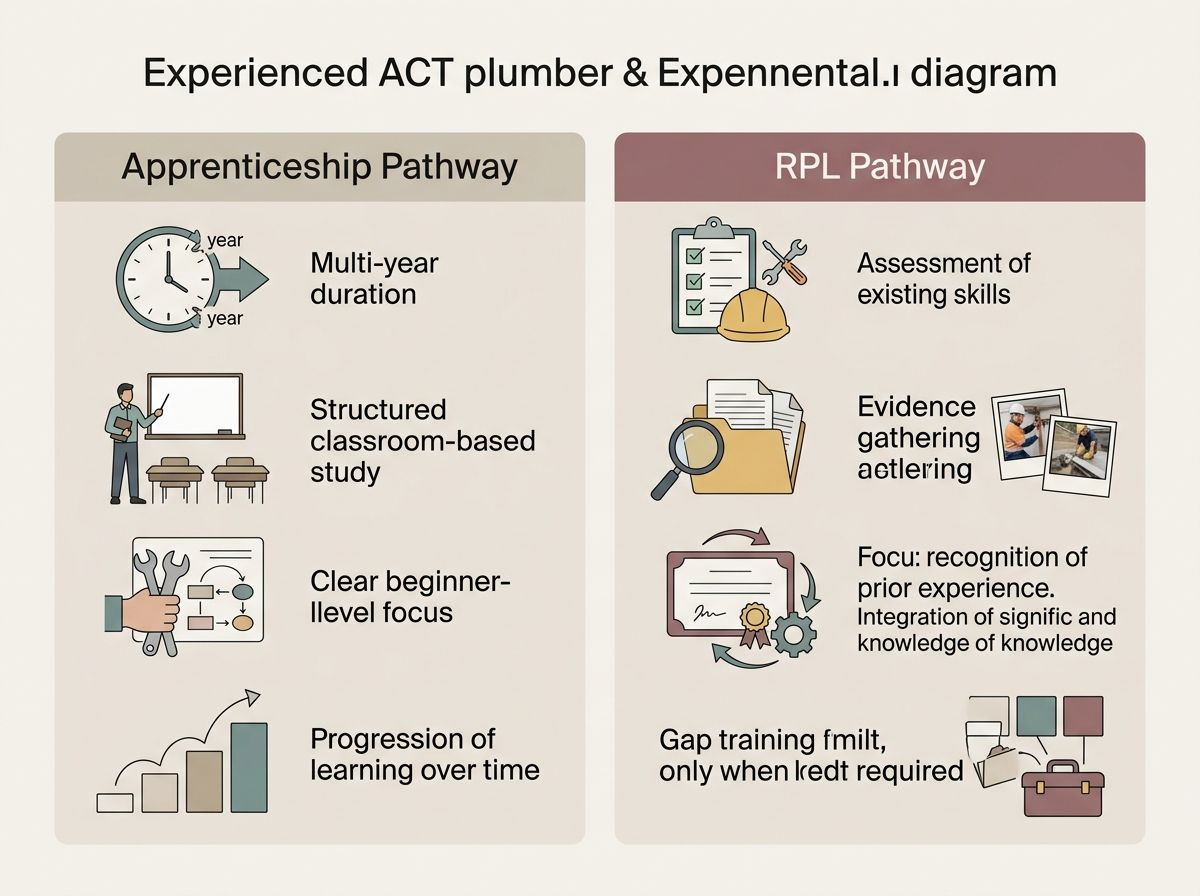
First, there is time. A plumbing apprenticeship typically runs for several years. For someone who already has the competency, that means years spent repeating what they already know, years they could have spent working as a licensed tradesperson.
Second, there is income. Apprentice wage rates are significantly lower than licensed plumber rates. The gap between what an apprentice earns and what a licensed plumber earns is substantial. Multiply that gap across several years, and the financial cost of following the wrong advice becomes very real. We have not cited specific figures here because wage rates change and vary by circumstance, but the Fair Work Commission's Plumbing and Fire Sprinklers Award sets out apprentice rates by year of training, and the contrast with licensed plumber earnings is significant. We encourage you to look it up.
Third, there is opportunity cost. While you are completing an apprenticeship, you cannot tender for work that requires a licence. You cannot supervise others as a licensed tradesperson. You cannot operate independently. Every year of unnecessary apprenticeship is a year of constrained earning potential and limited professional opportunity.
For someone who already has the skills, this is not a minor inconvenience. It is a significant and avoidable financial and professional setback.
What RPL actually is, and why it was built for people like you
Recognition of Prior Learning (RPL) is a formal assessment pathway under the Australian Qualifications Framework. It exists precisely because not everyone acquires skills through formal study. Many of the most capable tradespeople in Australia learned on the job, through mentorship and through years of practical problem-solving. RPL is the mechanism that allows that experience to be formally assessed and recognised.
RPL is not a shortcut. It is a rigorous assessment process. A qualified assessor from a registered training organisation evaluates whether you can demonstrate competency against the specific units of the Certificate III in Plumbing. If you have the skills, you demonstrate them through evidence, not through years of classroom attendance.
The qualification you receive through RPL is the same Certificate III in Plumbing (CPC32420) that an apprentice receives at the end of their training. The assessment standard is the same. The qualification is nationally recognised. The pathway to your ACT plumbing licence is the same. The only difference is how you got there.
RPL was built for workers who acquired skills through experience rather than formal study. If that describes you, RPL is not an alternative to the 'proper' pathway. It is the proper pathway for your situation.
The apprenticeship advice assumes you are starting from zero
Here is the thing about the advice you received: it was not wrong. It was given to the wrong person.
Most people who ask 'how do I become a plumber?' or 'how do I get a plumbing licence?' are starting from zero. They have no trade experience. For them, an apprenticeship is exactly the right answer. The advice is calibrated for that majority.
But you are not in that majority. You have years of demonstrated competency. You have done the work. The question you are actually asking is not 'how do I learn the trade?' but rather 'how do I get the credential that proves I already know it?'
Those are different questions. They have different answers. RPL is the answer to the second question.
What the RPL pathway looks like for an experienced ACT plumber
The RPL process is structured and supported. Here is what it typically involves:
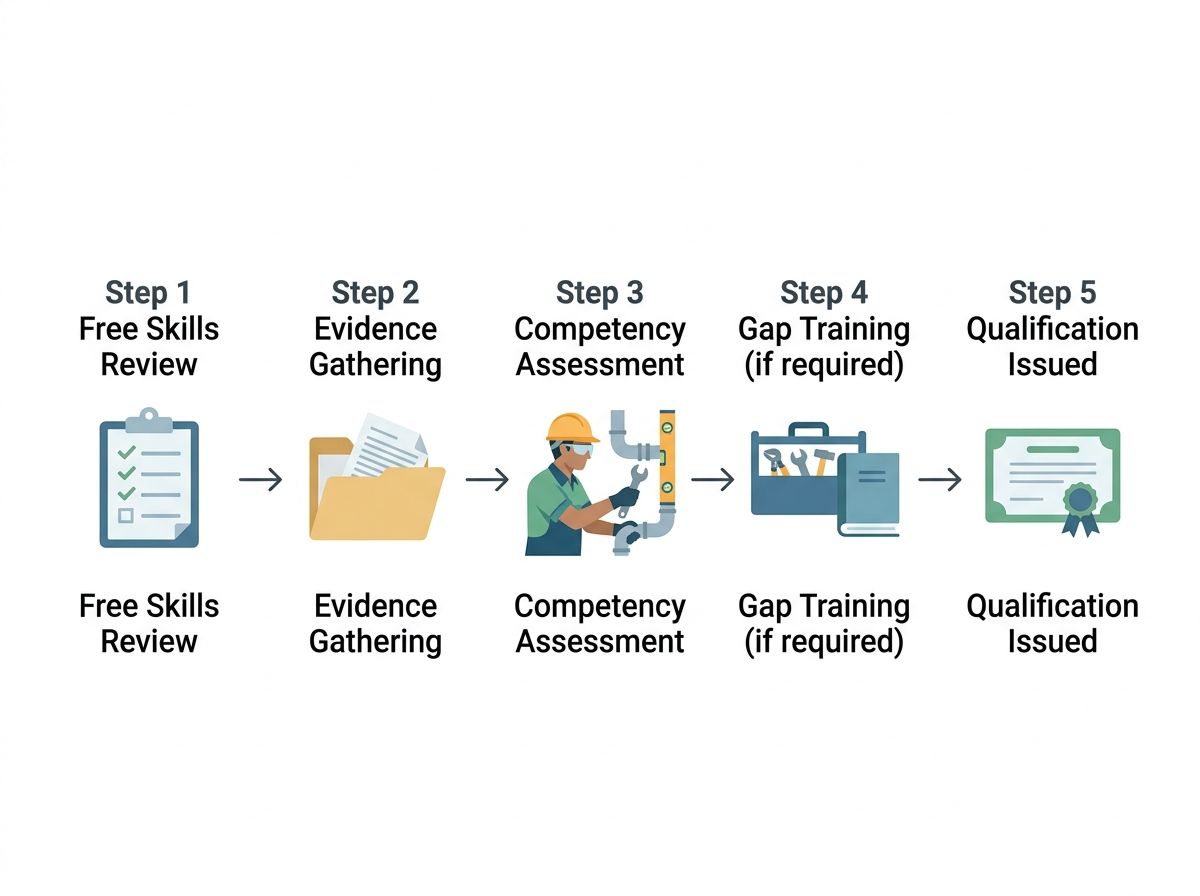
- A free skills review, which is an honest, no-obligation assessment of whether your experience is likely to support an RPL application. This is the starting point, designed to tell you the truth about your situation before you commit to anything.
- Evidence gathering, where you compile documentation of your experience. This typically includes records of work completed, employer references or statutory declarations, photographs of completed work, and third-party reports from supervisors or clients who can attest to your competency.
- Competency assessment, where a qualified assessor from a registered training organisation evaluates your evidence against the units of the Certificate III in Plumbing. This is a genuine assessment, not a rubber stamp.
- Gap training, if required, if the assessment identifies areas where your experience does not fully cover the required competencies. Gap training is provided to address those specific gaps, making it targeted rather than a full course.
- Qualification issuance, where the Certificate III in Plumbing is issued once competency is confirmed across all required units. This qualification is then used to support your ACT plumbing licence application.
The process is guided. You are not navigating it alone. The role of RPL is to support you through each stage, helping you understand what evidence is needed, how to present it, and what to expect at each step.
The ACT plumbing licence recognition pathway, including what qualification is required and how to apply, is covered on the product page.
Is RPL right for every experienced plumber?
Honest answer: not necessarily.
RPL is appropriate for workers who have substantial, demonstrable experience across the competency units of the Certificate III in Plumbing. If your experience has been broad, covering the range of skills the qualification assesses, then RPL is likely a strong fit.
If your experience has been narrow, focused on one specific area of plumbing work, then the assessment may identify gaps that require more extensive gap training. That is not a disqualification, but it is worth knowing before you begin.
The honest way to find out is through a skills review. It is free. It carries no obligation. And it is designed to give you an accurate picture of your situation, not to tell you what you want to hear.
The decision is yours
You have the experience. The question is which pathway honours it.
An apprenticeship repeats the journey. RPL recognises it. If you have years on the tools and you have been told to 'just do an apprenticeship,' you now know there is another option, and it was built for exactly your situation.
Recognition, not repetition. That is the principle. Your work deserves to be counted.
If you want to understand the full picture of what the ACT plumbing licence pathway involves, the product page covers the recognition process in detail.
Ready to Get Recognised?
Start with a free skills review to find out if RPL is right for you.