The Cert III in Cabinet Making isn't about learning the trade – it is about proving you already know it
Think the Cert III in cabinet making means going back to class? For experienced cabinet makers, RPL turns your years of work into formal qualifications.
By RPL it Australia8 min read
The assumption that stops experienced cabinet makers from getting qualified
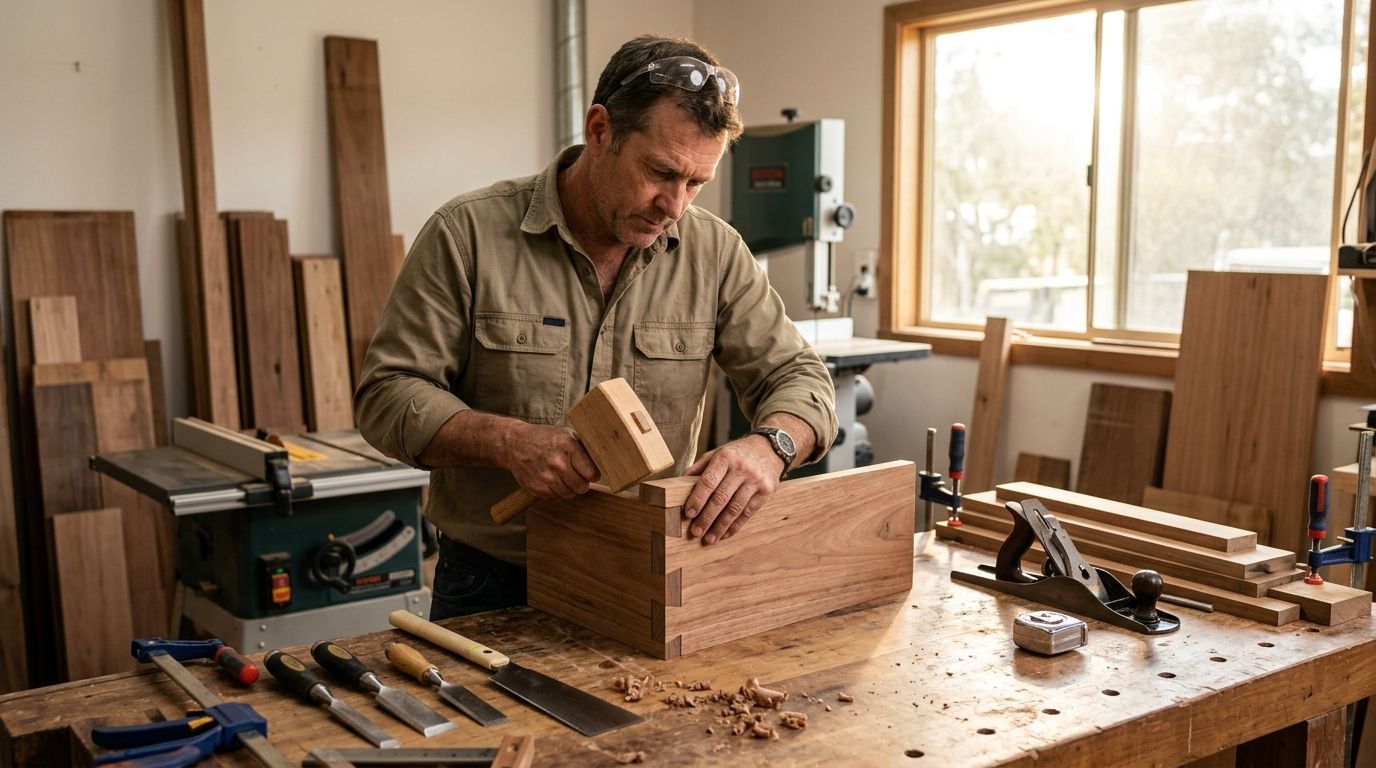
This scenario plays out regularly in workshops and joinery businesses across Australia. A cabinet maker with ten or twenty years of real trade experience looks into the Certificate III and stops. It is not a lack of skill that holds them back. They simply assume that getting qualified means sitting in a classroom, going over tasks they mastered years ago, and being treated like an apprentice.
That assumption is incorrect. It is the main reason why many skilled tradespeople remain without formal qualifications despite years of experience on the job.
If you have built kitchens, installed joinery, worked timber to spec, and delivered finished cabinetry to clients, you already know the trade. You do not need to prove your knowledge to yourself; you need the training system to recognise it. The system has a clear way to do this, and it does not require you to sit in a classroom.
What the Cert III in cabinet making actually assesses
The Certificate III in Cabinet Making and Timber Technology, qualification code MSF30322, is a nationally recognised qualification under the Australian Qualifications Framework. It consists of practical units of competency that define what a qualified cabinet maker must be able to do. These units cover selecting and preparing timber, constructing cabinet components, applying finishes, and reading technical drawings.
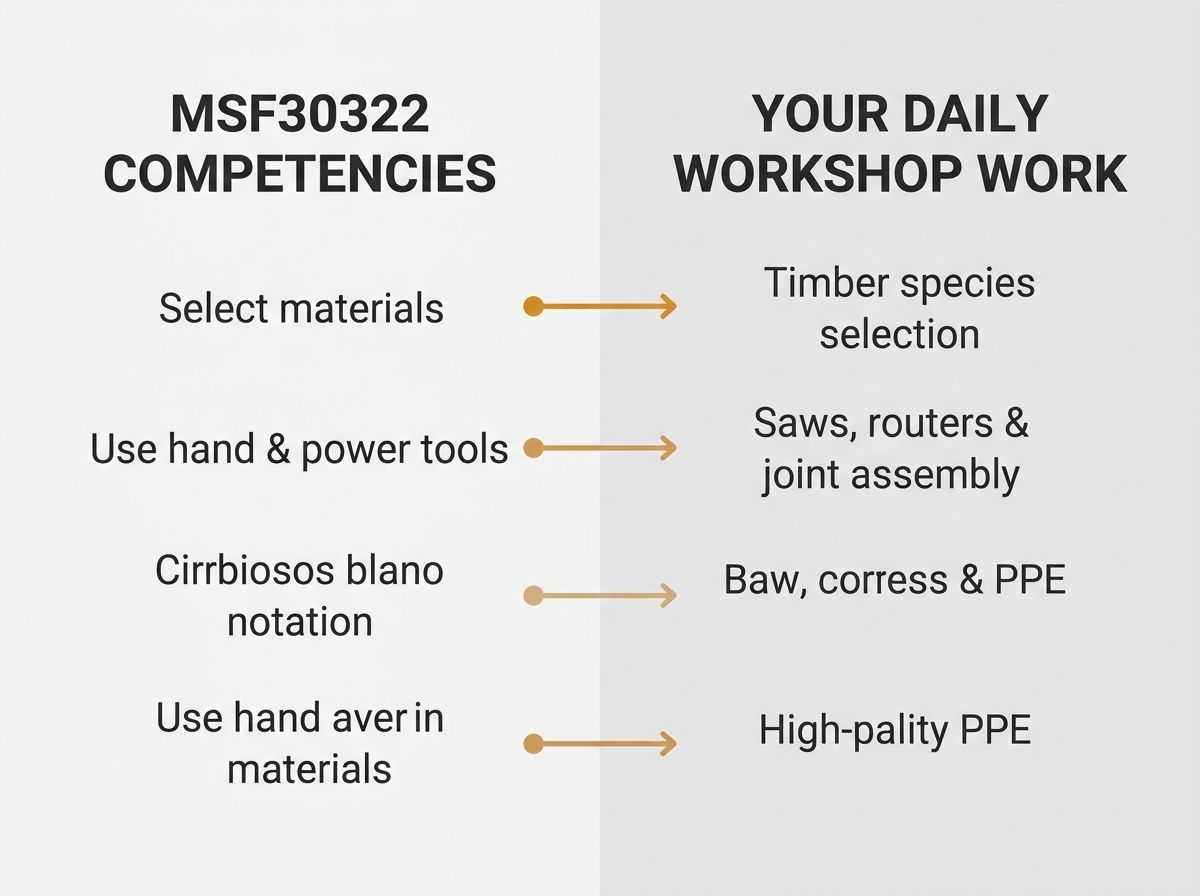
This is the key point for experienced tradespeople: the qualification does not care how you learned your trade. It assesses whether you can do the work now, rather than whether you sat through a course to learn it.
The units focus on practical outcomes. Your daily work already produces these outcomes. The Cert III is simply the qualification that confirms it.
Recognition of prior learning: the pathway built for experienced trade workers
Recognition of Prior Learning (RPL) is an established assessment pathway within the Australian vocational education system. It is designed to assess skills gained through direct work experience, informal on-the-job training, or industry experience, instead of requiring a standard classroom course.
RPL is not a shortcut or a loophole. It is a rigorous, official assessment process built directly into the national training framework. For experienced cabinet makers, it is simply the correct and practical path to a qualification.
A qualified assessor from a registered training organisation (RTO) conducts the assessment and issues the qualification. RPL it helps you navigate this process by identifying the evidence you need, showing you how to collect it, and helping you present it to the assessor. The final assessment decision remains with the partner RTO.
If the assessor identifies any gaps where your practical experience does not fully cover a specific unit, gap training is provided. This targeted training is included at no extra cost, keeping the process transparent and straightforward.
What evidence does an experienced cabinet maker actually need?
This is where many experienced tradespeople are surprised. The RPL process relies on proof of your skills, but most long-term cabinet makers already have more evidence than they realise.
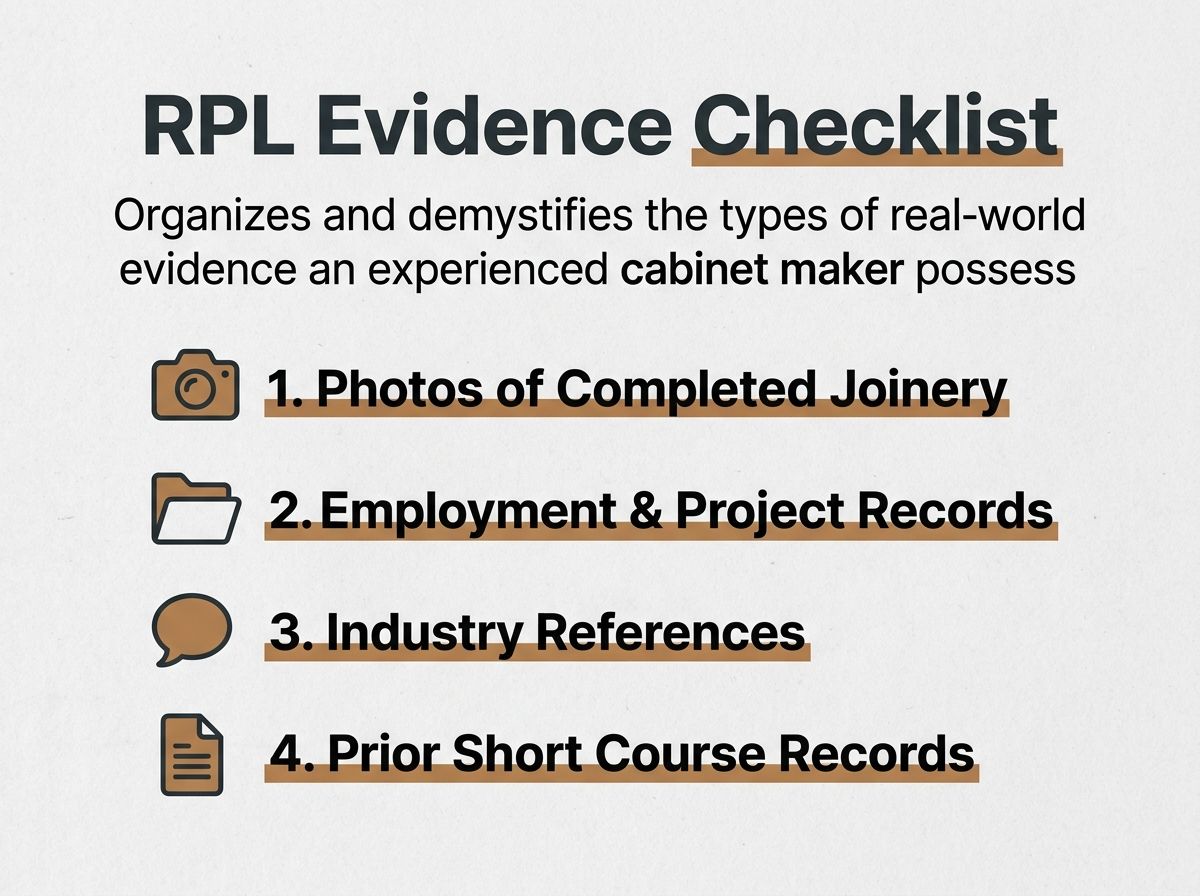
Your assessment evidence falls into three main areas. Direct evidence is highly effective, including photos of your finished joinery, physical samples, or onsite observation. Indirect evidence includes items like employment histories, payslips, and references from clients or builders. Supplementary evidence supports your application through tools lists, supplier invoices, and older training records or licences.
- Photos of your completed cabinet making and joinery projects
- Employment records or letters outlining your daily responsibilities
- References from licensed builders, employers, or past clients
- Records or descriptions of tools and materials you use regularly
- Previous training certificates, even if incomplete or outdated
- Supplier invoices, job sheets, or project specifications
If you have worked in the trade for several years, you have been creating this evidence on the job. Our team helps you identify what files you already have and organises them so the assessor can review them quickly.
Why the Cert III matters more than you might think
The Certificate III in Cabinet Making and Timber Technology is more than a piece of paper. Working without a formal qualification can create unexpected limits on your career that you may not have run into yet.
Many commercial and government tenders specify that all tradespeople on site must hold formal qualifications. Clients, commercial builders, and tier-one project managers often require proof of trade qualifications for major projects. Without a Cert III, highly experienced cabinet makers can be locked out of lucrative contracts they are fully capable of completing.
Training and supervising apprentices is another area where formal qualifications are standard. If you want to sign off on apprentices and help train the next generation of cabinet makers, holding your Cert III is usually a core requirement.
Business insurance, professional associations, and industry licensing boards also look for formal qualifications. Because rules differ depending on your state and specific sector, we recommend checking the guidelines for your local area. Across Australia, having your trade qualification simply removes the administrative hurdles that unqualified tradespeople face.
The difference between training and assessment
Training is for people who are learning a new skill. Assessment is for professionals who already have it.
This is a practical distinction. It is the difference between sitting through lessons on skills you use daily, and simply showing an assessor that you can do the work. The first option wastes your time, while the second respects your experience.
Getting your Cert III in Cabinet Making through RPL is an assessment process. You are treated as an experienced professional, not a student. You act as a candidate demonstrating established skills to an industry assessor. The pathway focuses entirely on your existing trade knowledge rather than teaching you from scratch.
This approach changes the entire experience. It turns a lengthy educational course into a straightforward validation of your trade career, making the process highly efficient and relevant to your daily work.
What the RPL process looks like for a cabinet maker
The RPL process is highly structured but remains straightforward for tradespeople with real industry experience. It follows a logical, step-by-step sequence.
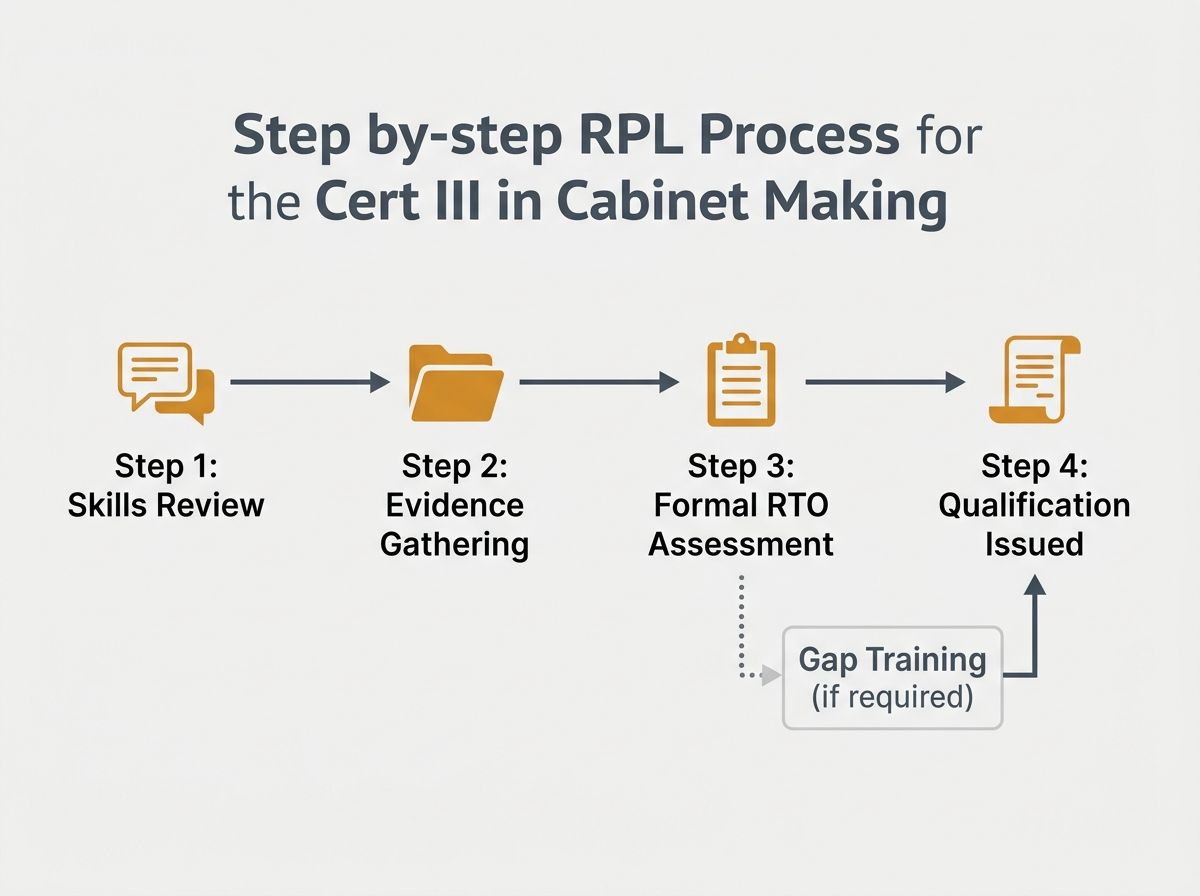
The first step is a skills review, which is an informal conversation about your work history, experience, and the specific units within the MSF30322 qualification. During this discussion, we help you determine if RPL is your best option and map out the evidence you will need. This initial review is free and involves no commitment.
If the skills review shows that you are a suitable candidate, you move on to gathering your evidence. You will collect records of your skills, such as employment histories, project photos, and industry references that align with the qualification standards. Our team supports you through this stage so you do not have to work it out alone.
Once compiled, your portfolio goes to the RTO assessor for formal review. The assessor checks your documentation, may contact you for clarification or a practical demonstration, and decides if you meet the national requirements. If any skills gaps appear, the partner RTO provides targeted gap training at no extra charge.
When you satisfy the criteria for all units, the RTO issues your official qualification. The Certificate III in Cabinet Making and Timber Technology you receive is the exact same credential earned through an apprenticeship, recognised Australia-wide.
Is RPL right for every cabinet maker?
To be direct: it depends on your experience. RPL is designed for experienced cabinet makers who have broad, practical skills across the different areas of the MSF30322 syllabus. If you handle diverse joinery work and understand the full scope of the trade, this pathway is usually the right fit.
If your experience is highly specialised and you have focused only on a single area of production, the assessment might highlight some units you have not covered. This does not rule you out of the process, but it means you might complete a small amount of gap training to finish your qualification.
If you are in the early stages of your career or do not yet have experience across a range of cabinet making tasks, standard training might be a better choice. We prefer to give you clear, honest advice upfront rather than start you on a pathway that does not suit your current experience.
Our Free Skills Review is built to answer these questions clearly and honestly, before you make any commitment.
Your experience is real. The Cert III makes it official.
The Certificate III in Cabinet Making and Timber Technology does not teach you how to do your job. It certifies that you already do it.
For experienced cabinet makers, this qualification is not the start of your training. It is the formal recognition of your professional career. The kitchens you have built, the commercial joinery you have fit, and the client projects you have delivered are proof of your capability. RPL is simply the process that translates your practical skills into a recognised trade credential.
You have the skills already. The Cert III is how you prove them to clients, builders, and licensing authorities.
General information only, current at the date shown. Licensing rules change, so check the current requirements with the relevant regulator before you rely on them. RPL it Australia is a student support service, not a Registered Training Organisation; qualifications are assessed and issued by our partner RTOs.