You don't need to redo your apprenticeship to get a builder licence in Victoria
Experienced builders in Victoria often assume getting licensed means repeating training. It does not. Here is how RPL changes the process.
By RPL it Australia6 min read
The assumption that keeps experienced builders unlicensed
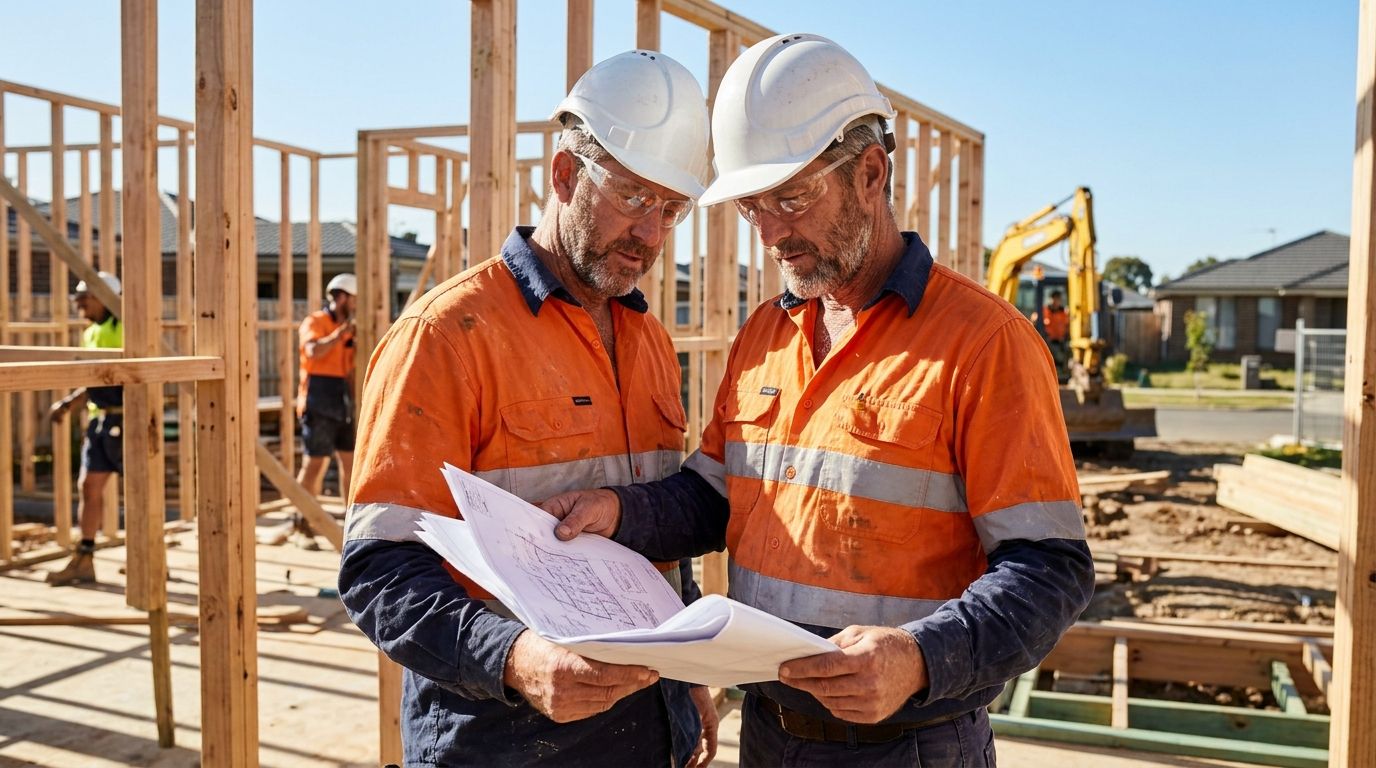
You have the experience. Years of it on site. You have managed construction sites, read architectural plans, supervised sub-contractors, and delivered physical projects that stand the test of time. You know the building industry inside out, not from reading a textbook, but from doing the work daily.
Yet when the question of obtaining a builder licence victoria arises, something holds you back. It is not the financial cost or the volume of paperwork. It is the assumption that getting licensed requires you to go back to the beginning, sit through training you already understand, and repeat an apprenticeship you completed on the job years ago.
This assumption is one of the most common reasons experienced Victorian building professionals remain unlicensed. They do not stay unlicensed because the qualification pathway is closed to them, but because they believe the system forces them to start their education all over again.
This is not the case. Understanding why this is a misconception starts with looking closely at what the Victorian Building Authority actually requires from licensing applicants.
What the VBA actually requires for a builder licence
The Victorian Building Authority (VBA) is the government body that issues builder licences across Victoria. To apply for a domestic builder licence, which is the category that allows you to carry out or manage domestic building projects, applicants must demonstrate both relevant site experience and a recognised qualification.
The experience component measures what you have actually built and managed on site. The knowledge component requires you to hold a formal qualification that documents your complete understanding of building practices, state legislation, and national technical requirements.
This is exactly where most experienced trade professionals get stuck. They have the practical site experience, often accumulated over decades. What they lack is the formal qualification, and they assume that obtaining this document requires enrolling in a class and studying from scratch.
The actual gap is the documentation of your skills, not the physical experience itself.
Please note that all VBA licensing requirements, including specific hands-on experience thresholds, accepted qualifications, and formal application processes, must be confirmed directly with the VBA at vba.vic.gov.au before making licensing decisions. Licensing rules change, and the VBA remains the authoritative source.
The part most experienced builders are missing
You do not need to redo your apprenticeship to get a builder licence in Victoria.
What you need is a formal building qualification, such as a Certificate IV in Building and Construction, which the VBA accepts as evidence of your technical knowledge. Many experienced tradespeople do not realise that this specific qualification can be obtained through a process called Recognition of Prior Learning.
Recognition of Prior Learning, or RPL, is a formal assessment pathway within the national Australian training framework. It does not require you to sit in a classroom learning concepts you already practice daily. Instead, it assesses what you can already do, using your industry work history and site experience as the evidence base.
Practical experience is just as valid as classroom education. It is simply a different type of evidence. RPL is the formal process that makes your years of site work visible to regulatory systems that would otherwise overlook those achievements.
The qualification you obtain through an RPL process is nationally recognised because the assessment is genuine. It is not an easy shortcut, but a rigorous pathway that matches your existing practical skills against official training standards.
What RPL uses instead of classroom hours
An RPL assessment for a building and construction qualification relies on the evidence you have already accumulated during your career. A qualified assessor from a registered training organisation evaluates what you have physically built and managed, rather than checking what you studied in a classroom.
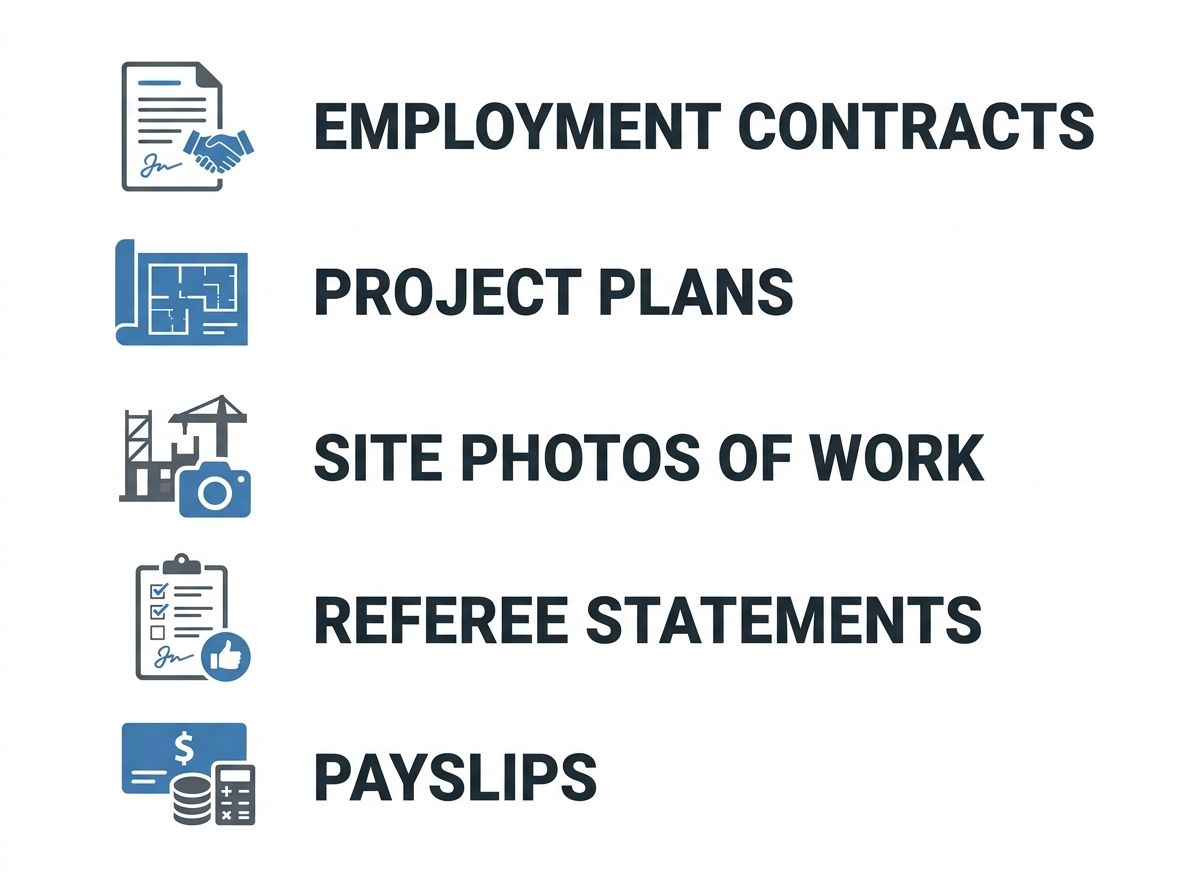
The types of evidence that support a construction RPL assessment include:
- Employment contracts and history files detailing your daily roles and supervisor responsibilities on site
- Project documentation including architectural plans, engineering specifications, contracts, and certificates of completion
- Statutory declarations or references from employers, clients, or industry colleagues who can verify your competency
- Clear site photographs demonstrating the specific types and scale of construction work you have managed
- Historical payslips, sub-contractor invoices, or tax records confirming your years of employment in the sector
- Any prior training certificates, partial qualifications, or industry licences you already hold
This assessment process is fully guided. You are not left to compile this evidence on your own. An RPL specialist will help you understand what documents the assessor requires and show you how to present your practical experience to meet the formal standards.
The process is straightforward and honest. If the assessment identifies areas where your documented experience does not fully meet the qualification standards, targeted gap training may be required. This is not a setback. It is a necessary part of a rigorous system that ensures your final qualification is genuine, allowing you to study only what is missing rather than repeating a whole course.
Experienced builders in other Australian states face similar licensing challenges, and the same RPL pathways are open to them.
Who this pathway is for
RPL for a Victorian builder licence is designed for trade professionals with a specific background. If your work history matches the following points, this assessment pathway is worth exploring:
- You have multiple years of hands-on experience in domestic building work, such as managing projects, coordinating trades, or working as a site supervisor
- You have been performing the work on site but lack the formal qualification currently required by the VBA
- You possess some documentation of your work history, including employment contracts, project records, or references
- You have completed partial training in the past, even if you did not finish the full qualification
- You have relevant overseas construction experience or technical qualifications that are not yet formally recognised in Australia
RPL is not suitable for every applicant. If you are early in your career, or if your site experience is limited or completely undocumented, a traditional training pathway is a better fit. An honest assessment saves you time and resources in the long run.
The gap between practical trade skills and formal credentials exists across many industries, not just building.
If you are unsure whether your career profile is strong enough to support an RPL pathway, a preliminary suitability assessment can clarify your options. This is a practical, low-risk way to get answers before committing to the process.
Your first step does not require a commitment
Before enrolling in any course, spending time gathering paperwork, or making licensing decisions, experienced Victorian builders can easily find out whether their site history supports an RPL pathway.
A Free Skills Review provides an honest, straightforward assessment of whether your professional background aligns with the RPL pathway for a builders licence victoria. This review is not a high-pressure sales call, and it involves no commitment. It is simply a practical starting point.
If your experience is sufficient, you will receive a clear plan of action. If it is not, you will find out exactly what steps you need to take next to qualify.
You have been performing this work for years. The challenge is presenting that experience in a format the official training system recognises.
General information only, current at the date shown. Licensing rules change, so check the current requirements with the relevant regulator before you rely on them. RPL it Australia is a student support service, not a Registered Training Organisation; qualifications are assessed and issued by our partner RTOs.