Why 10 Years on the Pans Doesn't Show Up on Your Resume
You run the kitchen and manage the service, yet your resume looks empty. Here is how SIT30821 RPL translates your cooking experience into a qualification.

The resume that doesn't reflect the kitchen
You open a new document, type your name at the top, and stare at the blank space beneath it. Ten years. Maybe more. You have run a section through a 200-cover Friday night service, trained the apprentice who is now a sous chef, managed the mise en place, tracked food costs, kept the kitchen compliant, and held the line when the head chef called in sick. You have done all of it, and you have done it well. But a standard resume does not show that. It sees no formal qualification, no certificate, and no code. It only sees years of work that exist in your hands, your instincts, and your muscle memory. The formal education system cannot read those things on their own.
What a decade in a commercial kitchen actually looks like
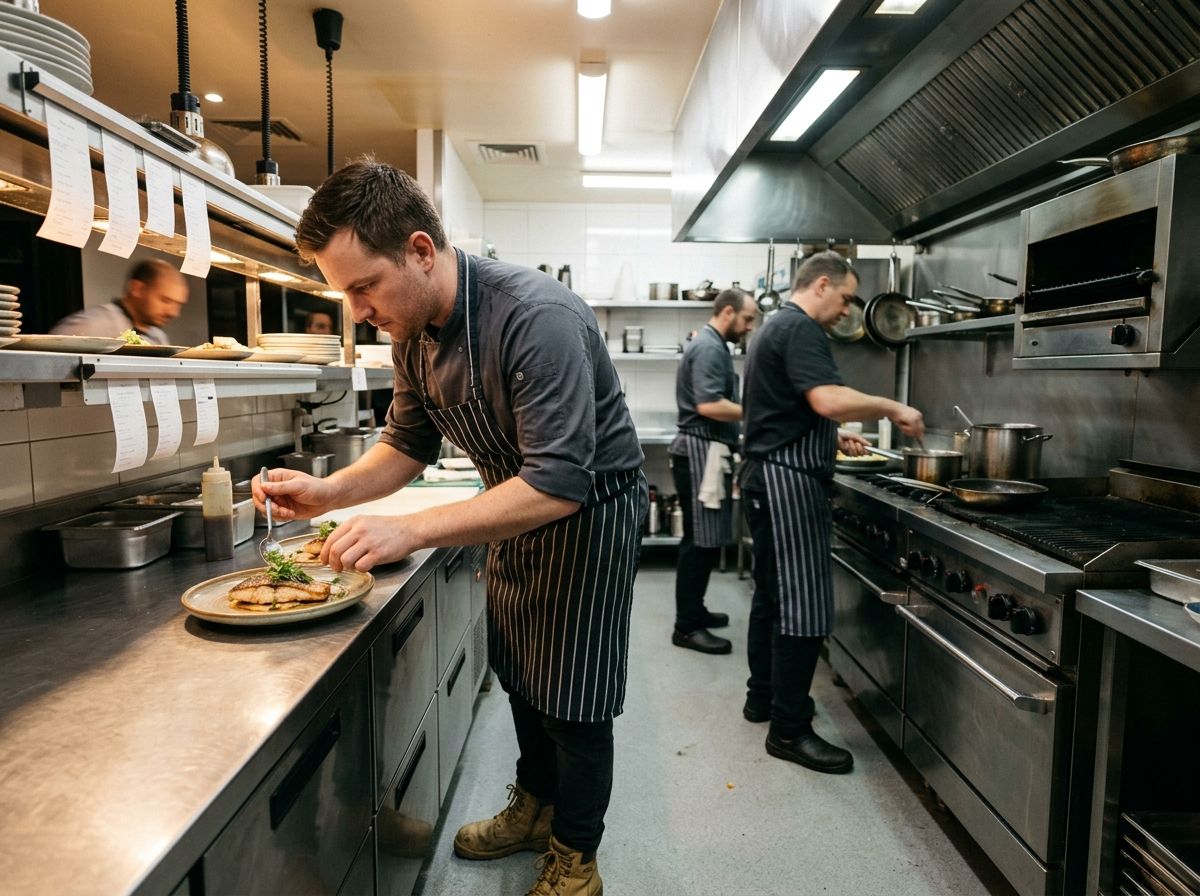
Let's make the invisible visible. A cook with ten years in a commercial kitchen has developed competency across several areas. This includes food preparation under pressure, cooking methods for different cuisines, and knife skills built over years of service. Food safety practices like temperature control, allergen management, and preventing cross-contamination are second nature. Kitchen operations are also part of the role, including ordering, stock rotation, waste minimisation, and equipment maintenance. On top of that, there is team management: training new staff, communicating with front of house, and controlling the pace of a section during peak service. These are not soft skills. They are specific, demonstrable competencies. They are exactly what a formal qualification like the Certificate III in Commercial Cookery (SIT30821) is designed to recognise. The skills are not missing. They just exist in a form the formal system was not built to read.
Why the formal system cannot see what you know
The Australian vocational education and training (VET) system was built for classroom-based learning. A student enrols, completes units, is assessed, and receives a qualification. While that model works for those starting out, it was not designed for experienced workers. When you have spent a decade learning on the job, your competency is real and deep. It is just not packaged in the way the system expects. This is where Recognition of Prior Learning (RPL) is useful. RPL is a formal assessment pathway within the Australian VET system. A qualified assessor evaluates your existing skills against the units of a qualification. Instead of retraining from scratch, your current knowledge is assessed as evidence. If you prove competency across the required units, the registered training organisation can award the qualification. The pathway is legitimate. It is not a shortcut; it is a built-in part of how the training system works.
If you have ever felt that the assumption that learning only happens in a classroom has worked against you, you are not alone. That assumption is built into the default pathway, and it is worth examining.
What SIT30821 RPL actually assesses
SIT30821 is the qualification code for the Certificate III in Commercial Cookery, the nationally recognised qualification that underpins professional cookery in Australia. Employers look for it when hiring for senior cook and chef de partie roles. Yet many experienced cooks do not hold it, despite having the skills it covers. RPL for SIT30821 is not a written test. It is an assessment of your existing competency, conducted by a qualified assessor from a registered training organisation (RTO). The assessor evaluates evidence to confirm you meet the standards the qualification requires. This evidence can take several forms, including references from head chefs or employers, employment history records, logbooks of tasks you have performed, photographs of dishes you have prepared, and sometimes a practical demonstration. The assessor uses these sources to verify your skills. RPL is a rigorous assessment process. If the assessor identifies areas where you cannot demonstrate competency against specific units, you may need gap training. When this occurs, gap training is usually provided at no extra cost. The qualification is nationally recognised because the process is robust; it is not a rubber stamp. The RTO conducts the assessment and issues the qualification, while RPL it helps you compile and present your evidence.
The skills you use every day are your evidence
Here is the main shift in perspective. The competencies SIT30821 assesses are not abstract academic concepts. They are the tasks you perform in a commercial kitchen every day. These include managing food preparation equipment, applying safe food handling practices, preparing and presenting dishes to standard, working in a kitchen team, and controlling costs while minimising waste. These are the units of the qualification, and they are also the core of your daily work. You do not need to learn new skills. You just need to document the ones you already use. This is where RPL it provides a guided pathway. We help you identify how your daily responsibilities align with formal competency units. We clarify what evidence you need to gather and how to organize it. We handle the paperwork and system requirements so you can focus on showing what you already know. Your skills are there. We help you present them clearly.
Is your experience enough to start the conversation?
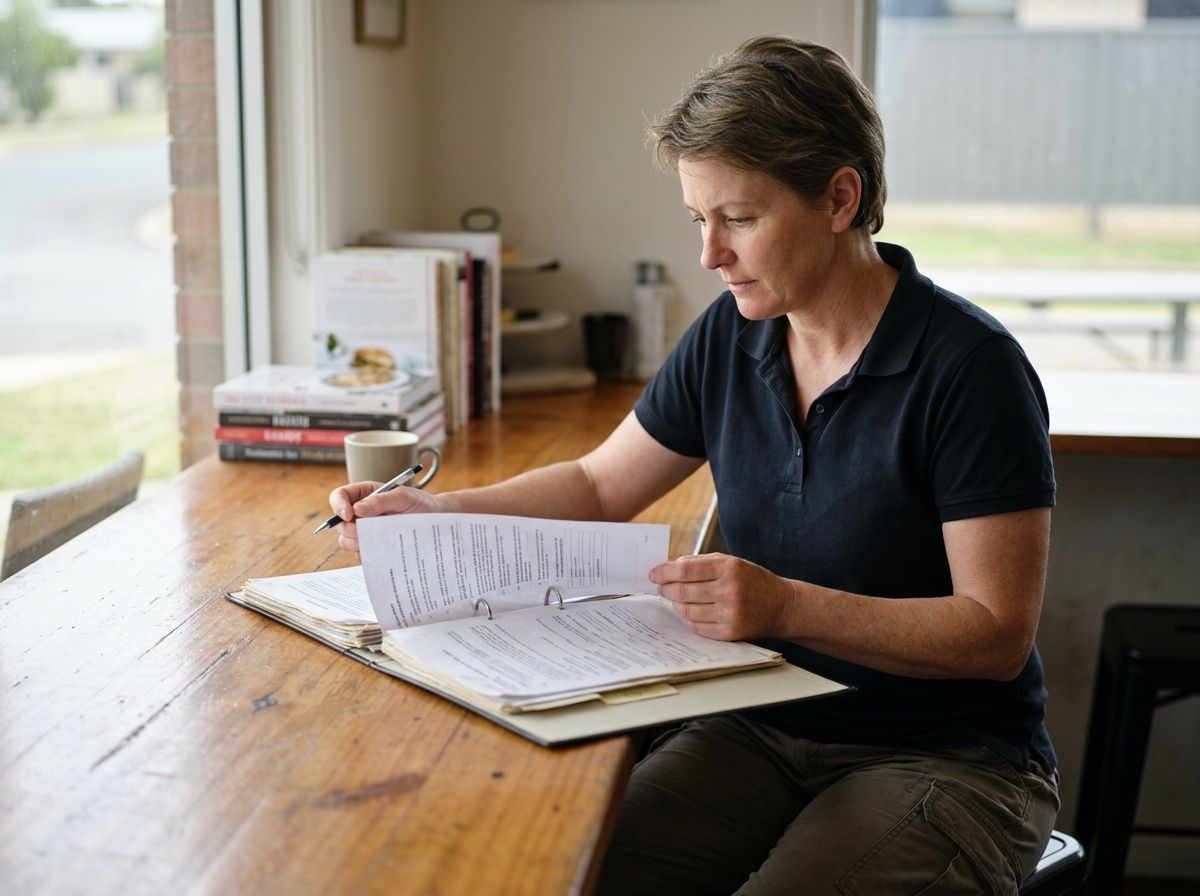
Not every cook is suitable for RPL. Your suitability depends on the depth of your experience, the evidence you can provide, and how your background matches the units of SIT30821. We provide honest suitability guidance before any commitment. We would rather point you toward the correct pathway than enrol you in something that does not fit. The Free Skills Review is where that straightforward conversation starts. It is a practical assessment of your experience, helping you find out whether your kitchen background supports an RPL pathway before you make any financial or time commitments. If you have worked professionally in kitchens for years and want to see if your experience maps to the Certificate III in Commercial Cookery, this is the first step. The choice to proceed is entirely yours.
Ready to Get Recognised?
Start with a free skills review to find out if RPL is right for you.