From personal training without a ticket to a recognised qualification without starting over
Been training clients without the SIS40221? You may not need to start from scratch. Discover the recognition pathway built for experienced trainers.
By RPL it Australia8 min read
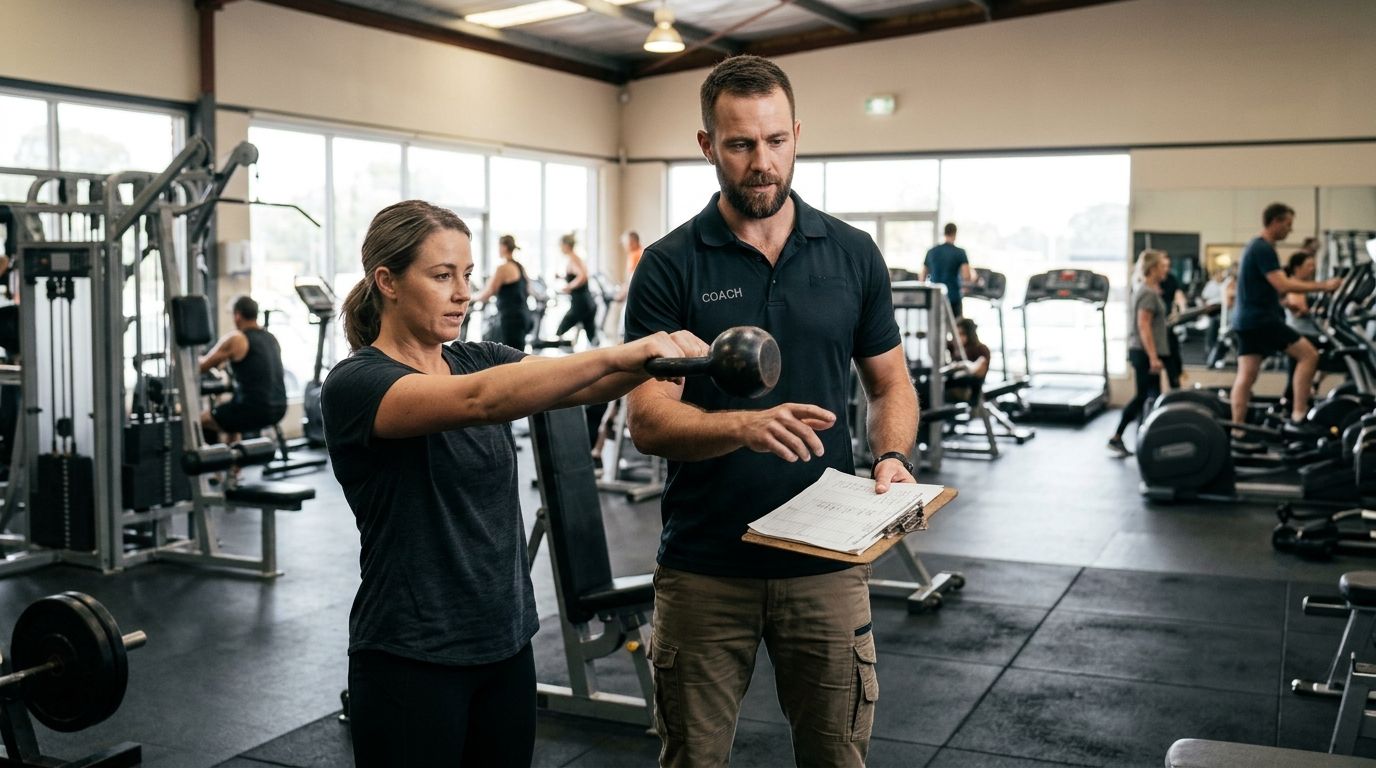
You have been doing the work. The qualification just hasn't caught up with your experience.
You already have the hands-on experience. You have coached clients through their very first push-up and their hundredth session. You have designed fitness programs, tracked client progress, and adapted training sessions on the fly. You have done the work that the Certificate IV in Fitness (SIS40221) is designed to assess.
Yet, when you look at job ads, insurance requirements, or gym employment criteria, the same phrase appears repeatedly: 'Certificate IV in Fitness required.' There is no mention of the years you have spent working on the floor, and no recognition of the clients you have helped. It is just a box that needs ticking, and right now, you cannot tick that box.
This is a highly frustrating situation that many fitness professionals in Australia know well. These are people who entered the industry through sports coaching, personal training mentorships, group fitness instruction, or practical gym floor experience. Now, they find themselves blocked by formal systems that only recognize the paper credential rather than the underlying competence.
Your skills are entirely real, and your experience is valuable. The challenge is finding a pathway that recognizes your practical ability without requiring you to sit through training on topics you have already mastered.
What the SIS40221 actually is and why it matters to your career
SIS40221 is the official qualification code for the Certificate IV in Fitness, which is the nationally recognized qualification for personal trainers and fitness instructors across Australia. It sits at Certificate IV level within the Australian Qualifications Framework and covers the core competencies required to work safely and effectively as a registered personal trainer.
The qualification covers fundamental areas such as client assessment, exercise program design, instruction and coaching technique, and safe exercise delivery. It is the specific credential that gyms, fitness centres, and insurance providers look for when hiring personal trainers. In many contexts, it is a practical prerequisite for employment or professional registration.
For anyone working in fitness without this formal qualification, the gap between what they can do on the gym floor and what the system formally recognizes can feel significant. That gap is real, but the pathway to closing it is often much more direct than people assume.
The common assumption that stops experienced trainers in their tracks
Most people assume there is only one way to obtain the SIS40221: enrol in a standard course, complete all the required units, and graduate. This is a reasonable assumption because it is how most qualifications work, and it is how most registered training organisations present the pathway on their websites.
However, this assumption carries a significant cost in both time and money for experienced trainers. Completing a Certificate IV in Fitness through standard enrolment typically takes many months of study, involves coursework covering material you already know well, and requires a financial investment that can run into thousands of dollars depending on the provider.
For someone who has been actively training clients for years, the prospect of sitting through foundational modules on topics they apply daily is highly frustrating. You are being asked to re-learn what you already know and prove competence you have already demonstrated, just in a different room, to a different assessor, on a different timeline.
Recognition should not require starting over from scratch, and for many experienced fitness professionals, it does not have to.
There is another pathway available, and it was built specifically for people like you
Recognition of Prior Learning (RPL) is a nationally recognized assessment pathway that allows experienced professionals to have their existing skills assessed without completing a full course from the very beginning.
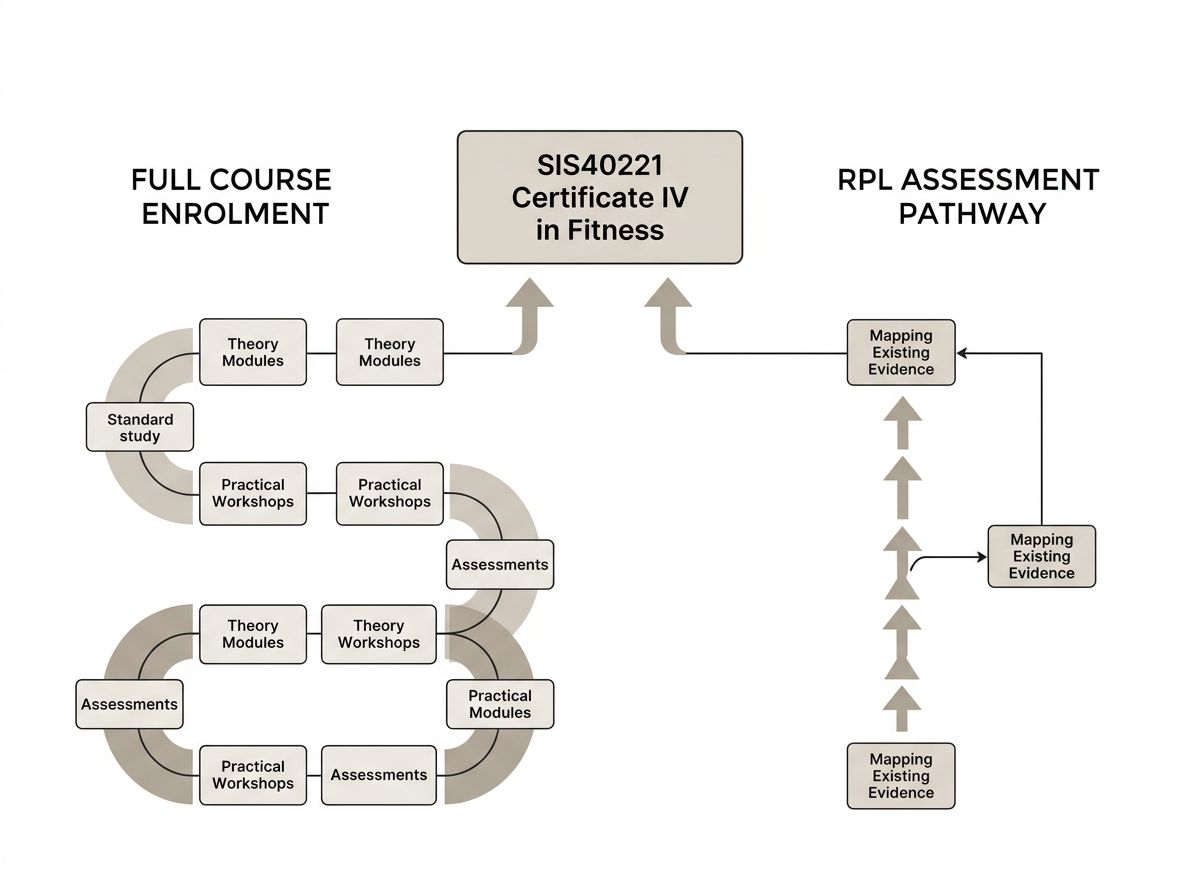
RPL exists within the Australian Qualifications Framework specifically to bridge the gap between demonstrated competence and formal recognition. It acknowledges that learning happens in many environments, such as on the gym floor, in coaching sessions, or through years of client work. Formal assessment can evaluate that learning directly, rather than requiring you to repeat it in a classroom.
For the Certificate IV in Fitness (SIS40221), RPL means a registered training organisation can assess your existing experience against the qualification standards. If your experience demonstrates the required competencies, you can be assessed as competent without completing a full course. Where gaps exist, targeted training may be required to address specific units. This training is focused and proportionate, rather than requiring a full re-enrolment.
This is not a shortcut or a workaround. RPL involves a genuine assessment by a qualified assessor, and the qualification you receive is the exact same nationally recognized credential. The assessment is real; what changes is the pathway to getting there.
What experience actually counts toward the SIS40221 qualification
The Certificate IV in Fitness assesses practical competencies that experienced trainers apply every day. If you have experience in any of the following areas, it may be highly relevant to an RPL assessment:
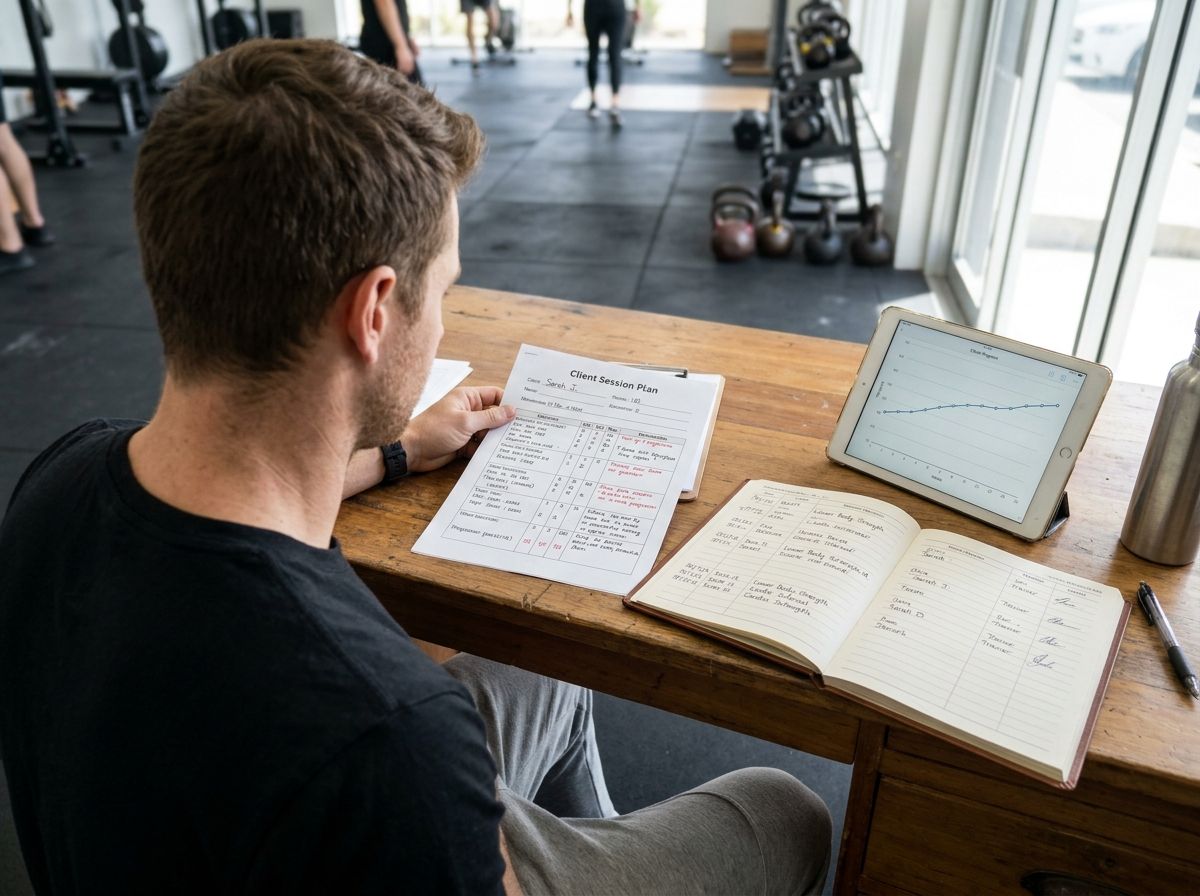
- Personal training: designing and delivering individual exercise programs, conducting client assessments, monitoring progress, and adapting sessions.
- Group fitness instruction: leading structured group exercise sessions, cueing technique, and managing participant safety.
- Sport coaching: designing training programs for athletes, conducting fitness assessments, and instructing exercise technique in a sports context.
- Gym floor work: supervising exercise, correcting technique, and providing guidance to members.
- Health and wellness coaching: working with clients on exercise behaviour, goal setting, and program adherence.
- Community fitness roles: leading exercise programs in community, corporate, or allied health settings.
Relevant evidence for an RPL assessment typically includes records of client work, training programs you have designed, references from employers or clients, logbooks of sessions delivered, and sometimes practical demonstrations of your skills. The specific requirements will depend on the RTO conducting the assessment.
Experience in sports coaching, including team sports, aquatics, or individual disciplines, can also be highly relevant. This is particularly true if your role involved program design, client assessment, or exercise instruction. A Free Skills Review will evaluate your background and provide a clear picture of where your experience sits.
The official title of your past roles matters far less than what you actually did on the job. The focus is simply on how your practical experience maps to the competencies the qualification requires.
What the RPL process looks like in practice
RPL is a guided process rather than a single event. At a high level, it typically involves three clear stages.
First is the initial skills review. This is a straightforward conversation about your background, including what you have done, for how long, and in what context. This stage ensures your suitability is assessed before you make any commitment. A reliable provider will tell you clearly whether your experience supports an RPL application and where any gaps may exist.
Second is evidence gathering. If the initial review shows you are a suitable candidate, you will work with an RPL guide to compile evidence of your experience. This can include client records, training programs, references, logbooks, or other documentation demonstrating your competence against the official standards.
Third is the formal assessment. A qualified assessor from the RTO reviews your evidence and may conduct a practical assessment or structured conversation to verify your competence. The assessor's judgment is independent, ensuring the outcome reflects a genuine evaluation of your skills.
If the assessor identifies any gaps where your evidence does not fully demonstrate competence, targeted training is provided for those specific units. This is not a full re-enrolment. It is focused, proportionate, and designed to build on what you already know.
The timeline for RPL varies depending on your background, the available evidence, and the RTO's processes. While the process is not instant and requires genuine evidence, it offers candidates with substantial experience a much more direct path to qualification than starting a full course from scratch.
Is RPL the right path for your situation?
RPL is not the right choice for everyone. It works best for those who have worked in fitness, coaching, or related roles for a significant period and can document that experience. If you are new to the industry or have limited practical experience, enrolling in a standard course is the more appropriate pathway.
RPL is generally a strong fit if you have been actively working in a fitness or coaching role, can demonstrate your experience through documentation or references, and want formal recognition of your existing skills rather than foundational training in areas you already understand.
RPL availability also varies by provider. Not every RTO offers RPL for the SIS40221, and the processes and evidence requirements differ between institutions. The best first step is to have a straightforward conversation about your background, rather than committing to a specific program upfront.
The decision is yours, but you deserve a clear, honest assessment before making it.
The next step: a Free Skills Review
If you have been training clients, coaching sport, or working in fitness without the SIS40221, the most practical step you can take is to find out where your experience actually sits before committing to any pathway.
A Free Skills Review is a no-cost, no-obligation discussion about your background and how it aligns with the Certificate IV in Fitness. This is not a sales call. It is an honest assessment of whether RPL is a viable pathway for you, and if it is not, we will explain your options.
Your skills are real, and we help you get them recognized.
Explore the Certificate IV in Fitness (SIS40221) qualification page to learn more about the units covered and how RPL it handles the assessment pathway.
General information only, current at the date shown. Licensing rules change, so check the current requirements with the relevant regulator before you rely on them. RPL it Australia is a student support service, not a Registered Training Organisation; qualifications are assessed and issued by our partner RTOs.