The Invisible Ceiling in ACT Plumbing: Why Experience and Formal Recognition Are Two Different Things
Experienced ACT plumbers face a common barrier: years of on-the-job competence but no qualification. Learn how RPL closes the gap.
The cycle nobody names
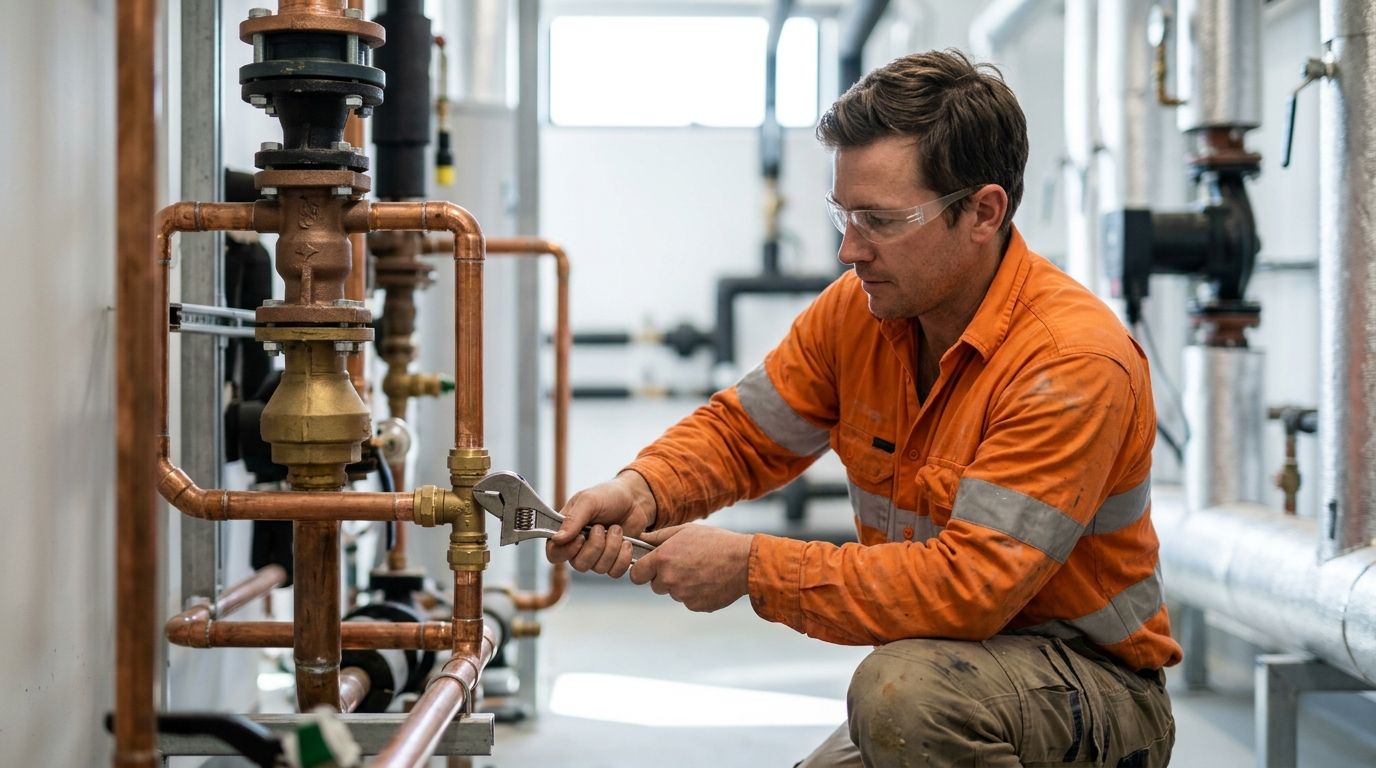
You have the experience. You have done the work on residential jobs, commercial fit-outs, new builds, and maintenance contracts. You know how to read a plan, rough in a system, and sign off on a job that passes inspection. The people who work alongside you know it too.
But the formal record says otherwise. Or rather, the formal record says nothing at all.
This is not a story about incompetence. It is a story about a structural gap—a predictable cycle that repeats across skilled ACT plumbers who learned their trade on the tools rather than through a formally assessed training pathway. Experience accumulates, genuine competence grows, the work gets done safely and professionally, and the formal record stays empty.
The cycle is not your fault. It is built into how the Australian qualification system counts skills. Understanding that distinction is the first step to resolving it.
Why experience and formal recognition are counted separately
Here is the core of it: in Australia, formal qualifications are not determined by what you can do. They are determined by how your learning was assessed and recorded.
Skills are developed one way, and they are formally recognised another. These two systems operate independently. You can spend a decade developing deep, genuine competence in plumbing, but that competence will not automatically generate a formal qualification. This is because no qualified assessor has evaluated it against a recognised standard and issued a record of that assessment.
The Australian Qualifications Framework (AQF) sets out how qualifications are structured and issued in Australia. A qualification is not simply a record of what you know. It is a record of what a registered training organisation (RTO) has formally assessed you as knowing and being able to do, against specific competency standards. On-the-job experience, no matter how extensive, does not generate that record on its own.
This is not a flaw in the system designed to punish experienced workers. It is a structural feature designed to ensure that formal qualifications carry consistent, verifiable meaning. The consequence, however, is that skilled workers who developed their competence outside a formal assessment pathway are left with a gap between what they can do and what the system can see.
Recognition of Prior Learning (RPL) is the mechanism the system provides to close that gap. But before we get to the solution, it is worth naming exactly where the gap surfaces.
Three moments when the gap becomes visible
The gap between experience and formal recognition is invisible until it isn't. For most skilled ACT plumbers, it surfaces at three predictable moments.
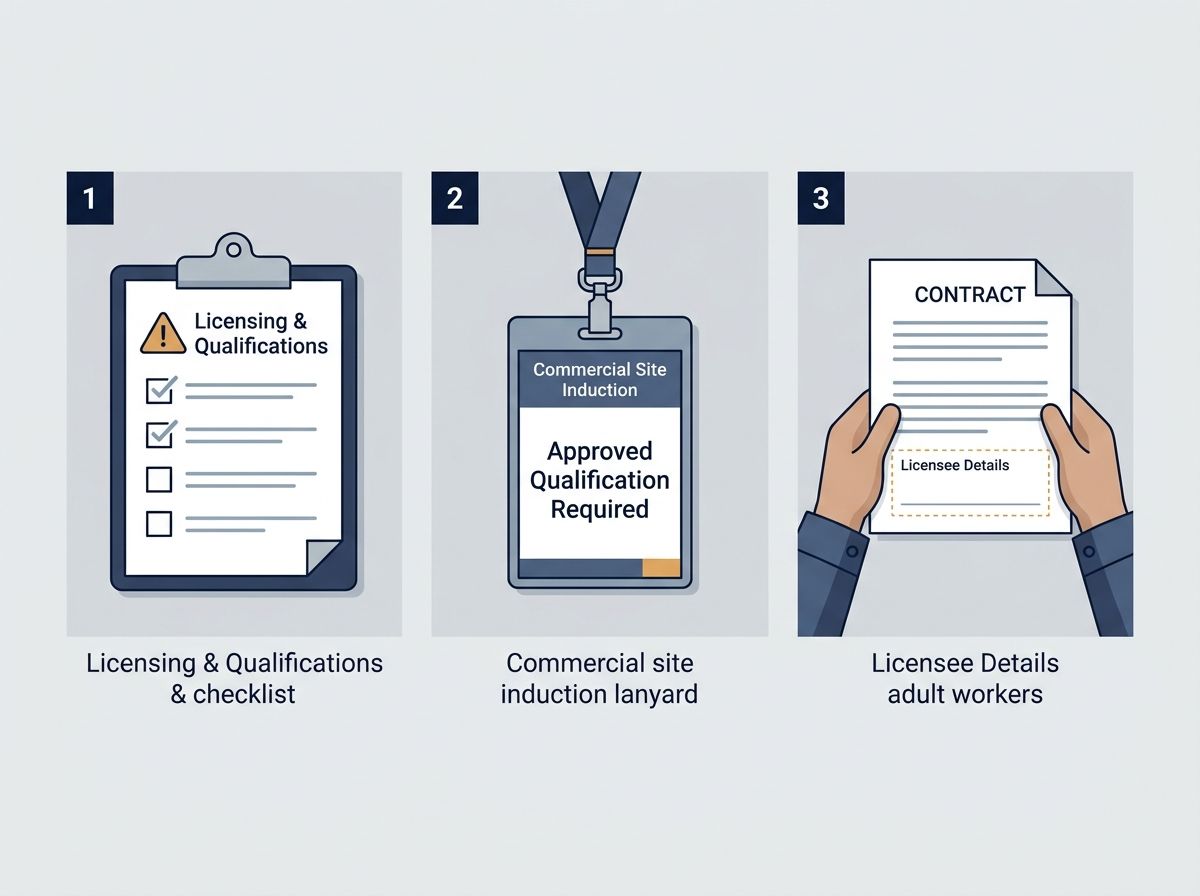
The first is a tender. You submit a bid for a commercial or government contract. The work is well within your capability, as you have done comparable jobs dozens of times. Then you reach the licence requirements section. Licensed tradesperson status is required. You do not have the formal credential, and the tender is dead before it starts.
The second is a commercial site induction. You arrive at a new site, like a hospital fit-out, a school refurbishment, or a government building. The site supervisor runs through the induction checklist. Proof of qualification is required before you can commence work. You have years of experience, but you do not have the paper, so you cannot start.
The third is an employer who wants to engage you. They have seen your work and they know your reputation. They want to bring you on for a significant project. However, their insurance, contract terms, or licensing obligations require that anyone doing licensed plumbing work holds the relevant credential. They recommend you, but they cannot officially engage you, and the opportunity passes.
These are not three different problems. They are the same structural gap appearing in different contexts. The gap is not your skill; the gap is the formal record.
What RPL actually does—and what it doesn't
Recognition of Prior Learning (RPL) is the formal assessment pathway that exists to convert documented experience into formal evidence. It is worth being precise about what that means, because RPL is frequently misunderstood.
RPL is not additional study. You are not going back to TAFE. You are not sitting in a classroom re-learning things you already know. RPL is an assessment process, meaning a structured evaluation of whether your existing skills and knowledge meet the competency standards for a qualification.
RPL is also not a rubber stamp. It is a rigorous process conducted by a qualified assessor from a registered training organisation. The assessor evaluates evidence of your existing competence against specific units of competency, which are the same standards that any plumbing apprentice must meet to receive their qualification. The assessment is genuine, and the qualification issued at the end is nationally recognised because of this rigor.
What RPL does is start from where you are. Rather than asking you to re-learn what you already know, it asks you to demonstrate what you already know. That demonstration happens through evidence, such as work records, logbooks, photographs of completed work, third-party reports from supervisors or employers, and in some cases practical demonstrations. The assessor evaluates that evidence against the competency standards and determines whether you meet them.
One important note: if the assessment identifies areas where your documented experience does not fully meet the competency standards, gap training may be required. A reputable RTO will be transparent about this possibility before you commit to the process. It is not a failure, but an honest assessment of where your evidence is strong and where it needs supplementing.
How Certificate III in Plumbing connects to the ACT trade licence
In the ACT, a plumbing trade licence requires evidence of the relevant qualification. Certificate III in Plumbing is the qualification that satisfies that requirement for most plumbing work in the territory.
RPL through Certificate III in Plumbing is the pathway that converts your documented experience into that formal evidence. The process involves working with a registered training organisation to gather and present evidence of your existing competence, having that evidence assessed by a qualified assessor, and, where the assessment confirms competency, receiving a nationally recognised qualification.
That qualification is then the credential that resolves the three trigger moments described above. It is what the tender requires, what the site induction checklist asks for, and what the employer needs to officially engage you.
Breaking the cycle: what the pathway looks like
The cycle where experience accumulates, the formal record stays empty, and the gap surfaces at trigger moments is not permanent. The RPL pathway through Certificate III in Plumbing is the mechanism that breaks it.
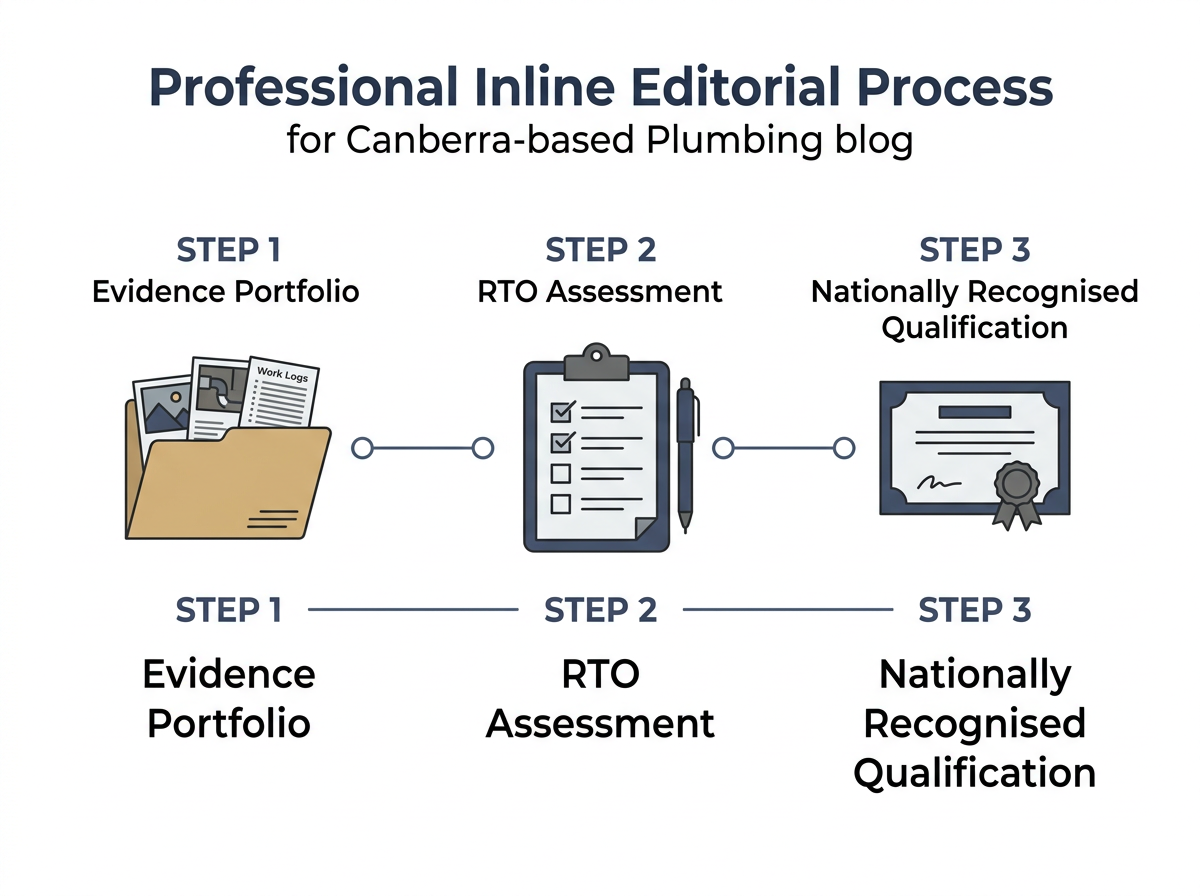
The process works like this: you work with a registered training organisation to understand what evidence is required against the competency standards for Certificate III in Plumbing. You gather that evidence, including work records, documentation of completed jobs, and statements from supervisors or employers who can verify your experience. A qualified assessor from the RTO evaluates that evidence. Where the evidence demonstrates competency, the qualification is issued. Where gaps are identified, the RTO works with you to address them.
The timeline for this process varies depending on the completeness of your existing documentation and the specific requirements of the RTO conducting the assessment. It is not instantaneous, as gathering and presenting evidence takes time and effort. But it is a structured recognition of what already exists, not a return to the beginning.
Your skills are real. Your experience counts. The RPL pathway is how you help the formal system see what the people who have worked alongside you have always known.
Is this pathway right for you?
RPL is not suitable for everyone. It is designed for people who have genuine, documented experience that can be assessed against the competency standards for Certificate III in Plumbing. If your experience is extensive but your documentation is thin, the first step is understanding what evidence you can gather and whether it is sufficient to support an assessment.
The honest answer to 'is this right for me?' depends on your specific situation: the nature and duration of your experience, the documentation you hold, and whether your work aligns with the competency standards the assessment will evaluate. That is exactly what a Free Skills Review is designed to establish.
The decision is yours, but you do not have to make it without information.
Ready to Get Recognised?
Start with a free skills review to find out if RPL is right for you.