You've Put in the Years. The ACT Plumbing Licence System Still Wants the Paper.
You've done the work for years. But the ACT plumbing licence system doesn't see experience — it sees paper. Here's why, and what the recognition pathway looks like.
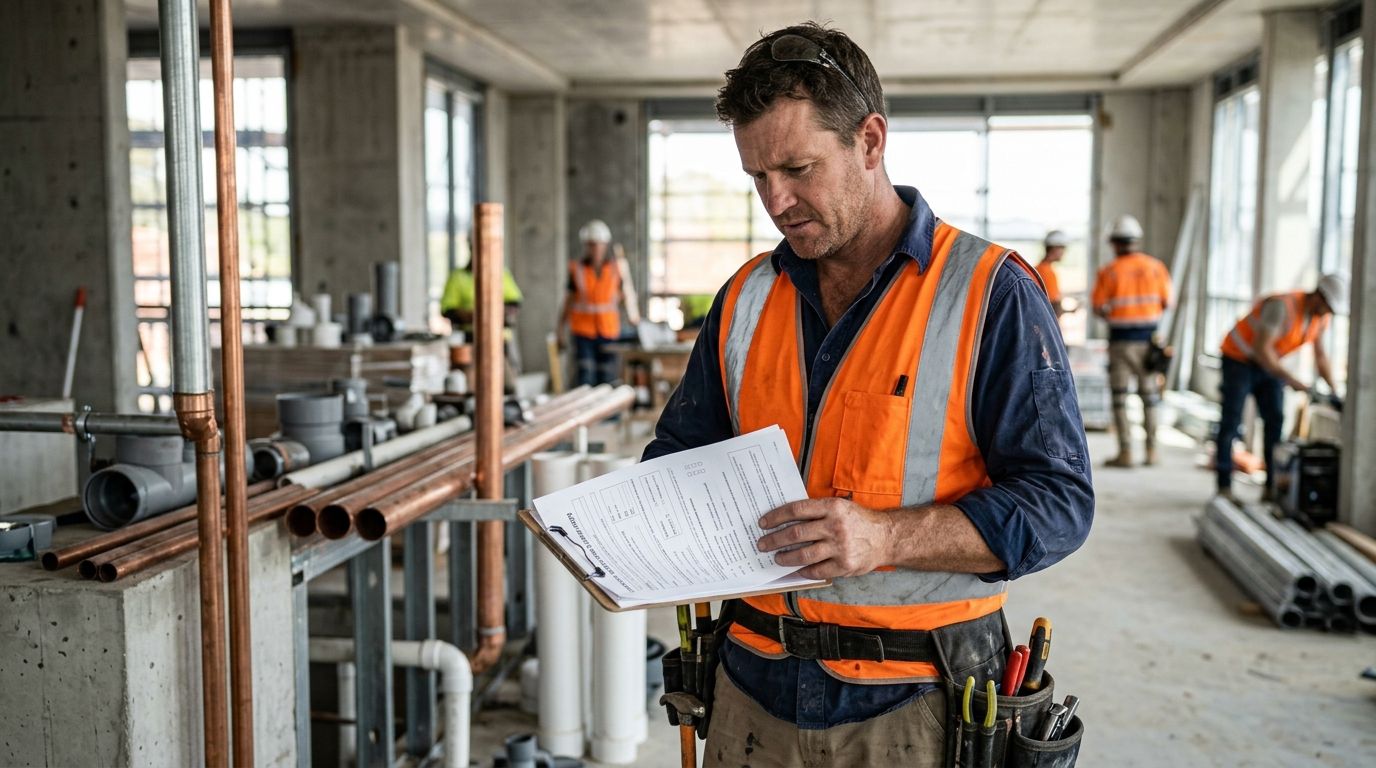
The tender you didn't get
Twelve years on ACT job sites. Commercial fit-outs, new builds, remediation work. You know the systems, you know the codes, you know what goes wrong and why. Then a tender lands — a commercial contract, the kind of work you've been doing for years — and the requirements section stops you cold.
Licensed tradesperson required.
Not 'experienced'. Not 'qualified by practice'. Licensed. And you're not. Not formally. Not on paper.
The contract goes to someone else. Someone who may have less time on the tools than you do. But they have the paper. And in the ACT commercial construction market, the paper is what counts.
This isn't a hypothetical. It's a pattern that plays out across Canberra regularly — experienced plumbers who've built genuine capability on the job, who've earned the trust of builders and project managers, who've handled work that would challenge many licensed tradespeople. And yet the formal system doesn't see any of it. Because the formal system wasn't designed to look at what you can do. It was designed to look at what you can prove.
This isn't about skill. It's about the system.
The frustration is real. And it's worth naming precisely, because it's not what it might look like from the outside.
This isn't about whether you can do the work. You know you can. The builders you work with know you can. The clients who keep calling you back know you can. The gap isn't in your capability — it's in how your capability is recorded.
The ACT plumbing licence system requires formal assessment of competency against national standards. That assessment has to be conducted by a registered training organisation and documented in a way the licensing authority can verify. Years of demonstrated competence on ACT job sites don't automatically satisfy that requirement — not because the experience isn't real, but because it hasn't been formally assessed and recorded in the way the system requires.
That's the structural gap. It's not about your skill level. It's about the distance between how competence is acquired — through years of practice, mentorship, and real-world problem-solving — and how it's formally recognised, which requires a specific kind of documented assessment.
This gap affects experienced tradespeople across Australia, not just in plumbing and not just in the ACT. It's a feature of how vocational licensing works, not a flaw in any individual's career. Understanding that distinction matters — because it changes what the solution looks like.
The four moments the gap shows up
The paper gap doesn't announce itself once. It shows up at specific, commercially consequential moments — and if you've been working in ACT plumbing for any length of time without a formal licence, you'll recognise at least some of these.
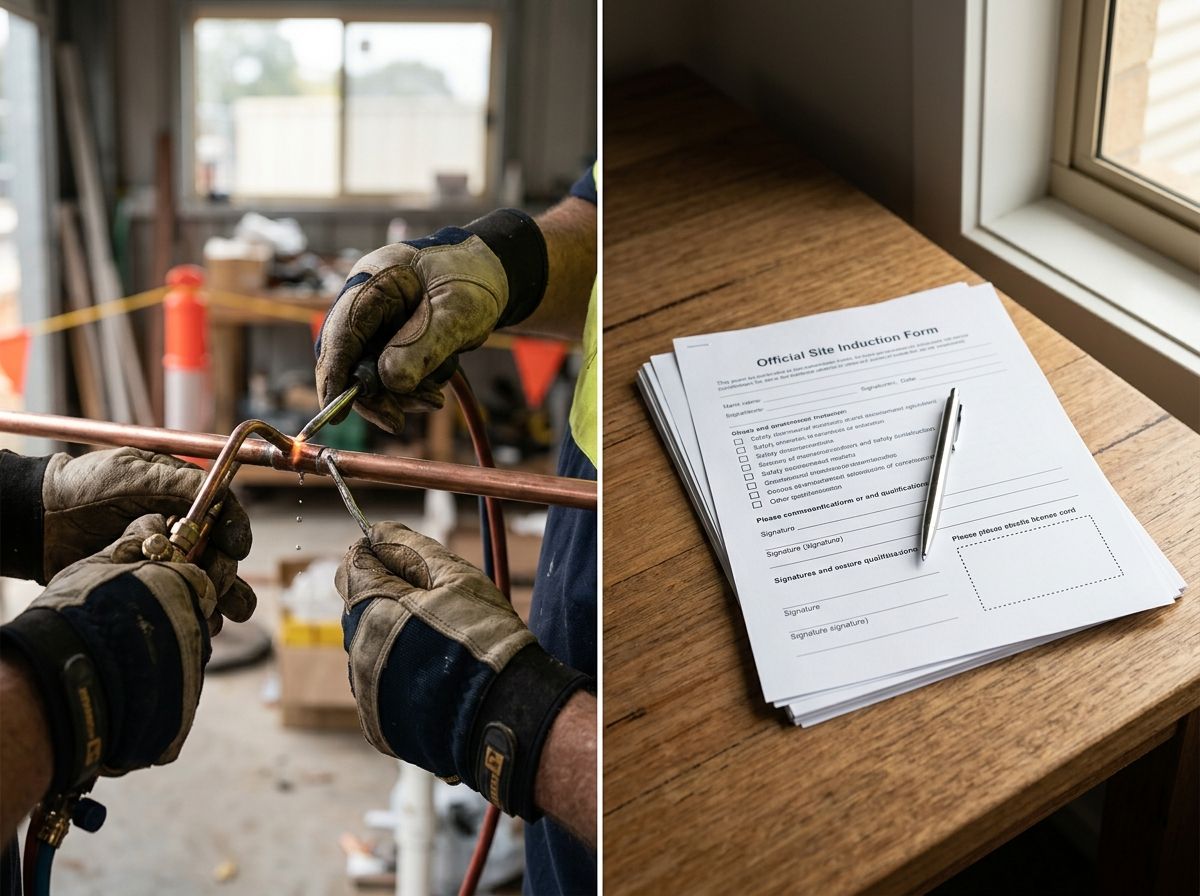
Tender requirements. Commercial construction tenders in the ACT commonly specify that plumbing work must be carried out by a licensed tradesperson. It doesn't matter how many similar jobs you've completed, or how strong your references are. The licence box needs to be ticked. Without it, your bid doesn't progress.
Insurance sign-offs. Public liability insurance for plumbing contractors can be structured around licensing status. When a project requires documentation of your coverage, the absence of a formal licence can create complications — or gaps — that affect your ability to work on certain sites or for certain clients.
Commercial site inductions. Many commercial construction sites in the ACT require tradespeople to show their licensing credentials as part of the site induction process. It's a compliance checkpoint. If you can't produce the licence, you may not be able to access the site — regardless of your experience level or the quality of your previous work.
Job applications and employment decisions. When you apply for a role that requires a licensed plumber, the screening process often filters on licence status before it reaches your experience. Automated systems, HR departments, and procurement teams look for the credential first. Your twelve years of ACT site experience may never be seen if the licence field is empty.
Each of these moments is a version of the same problem: the system has no mechanism for seeing what you already know unless it has been formally assessed. Your capability is real. But it's invisible to the processes that gatekeep commercial work.
Why the system works this way (and why that doesn't make it less frustrating)
It's worth being honest about why the licensing system is structured the way it is — not to defend it, but because understanding the logic helps clarify what the solution actually needs to look like.
Plumbing licensing exists to protect consumers and the public. Poorly executed plumbing work can cause serious harm — structural damage, contamination, safety failures. The licensing framework is designed to ensure that anyone carrying out licensed plumbing work has had their competency formally verified against a consistent national standard. That's a legitimate purpose.
The problem isn't that the system requires formal assessment. The problem is that the system has limited mechanisms for recognising competency that was developed outside of formal training pathways. If you completed an apprenticeship, your competency was assessed and documented as you went. If you built your skills on the job — through mentorship, practice, and accumulated experience — your competency is equally real, but it hasn't been documented in the form the system can read.
That's the frustration. Not that the system requires proof. But that the system, until recently, had few pathways for experienced workers to provide that proof without starting from scratch. The ACT licensing framework operates under ACT licensing legislation, and the formal assessment requirement is not going away. But there is now a recognised pathway for experienced plumbers to have their competency assessed — without repeating training they don't need.
The ACT Trade Licence pathway was built for this situation
Recognition of Prior Learning — RPL — is the mechanism that allows formally assessed competency to be demonstrated through evidence of what you already know and can do. It is not a shortcut. It is not a workaround. It is a rigorous assessment process that starts from where you are, not from zero.
The distinction matters: RPL is a recognition process, not a training programme. You are not being asked to learn what you already know. You are being asked to demonstrate it — through evidence, through structured assessment, through a process conducted by a registered training organisation that is specifically designed to evaluate real-world competency.
For experienced ACT plumbers, the pathway to formal licensing runs through RPL against the relevant Certificate III in Plumbing. The assessment is conducted by a qualified assessor from a registered training organisation — RPL it guides you through the process, but the RTO conducts the assessment and issues the qualification. That qualification is nationally recognised because the assessment is genuine.
If gaps in your competency are identified during the assessment process, gap training is provided — at no additional cost. The process is honest about what it finds, and it's designed to support you through any areas that need strengthening, not to penalise you for them.
The ACT Trade Licence pathway for plumbers is the formal recognition route for experienced tradespeople in this situation.
What the recognition process actually involves
The RPL process for an experienced plumber is built around evidence of what you've already done. That evidence typically includes documentation of your work history — records of the jobs you've completed, the systems you've worked on, the scope of work you've handled. It includes employer references or third-party reports from people who can verify your competency in practice. It may include photos of completed work, logbooks, or other records that demonstrate your experience against the specific units of competency being assessed.
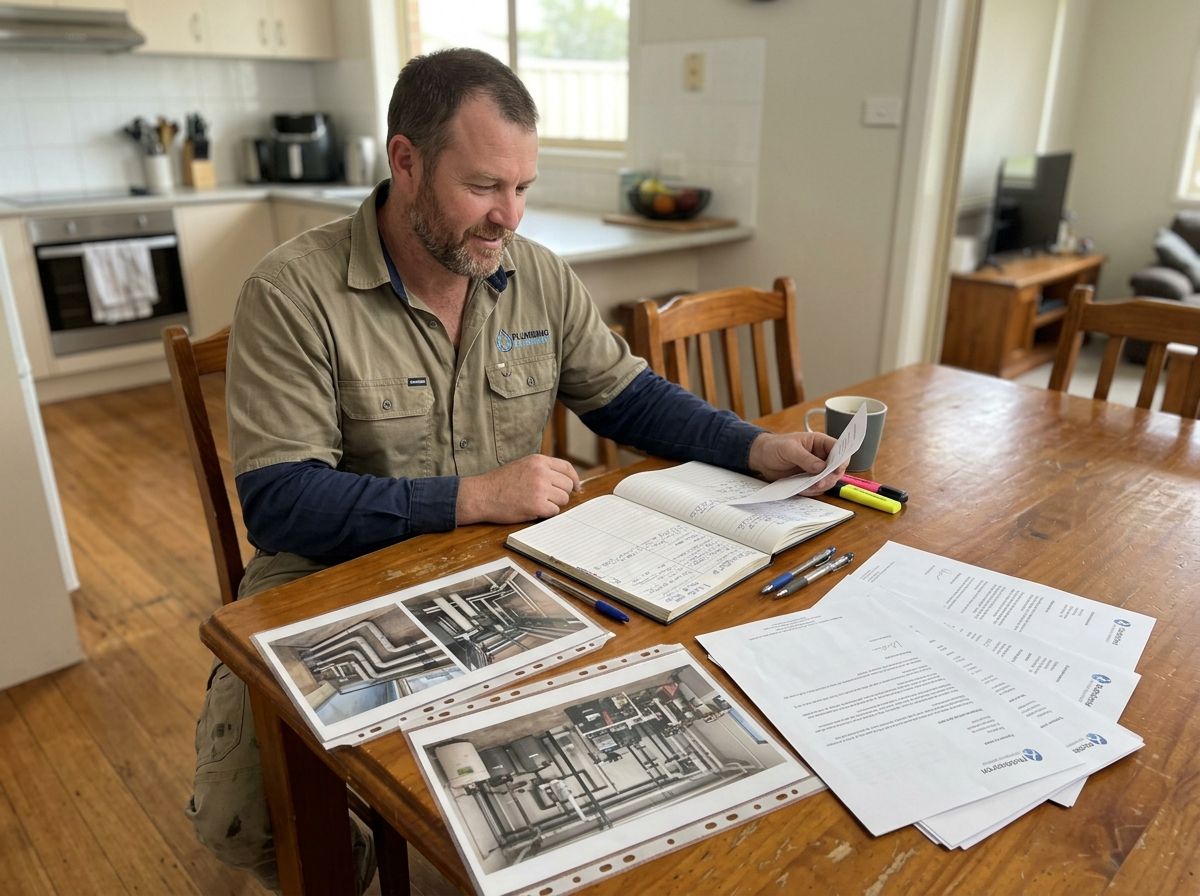
The assessor's job is to evaluate that evidence against the national competency standards — not to compare your background to a classroom curriculum, but to determine whether what you know and can do meets the standard. For most experienced ACT plumbers, the evidence is already there. The process is about gathering it, organising it, and presenting it in a form the assessor can work with.
This feels unfamiliar to people who've never been through a formal assessment process. That's understandable. The documentation side can feel like a lot when you're used to your work speaking for itself on site. But the process is structured — there's guidance at every step — and it's designed to surface the competency you already have, not to create barriers to recognising it.
If the assessment identifies areas where your evidence is thin or where your competency needs strengthening, gap training addresses those areas. The goal is to reach the standard, not to find reasons to fall short of it.
You have the experience. The ACT Trade Licence pathway exists to have that experience formally recognised. The decision is yours. A Free Skills Review costs nothing and commits you to nothing — it's the honest first step to understanding whether your experience qualifies for the ACT Trade Licence pathway.
Ready to Get Recognised?
Start with a free skills review to find out if RPL is right for you.