When 10 years on the tools means nothing without the paperwork
Your employer says you need a qualification. Here is how an RPL certificate turns your site experience into compliance without leaving the job.

The email nobody wants to get
You have been doing the job for years. You know the work. You have trained people who are now running their own crews. Then the email arrives, or the site manager pulls you aside, and the message is the same: the employer needs everyone to hold a formal qualification. The contract requires it, and the compliance deadline is real.
The frustration you feel is completely real. You are not being told you lack competence. You are being told that you lack paperwork. Those are two very different things, and the formal system only recognises one of them.
Across construction, mining, utilities, and related industries, employers must increasingly prove that their workforce holds nationally recognised qualifications. This is not a reflection on individual workers. It is a structural shift in how compliance is documented and verified. The mandate is not personal, but the impact certainly is.
This article is written for the worker who already knows how to do the job. The question is how to get the paperwork you need without stopping work to go back to school.
Why the formal system does not see what you have done
Formal systems, including employers, licensing bodies, and registered training organisations, require evidence in a specific format. Your decade on the tools exists in the wrong form for formal recognition. That is not a judgment on your competence. It is simply a formatting problem.
The Australian training system is built around nationally recognised qualifications. These qualifications consist of units of competency, which are specific, defined standards describing what a worker needs to know and do. When an employer or regulator asks for a qualification, they want documented proof that you have been assessed against those standards.
Your years of experience almost certainly meet those standards. The gap is not in what you can actually do. The gap is in the formal record of it. Recognition of prior learning (RPL) exists to close that specific gap.
What RPL is and what it is not
Recognition of prior learning is a formal assessment process that evaluates your existing skills and experience against the units of a nationally recognised qualification. Instead of studying what you already know, you provide evidence of what you can do, and a qualified assessor from a registered training organisation determines whether it meets the standard.
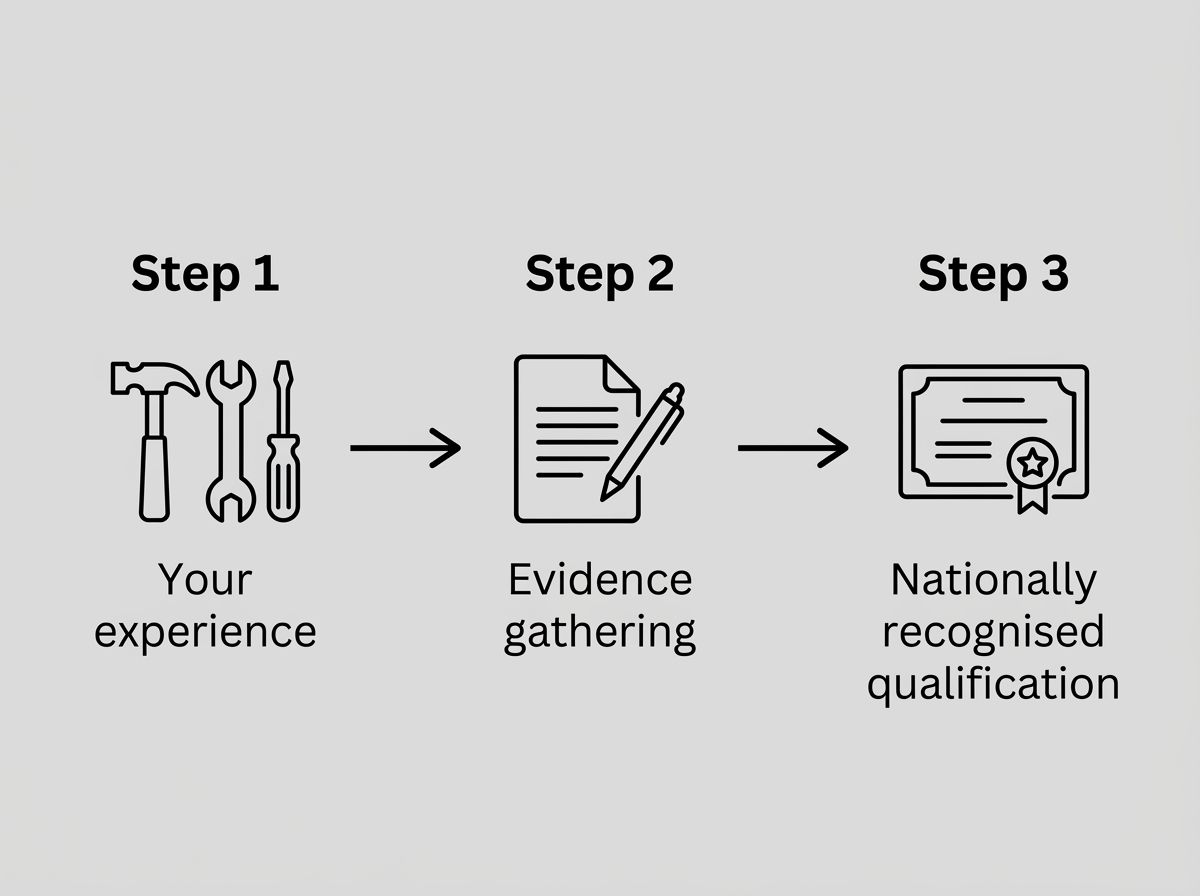
RPL is not a shortcut, and it is not a loophole. It is a rigorous assessment pathway that forms part of the nationally recognised training system in Australia. The qualification issued at the end is identical to one earned through traditional study because the assessment standard remains the same.
The difference lies in what you are being assessed on. In a traditional course, you learn the content first and then demonstrate it. In an RPL assessment, you demonstrate what you have already learned through years of doing the work. For experienced workers, this distinction is highly significant.
It is also worth being completely direct about what RPL involves. You will need to gather evidence. You will work with an assessor. There may be a practical component. If gaps are identified where your evidence does not fully meet the standard, those gaps are addressed through targeted training. The process is thorough, and the qualification is earned.
The evidence you already have on site
Here is what most experienced workers do not realise: the raw material for an RPL assessment is already on your phone, in your ute, and in your employer's records. You probably have more evidence than you think.
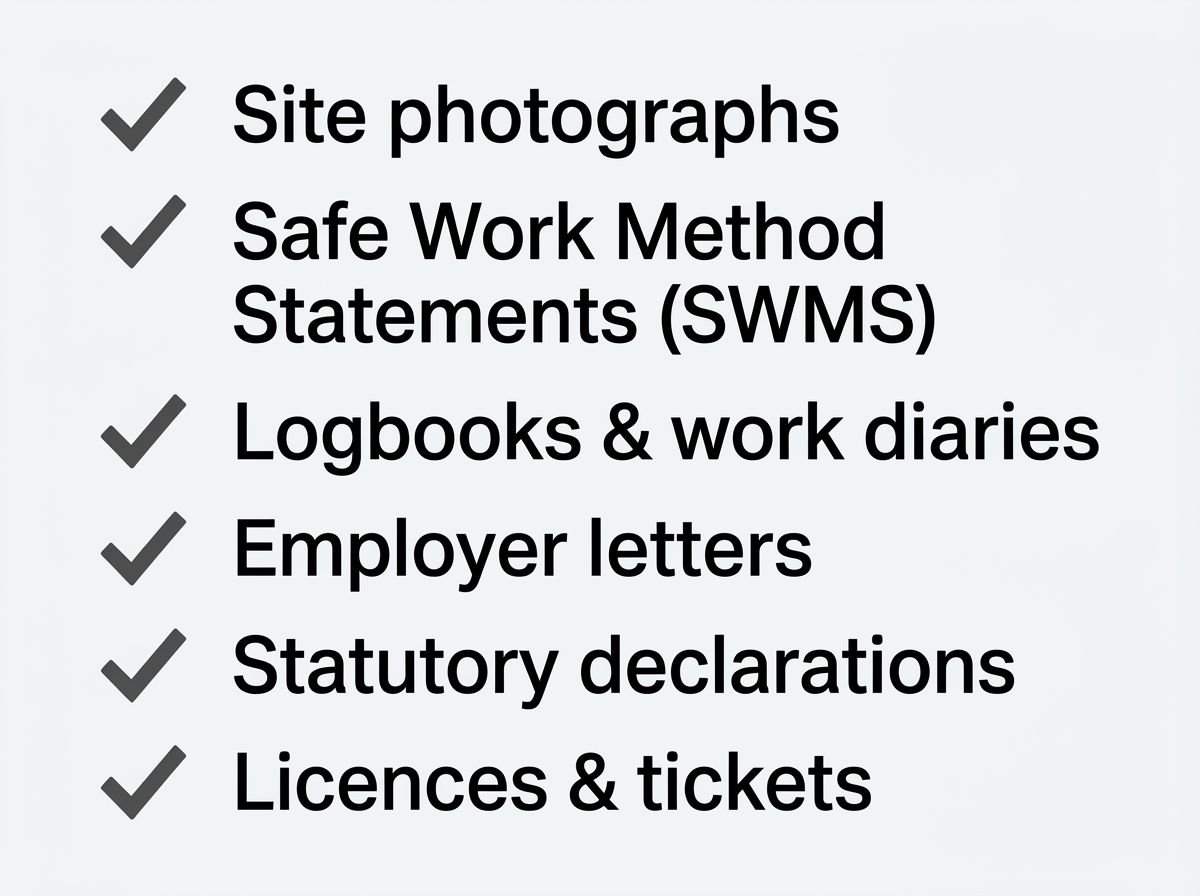
Assessors look for evidence that you can perform the work to the required standard. For trades and site workers, that evidence typically includes items such as:
- Site photographs of completed work
- Safe Work Method Statements (SWMS) you prepared or worked under
- Logbooks or daily work diaries
- Employer letters or statutory declarations confirming your role and experience
- Third-party reports from supervisors or project managers
- Completed project records, job sheets, or inspection reports
- Any licences, tickets, or certificates you already hold
The specific evidence required depends on the qualification and the training package it sits within. Your assessor will guide you through what is needed for your particular situation. The work you did last week is often the exact evidence you need today.
You are not starting from zero. You are simply organising what already exists.
Meeting compliance requirements without leaving the site
This is how the employer mandate gets resolved. The compliance requirement is met, and the actual work continues without interruption.
RPL allows you to work toward a nationally recognised qualification using evidence from work you have already done. Much of the evidence gathering happens around your existing schedule, meaning you are not required to take time off to attend classes or sit exams. The assessment is conducted by a qualified assessor from a registered training organisation.
The qualification issued at the end of a successful RPL assessment is nationally recognised under the Australian Qualifications Framework. It satisfies the same compliance requirements as a qualification earned through traditional classroom study. Your employer's requirements are met, and the contract condition is satisfied.
The process is not instant. Gathering evidence and working through an assessment takes time and effort, but it is designed to work around your existing commitments, not replace them.
What happens if there are gaps
Not every candidate will have evidence for every single unit in a qualification. This is normal. It does not mean RPL is the wrong pathway; it simply means the process is working as designed.
Where gaps are identified, the registered training organisation provides gap training to address them. This is a standard part of the RPL process, not a failure or a setback. The qualification is nationally recognised precisely because the assessment is thorough, and thorough assessment sometimes identifies areas where additional training is needed.
Before you begin, ask your provider whether gap training is included in the assessment fee and what the process looks like if gaps are identified. A good provider will be upfront about this from the start. Honest guidance before enrolment is not a weakness; it is the foundation of a process you can trust.
The RPL it approach is to guide candidates toward the right pathway, not simply to enrol them. If RPL is not the right fit for your situation, that is worth knowing before you invest time and money in the process.
Is your experience enough to start the process?
The honest answer is that it depends on the qualification, the training package, and the evidence you can gather. Not every worker with ten years of experience will have evidence that covers every unit. Some will, some will have most of it, and others will have gaps that require additional training.
The Free Skills Review exists to answer this question at no cost, with no obligation. It is a practical first step to find out whether your experience is likely to support an RPL pathway before you commit to anything.
You have the experience. The question is whether it can be presented as evidence, and that is exactly what a skills review is designed to determine.
For a broader perspective on how experienced workers approach the RPL certificate process, this article is worth reading before you begin.
Your employer's deadline is real. Your experience is real. The pathway to connect them exists. The decision is yours.
Ready to Get Recognised?
Start with a free skills review to find out if RPL is right for you.