Why standardising logistics qualifications does not drive employee turnover
Fearing staff will leave for competitors, employers hesitate to fund qualifications. The evidence actually points in the opposite direction.

The fear logistics managers face before signing off on training
You have a warehouse supervisor who has been running your inbound operations for six years. She knows the systems, the carriers, and the quirks of your peak season. Your new contract requires formally qualified logistics personnel. You consider sponsoring her through a Certificate IV in Supply Chain Operations or a Diploma of Logistics. Then you wonder: if she gets the qualification, does she become more attractive to every competitor in the market? You pay for the training. She leaves. You are left with the cost and none of the benefit.
This is the primary barrier preventing logistics employers from investing in workforce formalisation. It is a rational-sounding fear. But it is worth examining carefully, because the logic does not hold under closer inspection.
What the evidence shows about qualified workers and loyalty
Work-related training in Australia is overwhelmingly employer-funded. Analysis of HILDA Survey data by the Australian Industry Group Centre for Education and Training found that in 2024, 86 out of every 100 employees who undertook work-related training reported that their training was fully employer-sponsored. This pattern has remained consistent for each of the last five years.
The same analysis found that about nine in ten individuals who undertook work-related training in 2024 did so in paid work time. This means employers are investing in both course fees and the hours their people spend learning.
If employer-funded training reliably triggered departures, we would expect to see employers pulling back from it. Instead, participation in work-related training was above the long-term average in both 2023 and 2024, and employer investment in paid training hours reached a record high in 2024.
Research on organisational commitment provides further context. A study of Australian manufacturing managers found that perceived organisational support, meaning the sense that an employer values an employee's contribution and cares about their wellbeing, was significantly associated with higher levels of employee commitment. The literature reviewed in that study links organisational commitment to lower turnover rates, reduced absenteeism, and stronger job performance.
Sponsoring a qualification is one of the most concrete signals an employer can send to show they value a worker's contribution. The worker who receives that signal is unlikely to leave. They are more likely to feel that this employer is worth staying with.
The real reason logistics workers leave
Australia's transport, postal, and warehousing industry employs around 5% of the national workforce and contributes approximately 4.5% of GDP. It is a sector that depends on experienced, capable people, and it faces clear workforce pressures.
National workforce data from the AHRI Quarterly Australian Work Outlook found that average annual employee turnover across Australian workplaces was approximately 14% for the 12 months to July 2023. Turnover is not evenly distributed. Nearly a quarter of organisations reported annual turnover of 20% or more, while around three in ten reported turnover of less than 5%.
That variation matters. If qualification attainment were the primary driver of departure, we would expect turnover to be consistently high wherever employers invest in training. Instead, turnover varies significantly between organisations. This points to employer practices, workplace culture, and management quality as the more likely explanatory factors.
Research on Australian casual academics found that job-related characteristics, specifically supervisor support and co-worker support, were among the factors that impacted organisational commitment. The implication aligns with broader workforce psychology. Workers leave environments where they feel unsupported, undervalued, or invisible. They stay where they feel recognised.
The worker who leaves after getting qualified does not resign because of the qualification. They leave because of pre-existing issues, and the qualification gave them the confidence to take action. Employers who link the two are misidentifying the cause.
What happens to compliance when your logistics workforce is not formally qualified
The employer's fear focuses on losing a qualified worker. However, the more immediate and concrete risk is operating with an unqualified workforce.
The Transport and Logistics Training Package, the national framework that structures logistics qualifications in Australia, was designed to align with applicable heavy vehicle driving licensing and regulatory requirements for each state and territory. Licensing and regulatory obligations sit alongside formal qualifications. They are not the same thing, but they are connected.
For many transport and logistics roles, entry requirements include holding a current, full, and unrestricted Australian driver licence and fulfilling all relevant state or territory regulatory requirements. Formal qualifications such as a Certificate III or Certificate IV in a logistics discipline sit within this broader compliance framework.
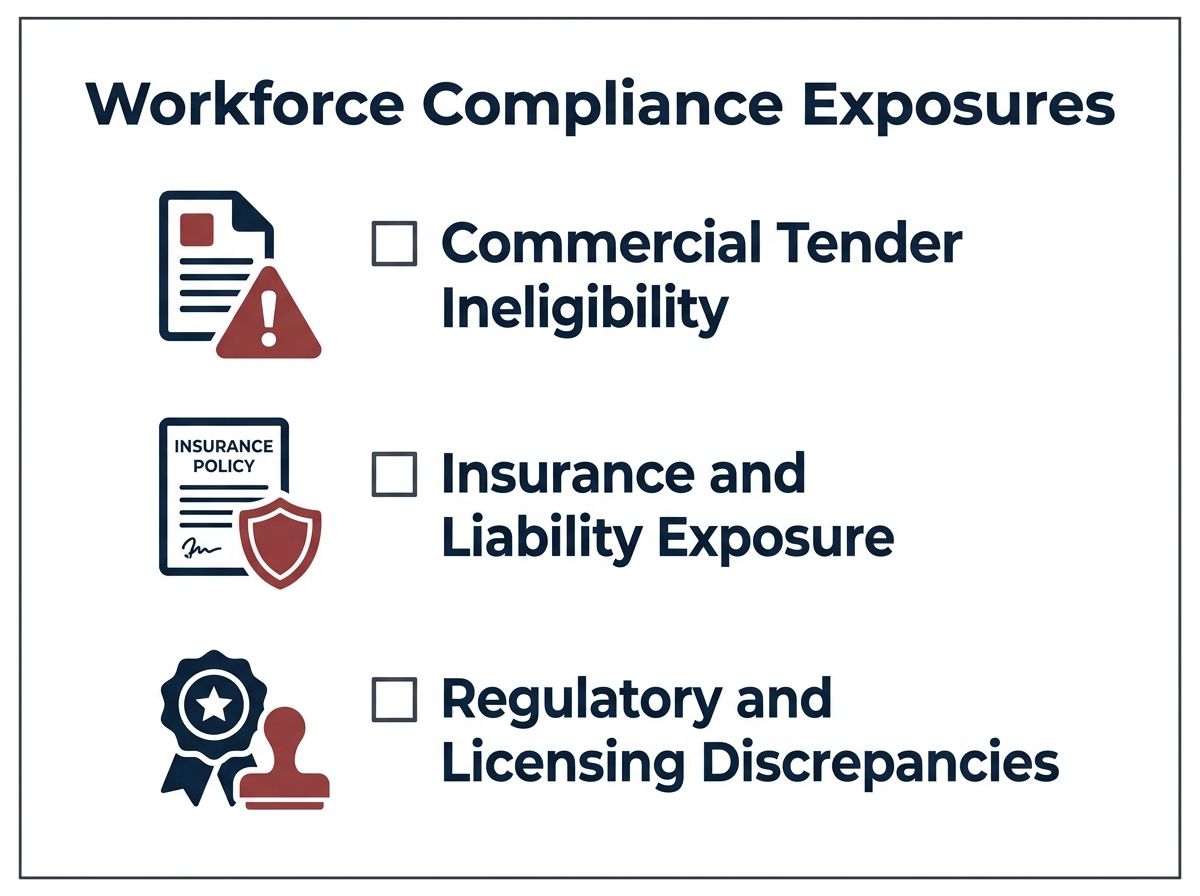
Beyond licensing, commercial and government contracts increasingly specify formally qualified personnel as a condition of engagement. An unqualified workforce may disqualify your business from tenders, create insurance exposure, and limit your capacity to take on higher-margin work. The question is not whether you can afford to qualify your team, but whether you can afford the risk of remaining unqualified.
The Australian Government's Jobs and Skills Australia profiles the transport, postal, and warehousing industry and notes that formal qualifications can improve employability for management and specialist roles.
Why RPL is a practical tool for workforce formalisation
Recognition of Prior Learning (RPL) is a formal assessment process under the Australian Qualifications Framework that evaluates skills, knowledge, and experience gained through work, rather than requiring a worker to repeat learning they have already demonstrated on the job.
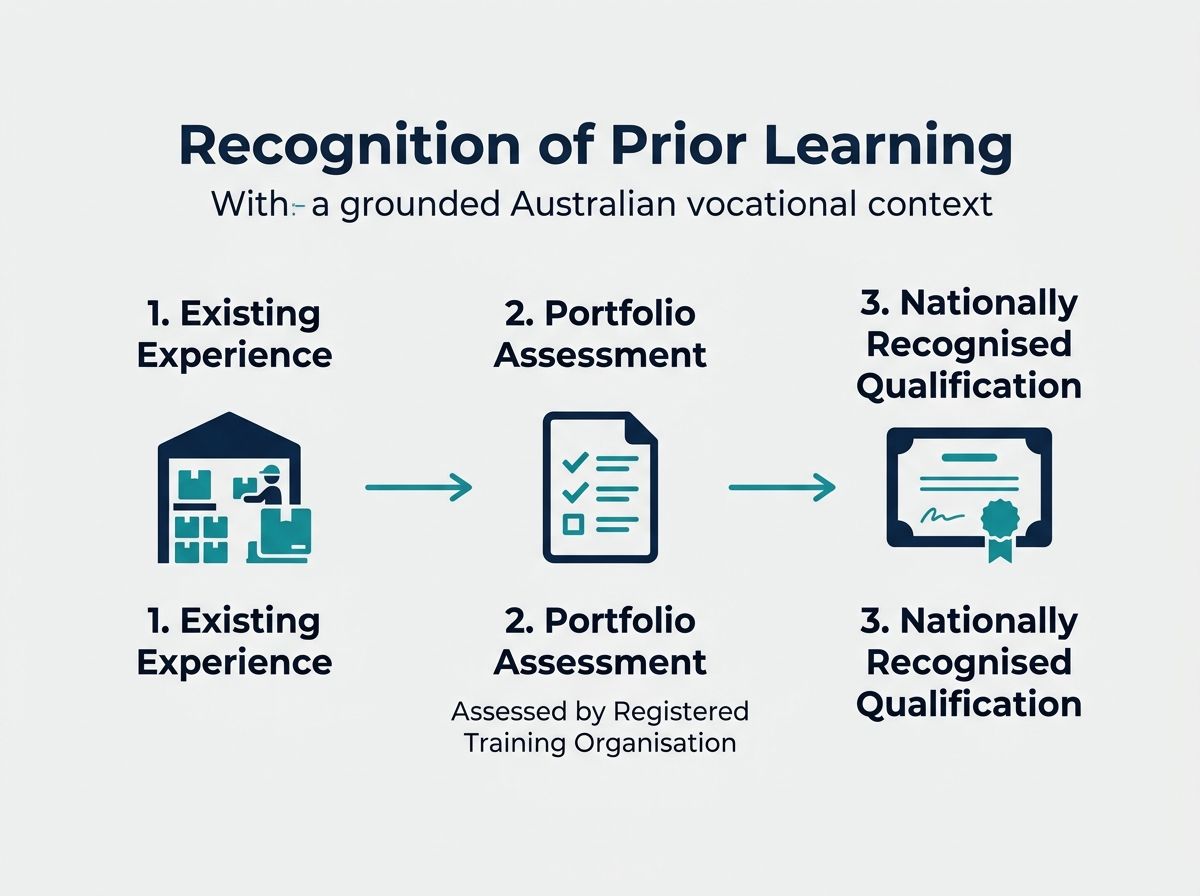
For logistics employers, this matters practically. Your experienced warehouse supervisor does not need to sit through units covering processes she already manages daily. RPL assesses what she already knows and does. This involves guided documentation of her existing competency, followed by a formal assessment conducted by a registered training organisation. The RTO issues the qualification, and RPL it guides the candidate through the process.
The Transport and Logistics Training Package includes qualifications at multiple levels, from Certificate I through to Diploma, covering supply chain operations, logistics management, and specialist transport disciplines. The national register at training.gov.au lists current TLI-coded qualifications. Qualification codes are periodically updated, so it is worth confirming the current code before proceeding.
Some registered training organisations offer the Diploma of Logistics through RPL, which is designed for people managing supply chain, transport, warehousing, and distribution operations. The specific qualifications available through RPL will vary by RTO and by the candidate's experience profile.
One RTO indicates that an RPL application typically takes between two and eight weeks, depending on the individual and the qualification, though timeframes vary and are not guaranteed. This compares with traditional study pathways that can take considerably longer, depending on the qualification level and delivery mode.
The practical implication for employers is that RPL allows you to formalise existing floor experience without removing workers from operations for extended periods. It provides recognition, not repetition.
The Australian Industry Group Centre for Education and Training analysis of HILDA Survey data found that in 2024, employer investment in paid training hours reached a record high, with the upper bound of the estimate exceeding $7 billion. This indicates that Australian employers broadly recognise the value of workforce development.
The retention paradox: recognition builds loyalty
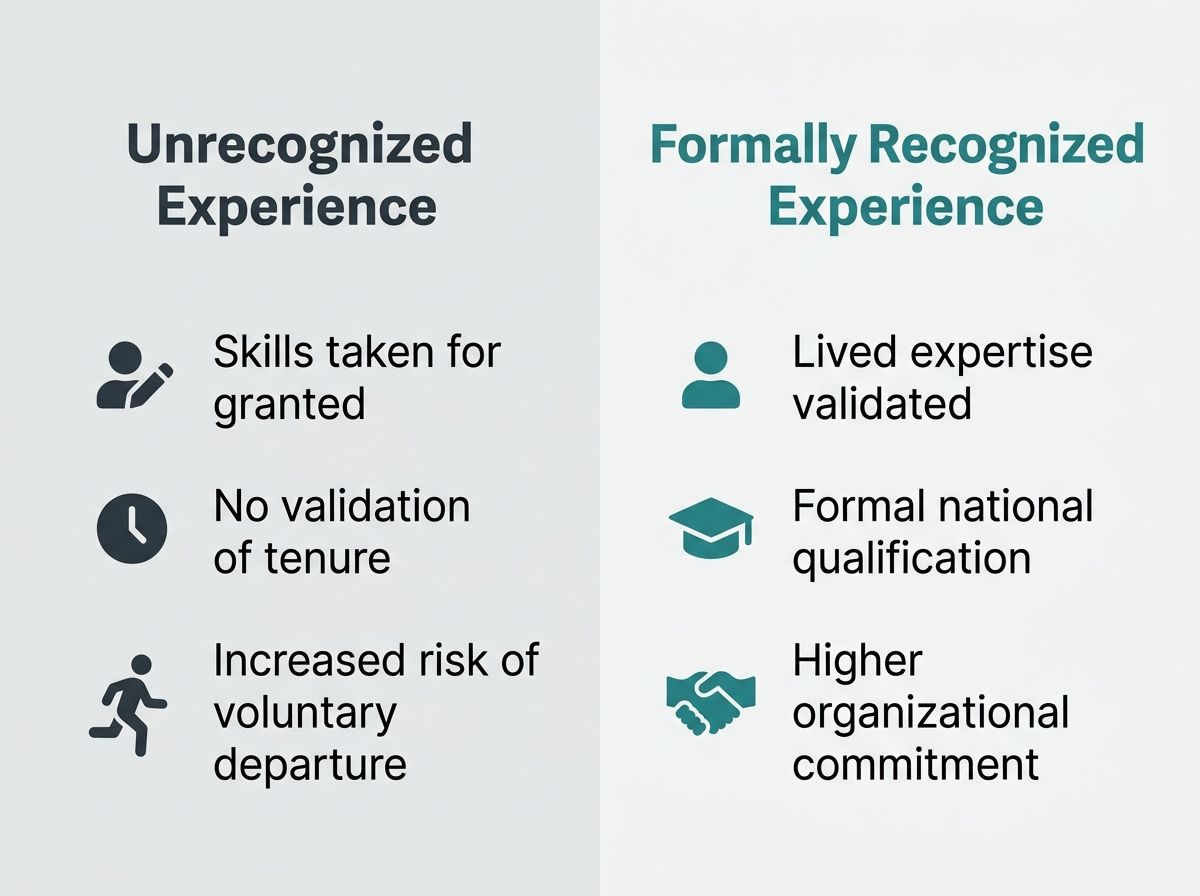
Here is the truth that the fear obscures: the worker who is formally recognised by their employer, whose years of floor experience are validated rather than dismissed, develops stronger organisational loyalty, not weaker.
Research on organisational commitment in Australian workplaces consistently finds that the sense of being valued by an employer is associated with higher commitment and lower turnover intent. The employer who invests in recognition, including formal recognition of existing expertise, becomes the employer worth staying with.
The worker who feels invisible is the one most likely to leave. The worker who feels seen, whose decade of logistics experience is formally acknowledged rather than taken for granted, has a reason to stay that goes beyond salary. You invest in recognition, they invest in you, and the team stays intact.
This is not a guarantee. Workforce dynamics are complex, and no single intervention determines whether someone stays or goes. But the fear that formalising qualifications triggers departure is not supported by the evidence, and the logic runs in the opposite direction.
The BITRE Australian Infrastructure and Transport Statistics Yearbook 2025 notes that road and rail workforces have been declining over the past three years, with around 273,000 people employed in road transport as of August 2025. This context makes retaining experienced workers a genuine strategic priority for logistics employers.
How to formalise your logistics team's experience
The first step does not require a commitment to enrolment. It requires an honest assessment of whether your workers' existing experience is suitable for RPL, and that is exactly what a Free Skills Review provides.
RPL it works with registered training organisations who conduct assessments and issue nationally recognised qualifications. Our role is to guide your workers through the process, helping them document their existing experience as evidence, understand what the assessment involves, and make an informed decision before any enrolment takes place.
If RPL is not the right fit for a particular worker, we will say so. Honest suitability guidance before commitment is the foundation of how we work. The decision is yours.
Ready to Get Recognised?
Start with a free skills review to find out if RPL is right for you.