Why years on the tools won't bypass the licensing gate (and what to do about it)
No formal glazing ticket? Learn how Recognition of Prior Learning (RPL) converts your years of site experience into an MSF30422 qualification.

The cycle nobody talks about in the glazing trade
You have spent years cutting, measuring and installing glass. You know how to read a job site, manage a complex curtain wall detail and troubleshoot a seal that is giving someone grief. The actual work is not your problem, and it never has been.
The real obstacle is a recurring pattern. Once you recognize this sequence, you will start seeing it everywhere.
It works like this: your skills grow, and eventually a better business opportunity appears. This could be a commercial contract, a government project or a role that pays what your expertise is actually worth. Then you hit the licensing requirements. Because you do not hold the formal qualification, the opportunity slips away. You find a temporary workaround, which works until you hit another ceiling and face the same barrier in a different form.
This is a structural issue within the glazing industry rather than a personal failure on your part. Recognition of Prior Learning is a process specifically designed to help you break this exact pattern.
Stage one: skills accumulate, but the clock does not start
Glaziers learn their trade by working on-site. This is one of the industry's great strengths. Years of solving real on-site problems build a depth of practical competence that no classroom can match in the same timeframe.
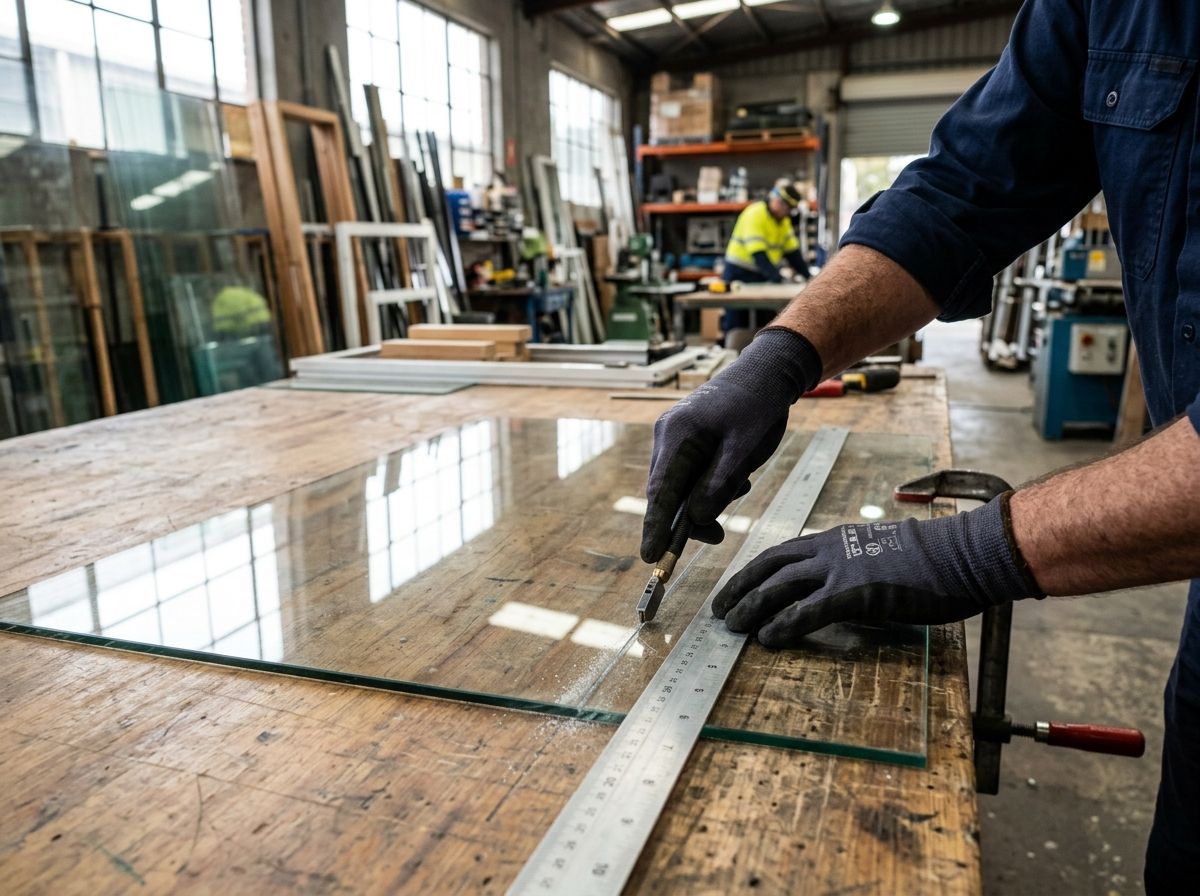
However, the formal qualification system does not recognize this time automatically. Your practical experience only counts once it is documented and assessed against national standards. The clock on your qualification does not start just because you are doing the work.
You can install a hundred shopfronts, work on high-rise glazing systems and train the workers around you, but the formal training system still views you as unqualified. Your expertise is real, but it remains invisible to the regulators and clients who control access to premium contracts.
The MSF30422 Certificate III in Glass and Glazing makes that practical expertise visible. Rather than testing whether you can do the job, it assesses whether your existing skills meet national standards. For most experienced trade workers, the gap between their current knowledge and the formal qualification is much smaller than they expect.
Stage two: the licensing barrier appears
At some point, the barrier appears. It might be a tender document requiring the subcontractor to hold a formal glazing qualification. It might be a site induction where the safety officer asks for your ticket. It could be an insurance requirement, or a principal contractor enforcing compliance on a government build.
Clients and regulators do not look at how many windows you have installed. They only look for formal trade credentials.
Licensing requirements for glazing trades vary across Australian states and territories. In some jurisdictions, you must hold a formal qualification or trade licence to perform certain commercial glazing work, especially on regulated building projects. Because the specifics differ by state, you should check with your local licensing body to see what rules apply to your work.
The experience of hitting this barrier is consistent across Queensland, New South Wales and Victoria. You have the skills, but the system has no record of them, and the opportunity passes.
Stage three: the workarounds and their limitations
Most experienced glaziers continue working by adapting and finding alternative ways to operate.
Some tradespeople work under the licence of a principal contractor or a more senior builder. Others choose to stay in the residential market, where compliance requirements are often lighter. Some take on work through labour-hire arrangements that sit under another person's credentials, while others simply avoid tendering for the contracts that require formal qualifications.
These are practical responses to a difficult licensing system. If you use these methods, it simply means you found a way to keep earning a living with your skills.
But workarounds always have ceilings. Working under another person's licence means your income is capped by their profit margin. Staying in the residential market means missing out on the commercial contracts that pay significantly more. Avoiding certain tenders means watching lucrative work go to competitors who have less practical experience but better paperwork.
A workaround is a temporary holding pattern. The licensing requirements remain a barrier at the next stage of your business growth.
To understand what these workarounds cost your business over time, read our article on
Stage four: hitting the ceiling
Eventually, these temporary methods stop working. A major contract will require your own formal credentials, an insurer will demand proof of qualification before writing a policy, or a site manager will enforce strict compliance in a way you cannot bypass. Sometimes, a colleague gets penalized for operating without the right paperwork.
This is where you hit the ceiling. The underlying issue of licensing demands a permanent solution rather than another temporary bypass.
This brings a specific frustration. It is not about your ability to do the job; it is about a system telling you that your decades of practical knowledge do not officially exist.
That frustration is justified, and it points directly toward the solution.
What the pattern is telling you
The barrier does not mean you lack skill. It means your experience is not in the format that licensing systems recognize.
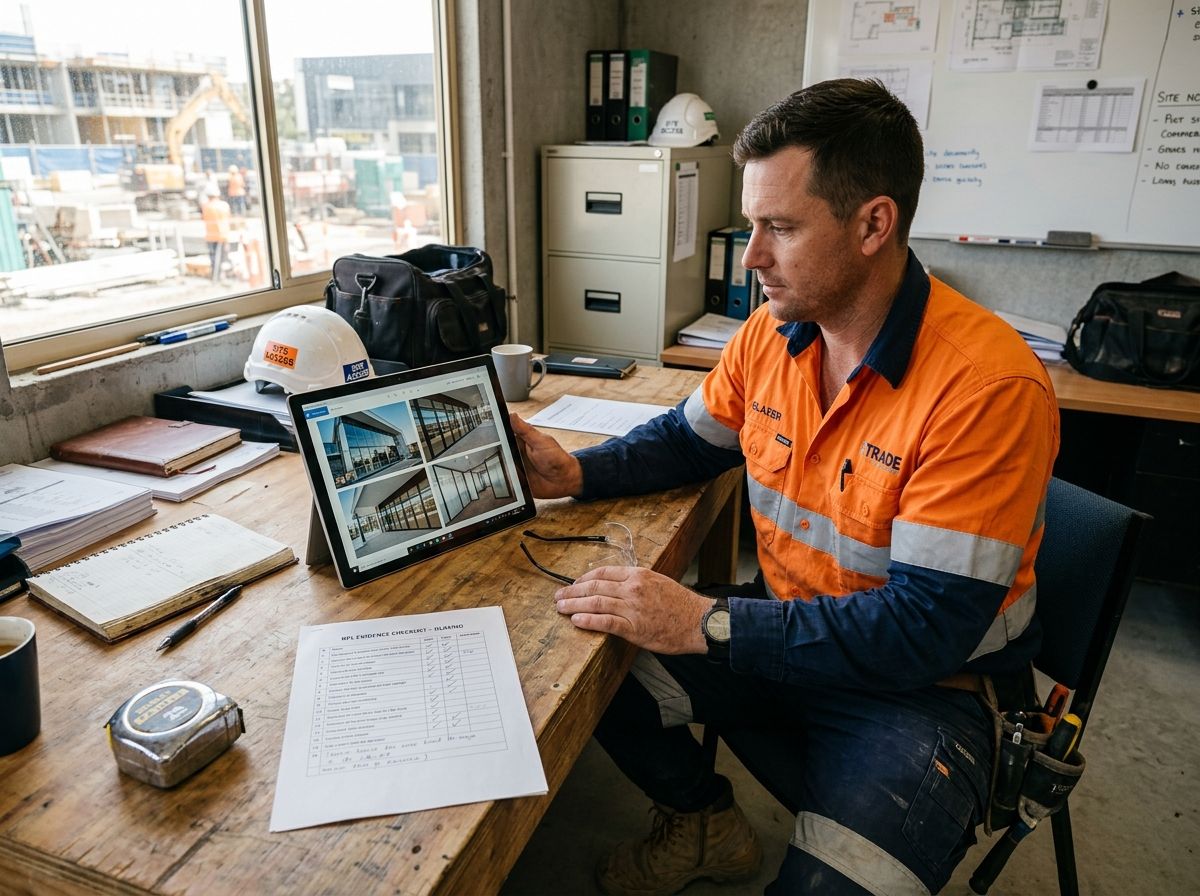
Your daily work can serve as evidence.
This is the core principle behind Recognition of Prior Learning, and it is the mechanism that breaks this cycle. The MSF30422 Certificate III in Glass and Glazing is not a course you have to sit through from the beginning. Instead, your qualification is assessed directly against the skills you already use and demonstrate on-site.
For experienced glaziers, the challenge is simply documenting your work to meet national standards. For most trade workers, this is highly achievable, but you need an honest assessment of your experience to begin.
How RPL converts your site work into the MSF30422
Recognition of Prior Learning is the formal process where a Registered Training Organisation assesses your current glazing skills and knowledge against the units of competency in the MSF30422. This assessment pathway ensures you do not have to repeat training you have already completed through your years of hands-on site work.
This process is a rigorous assessment pathway rather than a shortcut. The assessor from the Registered Training Organisation determines whether your experience demonstrates competence against the national standard. RPL it does not conduct assessments or issue qualifications; that is the role of the Registered Training Organisation. RPL it guides you through the process, helping you understand what evidence is needed, how to gather and present it, and what to expect at each stage.
If the assessment highlights any gaps in your documented experience, you can complete targeted gap training to meet the standard. This is a standard part of the process to ensure your nationally recognized qualification remains respected across the industry.
Assessment timeframes vary depending on the RTO and your individual circumstances. The timeline depends largely on how quickly you gather your evidence. However, if you have substantial, well-documented experience, you will not have to start your training from scratch.
You can view the details of the MSF30422 qualification and the RPL process on our
Evidence required for a glazing RPL
The evidence for your assessment does not need to be academic. It simply needs to prove your practical ability.
Experienced glaziers usually compile evidence including:
- Site photos showing your completed glazing work on different projects
- References from employers or supervisors confirming your experience and work history
- Job sheets, project records or work orders showing the tasks you have performed
- Observation reports from supervisors or assessors verifying your practical skills
- Previous training records, even if you did not complete the full qualification
If you have been on the tools for years, you already have more evidence than you realize. This evidence just needs to be organized and presented in a way that maps directly to the qualification requirements. That is where guided support makes a real difference, helping you identify and structure the evidence you already possess without inventing anything new.
Is RPL the right path for you?
RPL is an assessment process rather than an automatic trade certificate. Your eligibility depends on the scope of your glazing experience.
Glaziers with broad, documented experience across the core areas of the MSF30422 are generally strong candidates for RPL. Those with experience concentrated in a narrower range of tasks, or who have worked primarily in one type of glazing application, may find that some gap training is required to meet the full national standard.
This is not a disqualifying factor. Gap training is a normal part of the process, provided to address specific competency areas rather than requiring a full qualification from scratch. The honest assessment of your suitability always happens before enrolment rather than after.
RPL it's approach is to guide you to the right pathway rather than enrolling you in the wrong one. If RPL is not the most suitable option for your situation, our Free Skills Review will identify this before you invest any time or money.
How to break the cycle
The cycle of accumulating skills, hitting licensing barriers and relying on workarounds only ends when formal recognition is in place. The MSF30422 Certificate III in Glass and Glazing is the qualification that opens that gate, and RPL is the pathway that lets your existing experience count toward it.
Your next step is to get an honest assessment of your current skills rather than enrolling immediately.
A Free Skills Review is that starting point. It costs nothing and carries no obligation. It tells you exactly where your glazing experience stands against the MSF30422 standard, and shows whether RPL is the right pathway for your situation.
The decision to move forward is entirely yours.
Read more about the specific qualification requirements on our
Ready to Get Recognised?
Start with a free skills review to find out if RPL is right for you.