You've managed a salon for years without the diploma. Here's why that is catching up to you.
Experienced salon managers are hitting franchise, finance, and business-sale barriers without a Diploma of Salon Management. Here is what you can do.
By RPL it Australia7 min read

You've been running the salon. The diploma just hasn't caught up.
You have run the rosters. You have managed the budgets. You have handled client complaints, kept your patrons coming back, and trained staff members who went on to build successful careers of their own. You know exactly what a well-run salon looks like, because you have spent years running one.
The Diploma of Salon Management was never something you actually needed to do the job day-to-day. The work got done, clients were happy, and the business kept moving forward. The formal credential felt like an unnecessary detail for people who had not yet done what you had already spent years mastering in practice.
That logic worked well for a long time. For many experienced salon managers across Australia, it still holds true today. The work speaks for itself, the daily results are clear, and your team knows exactly who is in charge.
But formal systems do not read the room the way your team does. They read paperwork. That is where the gap starts to matter.
The three moments when the diploma suddenly matters
Most experienced salon managers do not go looking for the Diploma of Salon Management. It finds them, usually at a moment when a major business opportunity is on the line.
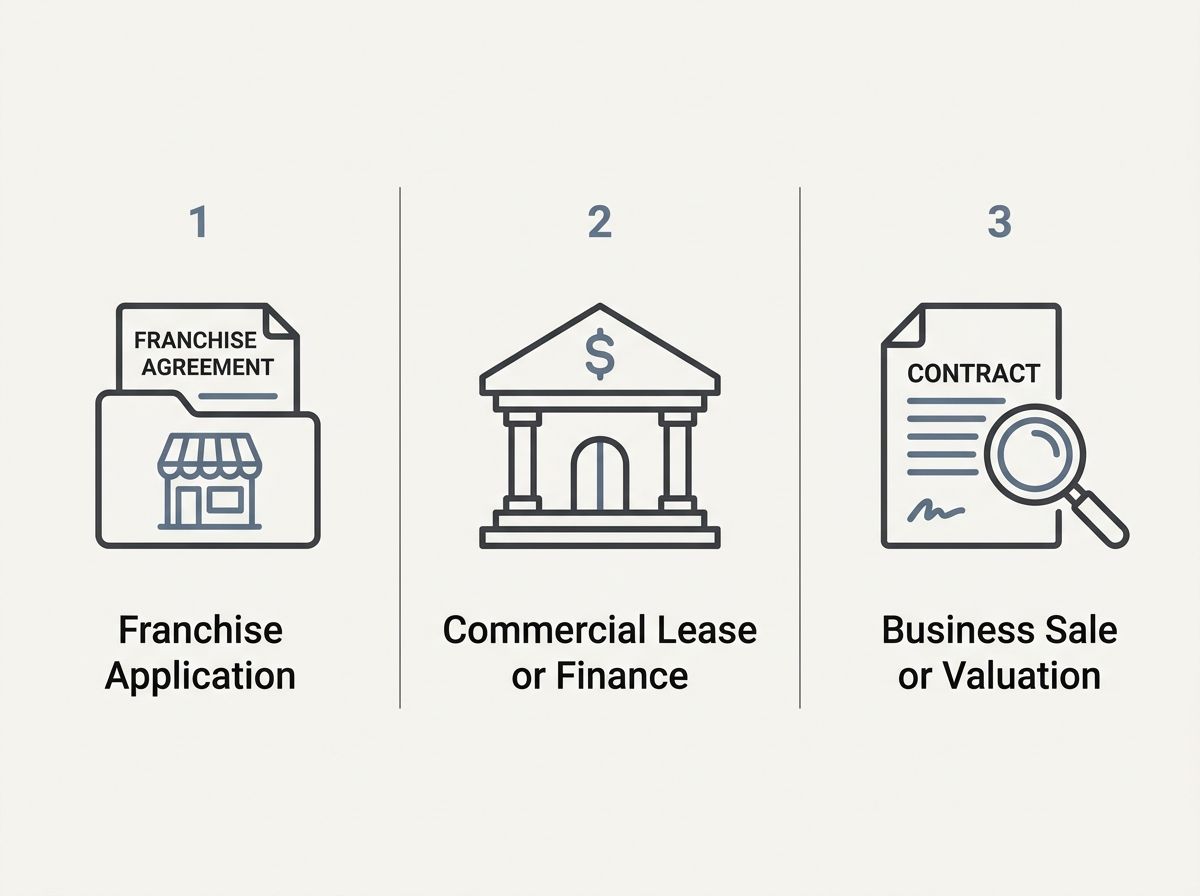
There are three common scenarios where this gap surfaces. If you have hit one of them, you will recognise the situation immediately.
- Franchise applications. You want to expand, or you are being approached about a franchise opportunity. The application process asks for your formal management qualifications, and because you do not have a diploma, the conversation stalls.
- Business finance or commercial leases. You are seeking finance to grow, refurbish, or open a second location. The lender or landlord asks about your formal credentials to assess your business viability. They use formal qualifications to evaluate risk, and you cannot point to one.
- Business sales or valuations. You are preparing to sell the salon, or a buyer's due diligence has flagged that the business value is partly tied to the owner-operator's formal credentials. Without the diploma, the valuation process becomes complicated.
None of these scenarios are about whether you can manage a salon. You have already proven that day in and day out. Instead, they are about whether an external system — such as a franchise group, a commercial lender, or a prospective buyer — can verify your capability through a recognised credential. That is a different challenge, and it is the one that catches experienced managers off guard.
What the Diploma of Salon Management actually covers
What surprises most experienced salon managers when they look at the Diploma of Salon Management (SHB50216) is that it is not a hairdressing course.
The qualification covers the management and business competencies that experienced salon operators already handle in their day-to-day work. The core areas include managing salon or spa business operations, developing and implementing business plans, managing financial performance, leading staff, ensuring workplace health and safety compliance, and overseeing client service standards.
These are not skills you learn in a classroom after years in the salon. These are skills you have been applying to real rosters, real budgets, real staff, and real clients for years.
The qualification exists to formally recognise that level of skill. It is the credential that tells a franchise group or commercial lender what they need to know: this person understands how to run a salon business.
Why experience alone stopped being enough
The salon industry has professionalised over the past two decades. Franchise models have expanded, commercial lending for small businesses has become more structured, and business sales now involve far more formal due diligence than they once did.
As this shift occurred, formal qualifications became the shorthand that external parties, like franchise groups, lenders, and buyers, use to assess management capability. This is not because experienced managers became less capable, but because external partners require a standardised way to verify skills without direct observation.
The result is a structural gap. Managers who built their careers through on-the-job experience, often before the Diploma of Salon Management became the industry benchmark, find themselves with years of proven competence that formal systems cannot easily verify.
This is not a personal failing. The industry changed, the credential became the standard, and managers who never needed a diploma to do the work are now finding they need it to unlock the next opportunity.
Recognition of prior learning: Formalising what you already do
Recognition of Prior Learning (RPL) is the formal assessment pathway that lets experienced salon managers present their existing skills as evidence for the Diploma of Salon Management, instead of repeating training they have already completed through years of practice.
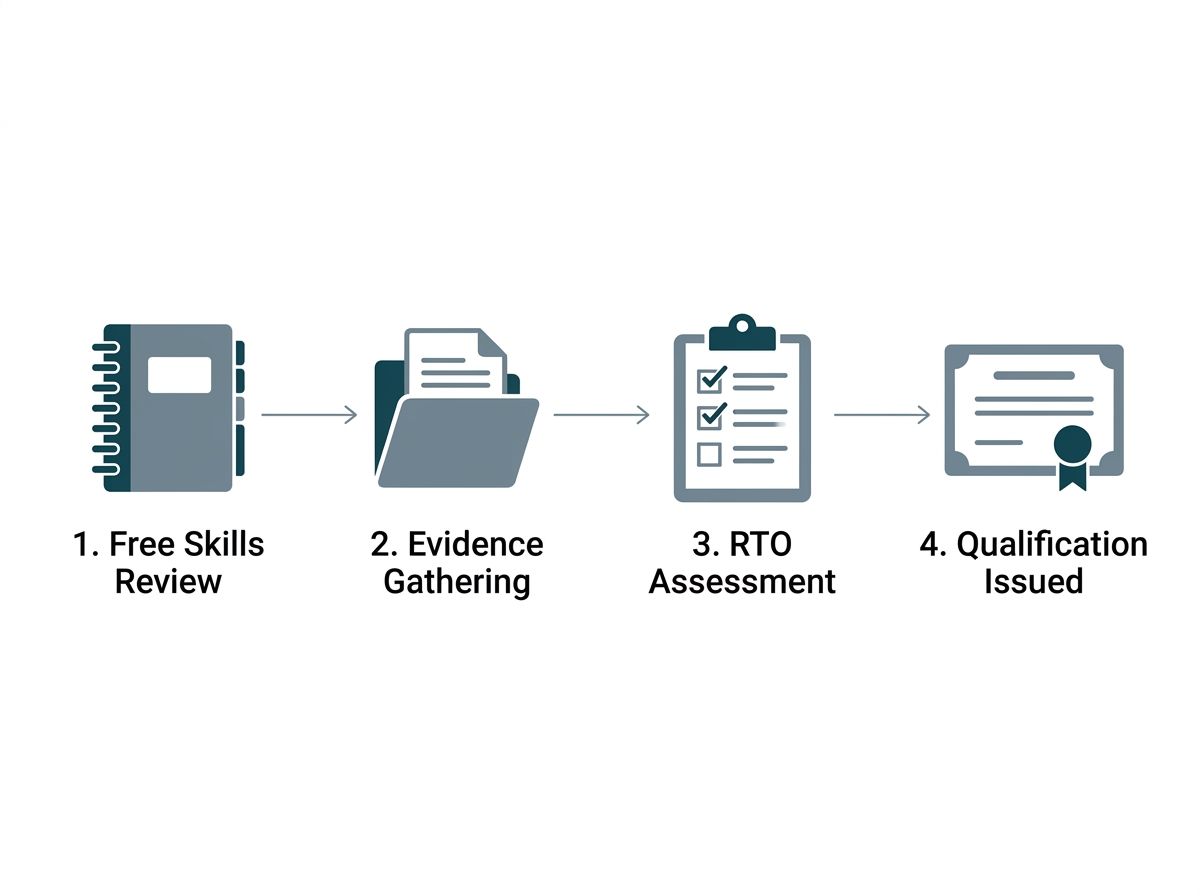
The process works by assessing your experience against the requirements of the qualification. You gather evidence of what you already do, such as documents, records, and examples from your actual work history. A qualified assessor from a registered training organisation (RTO) reviews this evidence to determine whether your skills meet the qualification standard.
If your evidence meets the requirements, the qualification is issued. If there are gaps where your evidence does not quite meet the standard, targeted gap training is provided to address those specific areas. The qualification is nationally recognised because the assessment is genuine.
RPL is not a shortcut. It is a rigorous assessment process that recognises the learning has already happened in your salon, over years of real management work. The assessment simply formalises that learning; it does not replace it.
The first step is understanding whether your existing experience is likely to support an RPL application. That is exactly what a Free Skills Review is designed to show you.
What counts as evidence for the Diploma of Salon Management
One of the most common concerns experienced salon managers raise is how to compile their evidence. The answer is usually simpler than they expect.
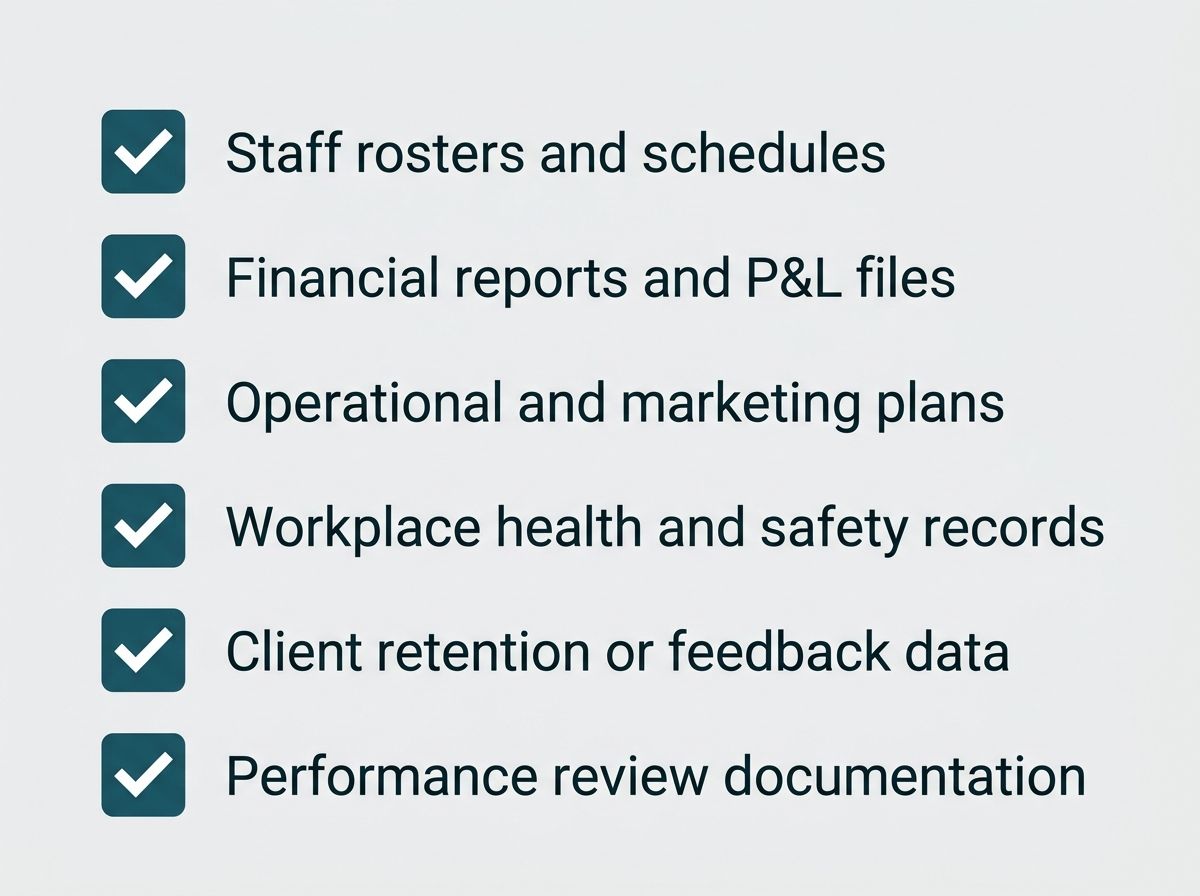
Evidence for an RPL assessment is drawn entirely from your work history. You do not need to create new documents, only organise what you already have. The types of evidence relevant for the Diploma of Salon Management include:
- Staff rosters, schedules, and employment records showing your workforce management
- Financial reports, profit and loss statements, and budget records showing your oversight of salon financial performance
- Business plans or operational plans showing your capacity to plan and manage business direction
- Workplace health and safety documentation, including policies, incident records, or compliance files you have maintained
- Client retention data, service records, or client feedback showing how you manage the client experience
- Supplier contracts, product orders, or inventory records showing your management of salon operations
- Performance reviews, training records, or staff development plans showing your leadership and people management
- Any formal or informal recognition of your management role, such as employment contracts, position descriptions, or references from owners
The specific evidence requirements vary by RTO and assessor. What matters is that the files demonstrate your competency against the qualification requirements, rather than fitting a rigid template. A skilled RPL specialist will help you identify what you have and how to present it.
Most experienced salon managers find they have far more relevant evidence than they initially assume. The challenge is usually organizing the material, not finding it.
The Free Skills Review: Find out where you stand before you commit
If you have been managing a salon for years without the Diploma of Salon Management, and you are now facing a scenario where that credential matters, the question is not whether you have the experience. You clearly do.
The question is whether your experience can be formally recognised through RPL. The answer depends on your specific situation, your available evidence, and the assessment process.
A Free Skills Review is a straightforward way to find out. It is a practical conversation about your experience, designed to give you a clear picture of whether RPL is suitable for you before you commit to anything.
The review is free and carries no obligation. You find out where you stand, and then the decision is entirely yours.
General information only, current at the date shown. Licensing rules change, so check the current requirements with the relevant regulator before you rely on them. RPL it Australia is a student support service, not a Registered Training Organisation; qualifications are assessed and issued by our partner RTOs.