You're Already Running the Agency. Why Are You Still Waiting for the License?
Senior property managers running trust accounts and training agents often already meet the Diploma of Property requirements. Find out if RPL applies to you.

The job description nobody officially gave you
You reconcile the trust accounts. You train the new agents. When a landlord dispute escalates, they call you. When the compliance audit arrives, you prepare the documentation. You know the legislation, the processes, and the people — and you run the day-to-day operation of the agency with the kind of quiet authority that only comes from years of doing the actual work.
What you do not have is the licence that would let you put your name on the door.
That gap — between the work you are already doing and the formal recognition that would let you do it independently — is not a reflection of your capability. It is a structural feature of how real estate licensing works in Australia. And it is costing you, in ways that are both concrete and invisible.
This article is for senior property managers and BDMs who are functionally operating as principals without the credential to prove it. You have the experience. The question is whether there is a pathway that recognises it — without requiring you to start over.
What the Diploma of Property actually requires
The Diploma of Property (Agency Management) — qualification code CPP51122 — is the nationally recognised qualification required to operate as a real estate agency principal or Licensee-in-Charge in a number of Australian states. It sits on the National Training Register and is delivered by registered training organisations (RTOs) across the country.
According to the National Training Register, CPP51122 comprises 12 units of competency: 7 core units and 5 elective units. Elective selection is subject to Australian Qualifications Framework integrity requirements, which means the specific electives available to you may vary depending on your chosen RTO and state. Always confirm the current unit structure directly with your RTO or on training.gov.au before making decisions based on it.
The seven core units, as listed consistently across multiple RTO course pages, cover the following areas of practice: managing compliance in the property industry; establishing and monitoring trust account management practices; managing ethical practice; managing a safe workplace; managing teams; managing operational finances; and developing a strategic business plan. These are not abstract academic concepts. They are the operational backbone of a functioning real estate agency.
The qualification is designed to reflect the role of property services principals who apply knowledge of agency compliance requirements, ethical standards, and consumer preferences to establish and control property services functions. It applies across residential and commercial practice — real estate sales, property management, strata management, business broking, and more.
If you have been doing any of this work — and if you are reading this, you almost certainly have — you already have a working relationship with the competency areas this qualification is designed to assess.
The paper ceiling in real estate is real — and specific
Real estate licensing in Australia is state-regulated. Each state and territory sets its own requirements, and the relevant state or territory authority is the source of truth for what applies to you.
What the available evidence does show is that formal qualifications appear consistently in state licensing pathways for agency principals and Licensees-in-Charge. In Tasmania, for example, the Australian Business Licence and Information Service lists eligibility for a real estate agent licence as requiring a Diploma of Property awarded by a registered training organisation — or a qualification the Board considers substantially equivalent — alongside at least two years of relevant full-time experience.
The pattern is consistent across the states where evidence is available: formal qualification alongside experience, not experience alone. There is no published evidence of an Australian state or territory that accepts a purely experience-based pathway to agency principal licensing, without any formal qualification requirement. Licensing requirements vary by jurisdiction, so you should verify the current requirements with the relevant regulator in your state or territory.
This is the paper ceiling. It is not a reflection of your competence. It is a regulatory design. The system requires a formal credential, and experience — no matter how extensive — does not substitute for it.
The frustration of that reality is legitimate. And it is also navigable.
Recognition of Prior Learning: the pathway built for this situation
Recognition of Prior Learning (RPL) is a formal assessment pathway within the Australian vocational education and training system. It allows your existing skills, knowledge, and experience to be assessed against the units of a nationally recognised qualification — without requiring you to repeat learning you have already demonstrated through your work.
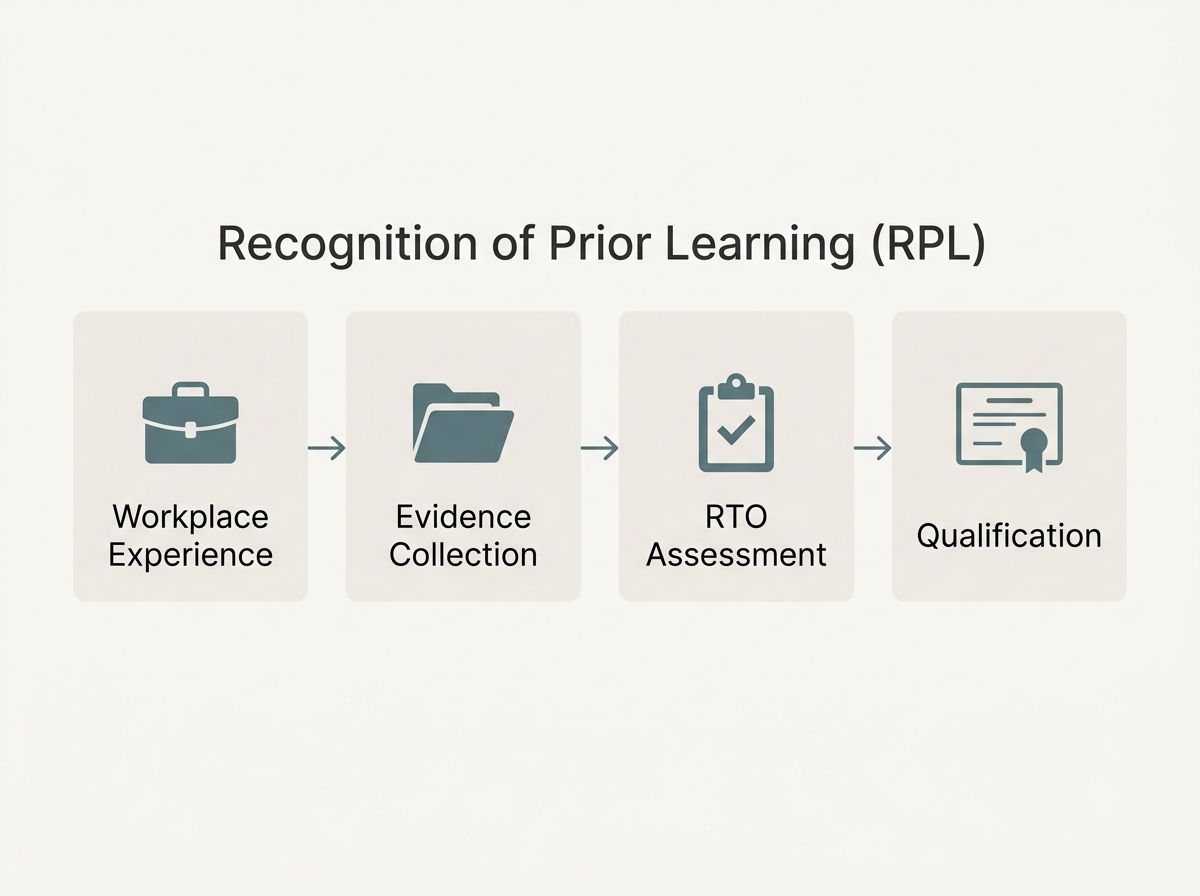
RPL is not a shortcut. It is a rigorous assessment process conducted by a qualified assessor from a registered training organisation. The assessor maps your genuine experience — your trust account management, your staff supervision, your compliance work, your agency operations — against each unit of the qualification and recognises what the evidence supports.
As one commentary on RPL for real estate and property professionals notes, the process 'recognises real work' and is 'not a way to obtain a real estate qualification for someone who has not practised.' The assessment is genuine. The qualification, when awarded, is nationally recognised because the assessment behind it is genuine.
For a broader explanation of how RPL works as a formal assessment process in the Australian VET system, the METS Education guide to RPL applications provides a useful general overview.
It is also worth noting that a qualification obtained through RPL does not by itself authorise you to work as a real estate agent or agency principal. Licensing is a separate application to the relevant state or territory regulator, and each regulator sets its own requirements. RPL toward CPP51122 addresses the qualification component of that pathway — the formal credential that licensing typically requires.
What your day-to-day work already proves
The core units of CPP51122 map closely to the work that senior property managers are already performing. Here is how that typically looks in practice, based on the competency areas the qualification covers:
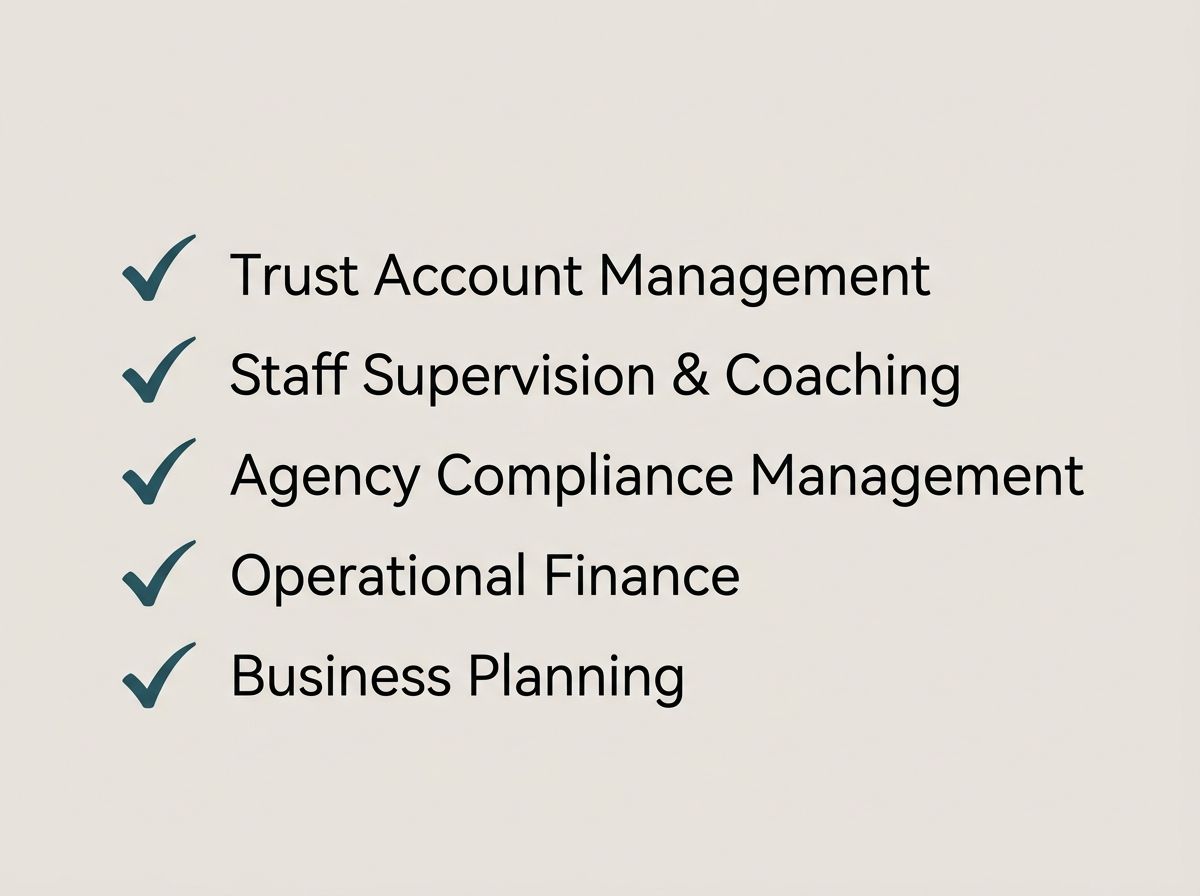
- If you manage trust account reconciliation, disbursements, and audits — you have evidence relevant to the unit covering trust account management practices.
- If you supervise, induct, coach, or mentor junior agents and property management staff — you have evidence relevant to the unit covering team management in the property industry.
- If you handle compliance with state tenancy legislation, agency licensing requirements, and consumer protection obligations — you have evidence relevant to the unit covering compliance management.
- If you manage landlord and tenant disputes, apply ethical standards, and maintain professional conduct — you have evidence relevant to the unit covering ethical practice.
- If you oversee agency budgets, operational finances, or fee structures — you have evidence relevant to the unit covering operational finance management.
- If you have contributed to business planning, strategic direction, or agency growth — you have evidence relevant to the unit covering strategic business planning.
This is not a checklist of aspirational skills. It is a description of what a senior property manager does on any given week. The evidence exists in your employment records, your trust account documentation, your training logs, your compliance files, and the professional references of the people you have worked with and supervised.
You have more evidence than you think. The question is whether it has been gathered and presented in a way that an assessor can evaluate against the qualification units.
What happens if there are gaps
RPL is a genuine assessment process, and genuine assessment sometimes identifies areas where the evidence does not fully demonstrate competency against a particular unit. This is not a failure. It is the process working as it should.
Where an assessor identifies gaps, gap training is provided. This means you address only the specific areas where your evidence falls short — not the units you have already demonstrated. You are not starting over. You are filling in the specific gaps, and nothing more.
Being transparent about this matters. RPL providers who promise guaranteed outcomes, no evidence required, or instant qualifications are not describing a compliant assessment process. A legitimate RPL pathway involves real assessment, real evidence, and honest guidance about what that assessment finds.
For context on what a compliant RPL process looks like — and what red flags to watch for when choosing a provider — this overview of ASQA rules for RPL in Australia is worth reading, noting that it is a commercial provider's summary rather than an official ASQA publication.
The first step costs you nothing
The paper ceiling in real estate is real. It is also specific — it requires a formal qualification, and experience alone does not satisfy it. But the pathway to that qualification does not require you to step back from your career, attend classes, or repeat what you already know.
RPL exists for professionals in your position. The work you have already done — the trust accounts, the teams, the compliance, the strategy — is the raw material of an RPL application. What it needs is to be gathered, structured, and assessed by someone qualified to evaluate it.
A Free Skills Review is the honest first step. It is an assessment of whether your experience is likely to support an RPL application for the Diploma of Property (Agency Management). It costs nothing. It commits you to nothing. It simply tells you whether what you have already built is enough to earn the qualification your career has been waiting for.
Recognition shouldn't require starting over.
Ready to Get Recognised?
Start with a free skills review to find out if RPL is right for you.