The Hidden Career Pivot: Why Customer Service Managers Make Top-Tier Clinic Managers
Retail managers already have the client skills beauty clinics need. See how your experience maps to a Diploma of Beauty Therapy — without starting from scratch.
The qualification wall nobody warns you about
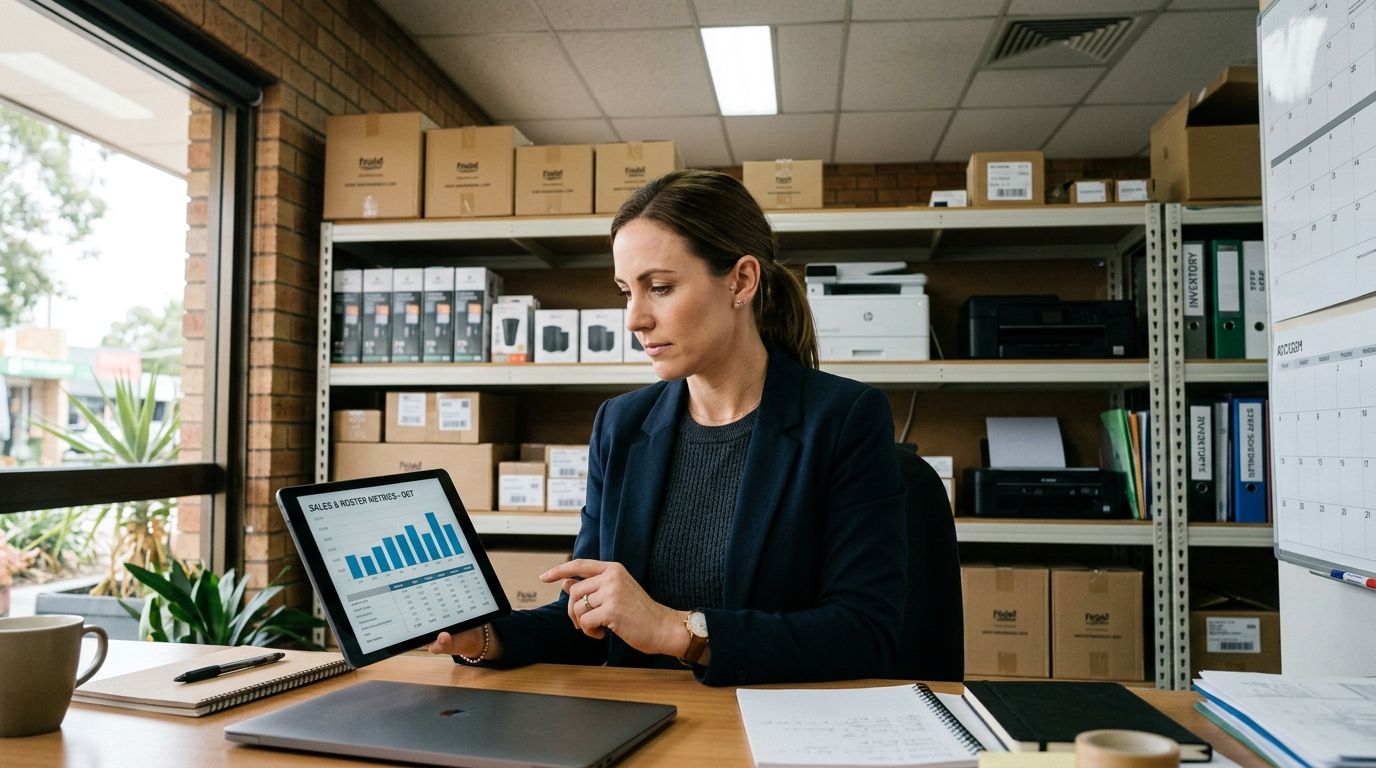
You manage a team. You hit targets. You handle difficult clients before 9am. You know how to read a sales report, coach an underperformer, and keep a floor running when two staff call in sick on the same Saturday.
And yet, when you look at clinic manager roles in the beauty industry, the job ads ask for something you do not have: a Diploma of Beauty Therapy.
The assumption is that you need to start over. Go back to basics. Sit in a classroom learning facial anatomy alongside school leavers. Spend years working as a junior therapist before anyone will trust you with a team.
That assumption is wrong. And the reason it is wrong is an advantage nobody in the beauty industry talks about openly.
What clinic managers actually do (and why it sounds familiar)
Strip away the industry label and a beauty clinic manager's day looks a lot like a retail manager's day. The language changes. The core work does not.
In retail, you track conversion rates and average transaction value. In a clinic, they track rebooking rates and average appointment value. Same discipline. Different terminology.
In retail, you manage staff rosters, handle performance conversations, and train new team members on product knowledge and selling technique. In a clinic, you do exactly the same — the products are skincare ranges instead of fashion accessories, and the selling technique is a treatment recommendation instead of an upsell at the register.
In retail, you manage stock, handle supplier relationships, and monitor shrinkage. In a clinic, you manage treatment consumables, retail product lines, and stock rotation. The systems are different. The thinking is identical.
In retail, you resolve client complaints, de-escalate difficult situations, and protect the brand's reputation in real time. In a clinic, you do the same — with the added sensitivity that clients are often in a vulnerable state when they are receiving treatments.
The skills are not different. They are the same skills, spoken in a different industry's language. That is the hidden advantage.
The 4 retail skills that beauty clinics are quietly desperate for
These are not soft skills. They are operational competencies that take years to develop — and that most junior beauty therapists simply do not have.
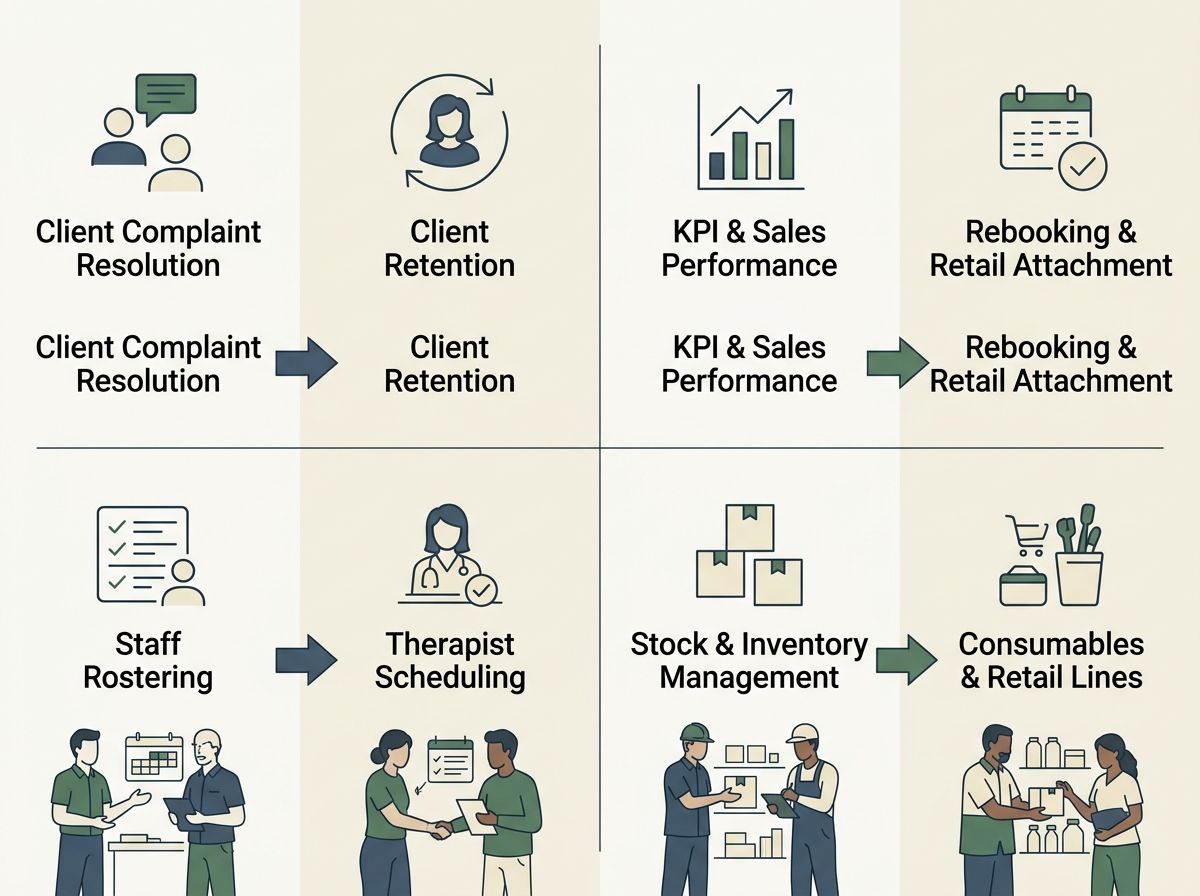
Skill 1: Client complaint resolution. In retail, you learn to de-escalate quickly, find a resolution that protects the relationship, and document the outcome. Beauty clinics deal with dissatisfied clients regularly — a treatment that did not meet expectations, a reaction to a product, a booking that went wrong. The ability to handle that conversation professionally, without losing the client, is not taught in a beauty school. It is learned on a retail floor.
Skill 2: KPI management and sales performance. Retail managers live and breathe performance metrics. In the beauty industry, the equivalent metrics include rebooking rate (how often clients rebook before leaving), retail attachment rate (how often a service results in a product sale), and average appointment value. Industry trade guidance commonly references these as the core operational measures for clinic performance.
Skill 3: Staff rostering and performance management. Scheduling a retail team across peak trading periods, managing leave, and having honest performance conversations are skills that transfer directly to managing a team of therapists across a treatment schedule. The complexity is comparable. The people-management principles are identical.
Skill 4: Stock and inventory management. Retail managers understand the relationship between stock levels, sell-through rates, and margin. Beauty clinics carry both treatment consumables and retail product lines. The discipline required to manage both — ordering, rotation, waste reduction — is the same discipline retail managers apply every week.
If you are already nodding at this list, that recognition matters. It means your experience is not irrelevant to beauty clinic management. It means your experience is evidence — presented in the wrong industry's language.
Why the Diploma of Beauty Therapy is not what you think it is
The SHB50121 Diploma of Beauty Therapy is the nationally recognised qualification associated with senior beauty therapist and salon manager roles in Australia. The name suggests it is purely a technical qualification — facials, waxing, body treatments.
It is not only that.
According to Charles Darwin University's published course description, the qualification's stated purpose includes consulting with clients to provide beauty advice, recommending beauty treatments and services, and selling retail skin-care and cosmetic products. Career outcomes listed for this qualification include Salon Manager — alongside Beauty Therapist and Beautician.
The qualification also includes core units covering salon financial transactions and selling to the retail customer — competencies that sit squarely within the experience of a retail manager.
There are technical beauty units in the qualification. That is honest and important to acknowledge. A retail manager will not have hands-on experience in facial treatments or body massage. Those units represent genuine gaps that would need to be addressed.
But the management, client service, and retail selling units? Those are not gaps. Those are strengths. And that distinction is what makes this career move different from starting over.
One private beauty training provider describes a combined beauty and salon-management study pathway as covering business and salon operations, team leadership, staff training, marketing, and financial management — and notes that graduates will have the knowledge and tools to run their own business, manage a team, or step into a senior role in the beauty industry.
That description — business operations, team leadership, financial management — will sound familiar to anyone who has managed a retail environment.
How Recognition of Prior Learning translates your retail experience into a formal qualification
Recognition of Prior Learning — RPL — is a formal assessment pathway within the Australian Qualifications Framework. It is the mechanism that makes this career move possible without repeating learning you have already done.
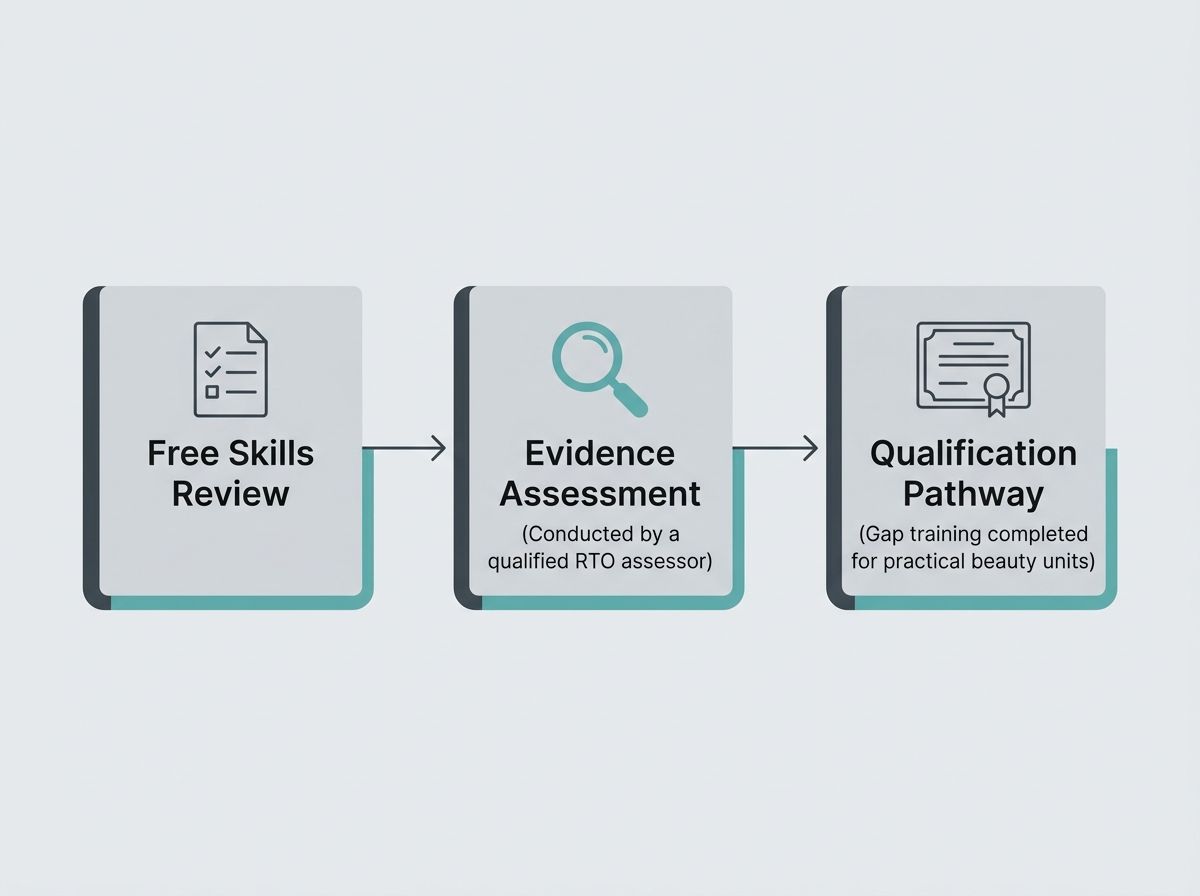
RPL is not a shortcut. It is a rigorous assessment of what you already know, measured against the specific units within a qualification. Where your experience demonstrates competency against a unit's requirements, you do not need to repeat that learning. Where gaps exist — and for a retail manager entering beauty, there will be gaps in the technical treatment units — those gaps are addressed through targeted training.
The assessment is conducted by a qualified assessor from a registered training organisation (RTO). RPL it guides candidates through the process and connects them with partner RTOs — but the assessment itself, and the qualification that follows, is issued by the RTO.
For a retail manager considering the Diploma of Beauty Therapy, the RPL process starts with an honest question: which units can your existing experience support, and which ones need additional work? The management, client service, and retail selling units are likely to be strong candidates for RPL. The technical beauty treatment units are likely to require gap training.
Gap training for units where competency cannot be demonstrated is standard in the RPL process. It is not a failure — it is an honest acknowledgement that some skills are genuinely new, and that the qualification requires them to be learned properly.
The national training package for beauty has historically been developed with input from retail industry training bodies alongside beauty industry associations — a recognition that the two sectors share significant common ground at the operational level.
What a Free Skills Review actually tells you
The question is not whether you have the skills. You do. The question is which ones are already evidence — and which ones need more work.
A Free Skills Review is an honest, no-obligation look at your existing experience against the units of the qualification you are considering. It is not an enrolment. It is not a commitment. It is a suitability check — designed to give you a clear picture of where you stand before you make any decision.
RPL it's approach is built on honest suitability guidance. If RPL is not the right pathway for your situation, we will tell you that. If your retail management experience maps strongly to a significant portion of the Diploma of Beauty Therapy, we will show you where — and where the gaps are.
The decision is yours. But the first step is free, and it comes with no obligation.
Ready to Get Recognised?
Start with a free skills review to find out if RPL is right for you.