Why retail beauty workers are quietly moving to the nail bar
Retail beauty workers already have the hardest skills to teach in nail technology. Learn why the Cert III is a shorter path than most expect.
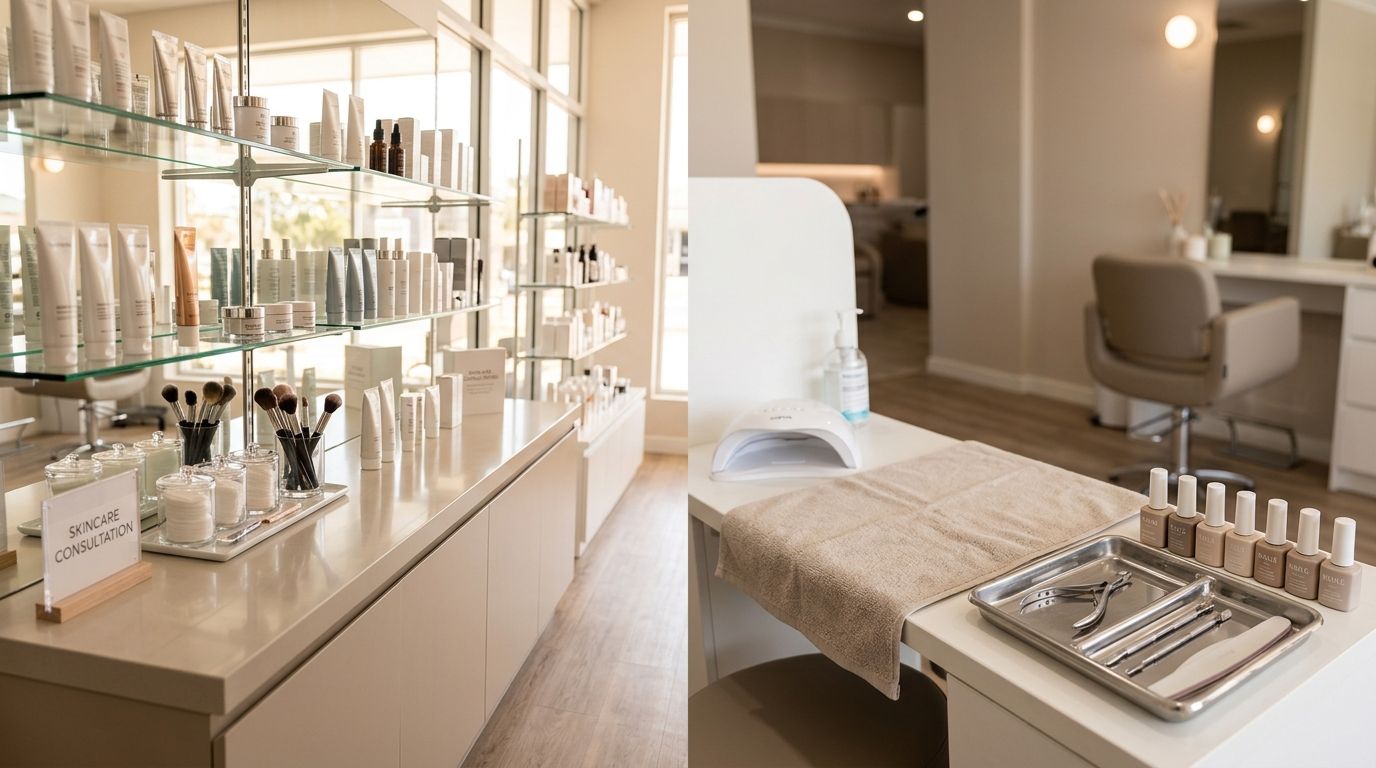
The counter is closer to the nail bar than you think
Something is happening in the beauty industry, and it is happening quietly behind the scenes. Makeup counter consultants, skincare advisors, and fragrance specialists are transitioning their careers. Workers who have spent years building genuine customer expertise behind a retail beauty counter are now making a deliberate move over to the professional nail bar.
This transition is not a random career change but rather a logical translation of skills. The experienced workers making this move are not starting over from scratch. Instead, they are arriving in the salon with far more relevant, practical experience than the training industry has traditionally recognised or named.
The Certificate III in Nail Technology (SHB30321) is the nationally recognised qualification that forms the foundation for professional nail technology work in Australia. For retail beauty workers, the distance between where they currently stand and where this qualification sits is much shorter than they might expect. The reasons for this are highly specific and worth exploring.
What the nail industry actually needs (and rarely finds)
Most people assume nail technology is primarily about technical application. However, salon owners and employers know that success requires a different set of skills.
Technical skills like applying gel, shaping acrylics, and executing creative nail art can be taught. These techniques take time and practice, but they are fully teachable. What is far harder to develop in a new worker is the professional baseline that makes a nail technician successful. This includes the ability to read a client's mood, manage a formal consultation, maintain strict hygiene discipline, and recommend the right retail products without making the client feel pressured.
These are core commercial competencies rather than simple interpersonal skills. They are the professional capabilities that determine whether a client rebooks their next appointment, refers friends, and trusts the technician with their hands. These skills build a sustainable client base and take years of practice to develop on the job, unless you have already built them through years of experience in retail beauty.
Retail beauty counter work develops these exact skills. They are not secondary elements of the role; they are the core of the daily job.
Three skills retail beauty has already taught you
Retail beauty workers carry three key competencies into nail technology that salon owners value highly. Here is how those skills translate to a professional salon environment.
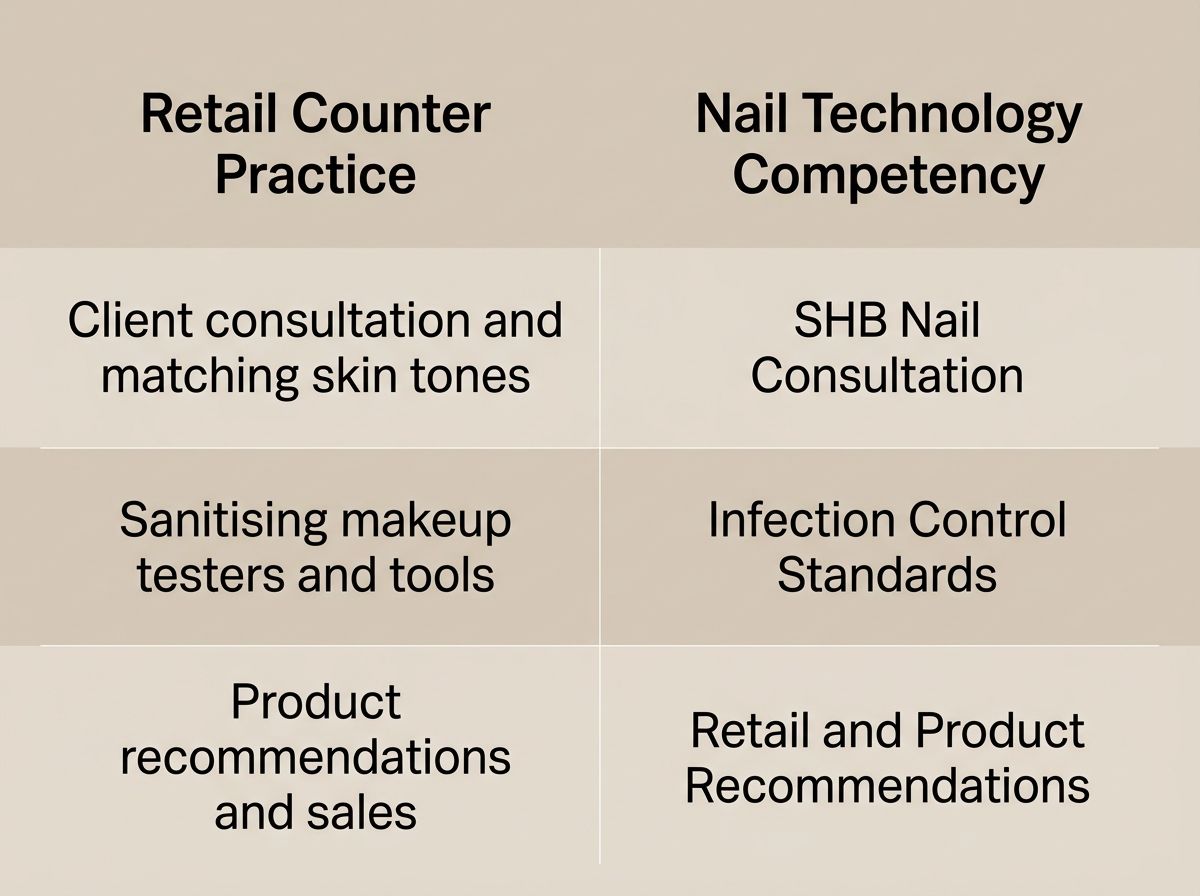
**Client consultation and communication.** At the beauty counter, you assess clients constantly. You analyse skin types, listen to specific concerns, identify what a customer actually needs, and adjust your approach in real time. You perform this process dozens of times per shift with complete strangers under commercial pressure. In nail technology, this is called client consultation, and it is a formal competency within the national qualification. The core skill is identical; only the service context is different.
**Hygiene and sanitation standards.** Retail beauty counter work operates under strict hygiene protocols. Managing testers, sanitising application tools, cleaning display surfaces, and direct client contact require disciplined sanitation practices. For experienced beauty workers, this is a daily habit rather than a set of rules to follow. In nail technology, infection control and hygiene management are core requirements of the qualification. The clean work practices you already use have a direct equivalent in nail salons.
**Retail and product recommendation.** Counter consultants are trained to suggest complementary products, such as pairing a specific serum with a moisturiser or recommending a primer to extend foundation wear. This is professional advice rather than aggressive selling. In a nail salon, the same logic applies when recommending nail treatments, home-care products, and complementary salon services. The commercial skill remains the same, even if the inventory is different.
You speak to clients, manage hygiene, and recommend products daily. The nail industry relies on these exact same skills.
Why the qualification gap is smaller than you think
The Certificate III in Nail Technology (SHB30321) is a national qualification issued by registered training organisations (RTOs) under the Australian Qualifications Framework. It establishes the technical and professional standards required to work as a qualified nail technician in Australia.
For workers with retail beauty experience, the gap between their current knowledge and the requirements of the qualification is often narrow. This is where the Recognition of Prior Learning (RPL) process becomes useful.
RPL is a formal assessment pathway within the Australian vocational education system. It allows a qualified assessor from a registered training organisation to evaluate your current skills and knowledge against national standards. Where your experience shows you meet these requirements, you do not need to repeat the training. If gaps exist, they are identified clearly so you can address them through targeted learning.
This pathway is a formal assessment process rather than a shortcut. The assessor's professional judgement determines the final outcome based on evidence, not simply the applicant's confidence. However, for retail beauty workers whose daily work already demonstrates client consultation, hygiene management, and retail product knowledge, the assessment starts with a strong baseline of practical evidence compared to a candidate with no industry background.
certificate page are the best place to start.
What the transition looks like in practice
The RPL process for a retail beauty worker pursuing a nail qualification begins with a skills review. This is an objective conversation about your career history, your hours on the job, and the evidence available to support your skills.
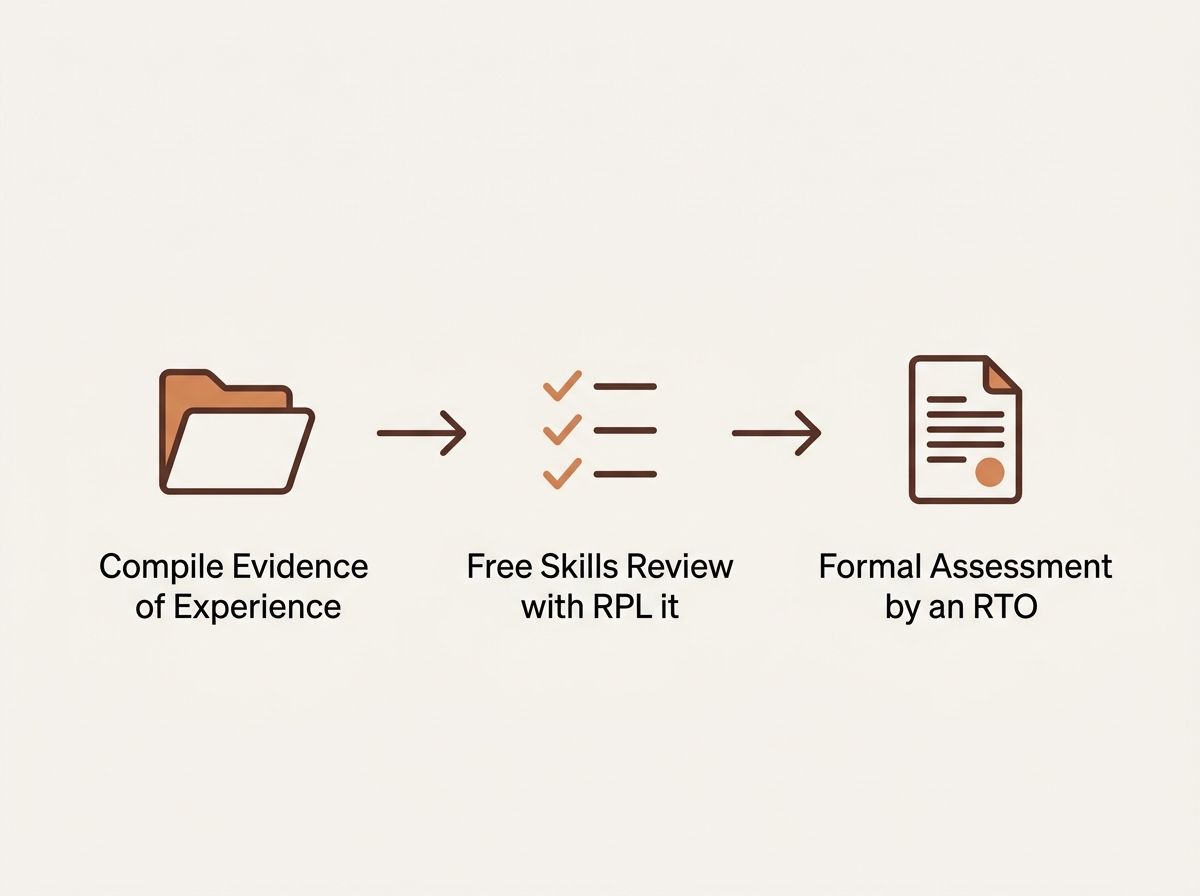
Evidence in a beauty and personal services RPL assessment can take several different forms. This can include employment records, reference letters from supervisors, proof of workplace hygiene training, records of product knowledge training, and documentation showing your client-facing responsibilities. An assessor uses these documents to map your skills against specific units of competency within the qualification.
If your experience meets a unit's requirements, that unit is recognised. If gaps are identified, such as technical units for specific services like acrylics or gels, you can complete targeted training to cover them. This gap training is a standard part of the process, allowing you to focus only on new skills rather than repeating what you already know.
The process begins with a realistic assessment of your current skills. It is an objective evaluation to establish exactly where you stand.
A practical career move for experienced beauty workers
Retail beauty work is highly skilled and demanding. The hours are long, sales targets are high, and the expertise you build in product knowledge, customer relations, hygiene, and business operations is substantial. Despite this, career progression behind the counter can feel limited, leaving many experienced workers looking for a clear, independent next step.
Working in nail technology offers independent options, such as salon employment, renting a chair, or running a mobile business. A formal qualification opens career pathways that are rarely available to retail counter staff. This transition is a step forward that builds on your existing professional skills instead of starting your career over from scratch.
Workers who transition to nail technology are utilizing their existing expertise. They are turning practical counter experience into a recognised national qualification. Your years of work can serve as formal evidence, provided they are assessed through the proper channels.
If you are considering a career change, remember that a
formal skills assessment helps translate your existing capabilities into a recognised qualification.
If you want to find out whether your background meets the standards, the first step is an independent skills review.
Ready to Get Recognised?
Start with a free skills review to find out if RPL is right for you.