Self-Taught Behind the Chair: What Counts as Evidence for Cert III Barbering
Self-taught barber? Learn how your client history, technique range, and shop experience can count as evidence for the Certificate III in Barbering RPL.
By RPL it Australia11 min read
You have been cutting hair for years. The question is whether it counts.
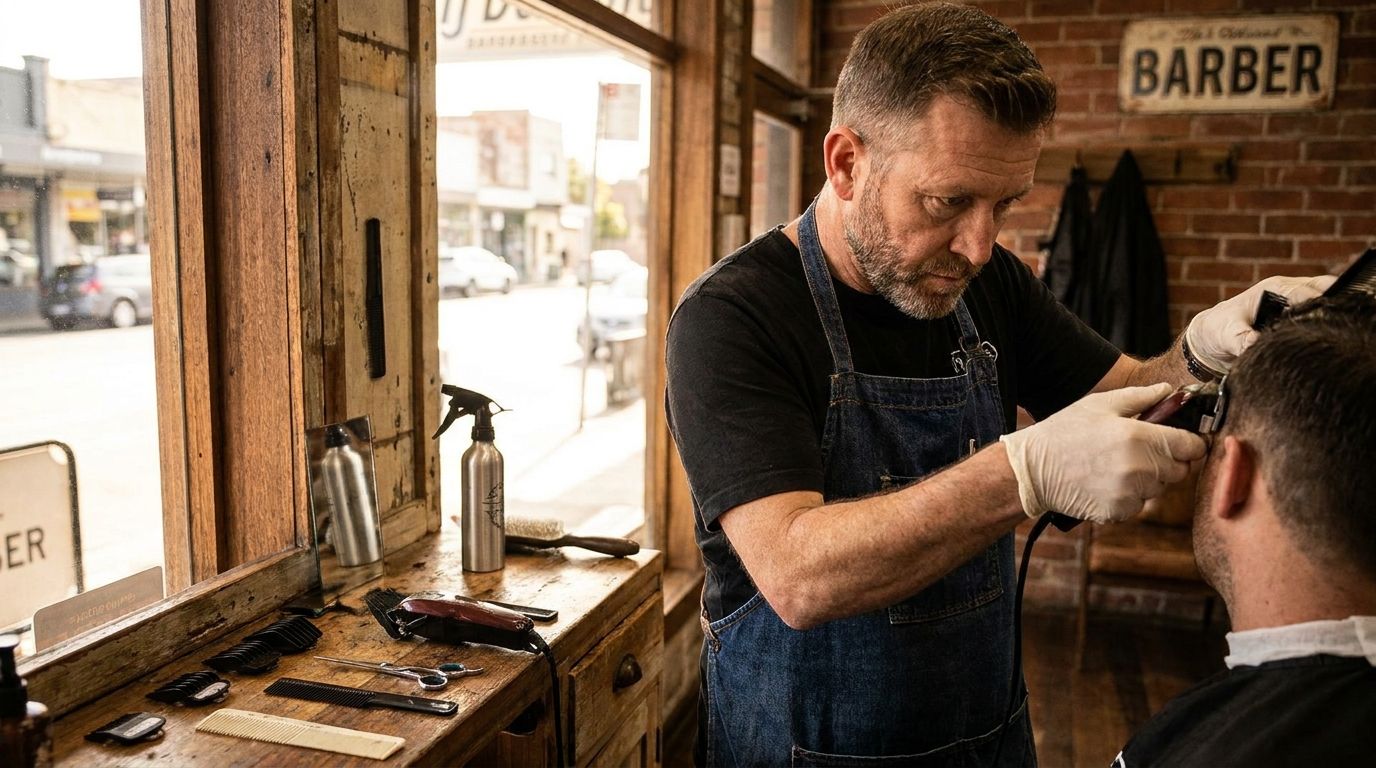
You have the experience. You know how to read a client's head shape before you pick up the clippers. You know the difference between a skin fade and a drop fade, and you know which one suits which face. You have been doing this work—properly and professionally—for years. Perhaps you learned the trade from a senior barber in a busy shop. Perhaps you taught yourself by watching, practicing, and improving week after week. Either way, the skill you possess is real.
The question is not whether you can cut hair. The question is whether the formal system can recognize your skills.
The Certificate III in Barbering is the national qualification for barbers in Australia. It covers the technical skills, client consultation, workplace safety, and professional practices that define the modern trade. For many self-taught or informally trained barbers, pursuing this qualification feels like being asked to go back to the beginning. It feels like sitting in a classroom to learn things you have already mastered over years behind the chair.
Recognition of Prior Learning, or RPL, offers a different pathway. Instead of completing training from scratch, your existing skills and experience are assessed against the actual qualification requirements. If your demonstrated competency meets the national standard, the qualification is issued by a registered training organisation (RTO). This means you do not have to repeat what you already know.
This article is a self-diagnostic guide. It walks through the main evidence categories that matter for a barbering RPL assessment—client history, technique range, and shop experience. This helps you understand where your existing experience is strong and where gaps might exist. We are direct and honest about both aspects.
What RPL actually means for a barber
RPL is a formal assessment pathway within Australia's vocational education and training system. It is not a shortcut, and it is not a quick workaround. It is a thorough process in which a qualified assessor reviews evidence of your existing skills and knowledge against the national competency standards set out in the qualification.
For a barber, this means the assessor looks closely at what you can actually do, rather than how you learned it. Your years behind the chair, client interactions, technique range, and understanding of workplace hygiene and safety all serve as assessable evidence. The assessor's role is to determine whether your demonstrated competency meets the exact standard required for the Certificate III in Barbering.
We should clarify a few details upfront. RPL it is a guide and support service. We help you understand the process, gather your evidence, and navigate the pathway. The assessment itself is conducted by a qualified assessor from a registered training organisation, and that RTO issues the qualification. Our role is to make the process easier to navigate, not to assess or award qualifications ourselves.
You should also know that an RPL assessment sometimes identifies gaps—areas where your experience does not yet meet the required standard for specific units. When that happens, targeted training is provided to address those areas before the qualification is issued. Gaps are a normal part of the process. They do not represent failure; they simply provide clear information on what to complete.
The self-assessment: Does your barbering experience count?
The Certificate III in Barbering covers several broad areas of competency: client consultation, cutting and styling techniques, chemical services, workplace health and safety, hygiene, and business practice. Specific units sit within each of these areas, and the evidence you gather must map directly to their individual requirements.
Not every barber has perfect evidence across all these areas. A barber who has focused exclusively on cutting and fading may have limited exposure to chemical services. A barber who has worked independently may have less formal documentation of their consultation process than someone who has worked in a highly structured salon chain. Both situations are workable starting points, but they require different approaches.
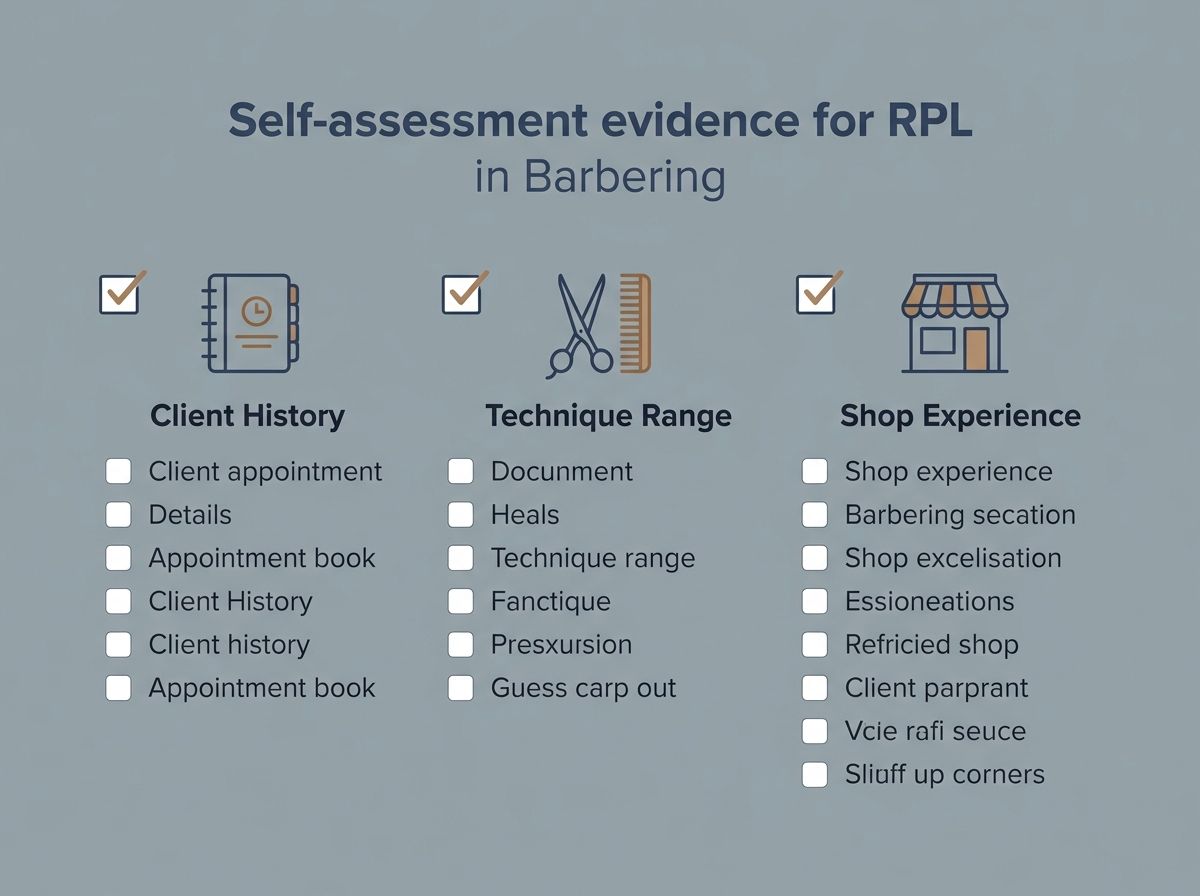
The sections below look at the three main evidence categories for self-taught barbers: client history, technique range, and shop experience. Work through each category honestly. Our goal is to provide absolute clarity, not a sales pitch.
Client history: Your appointment book as evidence
Client consultation and service delivery are central to the Certificate III in Barbering. The qualification expects a barber to demonstrate that they can assess a client's needs, recommend appropriate services, perform those services to a professional standard, and manage the client relationship over a period of time.
Your appointment history is evidence for these requirements, even if you have never viewed it in that light.
Consider what your client records show. Think of the number of clients you see regularly and the variety of services you perform. Look at the repeat bookings that demonstrate client satisfaction and trust. Consider the consultations you conduct before every cut—even the informal discussions where you ask about length, style preference, and lifestyle before picking up your tools. These interactions are all assessable.
Evidence in this category can include the following items:
- Appointment books or booking app records showing daily client volume and service histories
- Records of repeat clients that demonstrate ongoing professional relationships
- Notes or records of client consultations, including informal files and digital records
- Client testimonials or written statements describing your work quality and professionalism
- Employer or supervisor statements confirming the range and volume of services you have performed
- Before-and-after photos of your client work, collected with appropriate client consent
If you have been working informally—taking clients through word of mouth, working from a home setup, or renting a chair without formal employment contracts—your records may be less structured. This is common. What matters is that you can show the work actually occurred and was performed to a professional standard. Photos, messaging records, and client statements can all contribute to your evidence.
The consultation process is worth considering carefully. Even if you have never written down a formal consultation record, you almost certainly conduct a consultation before every service. Your ability to describe that process—what you ask, what you look for, and how you make recommendations—is itself valuable evidence of your competency.
Technique range: What cuts, styles, and services count
The cutting and styling units in the Certificate III in Barbering cover a range of techniques that experienced barbers will recognize immediately. The qualification is specific to barbering—it is not a generic hairdressing credential— and the techniques assessed reflect the day-to-day work of a professional barber.
Common techniques relevant to the cutting and styling units of the qualification include:
- Clipper cutting, which includes fades, skin fades, tapers, and clipper-over-comb techniques
- Scissor cutting, covering scissor-over-comb, point cutting, and scissor-only styles
- Beard grooming, including the shaping, trimming, and styling of facial hair
- Straight razor work, covering close shaving and detailing using a cut-throat or safety razor
- Combination techniques, blending clipper and scissor work across different hair types and textures
If you perform these techniques regularly across a range of clients and hair types, you have the foundation for strong evidence in these units. The key is being able to demonstrate that range—using photos, client records, or practical assessment—rather than simply asserting your experience.
Chemical services are a separate consideration. Depending on the specific elective units in the qualification, chemical services like colour application or chemical relaxing may be included. Barbers who focus strictly on cutting and grooming may have limited or no experience here. This represents a potential gap, and it is better to know about it before starting the RPL process.
You should also note that for certain technical units, a practical skills demonstration may be part of the assessment. This means an assessor observes you performing the technique in person, rather than relying solely on portfolio evidence. The exact requirements vary by RTO and by unit. A Free Skills Review will clarify what applies to your situation.
Shop experience: What your working environment proves
Working in a professional barbershop environment—whether as an employee, a chair renter, or a sole trader—demonstrates competency that goes beyond cutting technique. Workplace safety, hygiene, equipment maintenance, and professional conduct are all covered by the Certificate III in Barbering, and your day-to-day routine serves as evidence for these units.
If you have worked in a barbershop, you have operated in a regulated environment with specific hygiene and safety requirements. You have cleaned and maintained tools, managed clients in a commercial setting, and worked in accordance with the standards that this qualification formalises.
Evidence in this category can include the following items:
- Employment contracts, records, or payslips confirming your role and duration of employment
- Chair rental agreements or ABN registration confirming your self-employed business practice
- Records of workplace inductions or internal hygiene training
- Written statements from employers, senior barbers, or shop owners describing your skills and conduct
- Evidence of your tool and equipment sterilization and maintenance routines
- Records of any workplace health and safety training courses or certificates
Self-employed barbers—including those who rent a chair, operate as sole traders, or run their own shops—sometimes worry that their experience is seen as less official than that of an employed barber. It is not. Running your own chair requires the exact professional and business competencies this qualification assesses. Your ABN registration, client invoices, booking records, and business practices are all legitimate evidence sources.
The main difference for self-employed barbers is that third-party verification often comes from clients or industry peers rather than a traditional employer. Client statements, peer references from other qualified barbers, and your own business records can collectively build a strong evidence base.
Where self-taught barbers often face gaps—and what that means
Straightforward guidance is essential here. Most self-taught barbers have strong evidence in some areas and real gaps in others. Identifying where those gaps are likely to be is far more useful than pretending they do not exist.
The areas where self-taught barbers most commonly face gaps include:
- Chemical services: Barbers who focus purely on cutting and grooming may have little experience with colour, chemical relaxing, or other chemical treatments included in the course.
- Formal consultation documentation: The consultation process itself is usually performed well, but written records of these consultations are rarely kept in informal barbershops.
- Business and administration units: Sole traders and chair renters often possess practical business skills but may lack the formal records required to demonstrate them.
- Hygiene and infection control documentation: Safe practices are usually standard, but formal records of compliance or training may not exist.
Gaps do not disqualify you from pursuing the qualification. They are a normal part of the RPL assessment process. When an assessor identifies a gap, targeted gap training is provided to address that specific area. The qualification is then issued once all units are completed to the required standard.
The structure and format of gap training vary by RTO. Before committing to any RPL pathway, it is worth understanding what gap training looks like for the specific units where you might have gaps. A Free Skills Review is the right place to have that conversation honestly, before making any commitments.
What the evidence portfolio looks like
An RPL evidence portfolio is a structured collection of documents, records, and materials that demonstrate your competency against the units. For the Certificate III in Barbering, this portfolio typically draws from several different sources.
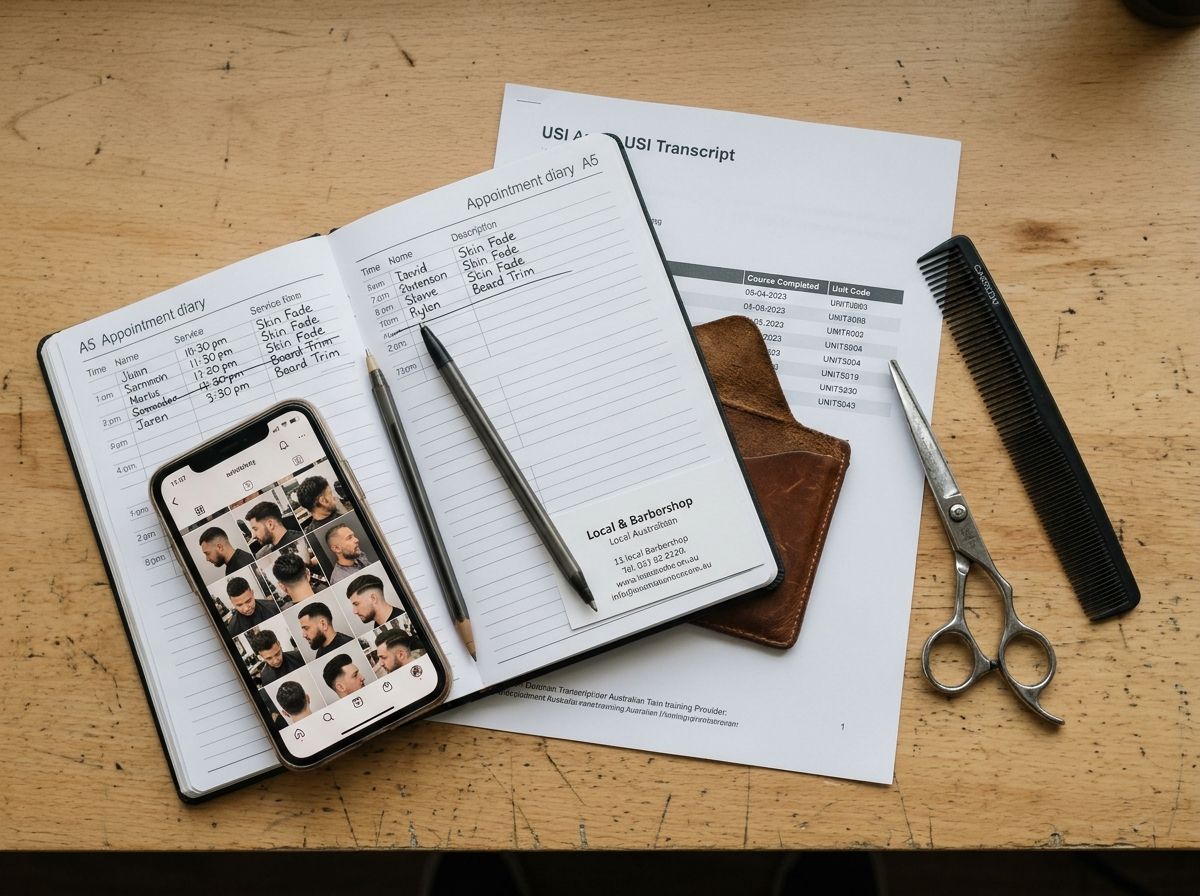
Common components of an evidence portfolio include:
- A skills summary or professional resume detailing your barbering experience, roles, employment duration, and working environments
- Client records or booking histories demonstrating client volume, service variety, and continuity of work
- Before-and-after photos of client cuts, showing technical competency in styling and cutting units with client consent
- Third-party reports from employers, senior barbers, or clients describing your skills and conduct
- Certificates or records from any prior training, including informal workshops, trade seminars, or short courses
- Evidence of business operation for self-employed barbers, such as ABN registration, invoices, and scheduling systems
- Records of any workplace safety, first aid, or infection control training
If you have completed any formal training in the past—even short courses or individual units that did not lead to a full qualification—your USI transcript may contain records you have forgotten. Checking
your USI transcript is a direct way to find prior formal training that could contribute to your evidence portfolio.
Social media pages—such as Instagram—are increasingly used as supporting evidence in hair and beauty RPL assessments alongside formal documentation. Whether they are accepted, and in what format, depends entirely on the assessing RTO. They are worth including as supporting material, but they rarely stand alone as primary evidence for most units.
A practical skills demonstration may also be required for some units. This means an assessor observes you performing specific techniques to verify that your actual hands-on skill meets the national qualification standard. The format and location for this demonstration vary by RTO.
The portfolio does not need to be perfect before you start. It simply needs to be honest and as complete as possible. The RPL process includes clear guidance on what is required and how to present it.
The Certificate III in Barbering page contains more detail on how the pathway works.
Are you ready to start?
If you have worked through the sections above, you should have a clearer picture of where your experience is strong and where gaps might exist. Achieving that clarity is the starting point.
Most self-taught barbers who have been working professionally for two or more years possess the foundation for an RPL application. Your client history, technique range, and shop experience are already established. What is usually missing is the formal evidence—the documentation, records, and third-party verification—that presents your experience in the exact format the vocational system requires.
The RPL process is designed to address this exact gap. It is not about building skills you do not have; it is about presenting the skills you already possess in a form that can be formally assessed.
If you have identified gaps in areas like chemical services or formal documentation, this is useful information. It allows you to address these units before or during the assessment process, rather than being caught by surprise.
The next step is a conversation, not a contract. A Free Skills Review provides a direct assessment of your specific situation at no cost, with no obligation to proceed. It is the most practical way to find out if your experience is ready to be assessed, and what steps to take next if it is not.
General information only, current at the date shown. Licensing rules change, so check the current requirements with the relevant regulator before you rely on them. RPL it Australia is a student support service, not a Registered Training Organisation; qualifications are assessed and issued by our partner RTOs.