What Years of Property Management Work Actually Count for Toward Your Real Estate Licence
A self-diagnostic checklist mapping property management tasks — inspections, leasing, arrears — against Certificate IV in Real Estate Practice competencies. See what counts.
By RPL it Australia8 min read

The gap between what you do and what the licence requires is smaller than you think
You have the experience. Years of it. Tenant calls, lease renewals, inspection reports, arrears notices, maintenance coordination — the full weight of a property management role, carried daily. And yet, when the conversation turns to a real estate agent's licence, the assumption is usually the same: you'd need to go back to the beginning and study for it.
That assumption is worth questioning. The Certificate IV in Real Estate Practice (CPP41419) is the nationally recognised qualification that underpins real estate licensing requirements across Australia. Its competency units — the specific skills and knowledge an assessor evaluates — map closely to the work experienced property managers do every day. For many property managers, the gap between their current role and the formal qualification is a documentation gap, not a skills gap.
This is what Recognition of Prior Learning (RPL) is designed to address. Rather than repeating training for skills you already demonstrate at work, RPL allows a qualified assessor from a registered training organisation (RTO) to evaluate your existing experience as evidence against the qualification's requirements. The checklist below is a starting point — a way to see, concretely, how your work history maps to the competency areas within CPP41419.
If you'd like to understand how the RPL pathway works before diving into the diagnostic, the article on the RPL pathway for property managers covers the broader process.
How to use this checklist
Read through each section and consider whether the tasks described reflect your regular work in a property management role — current or recent. The more items you recognise as part of your working day, the stronger your potential RPL case may be. This is not a formal assessment. It is a suitability indicator. A qualified assessor from a delivering RTO makes the actual determination. What this checklist gives you is an honest starting point.
Tenant communication and relationship management
Day-to-day communication with tenants is one of the most consistent and documentable aspects of property management work. Written notices, maintenance request responses, complaint handling, and routine correspondence all fall within the competency areas of CPP41419. If your role involves regular, documented communication with tenants, that work is likely assessable.
Consider whether your role includes tasks such as:
- Issuing written notices to tenants — entry notices, breach notices, termination notices
- Responding to tenant maintenance requests in writing (email, property management software, letter)
- Managing tenant complaints and documenting the resolution process
- Conducting ingoing and outgoing interviews or handover conversations with tenants
- Communicating rent increase or lease renewal terms to tenants
- Maintaining a written record of tenant communications across the tenancy lifecycle
If most of these describe your working week, your tenant communication experience is likely generating assessable evidence — much of it already sitting in your email history, property management software, and file notes.
Routine and special inspections
Property inspections are a core property management function, and the documentation they produce — condition reports, photographs, written observations — is precisely the kind of evidence that supports an RPL application. The competency areas within CPP41419 that relate to property inspection and condition reporting are among the most directly matched to standard property management practice.

Consider whether your role includes tasks such as:
- Conducting routine periodic inspections and preparing written condition reports
- Completing ingoing condition reports at the commencement of a tenancy
- Completing outgoing condition reports at the end of a tenancy and comparing against ingoing documentation
- Documenting property condition with photographs and written notes
- Identifying maintenance items during inspections and recording them formally
- Following up on maintenance or repair items identified during a previous inspection
- Conducting breach follow-up inspections after a notice has been issued
The frequency and documentation quality of your inspections matter. An assessor is not just looking for evidence that you inspected properties — they are looking for evidence that you conducted inspections systematically and recorded the outcomes in a way that supports property management decisions.
Lease administration and tenancy documentation
Lease administration is often where property managers hold their strongest and most documentable evidence. Preparing, executing, and managing tenancy agreements — including renewals, rent reviews, bond lodgement, and tenancy database checks — falls within the tenancy management competency areas of CPP41419. If you have managed tenancies from commencement to conclusion, you have likely covered significant ground here.
Consider whether your role includes tasks such as:
- Preparing and executing residential tenancy agreements
- Managing lease renewals and negotiating or communicating rent review terms
- Lodging and managing rental bonds with the relevant state authority
- Conducting tenancy database checks as part of the application assessment process
- Issuing lease variation documents or special condition addenda
- Managing the transition between tenancies — including notice periods, vacating procedures, and bond disbursement
- Maintaining tenancy files with complete and current documentation
Lease files are evidence. If your tenancy files are well-maintained and contain the documentation trail of a tenancy from application to vacating, you are holding a significant portion of what an RPL assessor would want to review.
Arrears management and financial administration
Managing rental arrears is one of the more demanding aspects of property management — and one of the most clearly documented. Breach notices, rent ledgers, tribunal applications, and payment plans all create a paper trail that maps directly to the financial administration and compliance competency areas within CPP41419. Property managers who have worked through arrears processes have generated assessable evidence, often without realising it.
Consider whether your role includes tasks such as:
- Monitoring rent ledgers and identifying arrears in a timely manner
- Issuing breach notices for rental arrears in accordance with relevant state tenancy legislation
- Following up with tenants on overdue rent — by phone, email, and written notice
- Applying to the relevant state tenancy tribunal for possession or payment orders
- Attending tribunal hearings and representing the landlord's interests
- Maintaining trust account records and reconciling rent receipts
- Preparing owner statements and disbursing funds to landlords
Not sure how your arrears and financial administration experience stacks up against the qualification's requirements? A Free Skills Review gives you an honest, personalised read — no obligation, no enrolment pressure.
Maintenance coordination and contractor management
Coordinating maintenance and repairs is a significant part of most property management roles, and the workflow it produces — requests, quotes, authorisations, completion records — maps to the property maintenance management competency areas within CPP41419. What is assessable is the coordination and documentation of maintenance, not the physical work itself.
Consider whether your role includes tasks such as:
- Receiving and triaging maintenance requests from tenants and assessing urgency
- Engaging and instructing tradespeople and contractors on behalf of landlords
- Obtaining and assessing quotes for repair and maintenance works
- Authorising maintenance expenditure within a delegated authority limit
- Communicating maintenance updates to landlords and tenants
- Following up completion of works and confirming outcomes with tenants
- Maintaining a maintenance log or records within your property management system
- Managing emergency maintenance situations outside business hours
What your checklist results actually mean
If you ticked most items across multiple sections, your work history likely covers a significant portion of the competency areas within CPP41419. That is a meaningful signal. It suggests your experience may be strong enough to support an RPL application — meaning a qualified assessor could evaluate your existing work as evidence against the qualification's requirements, rather than requiring you to complete the full course from scratch.
If you ticked items in only one or two sections, you may still have a case, but gap training is more likely to be required for the areas your experience does not cover. That is not a failure — it is part of how RPL works honestly. Where gaps are identified during assessment, gap training is typically provided as part of the process.
What this checklist cannot tell you is whether your specific evidence — the quality, recency, and documentation of your experience — is sufficient for a formal RPL assessment. That determination is made by a qualified assessor from the delivering RTO. What it can tell you is whether your experience is worth exploring further.
For a fuller picture of how the RPL pathway works for property managers — including what the assessment process involves — see the companion article on how the RPL pathway works for property managers.
The evidence you already have (and probably haven't thought about)
Your lease files are evidence. Your inspection reports are evidence. Your maintenance records are evidence. Your breach notices, rent ledgers, tribunal applications, and correspondence logs are evidence. Most property managers who have been in the role for several years are sitting on a substantial body of assessable material — they simply haven't thought of it in those terms.
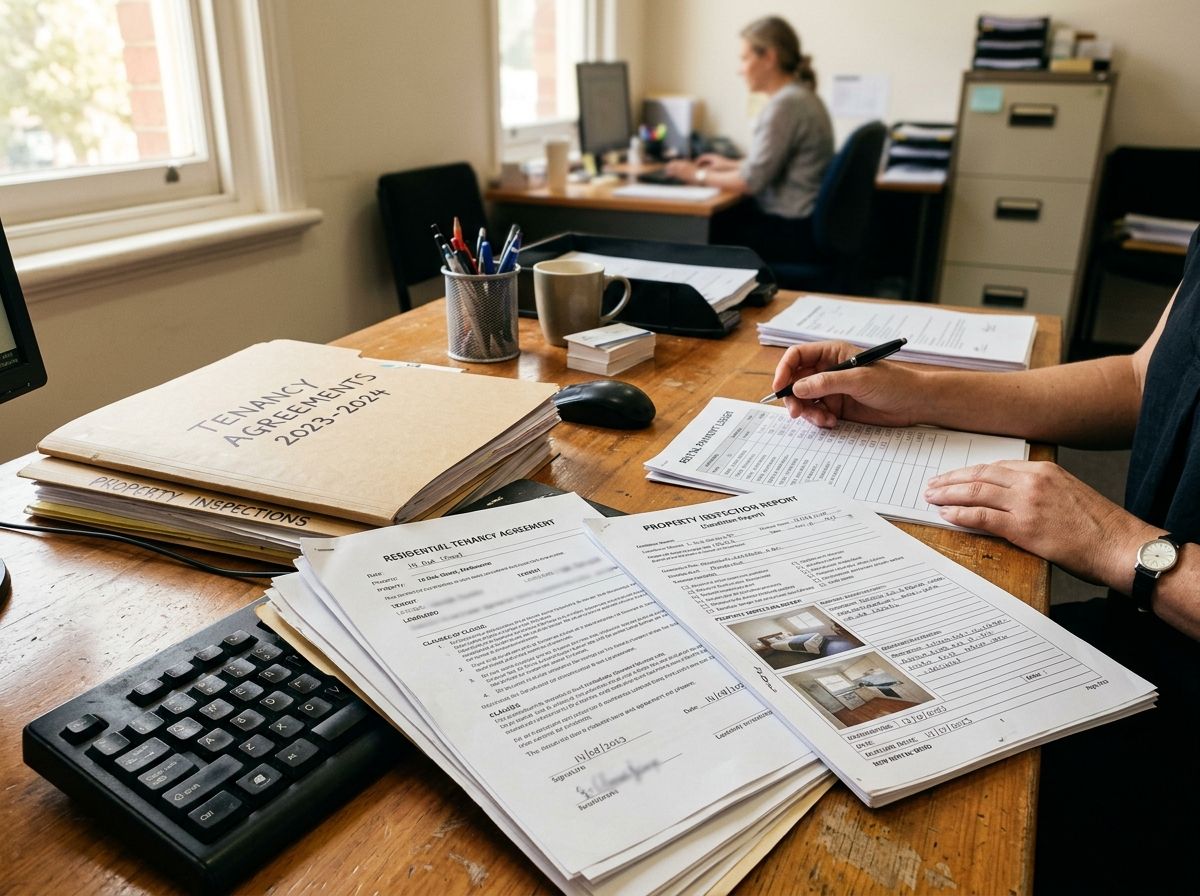
RPL assessment typically draws on a combination of documentary evidence and professional conversation. Documentary evidence includes work samples — the kinds of documents described throughout this checklist. Professional conversation involves a structured discussion with a qualified assessor, who uses it to verify the depth and currency of your experience in areas where documentation alone may not tell the full story.
The challenge for most property managers is not gathering evidence. It is presenting existing evidence in the format and structure that an assessor can evaluate against the qualification's competency requirements. That is where guided support makes a practical difference — not in creating experience you don't have, but in helping you present the experience you do have in a way that is assessable.
The next step if your checklist came back strong
A strong checklist result is worth acting on. The Certificate IV in Real Estate Practice (CPP41419) is the qualification that underpins real estate licensing requirements across Australia, and if your property management experience maps to its competency areas, an RPL pathway may be worth exploring seriously.
The Free Skills Review is the no-commitment starting point. It is an honest assessment of whether your specific property management experience is likely to support an RPL application — before any enrolment decision is made. Free. No obligation. The decision is yours.
General information only, current at the date shown. Licensing rules change, so check the current requirements with the relevant regulator before you rely on them. RPL it Australia is a student support service, not a Registered Training Organisation; qualifications are assessed and issued by our partner RTOs.