Horticulture Training Takes Years and Money You Don't Have: How RPL Skips Both
Experienced in advanced horticulture but blocked by the cost and time of a Certificate IV? RPL recognises your existing skills. Here is how it works.
By RPL it Australia7 min read

The qualification wall that stops experienced horticulture workers cold
You have the experience. Years of it. You have managed irrigation schedules across multiple sites, diagnosed plant health problems before they became expensive, supervised seasonal crews, and kept grounds and nurseries running to a standard that newer workers are still working toward. You know advanced horticulture systems inside out.
Then something changes. A council tender requires a Certificate IV in Horticulture. A new employer asks for AHC40422. A supervisory role you have been doing informally suddenly needs a formal credential to go with it. And the system, which has never once watched you work, tells you that your experience does not count unless it comes with a piece of paper.
That is the qualification wall. It is not a measure of your ability. It is a mismatch between the form your expertise takes (lived, practical, demonstrated on the job) and the form the formal system requires. The frustration is real, and it is the system's failure, not yours.
The question is not whether you have the knowledge. The question is whether there is a pathway that recognises it. There is. It is called Recognition of Prior Learning, and it is worth looking into before you spend months and thousands of dollars studying what you already know.
What the Certificate IV in Horticulture actually covers (and why you probably already do it)
The Certificate IV in Horticulture (AHC40422) is a nationally recognised qualification under the Australian Agriculture, Horticulture and Conservation and Land Management Training Package. It is designed to reflect the competencies of experienced horticulture workers operating at a supervisory or advanced technical level. These are people who plan and manage plant production, oversee grounds maintenance programs, apply advanced pest and disease management, and take responsibility for the quality and safety of horticultural operations.
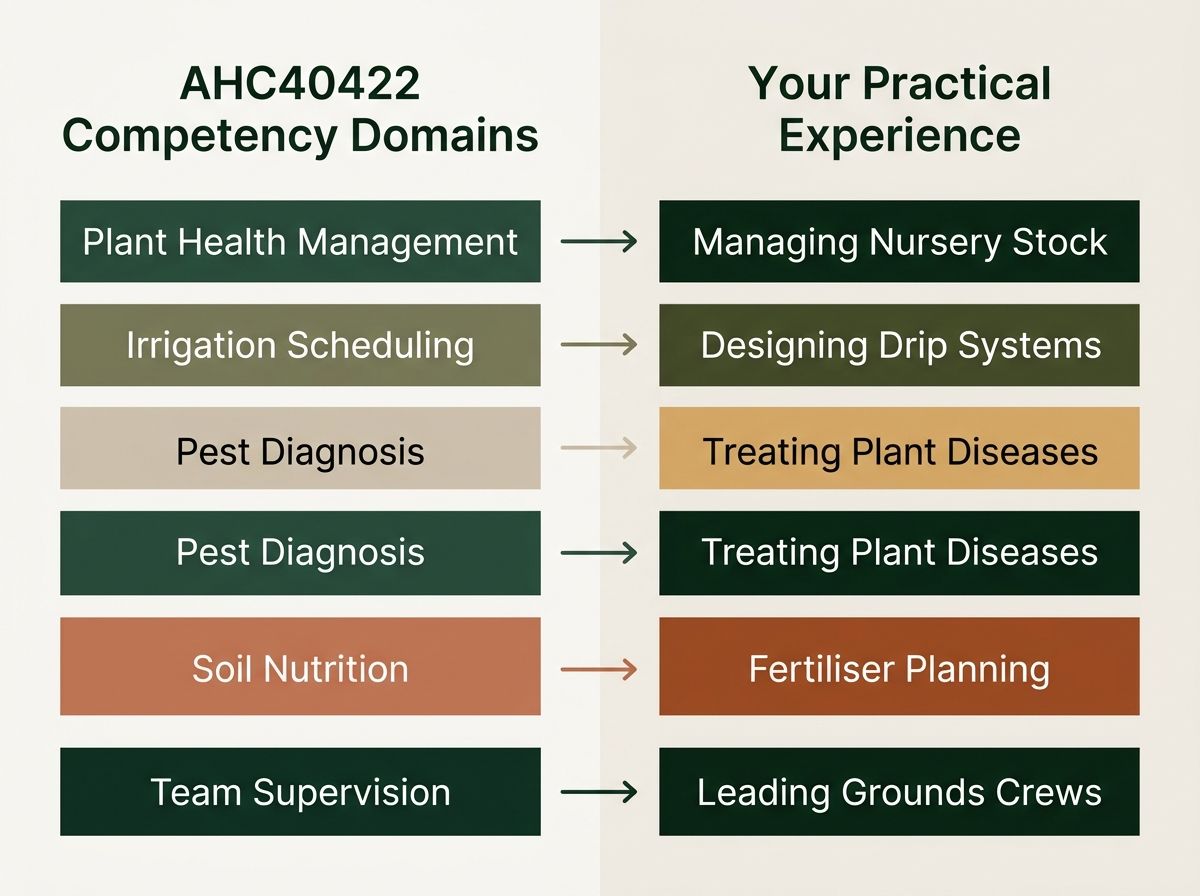
In plain terms, the qualification covers the kind of work that experienced horticulture professionals do every day. Core competency areas typically include managing plant health and nutrition, applying irrigation systems and scheduling, identifying and managing pests and diseases, maintaining and improving soil health, planning and supervising horticulture operations, and applying work health and safety practices in a horticulture context.
If you have spent years managing the plant health of a commercial nursery, you have done this work. If you have designed and maintained irrigation systems for a council parks department, you already have these skills. If you have supervised a grounds crew and been accountable for the quality of the outcome, you are already operating at this level.
The gap is not knowledge. The gap is documentation. The Certificate IV in Horticulture (AHC40422) does not require you to learn things you already know. It requires you to demonstrate, through evidence, that you know them. That is a very different problem, and it is a problem that Recognition of Prior Learning is specifically designed to solve.
Learn more about the Certificate IV in Horticulture (AHC40422) and what the RPL pathway involves.
The real cost of traditional study: why it doesn't add up for working professionals
Traditional study for a Certificate IV in Horticulture is a major commitment. Depending on the registered training organisation and your state, course fees can vary significantly. Even where government subsidies apply, the time investment remains substantial. A part-time study load designed for working professionals typically spans one to two years of evenings, weekends, and assessment submissions alongside a full-time job.
For someone already working in the industry managing sites, supervising staff, and delivering results, that is one to two years of studying content they already apply professionally. It is not learning; it is repetition. Repeating what you already know is not a reasonable price to pay for a credential that should reflect what you already do.
Government subsidies may be available for AHC40422 in some states and circumstances, and it is worth checking what applies in your situation. But even with subsidised fees, the time cost of traditional study does not disappear. The hours are still hours, and the evenings are still evenings. For experienced workers with families, full-time roles, and real responsibilities, that cost is not abstract. It is the main reason many qualified-in-practice horticulture professionals simply do not pursue the formal credential.
Recognition of Prior Learning does not ask you to repeat the journey. It asks you to show that you have already made it.
How RPL works for the Certificate IV in Horticulture
Recognition of Prior Learning (RPL) is a formal assessment pathway within Australia's national vocational education and training system. It allows experienced workers to have their existing skills and knowledge assessed against the requirements of a qualification, without completing the full coursework. The assessment is conducted by a qualified assessor from a registered training organisation (RTO). RPL it guides candidates through the process; the RTO conducts the assessment and issues the qualification.
RPL is not a shortcut. It is a rigorous assessment pathway, but it evaluates what you already know rather than what you still need to learn. That distinction matters. The evidence standard is genuine, the assessor is qualified, and the qualification is nationally recognised because the assessment process is legitimate.
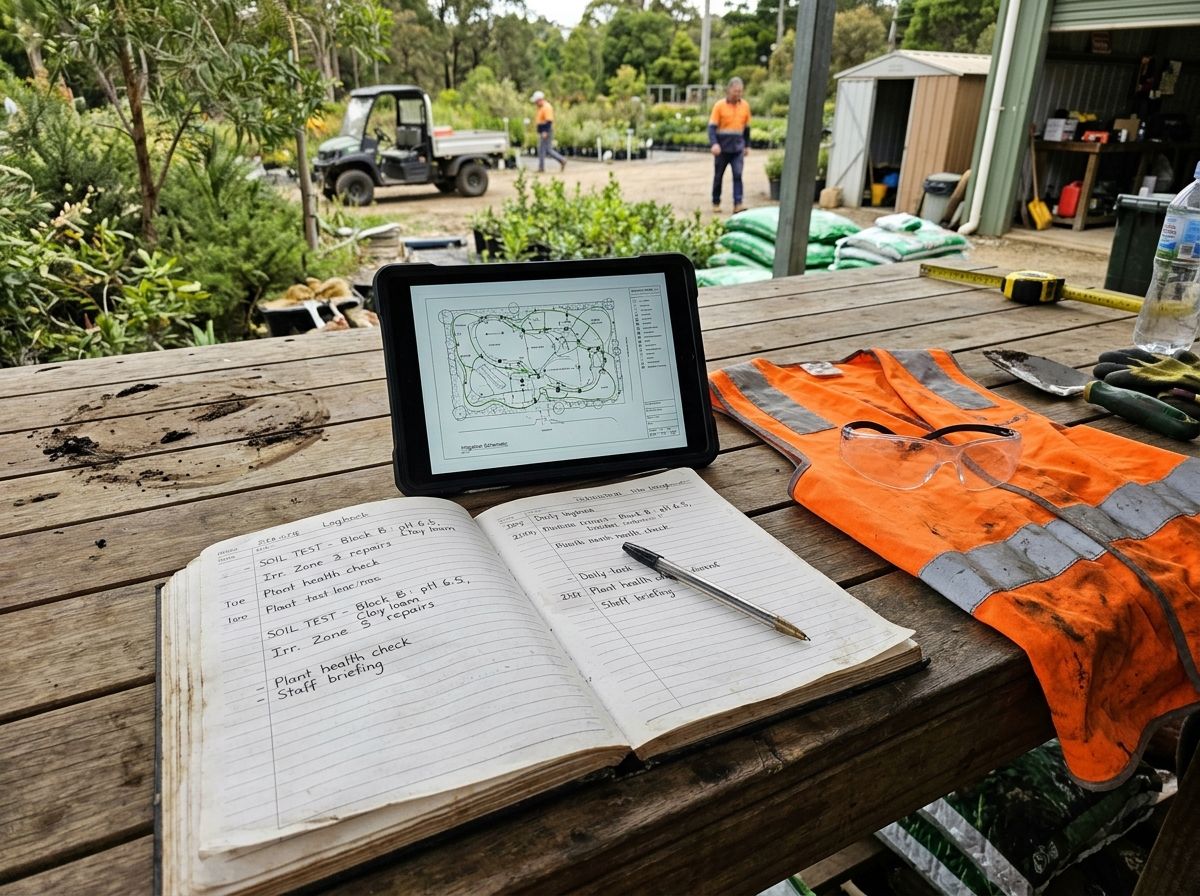
For the Certificate IV in Horticulture, the RPL process typically begins with a skills review. This is a practical conversation about your experience, your work history, and whether your background aligns with the competency requirements of AHC40422. If the fit is strong, the next stage involves gathering evidence: the documentation that demonstrates your competency. In a horticulture context, that evidence might include employer references and letters confirming your responsibilities, records of work you have managed such as site plans, maintenance schedules, or irrigation designs, photographs of completed projects or managed sites, payslips or position descriptions that show your level of responsibility, and logbooks or work diaries if you have kept them.
If gaps are identified during assessment where your documented evidence does not fully meet a unit's requirements, gap training is typically provided to address those specific areas. This is a normal part of the process, not a failure. And at RPL it, gap training is provided at no additional cost.
The process is guided. You are not navigating it alone. That is exactly what RPL it is here for.
Who is a good candidate for horticulture RPL?
RPL tends to work well for horticulture workers who have operated at an advanced or supervisory level for a meaningful period (typically several years or more) and who have performed the kinds of tasks that the Certificate IV in Horticulture is designed to recognise. That includes people who have managed plant health programs, overseen irrigation systems, supervised teams, and taken accountability for horticultural outcomes.
Strong RPL candidates generally have some form of documented work history. This does not have to be formal academic records, but enough to support an evidence portfolio. Employer references, position descriptions, site records, and photographs of work are all useful. The more responsibility you have held, and the more of that responsibility can be evidenced, the stronger the RPL case.
RPL may not be the right fit if your horticulture experience has been primarily entry-level or labouring work without supervisory or advanced technical responsibilities. It may also be less suitable if you have very limited documented evidence of your work, or if you have been working in a narrow area of horticulture that does not cover the breadth of competencies required by AHC40422.
The answer is that it depends on your specific situation. That is exactly what the Free Skills Review is designed to assess, honestly, without obligation, and before you commit to anything.
Your experience is real. The question is whether it is recognised.
You have spent years developing expertise in advanced horticulture systems. You have managed the complexity of living systems including plants, soil, water, pests, and teams, delivering results that less experienced workers could not. That expertise is real. It exists. The question is not whether you have it. The question is whether it has been formally recognised.
Experience can be evidence. That is the foundation of Recognition of Prior Learning. Your work history, your responsibilities, and your documented outcomes are more than just a career history; they are a portfolio. And with the right guidance, they can be presented as evidence against the requirements of the Certificate IV in Horticulture (AHC40422).
Getting your skills recognised shouldn't mean starting over. You already have the experience; we help you prove it.
General information only, current at the date shown. Licensing rules change, so check the current requirements with the relevant regulator before you rely on them. RPL it Australia is a student support service, not a Registered Training Organisation; qualifications are assessed and issued by our partner RTOs.