You Don't Need to Go Back to School for Your Cert 4 Disability
Think getting your cert 4 disability means sitting in a classroom? Veteran support workers already have the evidence. Here's what RPL actually looks like.

The myth keeping experienced support workers unqualified
You have worked in this sector for years. You know how to read support plans, implement behaviour support strategies, document shifts, coordinate with allied health, and support a participant through a difficult day—often before morning tea. You have done this hundreds of times. Yet, there remains a persistent assumption that to obtain your Certificate IV in Disability, you must return to school.
That assumption is incorrect, and it prevents experienced support workers from advancing their careers every single day.
The idea that formalising your career means sitting in a classroom to learn tasks you already perform is a persistent myth. It is what most workers are told when they look for qualifications, but it is not the only option. For support workers with solid, documented experience, classroom retraining is rarely the right path.
What experienced support workers do every day (and why it counts)
Think about your weekly routine. You implement NDIS support plans and write detailed progress reports. You assist participants with daily living tasks, personal care, community access, meal preparation, and transport. You monitor and report changes in participant health, coordinate with families and allied health professionals, and often mentor less experienced staff members.
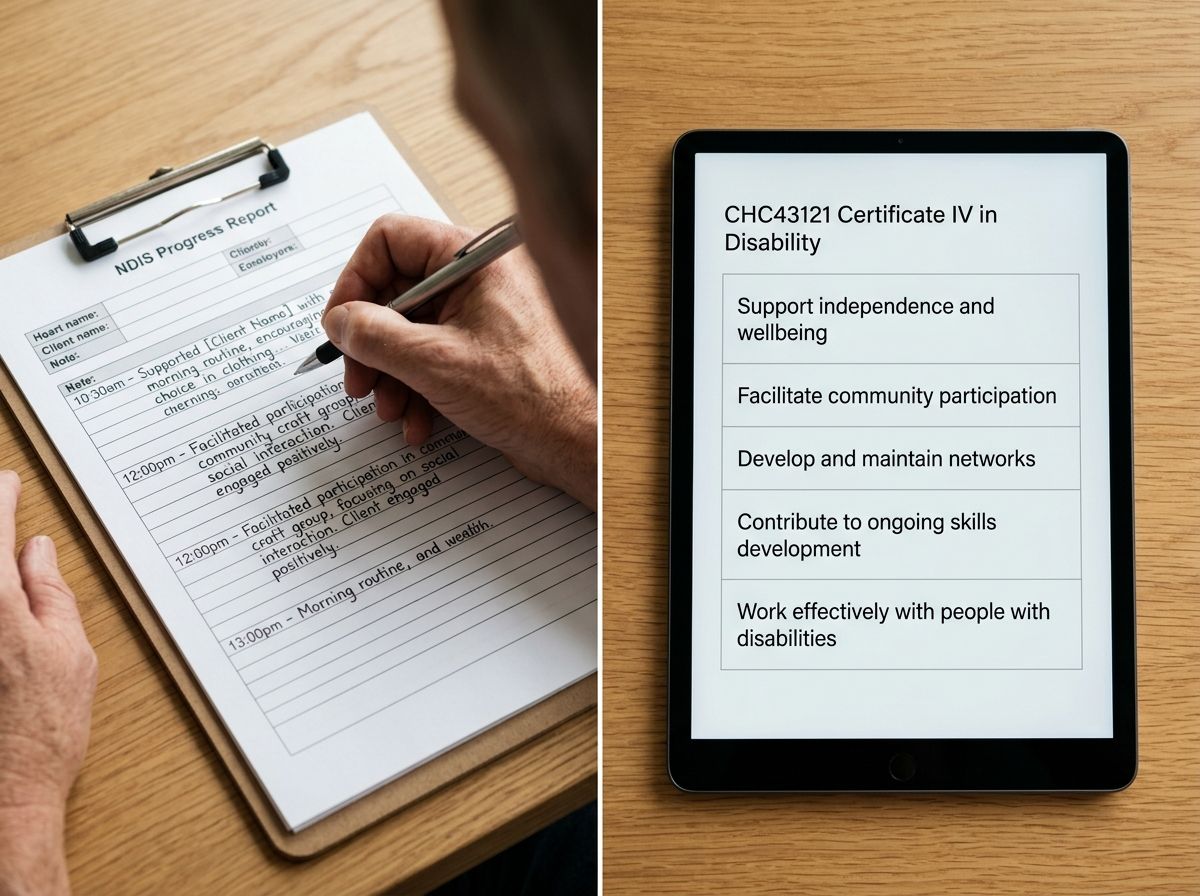
The Certificate IV in Disability Support (CHC43121) is designed around these practical competencies. The core units cover areas such as person-centred support, legal and ethical compliance, complex care, and community participation. The elective units cover mental health and behaviour support—which are practical areas that experienced support workers manage as a routine part of their daily roles.
Your daily support work is direct evidence of your competency. You already have the skills; they simply need to be formally assessed and recognised.
Learn more about the Certificate IV in Disability Support (CHC43121) and what the qualification covers.
Why the classroom myth persists in disability support
Most support workers searching for this qualification online find standard course pages, enrolment forms, class timetables, and unit outlines. The primary message they see is that they must enrol in a structured course and study for months.
Recognition of Prior Learning (RPL) is an alternative path. It is a formal assessment process that evaluates what you already know and can do, rather than retraining you from scratch. Data from the National Centre for Vocational Education Research (NCVER) shows that RPL uptake across Australian vocational education is low, largely because many experienced workers are unaware of it.
The disability sector is no different. Many qualified support workers do not know that their years of documented practice can form the basis of an assessment. The pathway is nationally recognised and meets the same high standards as classroom study, but it is rarely advertised.
What RPL for the Certificate IV looks like
RPL is not a shortcut. It is a rigorous assessment method that meets the same national standards as traditional study, conducted by an assessor from a Registered Training Organisation (RTO). The RTO assesses your practical competency and issues the qualification. RPL it helps you collect and structure your evidence.
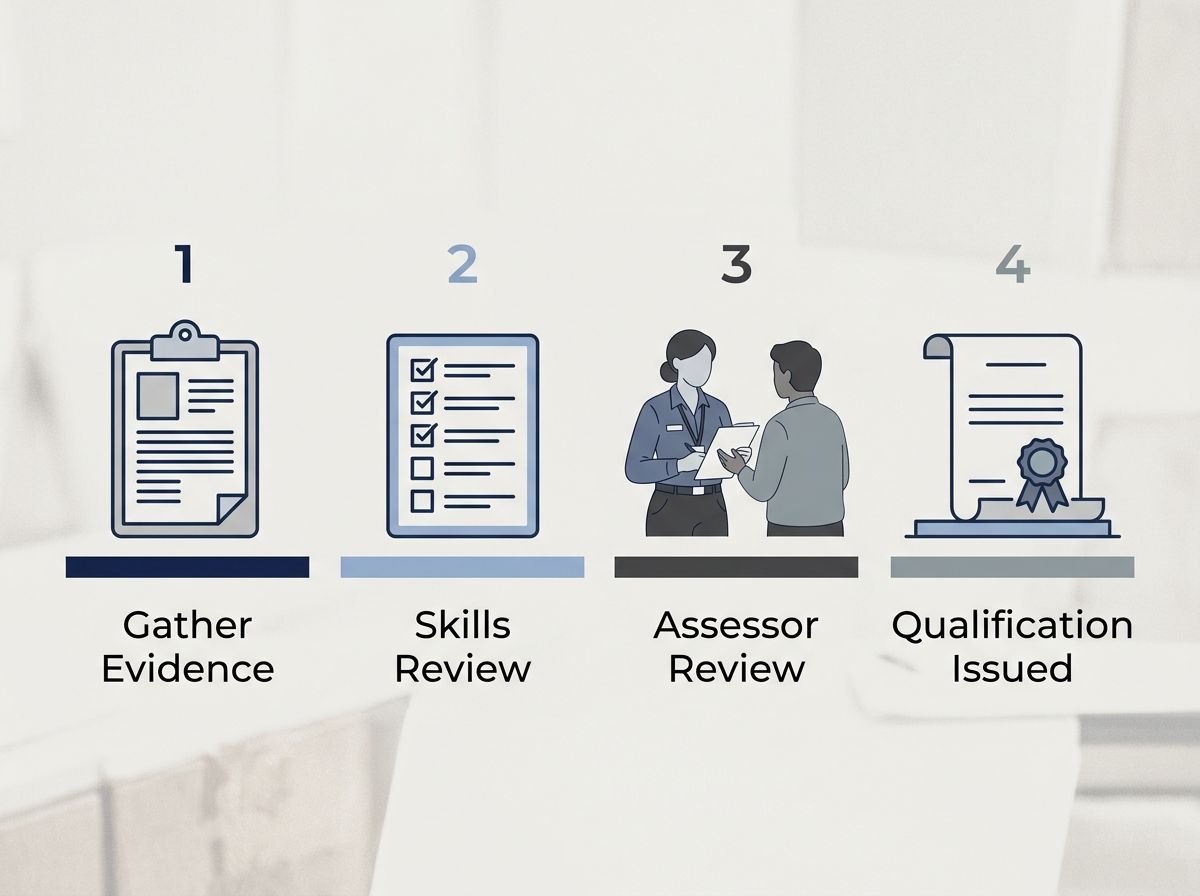
For a disability support worker, the assessment evidence typically includes:
- Workplace documentation: NDIS support plans, progress notes, incident reports, and daily shift records that verify your practice.
- Third-party verification: a report from a supervisor, team leader, or coordinator confirming your competence in specific areas.
- Structured interview: a technical discussion with an assessor where you explain how you apply your skills in real-world scenarios.
- Prior training records: any certificates, workplace induction files, or professional development workshops you have completed.
If an assessor identifies a gap where your evidence or practice does not fully meet a unit's requirements, they will provide targeted gap training. This is a standard part of a professional process that protects the value of the qualification. The assessment is honest, and the outcome matches your skills.
RPL does not involve sitting in a classroom to learn things you already do every day. It does not require you to start from scratch. It is simply your active experience, structured as evidence and assessed against national standards.
The daily tasks that map to CHC43121
Experienced support workers frequently overlook the extent to which their daily tasks are assessable. This is how typical disability support tasks map to the specific units of CHC43121:
- Implementing NDIS support plans and writing outcomes maps to person-centred support and planning units.
- Assisting with personal care and daily living tasks maps to units on supporting people with disability.
- Monitoring and reporting changes in participant wellbeing maps to units on monitoring support delivery.
- Using behaviour support plans and de-escalation methods maps to units on complex support needs.
- Helping participants access community activities maps to units on community participation and inclusion.
- Operating under NDIS Practice Standards and organisational policies maps to units on legal and ethical compliance.
- Liaising with families, coordinators, and allied health teams maps to professional communication units.
If you recognise your daily work in those descriptions, you already demonstrate the core competencies required for CHC43121. The skills are there; they simply need to be compiled and assessed.
Is RPL the right path for you?
RPL is not a universal solution, and realistic advice is important. Strong candidates for CHC43121 typically have several years of consistent, documented experience in disability support roles. They must have access to workplace records, including support plans and progress notes, and be able to nominate a coordinator or supervisor who can verify their practice.
This assessment method is generally not suitable if you are new to the sector, have only worked in a highly restricted role, or cannot access workplace documentation to show your practice. In those cases, a standard study pathway will serve you better, and it is useful to know this before you invest time in an assessment.
The Free Skills Review is designed to answer these questions directly. It is a no-obligation evaluation of your experience. There is no enrolment pressure and no commitment required, just a practical discussion about your work history and the requirements of the qualification.
Assessing your options without commitment
You have done this work for years and know it thoroughly. The core question is simply whether your practical experience matches the specific assessment criteria of this qualification and whether your workplace documentation is sufficient.
Your workplace experience can serve as evidence. We can help you determine if it does.
The Free Skills Review costs nothing, and there is no obligation to proceed. It is a straightforward conversation about your practical experience, what the CHC43121 qualification requires, and how your skills align. If they match, we assist you with the process. If they do not, we will tell you directly.
Gaining formal recognition does not require you to start your education from scratch. The choice to take the next step is yours.
Ready to Get Recognised?
Start with a free skills review to find out if RPL is right for you.