Why Some of the Best Barbers in Australia Still Don't Have a Certificate III in Barbering
Australia's best barbers built careers on skill and client trust — not certificates. Here's why the gap exists, and what RPL means for experienced barbers who need it now.
By RPL it Australia6 min read
The barbering industry has always rewarded the wrong thing (according to formal systems)
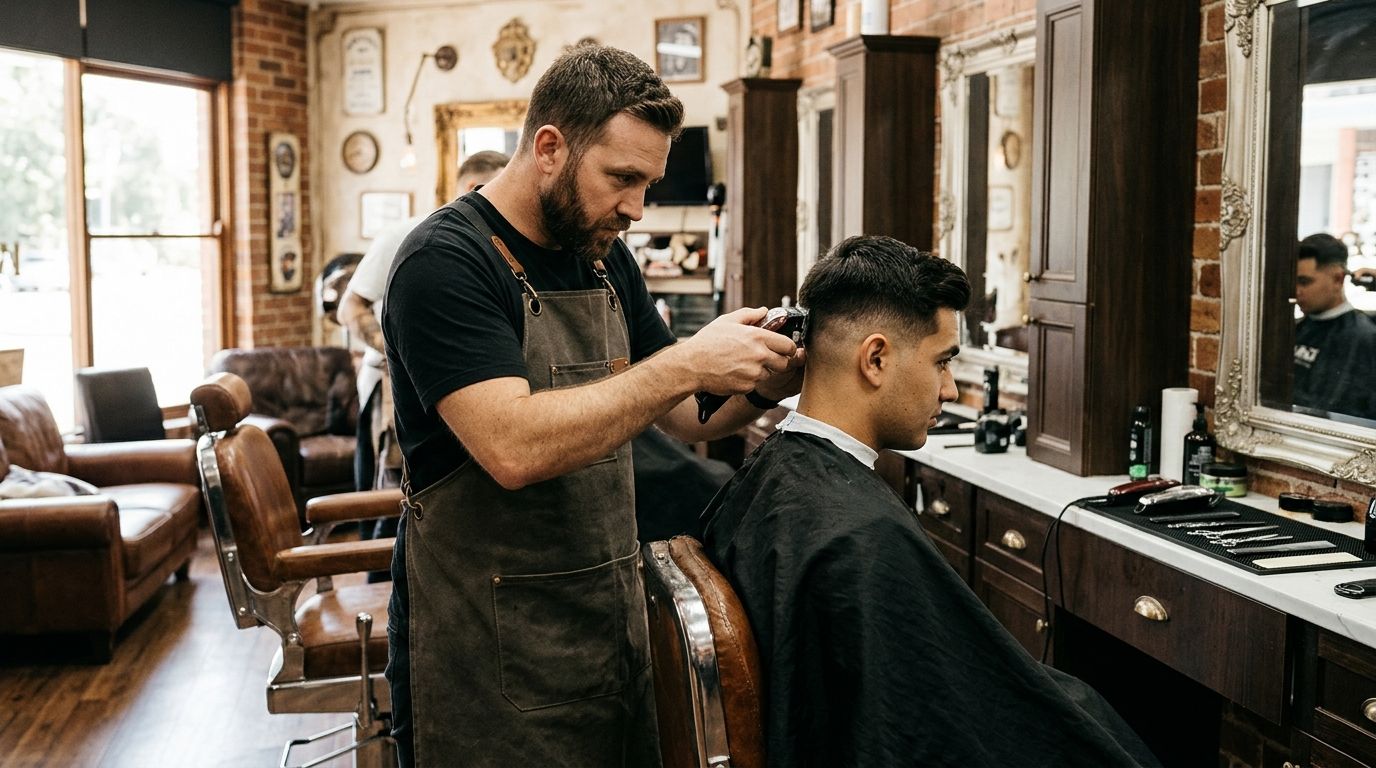
Walk into any respected barbershop in Australia and you will find barbers who have been cutting hair for ten, fifteen, twenty years. Their clients rebook without hesitation. Their reputation travels by word of mouth. Their technique is precise, consistent, and hard-won. What you will not necessarily find is a Certificate III in Barbering on the wall.
That is not an accident. It is not a failure. It is how the barbering industry has always worked.
Barbering rewards what it can actually see: the quality of the cut, the loyalty of the client base, the steadiness of the hand. Formal systems — the ones that govern leases, insurance policies, visa applications, and employment contracts — reward something different. They reward the certificate. For a long time, those two worlds rarely collided.
The contradiction only becomes visible when they do.
How the best barbers built their reputation without the certificate
Most experienced Australian barbers did not begin their careers in a TAFE classroom. They began behind the chair — watching, practising, getting feedback from senior barbers, building a client book one haircut at a time. Fades refined through repetition. Tapers learned by doing. Beard work developed through years of reading different face shapes and hair textures.
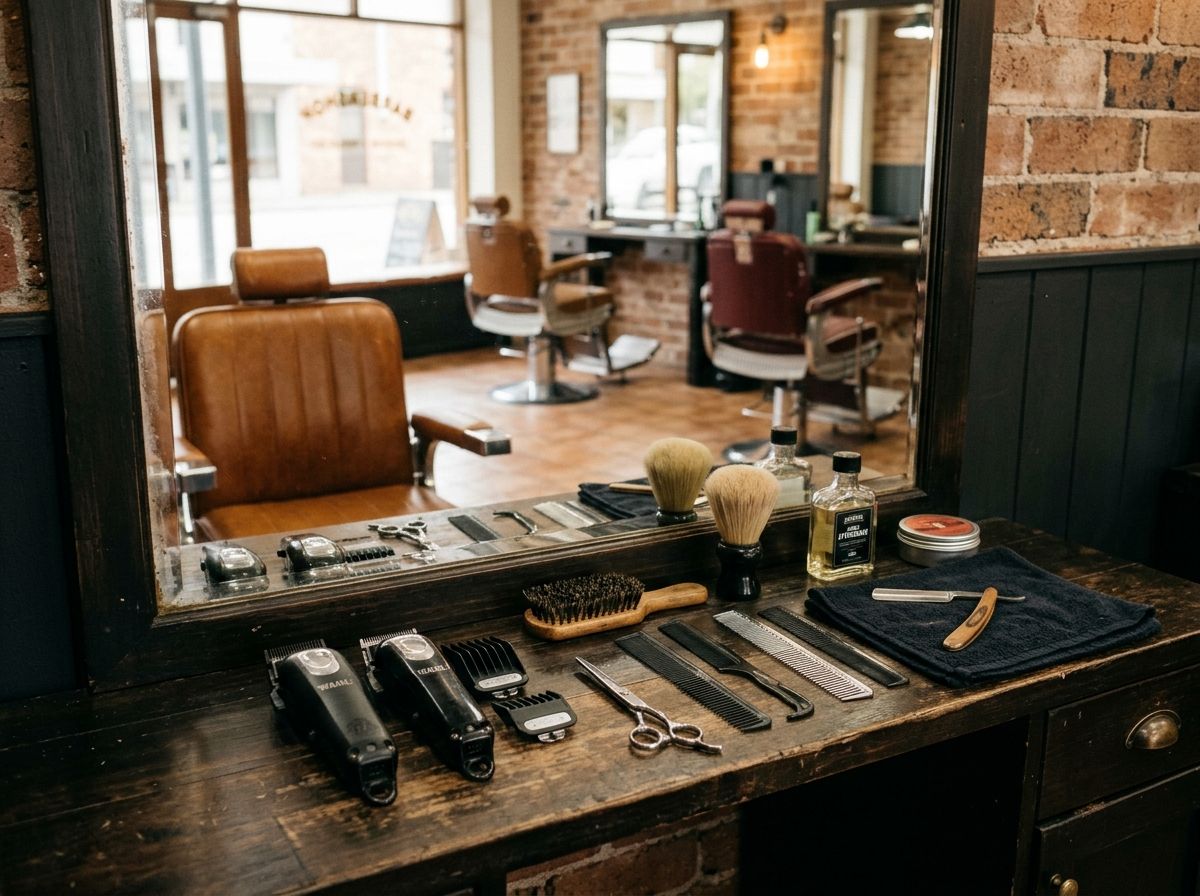
This is real skill. It is rigorous, demonstrable, and genuinely difficult to acquire. The Certificate III in Barbering (SHB30516) covers competencies that experienced barbers demonstrate every working day — client consultation, haircutting techniques, beard and facial hair services, workplace health and safety, and the practical knowledge that keeps a shop running professionally.
The barbers who have spent years developing these competencies often never pursued the formal credential because the market never asked for it. Client trust was the credential. The full chair was the evidence. The repeat booking was the assessment.
That is not a gap in their skill. It is a gap between how the industry works and what formal systems recognise.
If you are wondering whether your years behind the chair would count as evidence in a formal assessment, our guide on what counts as evidence for the Certificate III in Barbering via RPL walks through exactly that.
The moment the certificate suddenly matters
For most experienced barbers, the Certificate III in Barbering was never a priority. Then something changed.
It might be a shop lease. Some landlords and shopping centre operators include requirements around formal qualifications for tenants operating in personal services. It might be a public liability insurance policy — some insurers ask about formal credentials when assessing risk or setting premiums. It might be an employer or franchise that lists the qualification as a condition of employment. It might be a visa application that asks for evidence of formal trade credentials.
These are not reflections on the barber's skill. They are the administrative requirements of formal systems that were not designed around how the barbering industry actually works.
It is worth noting that the specific requirements vary — not every lease, insurer, or employer will ask for the certificate, and the rules differ across states and territories. If you have encountered a specific requirement, it is worth checking the exact wording of whatever is being asked of you. What is consistent is the pattern: barbers who have worked for years without ever needing the certificate suddenly find themselves in a situation where the paper matters.
That moment is disorienting. It is also more common than it used to be.
What the Certificate III in Barbering actually assesses
The Certificate III in Barbering (SHB30516) is not a beginner's course. It is a nationally recognised qualification that assesses the competencies of a working barber — the skills that experienced practitioners have been demonstrating for years.
The qualification covers client consultation and communication, haircutting and styling techniques, beard and facial hair grooming, chemical services, workplace health and safety, and the business knowledge required to operate professionally. These are not theoretical concepts. They are the practical competencies of the job.
For an experienced barber, the qualification is not about learning new skills. It is about formally demonstrating the skills already in practice. The assessment is the challenge — not the learning.
That distinction matters. It is the difference between going back to the beginning and having your existing expertise formally recognised. RPL — Recognition of Prior Learning — is the assessment pathway built around that distinction.
RPL: the pathway built for barbers who already know the work
Recognition of Prior Learning — RPL — is a formal assessment pathway under the Australian Qualifications Framework. It allows experienced barbers to have their existing skills assessed against the Certificate III in Barbering, using evidence from their working life rather than completing a full training course from scratch.
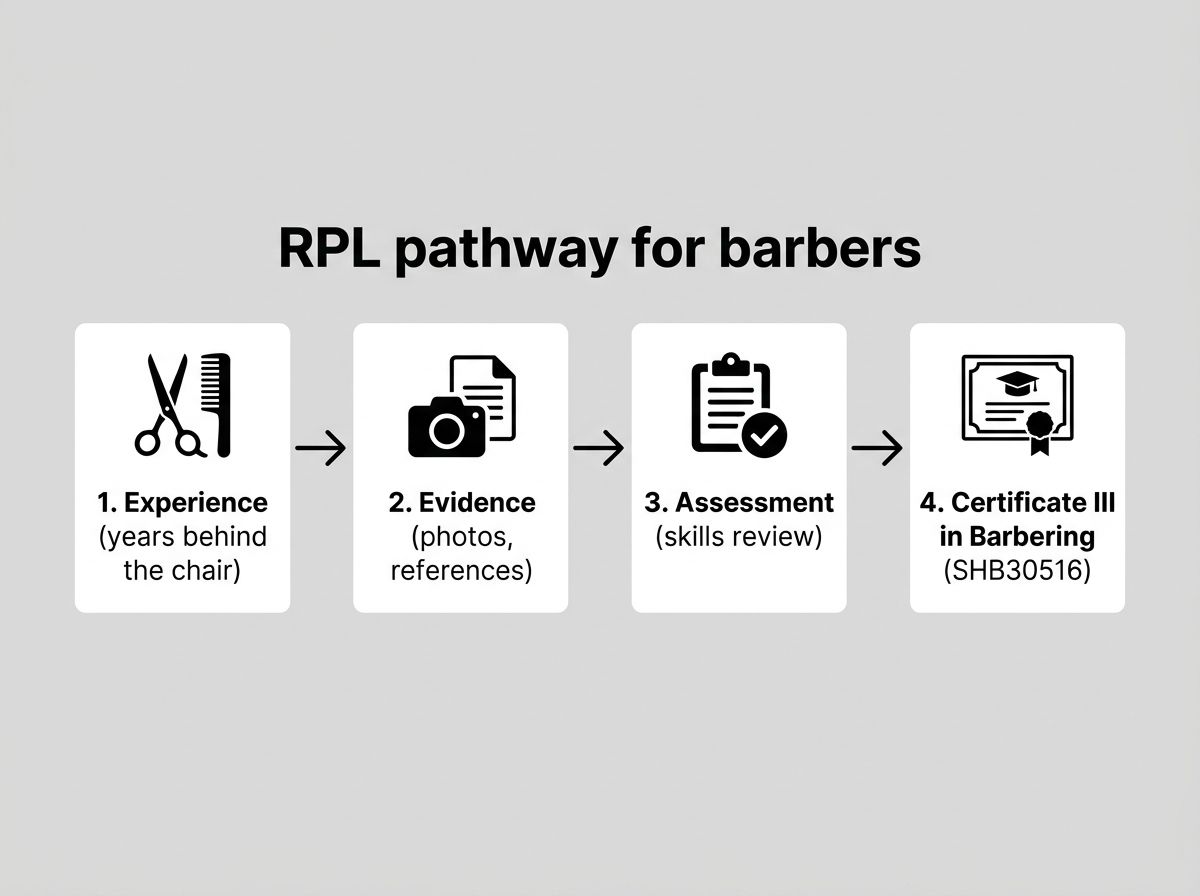
RPL is not a shortcut. It is a rigorous, evidence-based assessment conducted by a registered training organisation (RTO). The difference is that the evidence comes from the barber's existing work history — their experience, their demonstrated competency, their professional record — rather than from a classroom.
The types of evidence that support an RPL assessment typically include employment history, employer or colleague references, records of work performed, and demonstration of skills. The assessment is genuine. The qualification issued at the end is nationally recognised precisely because the process is rigorous.
It is also worth being honest about one thing: if the assessment identifies areas where competency has not yet been demonstrated, gap training may be required. This is not a barrier — it is part of what makes the process credible. RPL it guides candidates through the process and works with partner RTOs who provide gap training at no additional cost where it is needed.
Experience can be evidence. That is the principle RPL is built on. For barbers who have spent years building real competency behind the chair, it is the pathway that makes sense.
The contradiction isn't going away — but there's a pathway through it
The barbering industry will continue to operate on skill and reputation. That is not a problem — it is a strength. The best barbers will always be the ones whose clients keep coming back, whose technique keeps improving, whose shops keep running.
But the formal systems that intersect with barbering — leases, insurance, employment, migration — will continue to ask for the certificate. The gap between how the industry works and what those systems require is structural. It is not going to resolve itself.
For experienced barbers who have reached the point where the certificate matters, RPL is the pathway that honours what they have already built. It does not ask them to pretend they are beginners. It asks them to demonstrate what they already know — through a formal, evidence-based assessment that results in a nationally recognised qualification.
Your skills are real. Your experience counts. The decision about what to do with that is yours.
General information only, current at the date shown. Licensing rules change, so check the current requirements with the relevant regulator before you rely on them. RPL it Australia is a student support service, not a Registered Training Organisation; qualifications are assessed and issued by our partner RTOs.