How your years of garden and grounds management can be recognised with AHC30722
Experienced groundskeepers manage plant health, irrigation, and landscapes daily. AHC30722 is the qualification that makes those skills official.
By RPL it Australia7 min read
The pattern nobody names in horticulture
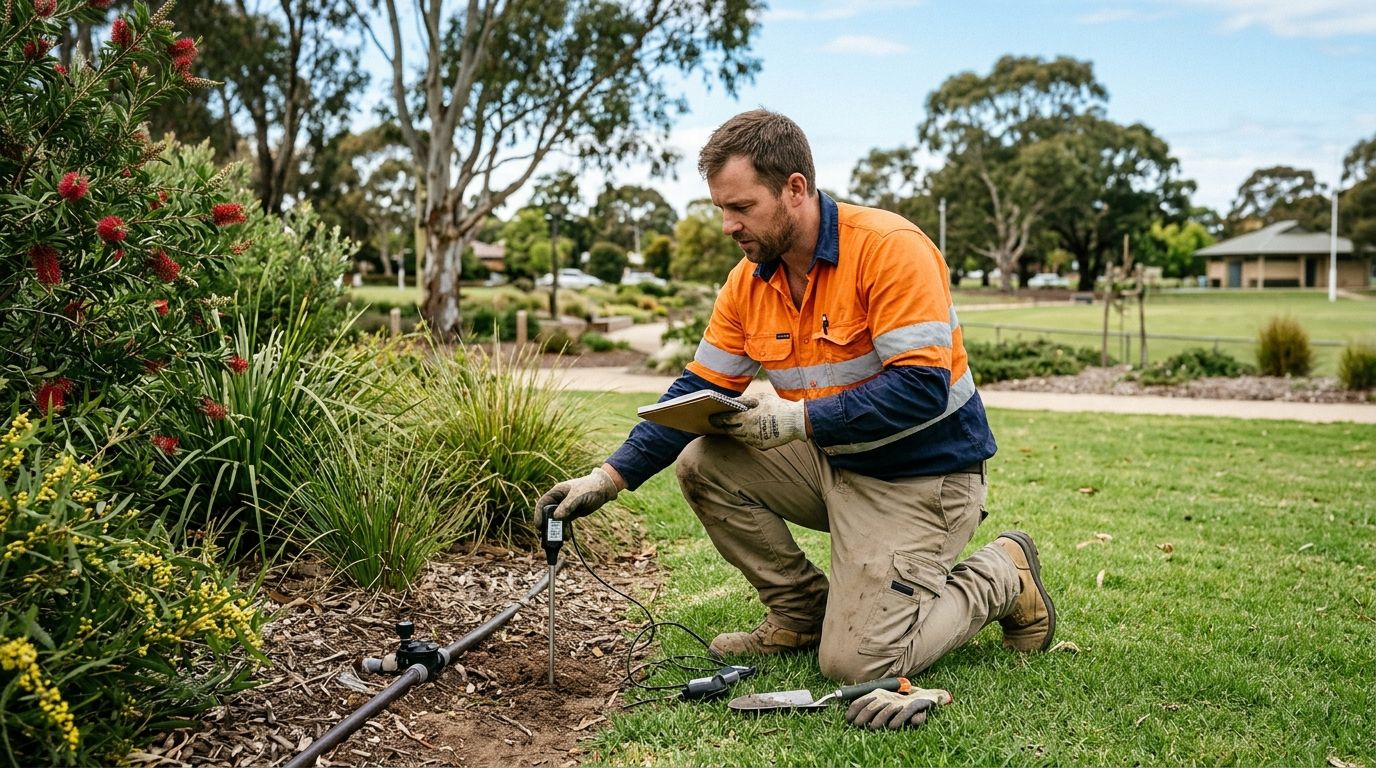
You know what healthy soil looks like, and you can read a plant before it shows visible stress. You have designed irrigation schedules around changing seasonal conditions, managed pest outbreaks before they could spread, and maintained grounds that other people take pride in. These grounds reflect years of accumulated practical judgement, rather than just physical labor.
Yet, when a senior grounds management role becomes available with a local council, a parks authority, a sporting facility, or a commercial property manager, the application usually requires a formal qualification. In most cases, this is specifically the Certificate III in Horticulture.
AHC30722 is the current national code for this qualification. If you have encountered this code in a job advertisement or a tender document and wondered what it meant, you are not alone. Many experienced horticulture workers only notice this code when it stands between them and a position they are fully capable of doing.
This is a common pattern in the industry: you are trusted with valuable, complex grounds but excluded from roles that match your capabilities. This does not happen because you lack the skills, but simply because your skills are not formally documented.
The Certificate III in Horticulture (AHC30722) is a nationally recognised qualification covering the core competencies of professional horticulture work in Australia.
What AHC30722 actually covers, and why it sounds like your job description
AHC30722 is the formal code for the Certificate III in Horticulture. It is a nationally recognised vocational qualification under the Australian Qualifications Framework, delivered by registered training organisations (RTOs) across the country.
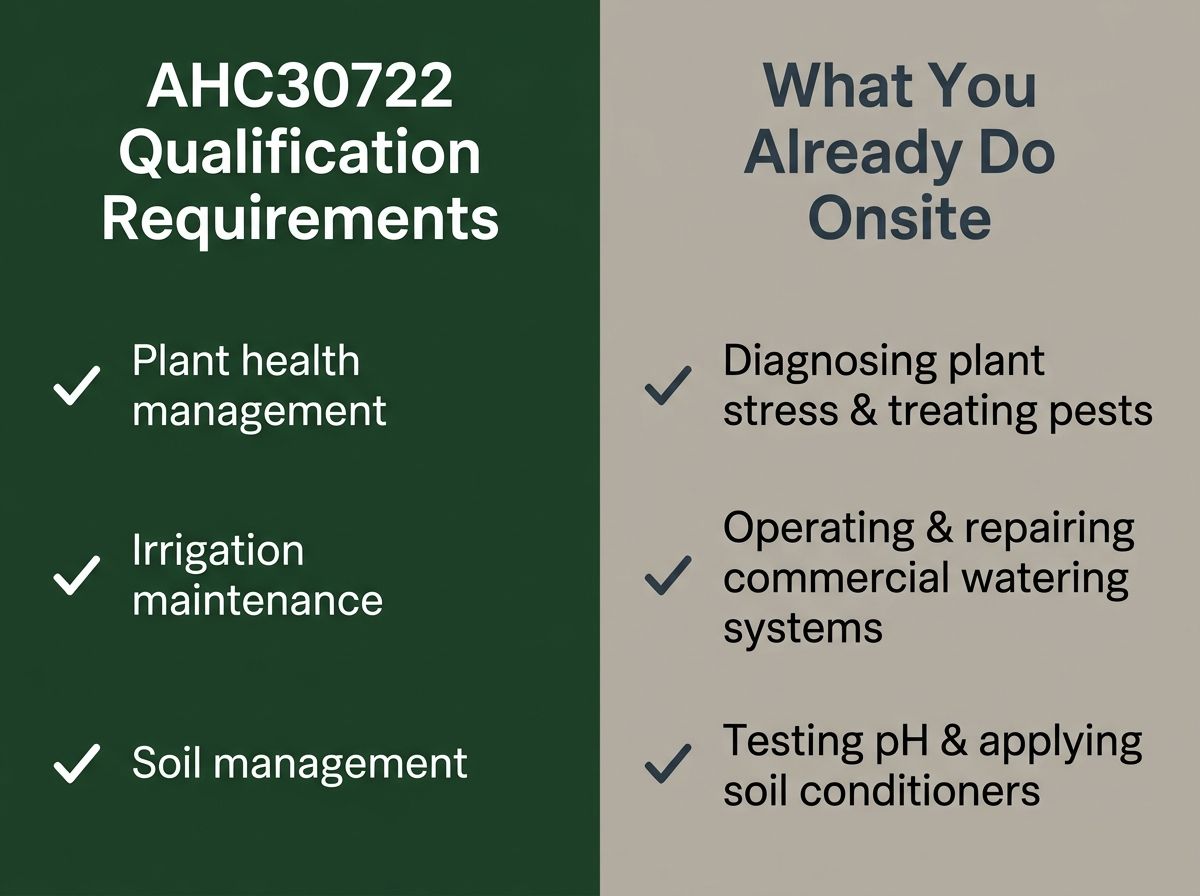
The qualification covers the practical and technical requirements of professional horticulture work. In plain terms, it assesses the skills needed to manage plant health, operate irrigation systems, identify pests and diseases, prepare soil, propagate plants, and maintain grounds to a professional standard.
If you work in professional grounds maintenance, much of what AHC30722 describes will sound familiar. This is not because the qualification was written around your specific job, but because your daily work has already built the competencies that the qualification measures.
- Plant health management: monitoring, diagnosing, and treating plant stress, disease, and pest pressure
- Irrigation: installing, operating, and maintaining irrigation systems appropriate to site conditions
- Soil management: assessing soil health, applying amendments, and preparing growing media
- Landscape maintenance: pruning, mowing, edging, and maintaining grounds to specification
- Propagation: growing plants from seed, cuttings, or other propagation methods
- Safe work practices: applying WHS requirements in horticulture and grounds environments
- Chemical use: applying pesticides and herbicides safely and in compliance with regulations
These are not academic concepts. They are the daily and weekly tasks of experienced groundskeepers. The qualification simply provides a formal framework for work you already do; it does not describe a different type of job.
The gap is not a lack of capability on your part. The gap is simply the absence of a formal qualification that documents those existing skills.
The cycle that keeps experienced horticulture workers stuck
This is a common pattern that repeats across the industry, though it is rarely named clearly.
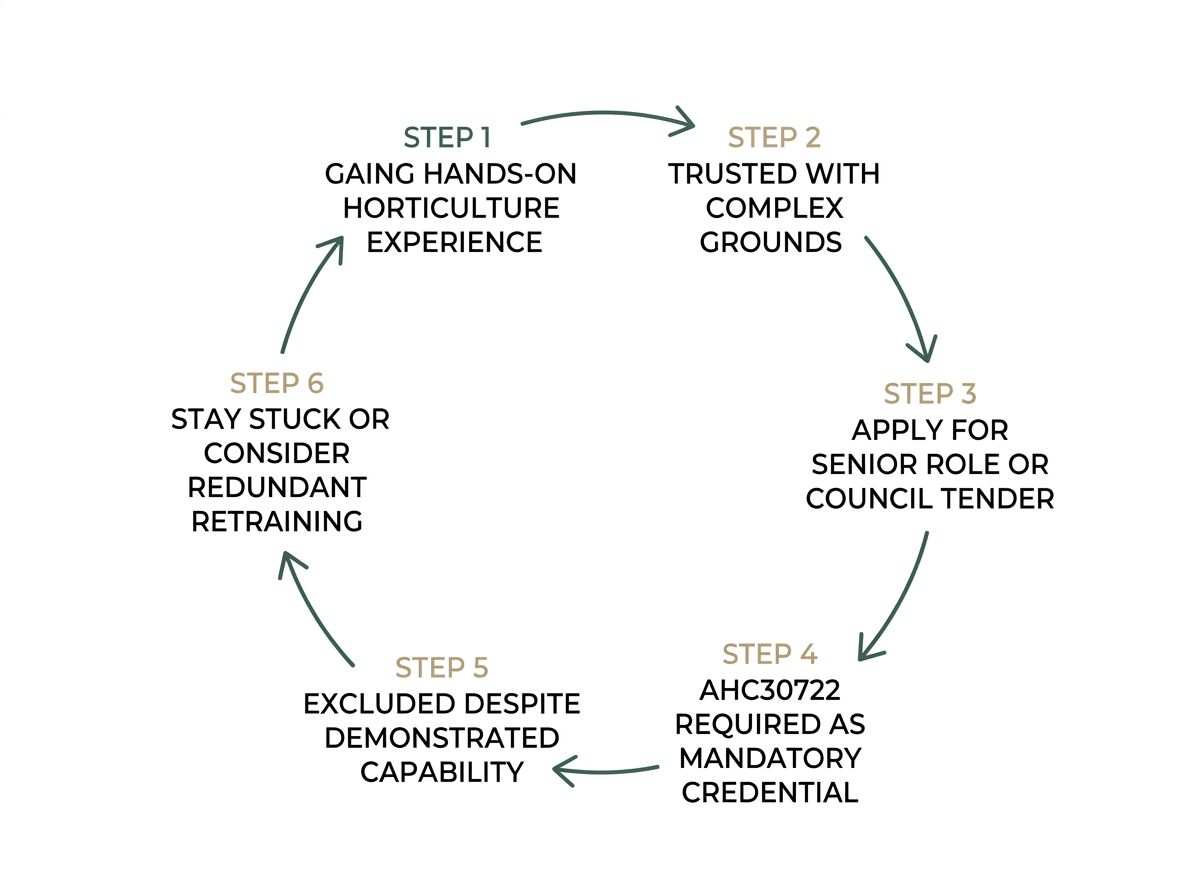
- Stage 1: You enter the horticulture industry through a laboring role, an apprenticeship, a family business, or by learning directly on the job.
- Stage 2: Over several years, you build real competence. You take on complex tasks, manage high-value sites, and earn the trust of your employer, who relies on your professional judgement.
- Stage 3: A role opens up that matches your capabilities, such as a senior grounds position, a team leader role, a council job, or a commercial contract.
- Stage 4: The job application requires a Certificate III in Horticulture (AHC30722) as a mandatory qualification.
- Stage 5: You have the skills but lack the certificate. Your application stalls, and the role often goes to another applicant who has the qualification but perhaps less practical experience.
- Stage 6: You consider studying, but full-time courses do not fit around your job, and part-time study takes years to complete. You remain in your current role, and the cycle continues.
Many experienced groundskeepers have faced this situation more than once.
Qualifications exist for good reasons, and they matter in professional industries. The frustration lies in a system that often fails to recognise your existing expertise unless you acquired it through classroom training.
This barrier is a credential wall. It does not reflect your actual capability, but rather how that capability is documented and presented.
What RPL means for someone who has already done the work
Recognition of Prior Learning (RPL) is a formal process within the Australian vocational education and training system. It allows a qualified assessor to evaluate your current skills against national qualification standards.
In plain terms, your work history serves as evidence, and RPL is the process used to evaluate it.
An RPL assessment for AHC30722 involves a qualified assessor from an RTO reviewing your documented work history against the units of the Certificate III in Horticulture. The assessor determines if your skills meet the national standard for each unit. This is a rigorous assessment pathway built around evidence you have already generated through years of professional work, rather than a classroom shortcut.
The types of evidence used for an AHC30722 assessment may include employment records, payslips, references from supervisors or clients, photographs of completed work, maintenance logs, irrigation plans, plant health records, and previous training certificates. The specific evidence requirements are determined entirely by the assessing RTO.
The assessment itself is conducted by an assessor from a registered training organisation. RPL it assists candidates by guiding you through the preparation and collection of evidence, but the final assessment decision remains solely with the RTO's assessor.
If any gaps in your documented experience are found during the assessment, you may need to complete targeted gap training. This is a standard part of the process to ensure compliance, rather than a failure of your skills.
The qualification issued through successful RPL is identical to the Certificate III in Horticulture earned via classroom study. Because the assessment standards are the same, the resulting qualification carries the same national weight.
For a broader explanation of how RPL works across different trades and industries, this article covers the key differences in how evidence is assessed depending on the qualification.
Who this pathway is and is not for
RPL for AHC30722 is designed for horticulture workers with substantial, practical experience across key areas like plant health, irrigation, soil management, pest control, and landscape maintenance. Candidates must be able to document this experience through employment records, references, and physical evidence of their work.
It is not suitable for those early in their careers, those with narrow experience restricted to one or two areas, or workers with undocumented histories. If your work consists solely of mowing and edging, for instance, without broader horticultural responsibilities, RPL may not be the appropriate pathway for you right now.
Honest suitability assessments are important. We prefer to direct candidates to the correct pathway rather than enrol them in an unsuitable program. This approach ensures a reliable process and genuine qualification outcomes.
If you are unsure whether your experience qualifies, the Free Skills Review is the practical first step. This is a complimentary, no-obligation conversation to help you determine if RPL is a viable option before making any commitments.
Your experience has always been evidence; it just needed the right framework
The years you have spent managing plant health, maintaining irrigation systems, assessing soil, and caring for grounds represent the core of what AHC30722 assesses. This practical experience is the actual evidence required for the qualification.
Your practical skills and years of experience are real assets that deserve formal recognition.
The Certificate III in Horticulture is not a qualification you need to start from scratch. For experienced groundskeepers, it is a formal recognition of the skills you already use every day, achieved through a process that translates your work history into a national qualification.
Experienced professionals should not have to start their training over.
General information only, current at the date shown. Licensing rules change, so check the current requirements with the relevant regulator before you rely on them. RPL it Australia is a student support service, not a Registered Training Organisation; qualifications are assessed and issued by our partner RTOs.