Understanding the Unique Student Identifier for RPL
You have the experience, but now you need a 10-digit number. Learn what a Unique Student Identifier (USI) is, why RPL requires it, and how to get one.

You have the experience. Now a government number is holding you up.
You have spent years building practical, high-level expertise. You have managed teams, solved complex operational problems, and delivered commercial results that newer graduates only read about in textbooks. You finally decided to get that experience formally recognised through RPL. Then, during the process, you are asked for your Unique Student Identifier.
Your what?
This is one of the most common points of friction in the RPL process. This does not happen because the requirement is unreasonable, but because it is rarely explained to candidates upfront. While you were focused on compiling your evidence and choosing your qualification goal, a 10-digit government number was likely not on your radar.
The frustration is understandable, but the requirement is mandatory. Fortunately, resolving it is much simpler than the surprise of discovering it.
What is a Unique Student Identifier?
A Unique Student Identifier (USI) is a 10-character alphanumeric code issued by the Australian Government. It creates a permanent, lifelong online record of your nationally recognised VET training and qualifications. The code belongs entirely to you, not to your employer or any training provider. It costs nothing to create, and it stays with you for life, regardless of how many different institutions you study with.
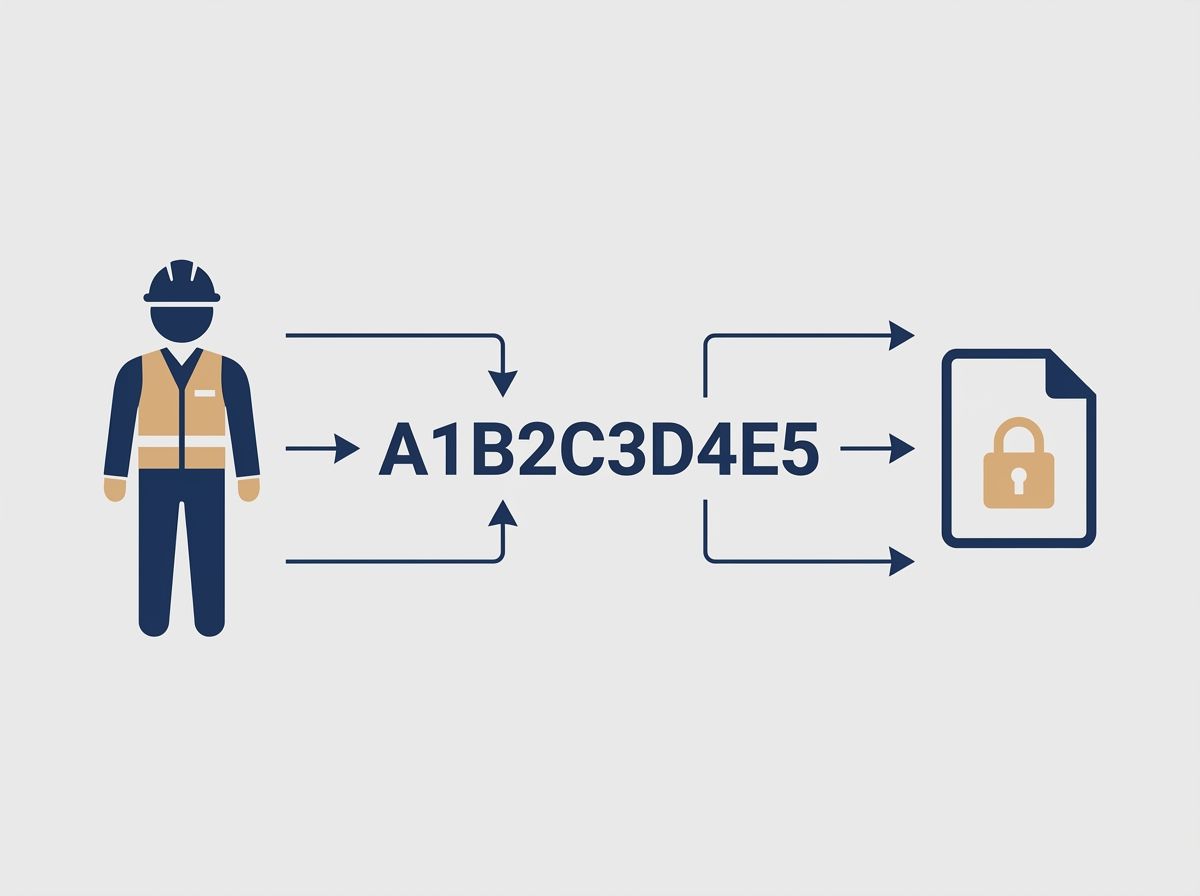
The USI was introduced in 2015 and is managed by the Student Identifiers Registrar. You need a USI whenever you undertake nationally recognised training, apply for a VET student loan, access Commonwealth financial assistance like HELP, or graduate from higher education.
Think of it as the administrative infrastructure behind your credentials. Every nationally recognised certificate, diploma, or statement of attainment issued by a Registered Training Organisation must be linked to this single number. It is the mechanism that keeps your qualifications portable, secure, and permanently recorded, no matter when or where you earned them across Australia.
You can create or find your identifier directly through the official Australian Government USI portal.
Why does RPL require a USI?
Registered Training Organisations (RTOs) are legally required to collect and verify a valid USI before they can issue any nationally recognised qualification or statement of attainment. This applies directly to outcomes achieved through RPL. This rule is established under the Student Identifiers Act 2014 and remains a strict condition of registration for every RTO.
RPL is a formal assessment pathway. When your experience is assessed and found to meet the competency standards for a qualification, the RTO issues your credential. That credential, whether it is a full diploma or a single statement of attainment, cannot legally be issued unless a valid USI is verified on your student record.
This is a practical administrative requirement rather than bureaucracy for its own sake. The USI makes your RPL outcome nationally portable. Without this identifier, your qualification cannot be officially recorded. With it, your formally assessed skills become part of a permanent, verifiable registry record that supports your career progression.
The Australian Government's USI provider guidance confirms that training organisations must verify a student's USI before issuing any qualification or statement of attainment.
How to get your USI
You can create a USI through the official Australian Government website at usi.gov.au. The process takes place online using a government-issued identity document. Your identity is verified through the Document Verification Service (DVS), which matches your details against national databases in real time.
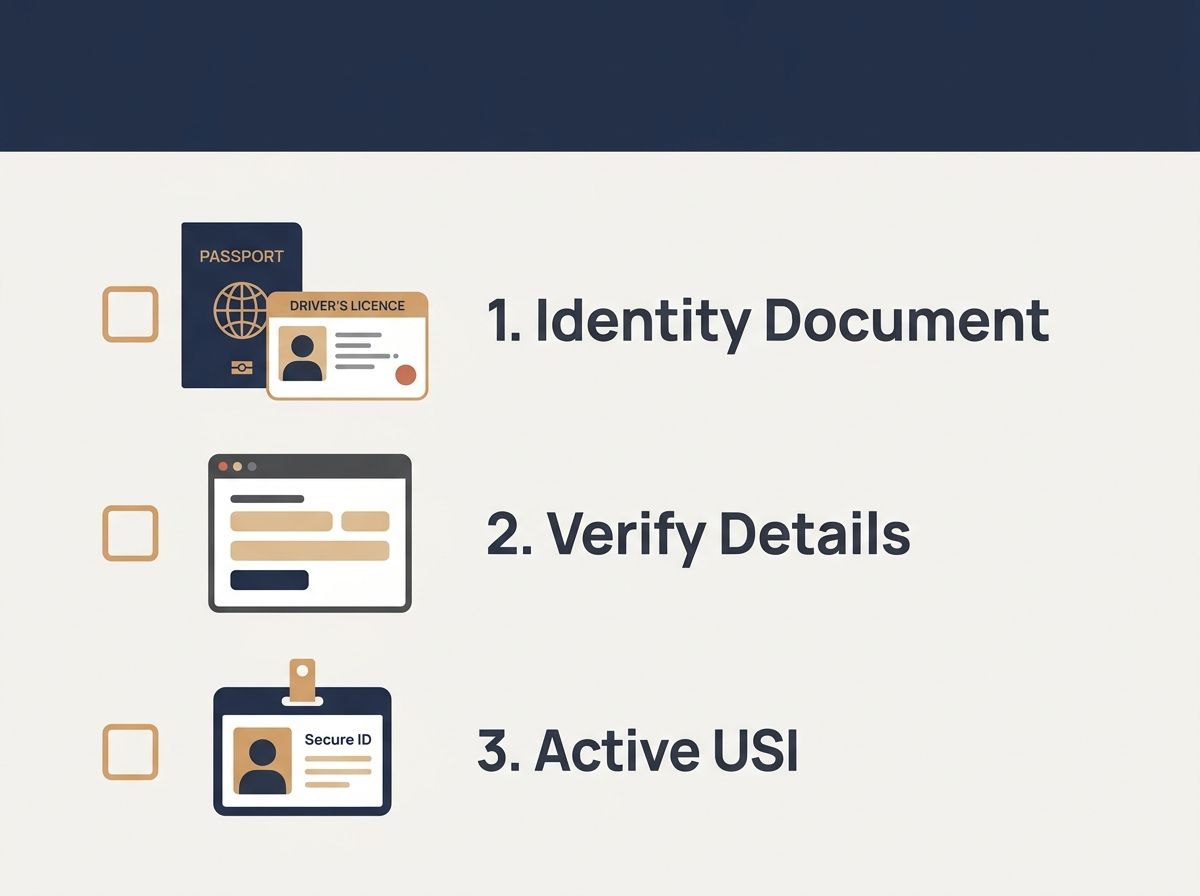
One essential detail: your personal information must match your identity document exactly, including any hyphens, apostrophes, or accents in your name. Verify your legal name spelling before you start.
Accepted identity documents include:
- An Australian driver's licence: this must be current, valid, and issued by an Australian state or territory (some states allow recently expired licences, but rules vary)
- An Australian passport: either current, or expired within the past three years
- A non-Australian passport with a valid Australian visa: this option is for international students and visa holders who have already arrived in Australia
- Other official documents: Medicare cards, birth certificates, or citizenship certificates are also accepted, and you can check the current list of options at usi.gov.au
You will need one verifiable form of identification to complete this registration process. The USI system does not store copies of your physical identity documents, though your basic personal details are saved in your account profile.
If you have completed any nationally recognised VET courses in Australia since 2015, you likely already have an active USI. You can retrieve your existing identifier through the search tool at usi.gov.au instead of creating a duplicate account.
Because identification rules can change, always confirm the accepted documents directly on the official website before starting your application.
The official USI identity verification page details the accepted documents and explains how the verification system operates.
What happens to your USI after RPL?
Once your RPL assessment is complete and the qualification is issued, that outcome is linked directly to your permanent VET record. Your USI stays with you permanently. It does not expire, it does not belong to the RTO, and it is not tied to your current employer.
Through the USI registry portal, you can access an official VET transcript showing all your qualifications and verified training history. You can share this document with employers or education providers either as a physical copy or digitally using a secure email link or QR code.
Keep in mind that you maintain control over your USI transcript. Employers and external parties can only view the specific records you choose to share with them; they do not have independent access to search the USI registry on your behalf.
Transcripts can occasionally show gaps, particularly if recent completions have not been reported to national databases yet or if an RTO has not submitted its end-of-year data. If you notice a missing qualification, contact the issuing RTO to update your record.
The USI is a practical tool, not a barrier
Discovering an administrative requirement mid-process is inconvenient. It is frustrating to learn that a government number is required before your years of practical work can be recognised.
This identifier is not a barrier to your recognition; it is the mechanism that secures your credentials. An RTO cannot legally issue your qualification without it. Once linked, your assessed expertise becomes a permanent record that belongs to you, travels with you throughout your career, and can be shared instantly.
Your experience provides the evidence. The USI ensures that evidence is formally and permanently recorded.
Ready to find out if your experience qualifies for RPL?
Acquiring a USI is just a minor administrative step. The central question is whether your professional experience matches the requirements of your target qualification in the first place. It is best to resolve this fundamental question before investing further time and effort.
Our dedicated resource page provides detailed information on how the USI requirement fits into your assessment path with RPL it.
Visit our USI information page for additional details on how this national requirement applies to RPL candidates.
Ready to Get Recognised?
Start with a free skills review to find out if RPL is right for you.