How uncredentialed glaziers cost your business tenders (and compliance)
Skilled glaziers without a Certificate III cost businesses tenders, create insurance risks, and bottleneck work. Here is the pattern and how to break it.

The tender you didn't win (and why it keeps happening)
Your glaziers are skilled, which is not the issue here. The actual issue is that commercial and government clients increasingly require documented proof of that skill before they will even evaluate your tender. In this context, proof means formal credentials, specifically the Certificate III in Glass and Glazing (MSF30422).
If your workforce cannot demonstrate that credential, your tender application can be disqualified before anyone assesses the quality of your work, your pricing, or your track record. The capability exists on site, but the paperwork does not match it. This gap is costing glazing businesses real commercial opportunities, and it tends to cost them repeatedly, in the same way, for the exact same reason.
This article maps out the pattern. It has three distinct stages, each compounding the impact of the last. It also provides one practical way to break this cycle without pulling your workers off the tools for months of classroom study.
If this pattern sounds familiar from other trades, it is not unique to glazing. See how uncredentialed workforces lose Tier-1 contracts in the electrical sector.
Stage 1: The compliance pre-qualification wall
Most glazing businesses do not lose tenders because of poor workmanship. They lose them before their work is ever assessed.
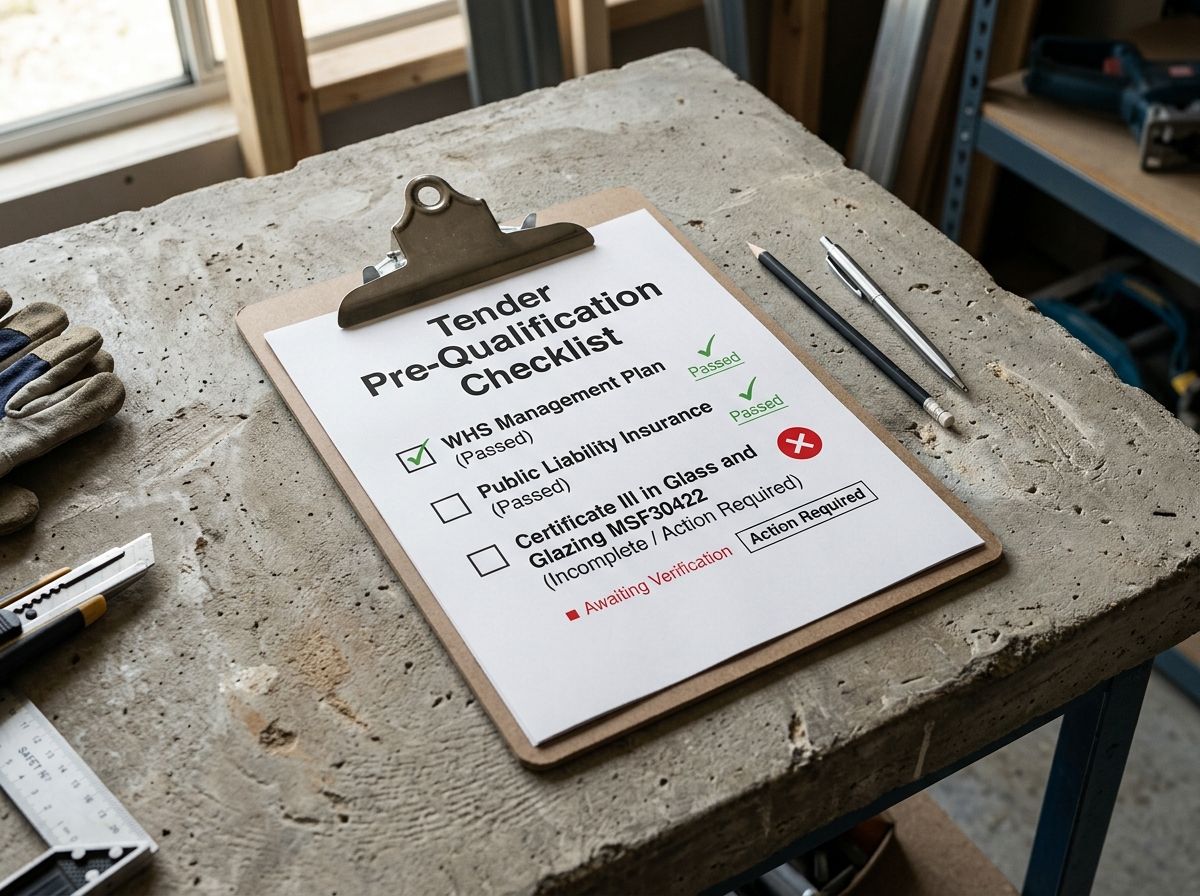
Commercial construction projects, particularly those involving principal contractors, government clients, or large-scale fitouts, increasingly include pre-qualification requirements as a standard part of the tender process. These requirements exist to manage liability. Principal contractors are responsible for the subcontractors they engage, and they pass that responsibility down through workforce credentialing requirements.
For glazing subcontractors, this often means proving that workers hold recognised qualifications. The Certificate III in Glass and Glazing (MSF30422) is the nationally recognised qualification for glaziers in Australia. Where a tender pre-qualification checklist requires evidence of a credentialed glazing workforce, a business whose workers hold no formal qualification may not progress past that stage, regardless of the years of site experience those workers possess.
Licensing requirements for glazing work also vary by state and territory. In some jurisdictions, glazing is a regulated or licensed trade. The specific requirements, including whether a qualified supervisor must be present on commercial sites, differ across Queensland, New South Wales, Victoria, South Australia, and Western Australia. Business owners should verify the specific requirements applicable to their state with the relevant licensing authority. What remains consistent across jurisdictions is that formal credentials are increasingly expected, and their absence creates a pre-qualification barrier that skilled but uncredentialed workers cannot cross.
Stage 2: The one-supervisor bottleneck
Many glazing businesses operate with one credentialed person, often the owner or a senior employee, overseeing a team of experienced but uncredentialed glaziers. This is a common arrangement, but it is also a structural bottleneck.
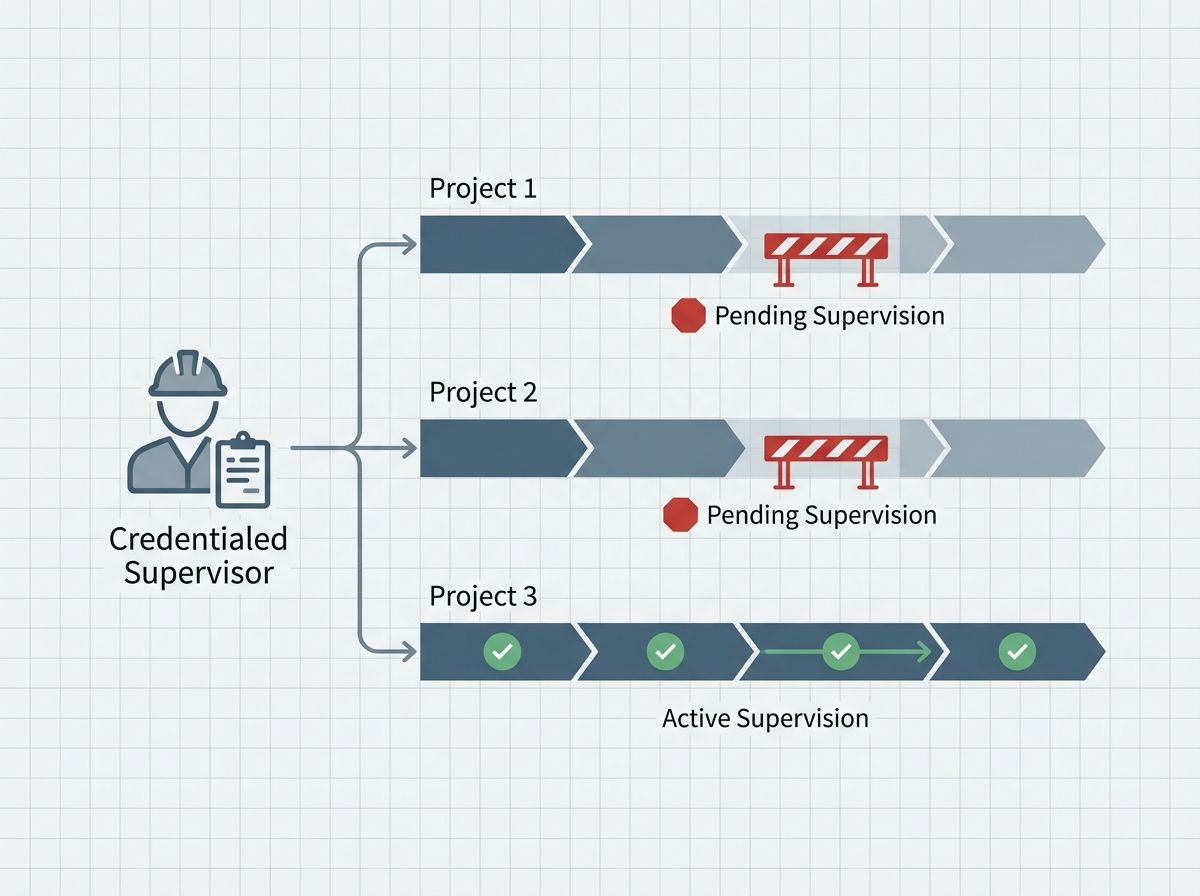
Your business can only grow as fast as that one person can supervise.
When licensing or site requirements mean that a credentialed supervisor must be present for certain types of commercial glazing work, your business capacity is capped by the availability of that one person. Multiple simultaneous jobs become difficult to manage. Taking on larger projects, or projects across different sites, creates compliance risks if the credentialed supervisor cannot be present at all locations.
This is not a skills problem. The other glaziers on your team are likely entirely capable of managing a job independently. The bottleneck is administrative. The paperwork does not reflect the capability that already exists in your workforce. Until it does, the business operates below its actual capacity, restricted not by what your workers can do, but by what they can formally demonstrate.
Note: the specific supervision requirements for glazing work vary by state and by the nature of the work being performed. Business owners should verify the applicable requirements with their state licensing authority. The pattern described here, where one credentialed person limits the operational capacity of a larger team, is a common structural consequence of credential gaps in trade businesses generally.
Stage 3: Insurance and liability exposure
The third stage of this pattern is the one most business owners overlook until something goes wrong.
Under Australian work health and safety legislation, employers have a duty to ensure that workers are competent to perform the work they are assigned. Competence in a regulated or credentialed trade context is increasingly understood to require formal qualifications, not just demonstrated ability. Where a worker is performing work for which a formal credential is expected or required, and an incident occurs, the absence of that credential can become a relevant factor in determining liability.
This is worth a direct conversation with your insurer or broker. Commercial liability policies for construction and trade businesses typically include conditions around workforce competency and compliance with applicable licensing requirements. Whether the absence of a Certificate III in Glass and Glazing affects your policy, and under what circumstances, is a question your insurer is best placed to answer. The risk exists, and it is worth understanding before an incident makes it relevant.
The general principle under the model Work Health and Safety Act, which has been adopted in most Australian states and territories, is that a person conducting a business or undertaking must ensure, so far as is reasonably practicable, that workers are competent to carry out the work safely. Formal qualifications are one recognised indicator of competence. Their absence is not automatically a liability, but it is a risk factor that prudent business owners must assess.
Why this pattern keeps repeating
The cycle persists because upskilling feels disruptive. Business owners assume that getting workers credentialed means pulling them off the tools for months of classroom study, which is time the business cannot spare and workers do not want to spend in a classroom.
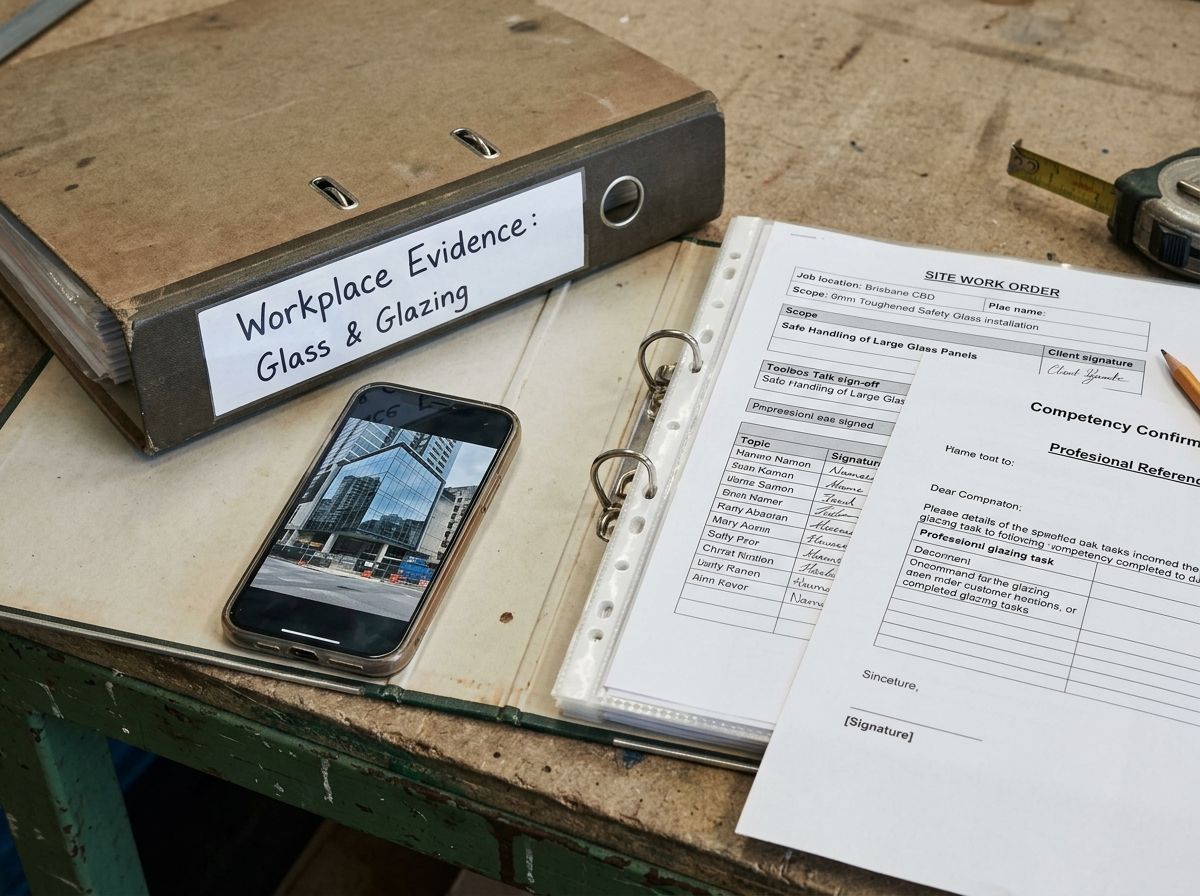
That assumption is incorrect, and it is the main reason this cycle continues.
Recognition of Prior Learning (RPL) is a formal assessment pathway that evaluates what workers already know and can do, using evidence from their existing work. It is not a shortcut. It is a rigorous assessment process conducted by a registered training organisation (RTO). For glaziers who have been doing the work for years, the evidence of their competence already exists in completed installations, job records, site documentation, supervisor references, and photographs of their work.
RPL assesses that existing evidence against the units of competency in the Certificate III in Glass and Glazing (MSF30422). Where the evidence demonstrates competency, the worker does not need to repeat the learning. Where gaps are identified, targeted gap training is provided, typically at no additional cost through the delivering RTO. The disruption to operations is significantly less than a traditional training pathway.
The qualification issued at the end of a successful RPL assessment is the same nationally recognised Certificate III in Glass and Glazing as any other training pathway. It carries identical weight in tender pre-qualification, resolves the supervisor bottleneck, and addresses the same insurance risks.
What breaking the cycle looks like for a glazing business
When a glazing business upskills its workforce through RPL, the change is administrative, but the commercial outcomes are significant.
Employing multiple credentialed glaziers means the business can demonstrate a qualified workforce at the pre-qualification stage of a tender. The compliance wall becomes passable. The one-supervisor bottleneck eases, as more workers can operate with appropriate credentials, and the business's capacity is no longer capped by a single person's availability. The insurance risk factor is addressed because the workforce's competence is formally documented.
None of this requires your workers to return to the classroom. They simply need to document what they already do, with guidance from an RPL support service that knows exactly what evidence RTOs require.
RPL it guides workers through the evidence-gathering process and connects them with registered training organisations that conduct the formal assessment. RPL it does not assess competency or issue qualifications, which is the role of the RTO. What RPL it does is make the process navigable for workers who have the skills but have never had to present them as formal evidence before.
Gap training may be required if the assessment identifies areas where the evidence does not fully meet the competency standard. This is a normal part of the process and is provided through the assessing RTO. The goal is an honest suitability assessment to identify workers who are ready for certification.
Is your glazing workforce ready for a skills review?
The first step is understanding whether your workers' experience is likely to meet the evidence requirements for RPL. That is the purpose of the Free Skills Review.
The review is free, carries no obligation, and does not commit you or your workers to enrolment. It provides an honest assessment of where your workforce stands and whether RPL is a realistic option for them.
Your glaziers have the experience. The question is whether that experience, once properly documented, meets the standard for formal recognition. A Free Skills Review helps answer that question before any commitment is made.
The decision is yours.
Ready to Get Recognised?
Start with a free skills review to find out if RPL is right for you.