Getting Your UEE20120 Doesn't Have to Mean Years in a Classroom
Already installing split systems? The UEE20120 can be achieved through RPL — an assessment of your existing skills, not a course. Here's how it works.
By RPL it Australia7 min read
The Assumption That Keeps Experienced Technicians Waiting
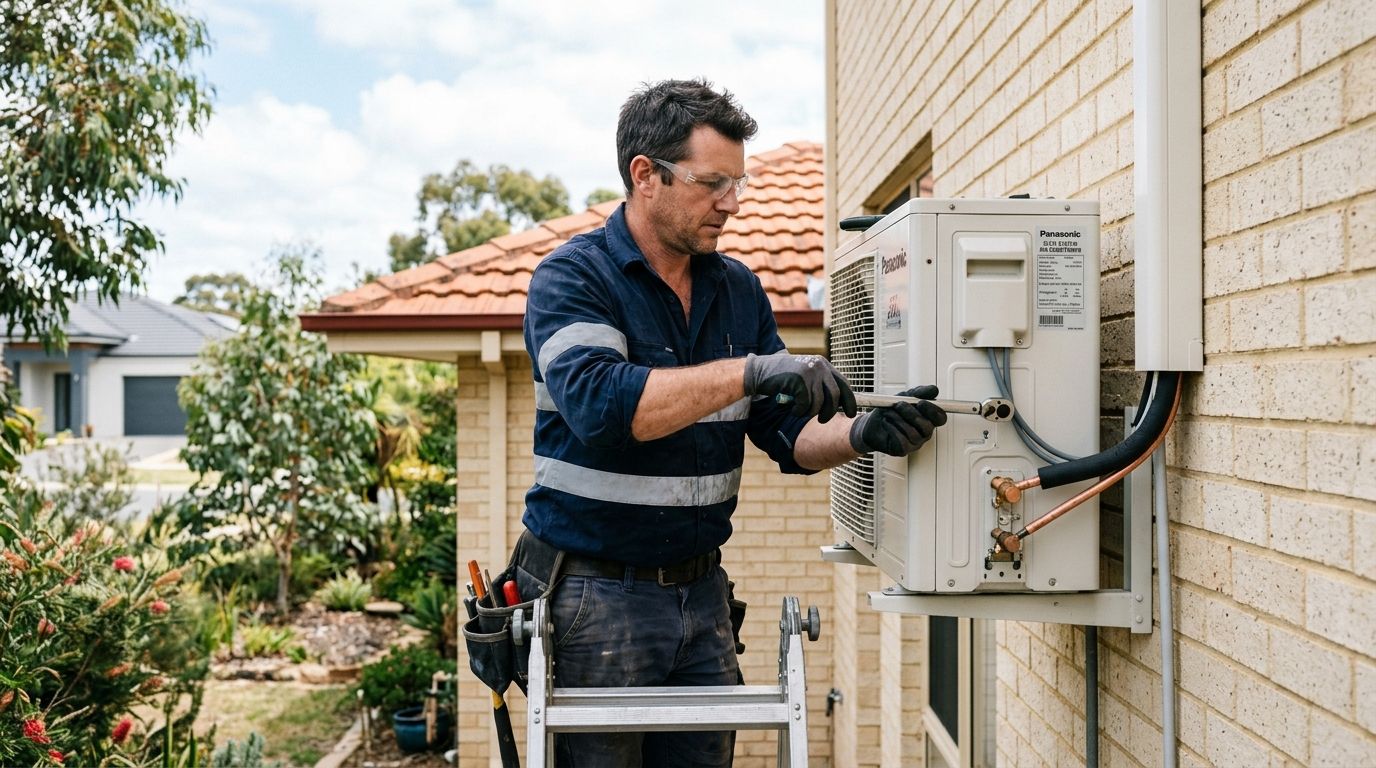
You've been installing split systems for years. Mounting outdoor units, running refrigerant lines, commissioning systems, and signing off on compliance paperwork. Now your employer, a new contract, or a licensing requirement demands a credential to prove it.
The common assumption among experienced technicians is that getting the UEE20120 Certificate II in Split Air Conditioning and Heat Pump Systems requires enrolling in a course, attending classes, and taking time off the tools. That assumption is the barrier. For most experienced split system technicians, it is also incorrect.
The UEE20120 is a nationally recognised qualification within the UEE Electrotechnology Training Package. It formally recognises the competencies required to install, commission, and decommission split air conditioning and heat pump systems. For those already doing this work on the job, Recognition of Prior Learning (RPL) is the assessment pathway designed for your situation. It is not a shortcut or a workaround; it is the standard pathway.
What UEE20120 Actually Covers — And Why You Probably Already Do It
The UEE20120 covers the skills and knowledge required to install, commission, and decommission single-head split air conditioning and heat pump systems. This includes wall-hung, floor and ceiling-suspended, cassette, ducted fan coil, and water heating heat pump systems. It is a Certificate II level qualification, reflecting the practical competencies of workers performing split system installations in the field.
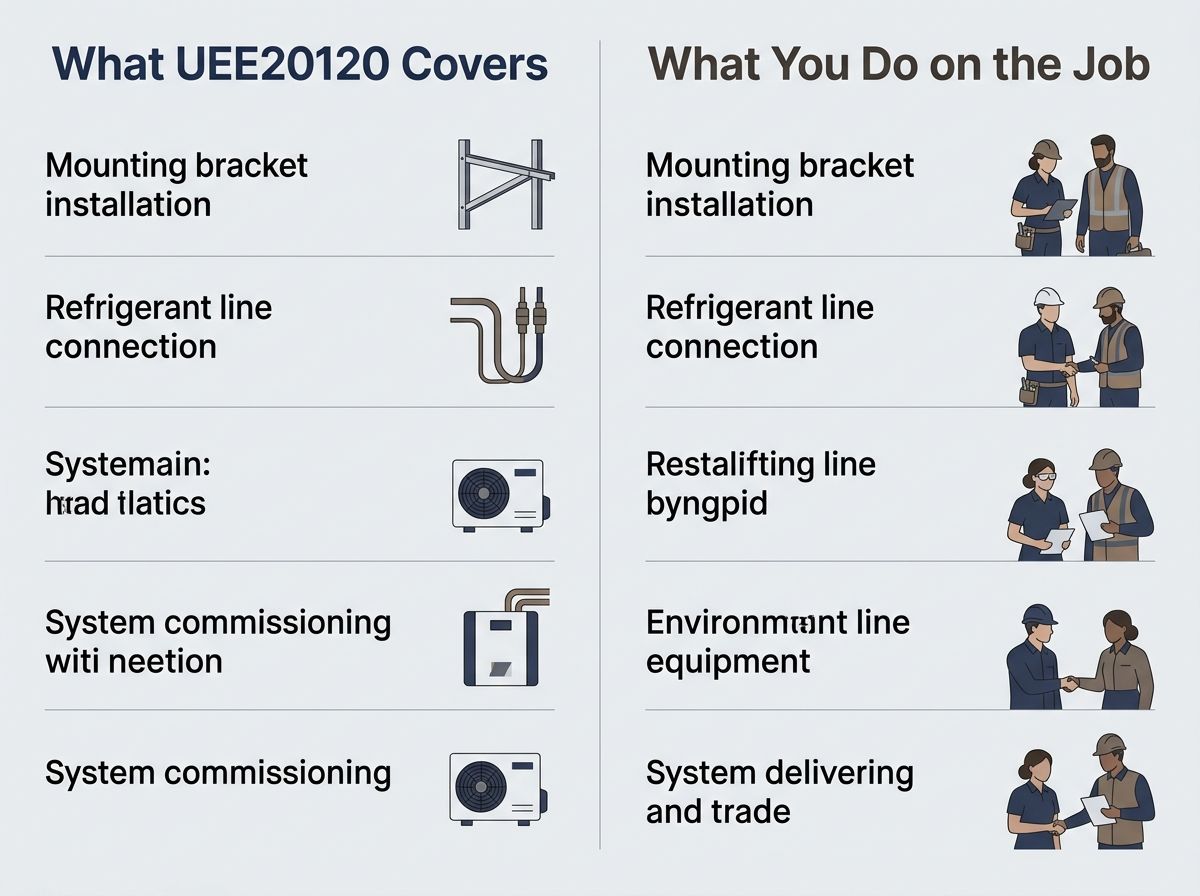
For an experienced split system technician, this is a description of your day-to-day work: mounting brackets, securing outdoor units, connecting refrigerant lines, ensuring correct charge, commissioning the system, verifying airflow and temperature performance, and completing compliance documentation. If you do this work, you have been demonstrating these competencies on the job, just without the formal assessment that produces the certificate.
The qualification does not cover service, repair, maintenance, fault diagnosis, or electrical installation work. It is specifically scoped to installation and commissioning. This defined scope means the UEE20120 does not require you to demonstrate broad electrical trade skills, but rather the specific competencies that split system installation demands.
You can review the full scope of the qualification and what the RPL pathway involves on the UEE20120 qualification page.
RPL Is the Right Pathway for Experienced Workers
Recognition of Prior Learning is a formal part of Australia's vocational education and training system. It is not a fast-track loophole. It is the assessment pathway designed specifically for workers who have developed competency through experience rather than classroom study.
As ASQA — the national regulator for vocational education and training — states directly: 'Recognition of Prior Learning (or RPL) is a legitimate part of the VET sector and the Australian education system.' Under the Standards for Registered Training Organisations, RTOs are required to offer RPL to individual students as a pathway to nationally recognised qualifications.
RPL is an assessment-only process. It assesses your competency, which may have been acquired through formal, non-formal, or informal learning, including on-the-job experience. The assessor reviews the evidence against the qualification's units of competency and makes a professional judgement about whether the required standard has been met.
The Western Australian Government's fact sheet on RPL is clear on this point: 'RPL is an assessment process and must meet the Principles of Assessment and the Rules of Evidence.' It is conducted with the same rigour and validity as any other form of assessment.
The qualification is nationally recognised because the assessment is genuine. If your employer or a licensing body requires the UEE20120, a qualification achieved through RPL is the exact same credential as one achieved through a classroom course. The certificate does not record how it was earned.
What Goes Into an RPL Portfolio for UEE20120
The RPL process for UEE20120 involves gathering evidence that demonstrates your competency against the qualification's units. For an experienced split system technician, much of this evidence already exists in the records of the work you have been doing.
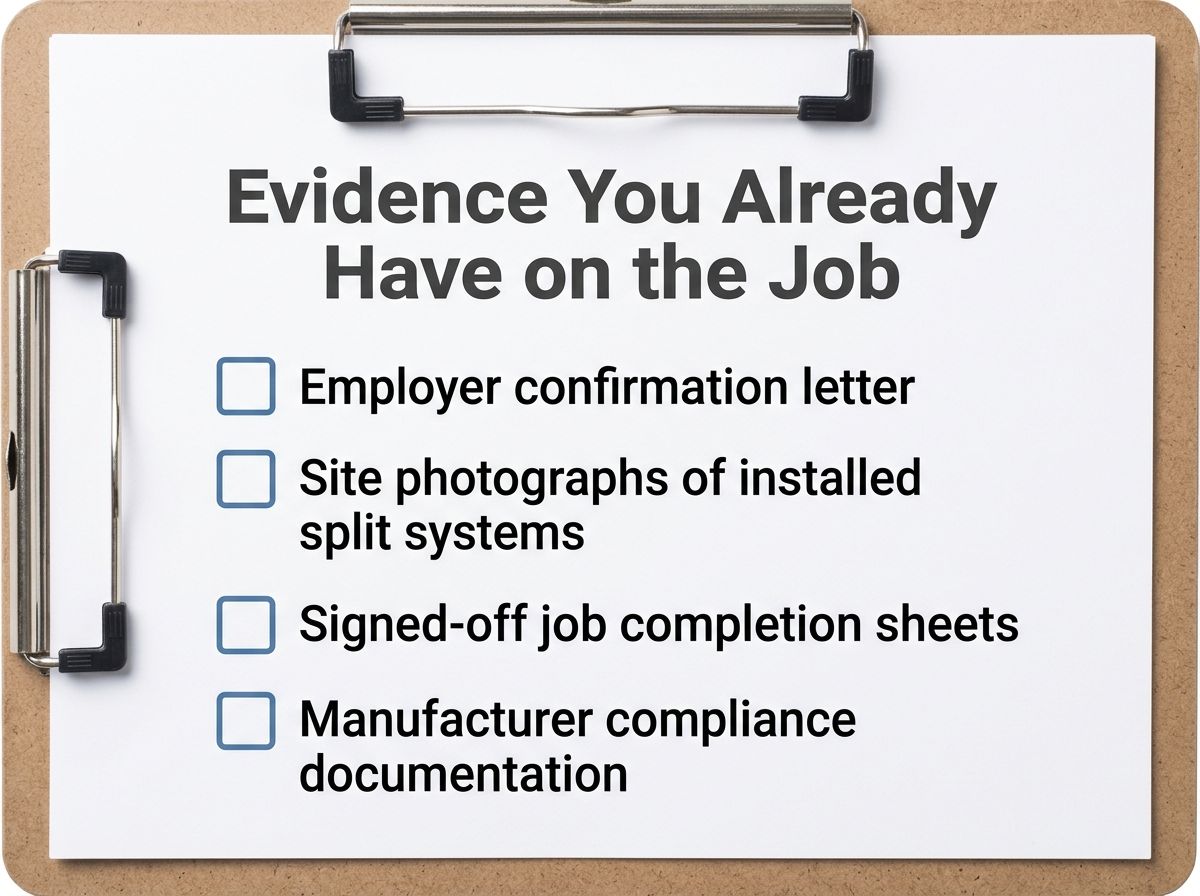
Typical evidence types that RTOs consider for electrotechnology RPL include:
- A letter from your employer confirming your role and the scope of split system installation work you have performed, including system types and approximate installation volume
- Site photos of completed installations, showing outdoor unit mounting, refrigerant line connections, indoor unit placement, and commissioning documentation
- Job completion sheets and compliance documentation you have signed off on in the course of your work
- A supervisor or third-party reference confirming your competency in the relevant tasks
- Your work history, including employment records that demonstrate the duration and nature of your experience
The specific evidence requirements vary by RTO. Some RTOs also include a practical skills demonstration or a technical conversation with an assessor as part of the RPL process. Evidence gathering is designed to work around your existing work schedule, so you do not need to stop working to complete it.
The UEE Electrotechnology Training Package implementation guides confirm that RPL and direct credit processes are standard mechanisms for recognising prior competency within this training package.
The Rigour Is Real — And That Is the Point
RPL for UEE20120 is a genuine assessment. The RTO's assessor reviews your evidence against the qualification's units of competency. If the evidence demonstrates the required standard, the qualification is awarded. If gaps are identified where your evidence does not clearly demonstrate competency, gap training may be required. This is a standard part of the process, not a failure.
Gap training is typically provided by the delivering RTO as part of the RPL process. It addresses the specific areas where additional evidence or skill demonstration is needed, rather than requiring you to repeat competencies you have already demonstrated.
This rigour is what makes the qualification credible to employers and licensing bodies. The assessor makes the determination, not the candidate, and not the RPL support service. RPL it guides candidates through the recognition process and helps them prepare their evidence. The RTO conducts the assessment and issues the qualification.
UEE20120 and the ARC Licence: What You Need to Know
For split system technicians, the UEE20120 is closely linked to the Australian Refrigeration Council's licensing scheme, but the qualification and the licence are separate.
The Victorian Government's Solar Victoria website explains that completing the UEE20120 'will allow you to apply for a Refrigerant Handling Licence through the Australian Refrigeration Council (ARC).' The qualification satisfies the training requirements to apply for the ARC's Restricted Split System Air Conditioning Installation and Decommissioning Licence (RSS003).
Completing the UEE20120, whether through RPL or study, does not automatically grant ARC licensing. The ARC licence is a separate credential that you apply for after completing the qualification. The ARC's own submission to the Productivity Commission confirms that ARCtick national licensing requirements are distinct from and cannot be substituted by state-based refrigeration, plumbing, or electrical licences.
State-based licensing requirements for split system installation work vary. Some states may require additional licences or registrations beyond the ARC credential. Always check with your relevant state licensing authority for the requirements that apply to your specific situation and trade background.
What This Means If Your Employer Has Asked You to Get Qualified
If your employer has asked for the UEE20120 and you have been doing split system installation work, RPL is how you get the certificate without stopping work.
The evidence gathering happens around your existing schedule, and the assessment is conducted by the RTO. The qualification, if awarded, is the same nationally recognised UEE20120 as one earned through a course, because the assessment meets the same national standards.
The starting point is understanding whether your experience is likely to support an RPL application. That is what the Free Skills Review is for — a straightforward conversation about your background and whether RPL is the right pathway for you.
The Reality: Experience Is Your Best Asset
Conventional wisdom suggests that getting a qualification is harder for people who have been working for years without formal study. The reality for UEE20120 RPL is the opposite.
The more split system installations you have completed, the more evidence you have. The more job sheets you have signed off, the stronger your portfolio. Years on the tools is a distinct advantage in the RPL process, as this is the exact evidence the assessor is looking for.
Your experience is not a gap to fill. It is the basis of the qualification, waiting to be formally assessed.
Recognition of Prior Learning exists because the VET system acknowledges that competency can be developed through experience, not just classroom study. For experienced split system technicians, RPL is the standard pathway.
Where to Start If You Think RPL Might Be Right for You
Before committing to anything, it is worth understanding whether your specific experience supports an RPL application for UEE20120. Experience varies, and a suitability assessment is the right first step.
You can review the full scope of the UEE20120 qualification, what it covers, what the RPL pathway involves, and the next steps on the qualification page.
The decision is yours. If you have been installing split systems on the job and your employer needs the UEE20120, the Free Skills Review is the no-obligation starting point.
General information only, current at the date shown. Licensing rules change, so check the current requirements with the relevant regulator before you rely on them. RPL it Australia is a student support service, not a Registered Training Organisation; qualifications are assessed and issued by our partner RTOs.