You Don't Need to Go Back to School — RPL for Bricklaying Isn't What You Think
Think RPL means going back to TAFE? It doesn't. RPL for bricklaying assesses what you already know — no classroom, no starting over. Here's how it actually works.
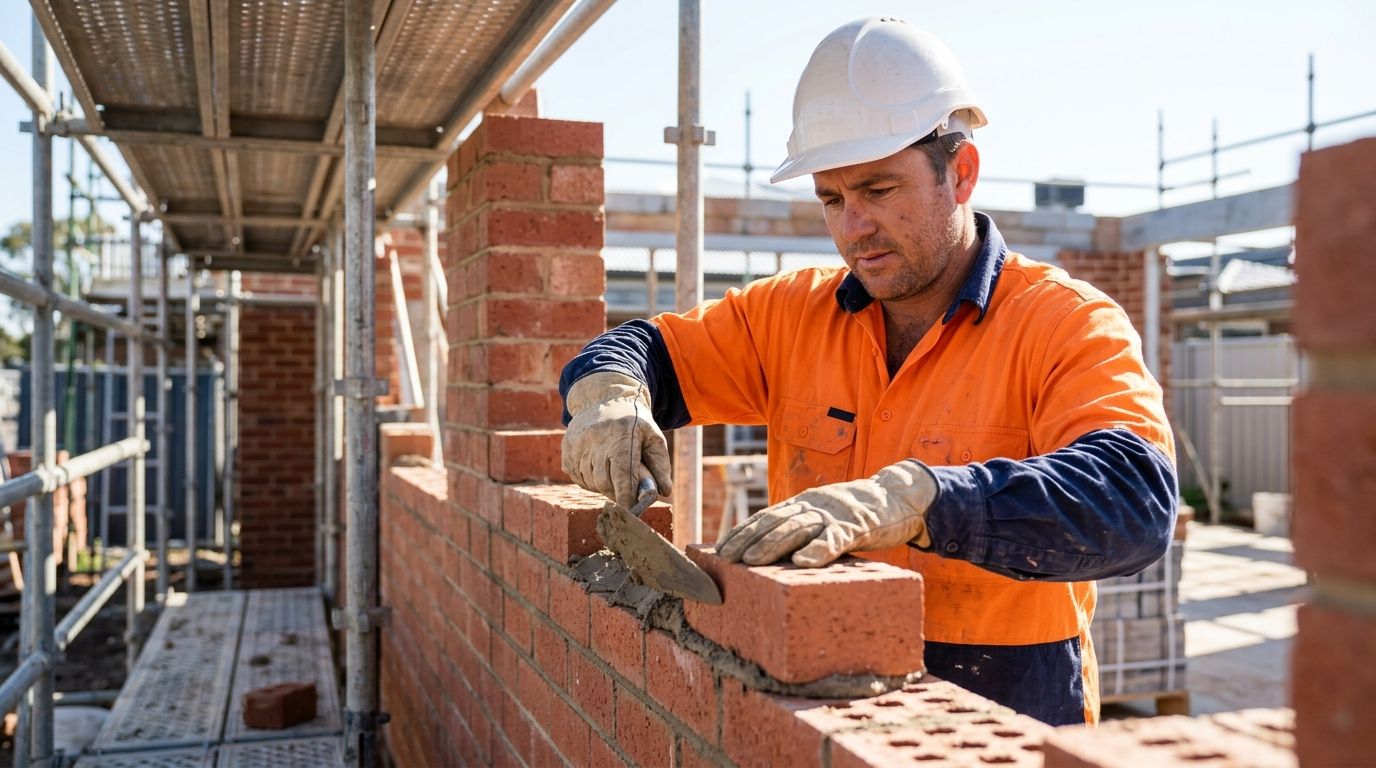
The assumption that stops most experienced bricklayers from pursuing recognition
You have the experience. Years of it. You know how to read a site, mix mortar to the right consistency, lay a straight course under pressure, and fix someone else's mistakes without being asked. You've done the work that the Certificate III in Bricklaying and Blocklaying is supposed to prove you can do.
And yet, when someone mentions RPL — Recognition of Prior Learning — the first thought for most experienced bricklayers is the same: 'I'm not going back to school.'
That reaction makes sense. The word 'qualification' implies education. Education implies classrooms. Classrooms imply starting over. And starting over, after a decade on the tools, feels like an insult.
Here's what this article is about: that assumption is wrong. Not slightly wrong — fundamentally wrong. RPL for bricklaying and blocklaying is not an education program. It is an assessment process. That distinction matters, and once you understand it, the Certificate III stops feeling like a barrier and starts looking like something that was always within reach.
If you've already felt the frustration of being invisible on paper despite years of demonstrated skill, that experience is exactly what this article is for.
What RPL actually is — and what it isn't
The Australian Skills Quality Authority defines RPL as 'an assessment-only process that assesses the competency of an individual — competency which may have been acquired through formal, non-formal and/or informal learning.' The assessment seeks to determine the extent to which an individual meets the requirements specified in a training package or VET accredited course.
Read that again: assessment-only. The assessor is not teaching you bricklaying. They are verifying that you already know it.
This is the core distinction. A course delivers training — it assumes you don't yet have the skills and sets out to give them to you. RPL does the opposite. It assumes you may already have the skills and sets out to confirm whether you do. The pathway to competency is not what's being assessed. The competency itself is.
For an experienced bricklayer, this changes everything. You are not a student. You are a candidate presenting evidence of existing competency to a qualified assessor. That is a different relationship to the process — and a different demand on your time.
ASQA's official guidance on RPL confirms this distinction clearly, positioning RPL within the assessment system rather than the training delivery system.
What the RPL process actually looks like for a bricklayer
For an experienced bricklayer, RPL for the Certificate III in Bricklaying and Blocklaying (CPC33020) typically involves three things: a portfolio of evidence, references from supervisors or employers, and a practical skills assessment.
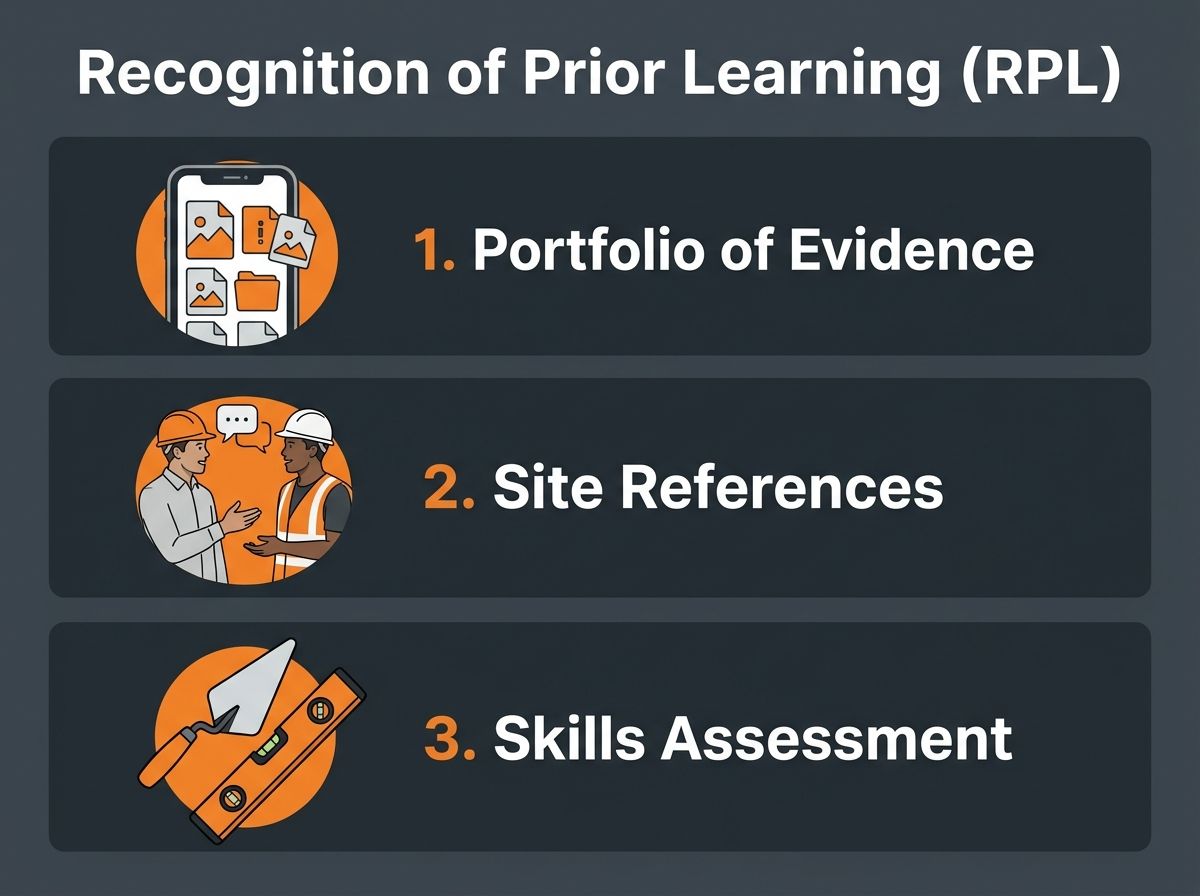
That's it. No classroom. No textbooks. No sitting next to an apprentice learning how to mix mortar.
The qualification requires competency across 28 units — 20 core units and 8 elective units. Core units cover the foundational skills of the trade: laying masonry walls, installing flashings, constructing arches, applying WHS requirements on construction sites, and working safely with construction materials. Elective units allow you to specialise in areas such as traditional and heritage bricklaying, refractory bricklaying, or paving.
The qualification has no formal entry requirements. What it does require is that you can demonstrate competency against those 28 units — and for an experienced bricklayer, the evidence of that competency already exists. It just needs to be organised and presented.
A note on the White Card: the qualification includes CPCCWHS1001 (Prepare to work safely in the construction industry) as a prerequisite. If you've been working on construction sites in Australia, you almost certainly already hold this. If you don't, it's a straightforward requirement to address before the assessment begins.
The full unit structure for CPC33020 is published on training.gov.au, where you can review the packaging rules and prerequisite requirements directly.
The evidence you already have — you just haven't organised it yet
Here's what most experienced bricklayers don't realise: the raw material for an RPL application is already in their possession. It's sitting on their phone, in their work history, and in the relationships they've built on site over years.
- Site photos of completed work — walls, blockwork, arches, flashings, paving
- References from supervisors, site managers, or employers who can confirm your competency
- Records of projects you've worked on — job sheets, contracts, payslips, or letters of engagement
- Certificates from any formal training or workshops you've attended
- Your ability to demonstrate your skills in a practical assessment
The barrier is rarely the evidence itself. It's knowing how to present it in the format the assessment requires. That's where guidance makes the difference — not in creating evidence from scratch, but in organising what already exists into a portfolio that maps to the units of competency.
Many RTOs also include a competency conversation as part of the process — a structured discussion with an assessor that lets you talk through your experience and demonstrate your understanding of the work you've been doing for years. For most experienced bricklayers, this is the most natural part of the process.
One thing worth knowing honestly: if the assessment identifies gaps in specific areas, targeted gap training may be required. This is not a full course — it addresses only the specific units where evidence of competency is insufficient. It's a genuine part of the assessment process, and it exists to ensure the qualification means something.
Why the Certificate III matters — even if you've been doing the work for years
The 'why bother?' objection is understandable. You've been laying brick for a decade. The work speaks for itself. Why does a piece of paper change anything?
Because in the formal systems that govern Australian construction — tenders, contracts, licensing, insurance — the work doesn't speak for itself. The paper does.
In many Australian states and territories, the Certificate III in Bricklaying and Blocklaying is a prerequisite for a trade contractor licence. Without it, the scope of work you can legally take on, or the contracts you can sign as a principal contractor, may be limited. Licensing requirements vary by state, so it's worth checking with the relevant authority in your jurisdiction — but the qualification is consistently the foundation.
Beyond licensing, the certificate matters in tenders, commercial site inductions, and insurance arrangements. Main contractors increasingly require evidence of formal qualification from subcontractors. The certificate is the evidence they're asking for.
The Certificate III is nationally recognised because the assessment is genuine. It is not a rubber stamp. It is a rigorous evaluation of competency against a nationally consistent standard. That rigour is exactly what gives it value — and it's why an RPL pathway to the certificate carries the same weight as any other pathway.
What RPL for bricklaying is not — clearing up the misconceptions
Three misconceptions keep experienced bricklayers from pursuing recognition. Each one is worth addressing directly.
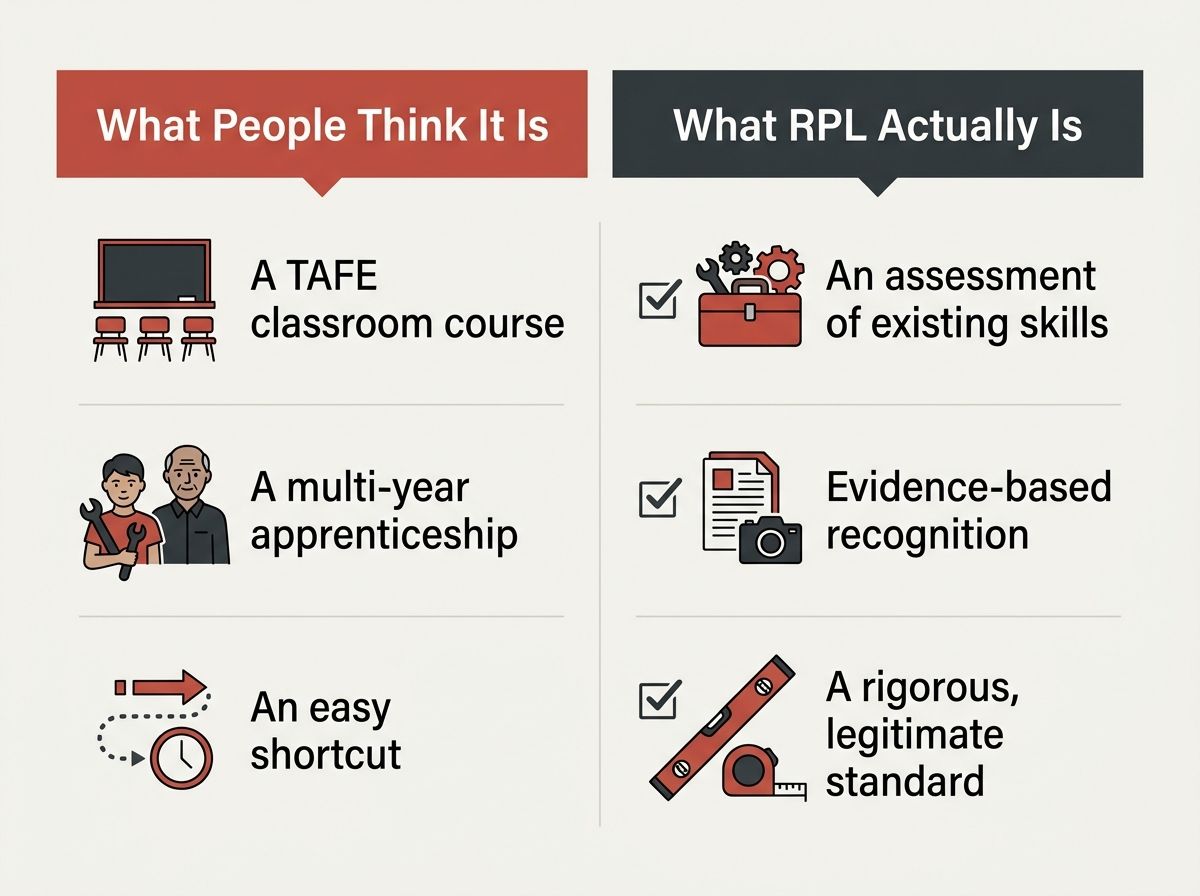
Misconception 1: RPL is a TAFE course
RPL is not a TAFE course. There are no classes to attend, no timetable to follow, and no campus to travel to. The assessment happens through your portfolio of evidence, your supervisor references, and a practical skills check. The assessor comes to the evidence — the evidence does not come from a classroom.
Misconception 2: RPL is an apprenticeship
RPL is not an apprenticeship. An apprenticeship is a structured training program for someone who is learning the trade. RPL is an assessment process for someone who has already learned it. You are not starting from the beginning. You are demonstrating that you never needed to.
Misconception 3: RPL is a shortcut
RPL is not a shortcut. It is a rigorous assessment pathway that requires genuine evidence of genuine competency. The qualification you receive through RPL is identical to the qualification received through any other pathway — because the assessment standard is the same. The difference is that RPL recognises the work you've already done, rather than asking you to repeat it.
ASQA's guidance on RPL makes clear that it is a legitimate, regulated assessment pathway within the Australian VET system — not an alternative to assessment, but a form of it.
These misconceptions exist because the language around qualifications is genuinely confusing. 'Getting qualified' sounds like education. 'Recognition of Prior Learning' sounds bureaucratic. Neither phrase makes it obvious that what's actually happening is an assessment of skills you use every day on site. Now you know what it actually involves.
The next step: a free skills review, no commitment required
You have the experience. The question now is whether that experience is ready to be formally recognised — and the honest answer is that it depends on what you've done, how long you've been doing it, and how your evidence maps to the units of competency in CPC33020.
The Free Skills Review is how you find out. It's a no-obligation conversation about what you have and what the assessment requires. No enrolment. No commitment. Just an honest look at where you stand before you decide whether to proceed.
Your skills are real. The Free Skills Review is how you find out whether they're ready to be formally recognised.
The decision is yours. The pathway exists. The Certificate III in Bricklaying and Blocklaying is not a course you need to complete — it is a qualification that may already reflect what you know.
Ready to explore the qualification itself? The Certificate III in Bricklaying and Blocklaying page outlines the RPL pathway and what to expect from the assessment process.
Ready to Get Recognised?
Start with a free skills review to find out if RPL is right for you.