You've been doing the work for years, but without the paper, you're invisible
Years of bricklaying experience but no Cert III? Your skills just need formal recognition. Here is what RPL means for your career.
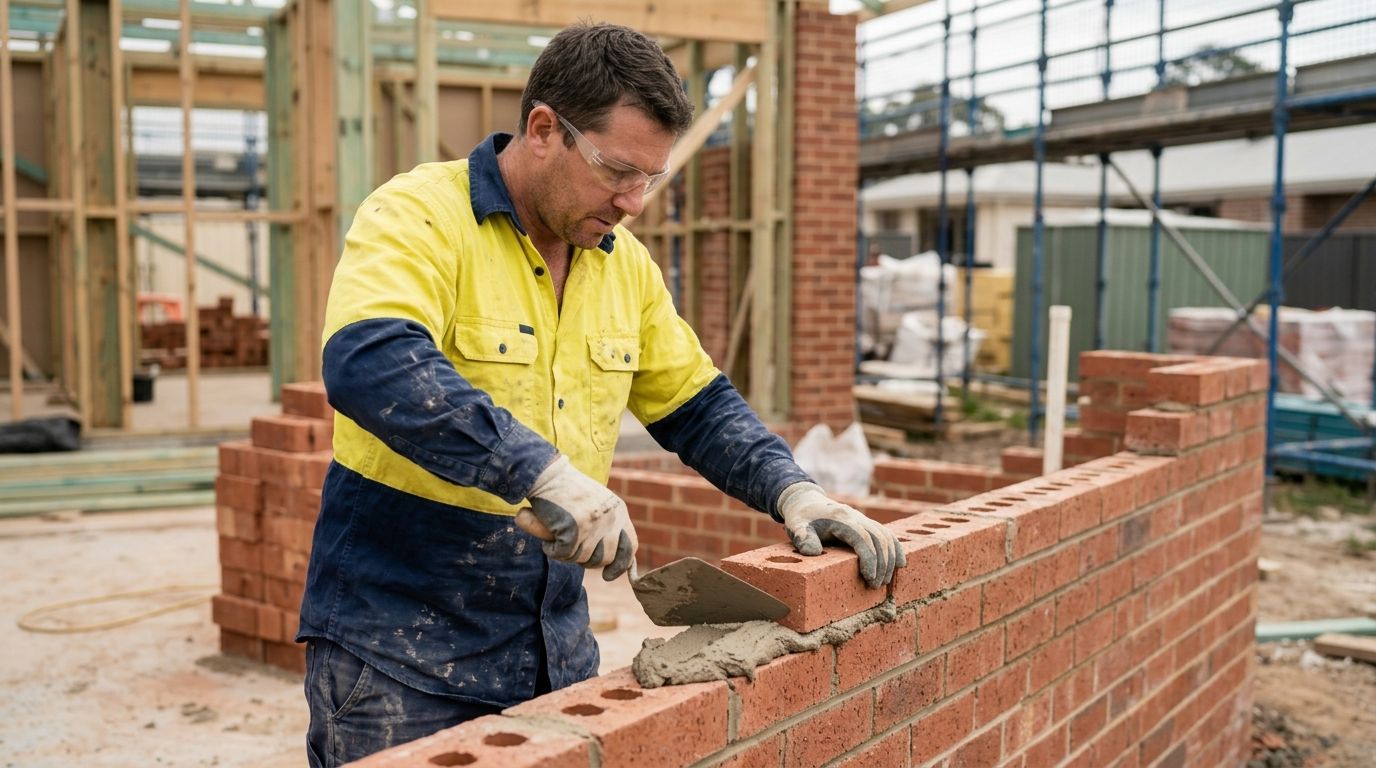
The question every experienced bricklayer dreads
You have been working on site since before some of your younger colleagues finished school. You know how to read a course, manage a corner, and keep a wall plumb in heavy wind. You have laid brick on residential builds, commercial projects, and heritage restorations. You have even trained apprentices who now hold more formal qualifications than you do.
Then someone asks: "Have you got your ticket?"
It is not an accusation. It is just a routine question, but it lands like one because you know exactly what it means. It means your decade of on-site experience does not count in the way the system requires. It means a job you could do easily might go to someone with less experience who holds the right piece of paper.
This specific frustration has a name.
The paper ceiling: why experienced bricklayers face a barrier
The paper ceiling is the invisible barrier that blocks skilled workers from advancing. It exists not because they lack competence, but because their competency exists in the wrong format. It is a system that measures capability by credentials rather than practical ability. Your skills are real and your experience is deep, but formal systems only recognise what has been formally assessed and recorded.
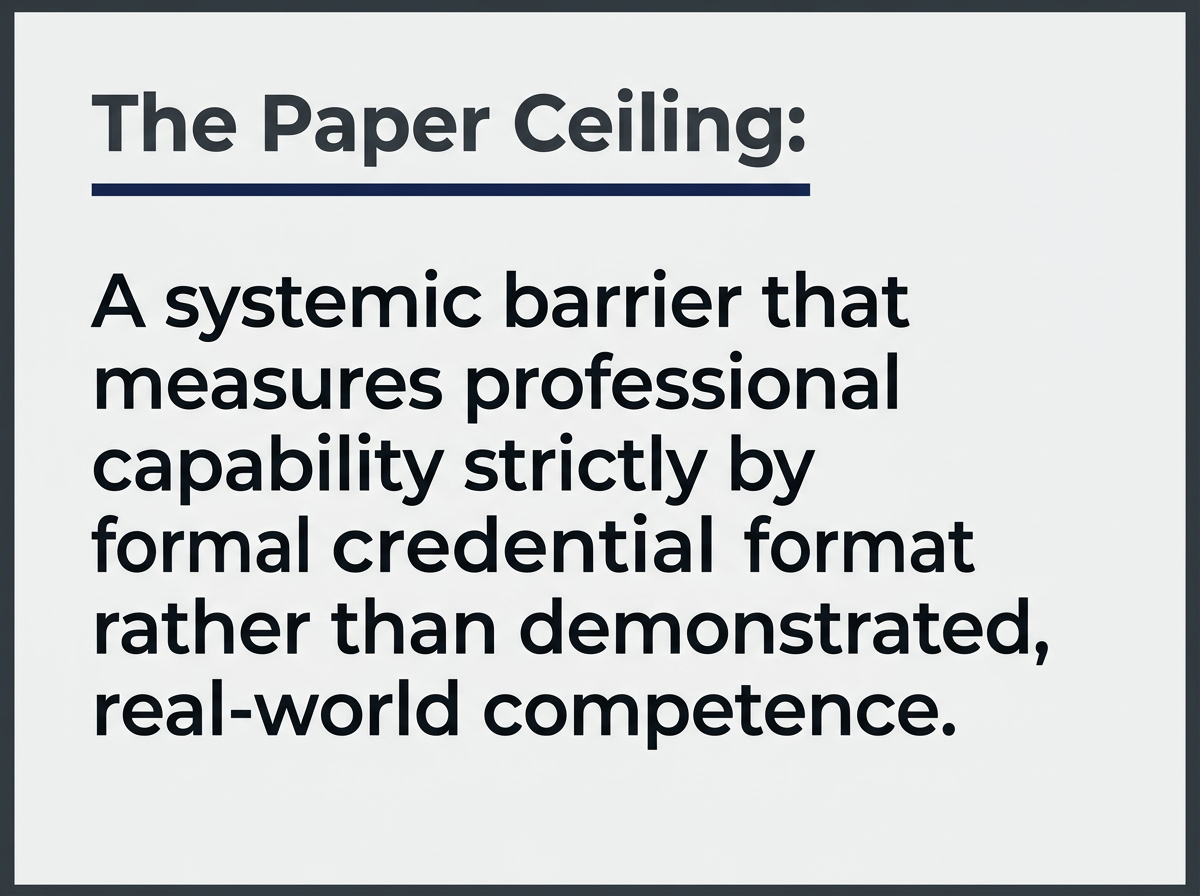
This is not a reflection of your trade skills. It is a structural gap between your practical abilities and what the system can verify.
The paper ceiling affects tradespeople in different ways. For bricklayers, it usually appears in highly specific situations.
How to recognise the paper ceiling in your career
You might be experiencing this barrier if you recognise any of these situations:
- You have been asked for your ticket on a new site and had to explain your years of experience instead of showing a qualification.
- A role you were perfect for required a Cert III in Bricklaying and Blocklaying as a minimum, so you could not apply.
- A colleague with less time on the tools was promoted or given a higher rate because they had the formal qualification.
- You have been told you must get qualified before you can take on supervisory or leading hand responsibilities.
- In NSW, where bricklaying is a licensed occupation, the Cert III is the required pathway to apply for a trade licence with NSW Fair Trading. Without it, certain work classifications are formally out of reach.
- You have considered going back to study but cannot justify sitting in a classroom to repeat what you already know from scratch.
If these situations sound familiar, you are not alone, and the issue is not your level of skill.
Why the paper ceiling exists and why it persists
The regulatory system requires formal evidence of competency because it cannot observe your work history directly. A licensing authority, an employer, or a site manager cannot follow you through ten years of builds to verify what you know. They need a standardised, independently assessed credential that proves you have demonstrated competency against a nationally recognised benchmark.
That benchmark, for bricklaying in Australia, is the Certificate III in Bricklaying and Blocklaying (CPC33020). Licensing, legislative, and regulatory requirements vary between states and territories, but the qualification itself is nationally recognised across the country.
The issue is not the system itself. The challenge is that your proof of skills—years of real projects and practical results—exists in a format the system is not built to read directly.
Your experience is valid evidence; it just needs to be presented in the right format.
The Cert III in Bricklaying and Blocklaying is recognition, not retraining
For an experienced bricklayer, the Certificate III in Bricklaying and Blocklaying does not require going back to school. It can be achieved through a recognition pathway.
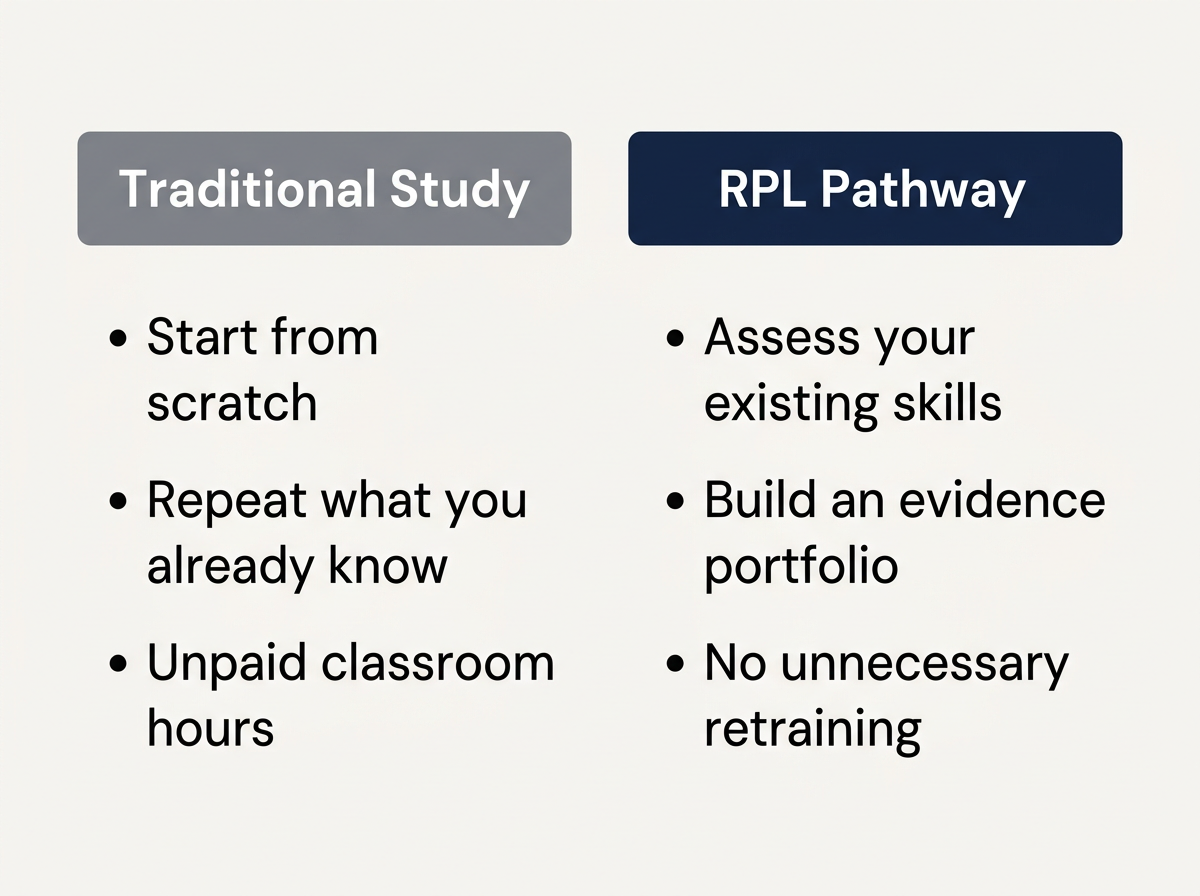
Recognition of Prior Learning (RPL) is the formal process by which a registered training organisation (RTO) assesses your existing skills and experience against the competency requirements of a qualification. The process evaluates what you already know; it does not teach you skills you already use every day.
The CPC33020 qualification requires you to demonstrate competency across 28 units: 20 core units and 8 elective units. The core units cover the practical skills of the trade, such as handling materials, using tools and equipment, constructing cavity brick walls, laying walls and corners, installing flashings and damp proof courses, and constructing arches and curved walls. There are no formal entry requirements for the qualification itself.
If you have been doing this work for years, you already perform these tasks daily. The RPL process does not ask "can you learn this?", but rather "can you prove you already know this?"
How the bricklaying RPL process works
RPL is not a shortcut. It is a rigorous assessment process that evaluates practical evidence rather than classroom performance.
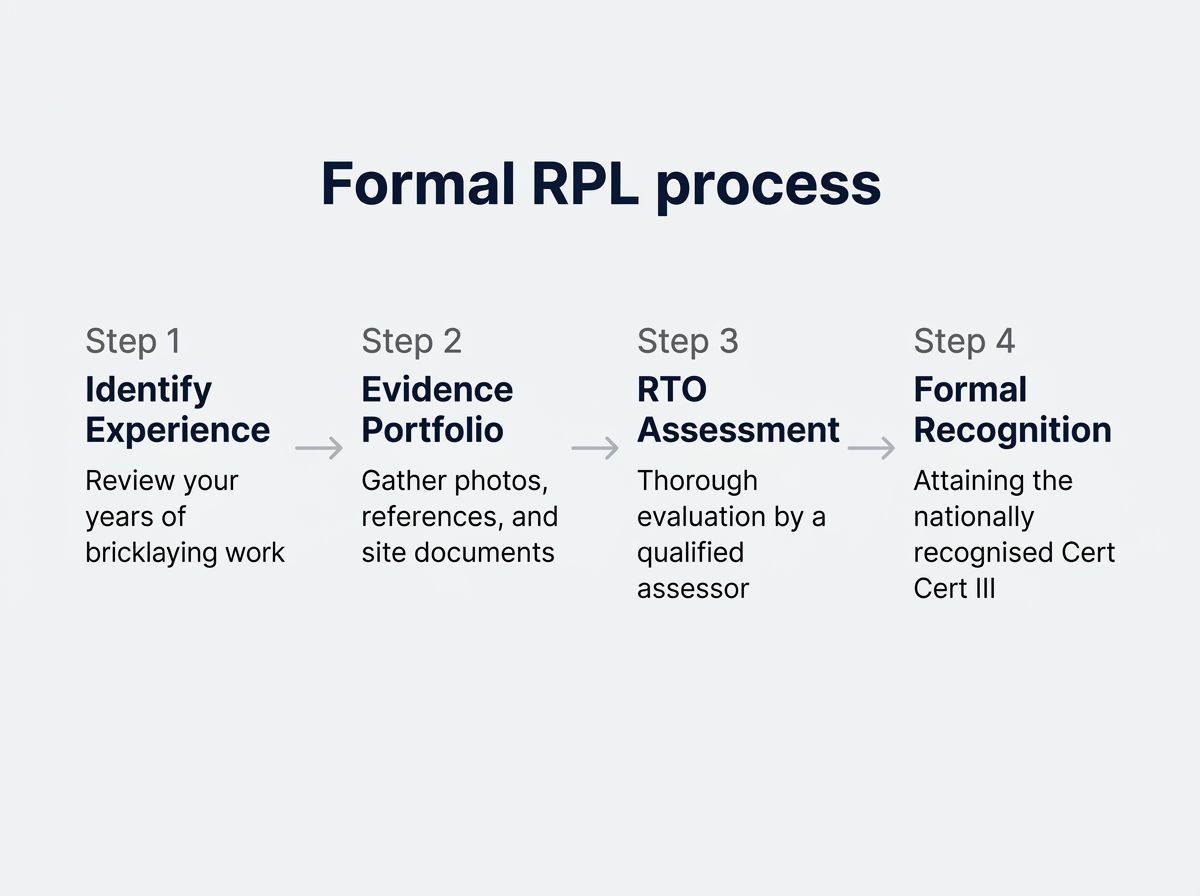
In a construction trade RPL assessment, evidence of your competency can include things such as records of completed training, documentation of past projects and work history, practical work samples or portfolios, and statements or references from employers or supervisors who can speak directly to your skills.
The assessment is conducted by a qualified assessor from a registered training organisation. RPL it does not assess or award qualifications; we guide candidates through the process of gathering and presenting their evidence, and we work with RTOs who conduct the formal assessment. The qualification, if awarded, is issued by the RTO and is nationally recognised.
It is also worth noting that if gaps are identified during assessment—areas where your evidence does not yet meet the competency requirements—gap training can be provided. This is not a failure; it is simply part of a thorough assessment process.
As for how long the process takes, it depends on your individual circumstances, the evidence you can provide, and the assessing RTO. Some RTOs indicate their RPL process for a Certificate III trade may take anywhere from several weeks to several months. According to the Construction Training Fund WA, the duration depends on the extent of prior learning being assessed and should be discussed directly with the RTO.
One important note: industry bodies advise being cautious of providers offering a trade qualification in less than four to six weeks, as this may indicate an assessment process that is not thorough enough to be credible.
The Construction Training Fund in Western Australia provides a useful overview of how RPL works for construction and trades qualifications, including the factors that affect how long the process takes.
Your experience is real, and your recognition should be too
Your skills and years of on-site experience are not in question. The work you have completed is real.
RPL offers a practical way to make your experience visible to employers and regulators, formally and credibly, without requiring you to retrain from scratch.
The Certificate III in Bricklaying and Blocklaying is not something you need to learn from scratch. It is a credential that formally recognises the trade skills you have already earned through years of work.
The national training register lists the full details of the CPC33020 qualification, including the units of competency that are assessed, which gives a clear picture of what your experience would be measured against.
The choice is yours. If you want to find out if your experience meets the criteria, the initial review is straightforward and free.
Ready to Get Recognised?
Start with a free skills review to find out if RPL is right for you.