6 Things You Can Do With a Bricklaying Certificate That Most Bricklayers Don't Know About
Your Cert III in Bricklaying and Blocklaying opens more doors than site access. Here are 6 career pathways most bricklayers never hear about — and why the certificate is the key.
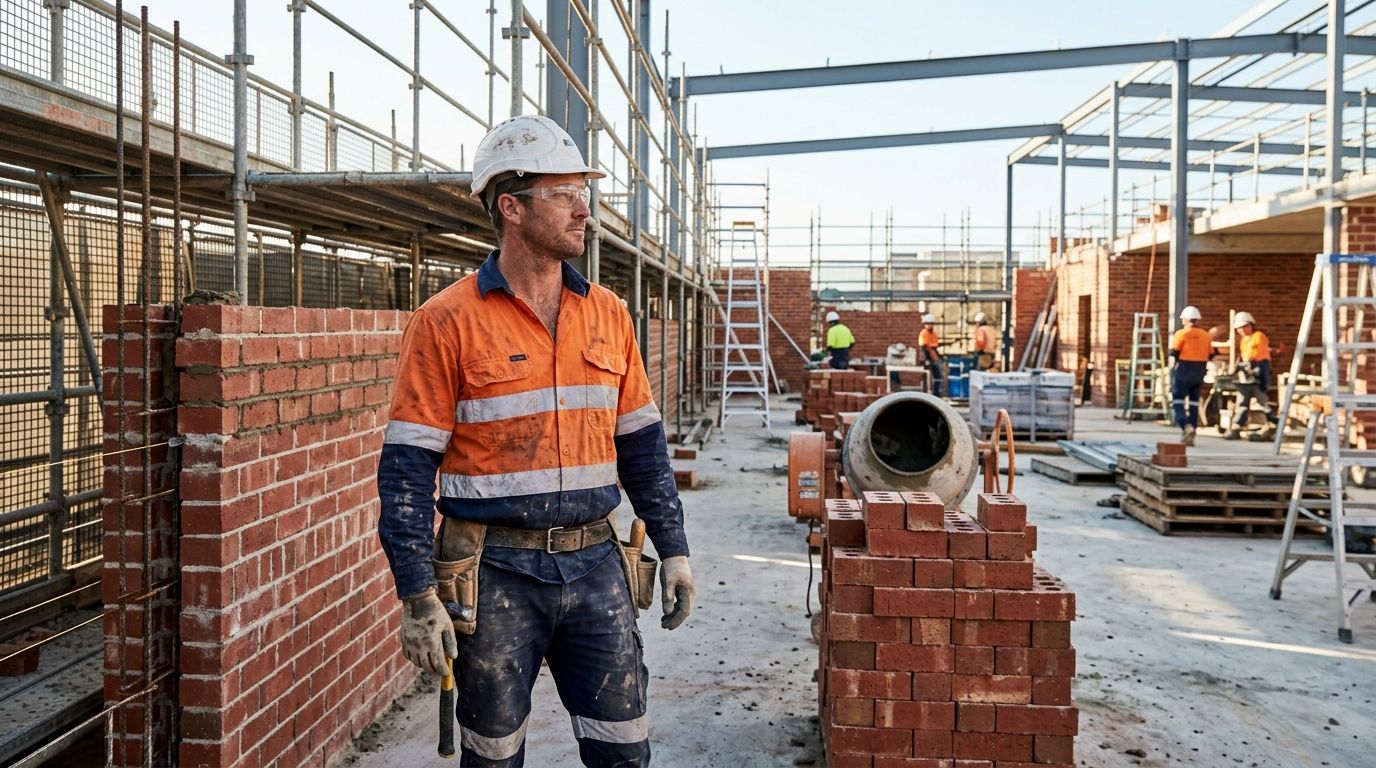
The certificate most bricklayers treat as a checkbox
You have the experience. You know the work. And somewhere along the way, you either got the Cert III in Bricklaying and Blocklaying (CPC33020) or you're working toward it — because the site demands it, the contractor requires it, or the compliance pressure finally caught up.
Most bricklayers treat the certificate as exactly that: a checkbox. The paper that keeps you on site. What most don't realise is that the Certificate III in Bricklaying and Blocklaying is a nationally recognised qualification under the Australian Qualifications Framework — and that formal status opens pathways well beyond the tools.
The bricklaying industry has faced a documented skills shortage for a number of years. According to an ACCC determination, approximately half of the current bricklayer workforce lacked a formal Certificate III qualification — which means the credential carries real weight in a market where qualified tradespeople are genuinely scarce.
Here are six things that certificate makes possible — most of which nobody on site has ever mentioned.
1. Construction site supervisor — the qualification that gets you off the tools
Site supervisor roles in Australian construction typically require a formal qualification pathway — and the Certificate III in Bricklaying and Blocklaying is the foundation of that pathway. In Queensland, for example, the QBCC requires a Certificate IV in Building and Construction for site supervisor licensing. The Cert III in a trade qualification is the recognised prerequisite that feeds into that Certificate IV.
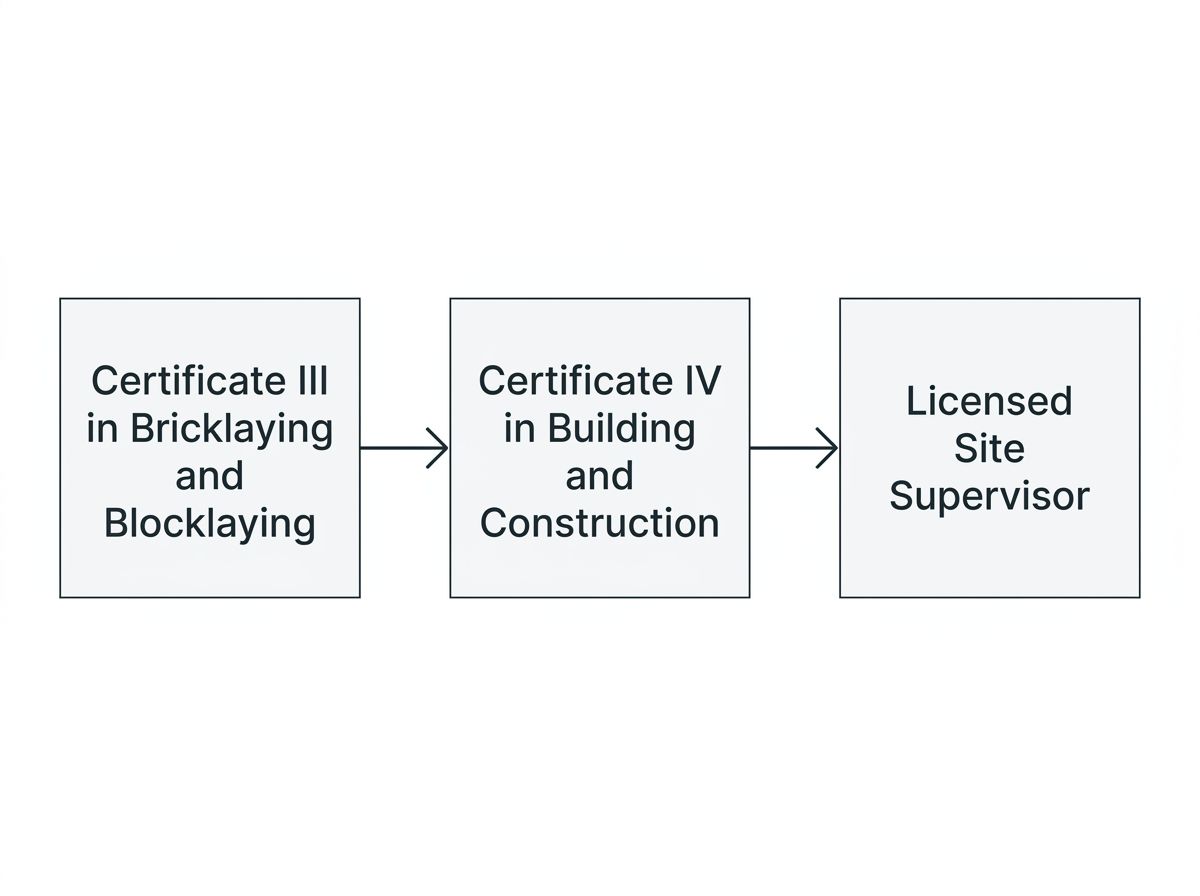
This matters because the credential you already hold — or are pursuing — positions you for a supervisory career without starting over. The Certificate IV in Building and Construction builds directly on trade-level qualifications. Site supervisors in Australia typically earn significantly more than bricklayers on the tools, with roles in the $110,000–$160,000 range depending on experience, location, and project scale.
The physical demands of bricklaying are real. A supervisory pathway uses everything you know about the trade — materials, sequencing, quality, site coordination — without the daily toll on your body. The Cert III is the first step in that credential chain.
2. Construction estimator — where bricklaying knowledge becomes a commercial advantage
Construction estimating is a role that desk-trained estimators consistently struggle with when it comes to bricklaying and masonry. Accurately costing brick quantities, mortar ratios, labour rates, wastage, and access requirements requires someone who has actually done the work. That's you.
Builders and construction firms actively seek estimators with hands-on trade experience. The Certificate III in Bricklaying and Blocklaying signals formal competency in the trade — it's the credential that makes your knowledge legible to an employer who can't see you on site. Construction estimators in Australia typically earn in the range of $95,000–$125,000 annually, with senior roles and specialist estimators earning considerably more.
This is a career that uses everything a bricklayer knows — without the physical toll. And it's one of the clearest examples of where the certificate converts trade expertise into real commercial value in a completely different context.
3. Heritage restoration specialist — a niche that pays a premium
Heritage restoration — restoring historic buildings, churches, government buildings, and listed structures — is a niche that most bricklayers have never considered. It's also one where formal trade qualifications matter, and where the work carries genuine cultural weight.
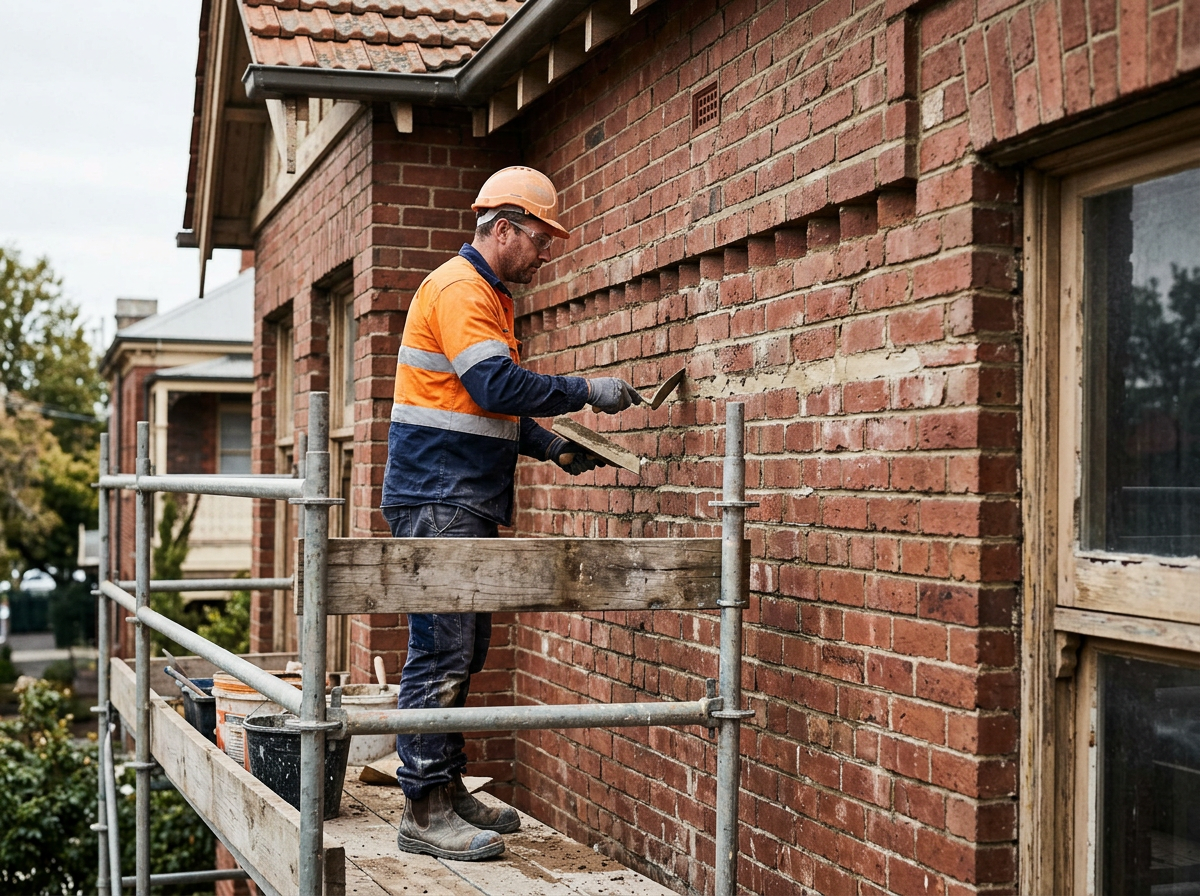
Heritage conservation requires practical trade skills and craftsmanship, supported by appropriate training and education. The skills involved are distinct from modern construction — heritage conservation is informed by traditional construction systems and requires specialised practices that differ from standard residential or commercial bricklaying.
The Certificate III in Bricklaying and Blocklaying is the trade-level foundation that heritage restoration training builds on. Formal heritage conservation qualifications exist at Certificate II and Certificate IV levels in Australia — and they are designed for tradespeople who already hold a relevant trade qualification. Your Cert III is the entry point.
Heritage restoration specialists typically command premium rates compared to standard bricklaying work. The projects are smaller in volume, more technically demanding, and often funded by government heritage bodies or institutional clients. It's a niche — but it's a real one, and the Cert III is what makes you eligible to pursue it.
4. Building inspection and defect assessment — when trade knowledge meets formal process
Building defect disputes, insurance claims, and pre-purchase inspections regularly require assessors who can evaluate bricklaying and masonry work with genuine technical authority. The Certificate III in Bricklaying and Blocklaying establishes the formal trade credential that underpins that authority.
The pathway here typically runs through the Certificate IV in Building Inspection — a qualification that accepts a trade Cert III as a recognised foundation. Building inspectors with bricklaying backgrounds are well-positioned to assess masonry defects, structural concerns, and workmanship quality in ways that generalist inspectors often cannot.
To be clear: the Cert III alone does not qualify you as a building inspector. The Certificate IV in Building Inspection is the credential that enables that role. But the Cert III is the trade-level prerequisite that makes the pathway accessible — and it's a pathway most bricklayers have never been told about. Building inspectors in Australia typically operate as independent practitioners or within inspection firms, with earnings that reflect the specialist nature of the work.
5. Registered Training Organisation (RTO) trainer — teaching what you already know
RTOs that deliver the Certificate III in Bricklaying and Blocklaying are required to employ trainers who hold the relevant vocational qualification. That means a qualified bricklayer with the Cert III — combined with a Certificate IV in Training and Assessment (TAE40122) — meets the standard trainer qualification requirements for delivering this qualification at an RTO.
This is a pathway that many experienced tradespeople overlook entirely. Training roles offer stable employment, regular hours, and the chance to put decades of hard-won knowledge to work in a new context. The construction industry faces a documented skills shortage, and demand for qualified trade trainers reflects that pressure.
The TAE40122 is an additional qualification — it's a genuine step, not a formality. But it's a manageable one, and it's the only additional credential required to convert your Cert III in Bricklaying and Blocklaying into a training career. TAFE colleges and private RTOs across Australia employ trade trainers, and the combination of hands-on experience and formal qualification is exactly what they're looking for.
The Certificate III in Bricklaying and Blocklaying (CPC33020) is the qualification that makes this pathway possible — and it's available through RPL for experienced bricklayers.
6. Running your own subcontracting business — the credential that makes it legal
Many experienced bricklayers work informally for years — under someone else's licence, on someone else's ABN — because they assume running their own business requires more than they have. In most cases, the Certificate III in Bricklaying and Blocklaying is the key piece they're missing.
Licensing requirements for bricklaying contractors vary by state, but the pattern is consistent: formal trade qualifications are required to operate legally. According to a training provider, in New South Wales a contractor licence is required for residential bricklaying work valued over $5,000, and the Certificate III in Bricklaying and Blocklaying (CPC33020) is the mandatory qualification. In Victoria, a Domestic Builder (Limited) – Bricklaying registration is required through the Victorian Building Authority, with the Certificate III as a core requirement alongside documented experience. In Queensland, a bricklaying and blocklaying contractor licence requires the Certificate III as the technical qualification.
Requirements vary across states and territories, and licensing rules change — always verify current requirements with the relevant state authority before making business decisions. But the consistent thread is clear: the Certificate III in Bricklaying and Blocklaying is what separates working under someone else's licence from running your own legitimate business.
For NSW specifically, licensing requirements for bricklaying contractors are administered by NSW Fair Trading, and the Certificate III is the standard qualification requirement.
Your experience is already pointing somewhere
The Certificate III in Bricklaying and Blocklaying is not only a site access credential. It's a nationally recognised qualification that opens six distinct pathways — site supervision, estimating, heritage restoration, building inspection, training, and business ownership — most of which the industry never tells you about.
Your years on the tools have already built the competency. The certificate makes it visible to the systems that control access to these pathways. That's the difference between experience that exists and experience that counts.
If you're working toward the Cert III, or wondering whether your experience already qualifies you for it, the next step is understanding where you actually stand — not guessing.
Understanding what the Cert III in Bricklaying actually covers is a useful starting point for anyone considering these pathways.
Ready to Get Recognised?
Start with a free skills review to find out if RPL is right for you.