The Compliance Cliff: Why Construction Sites Are Now Requiring a Certificate III in Bricklaying/Blocklaying
Construction sites across Australia are requiring a Certificate III in Bricklaying/Blocklaying. Here is why it is happening and how RPL can help you.
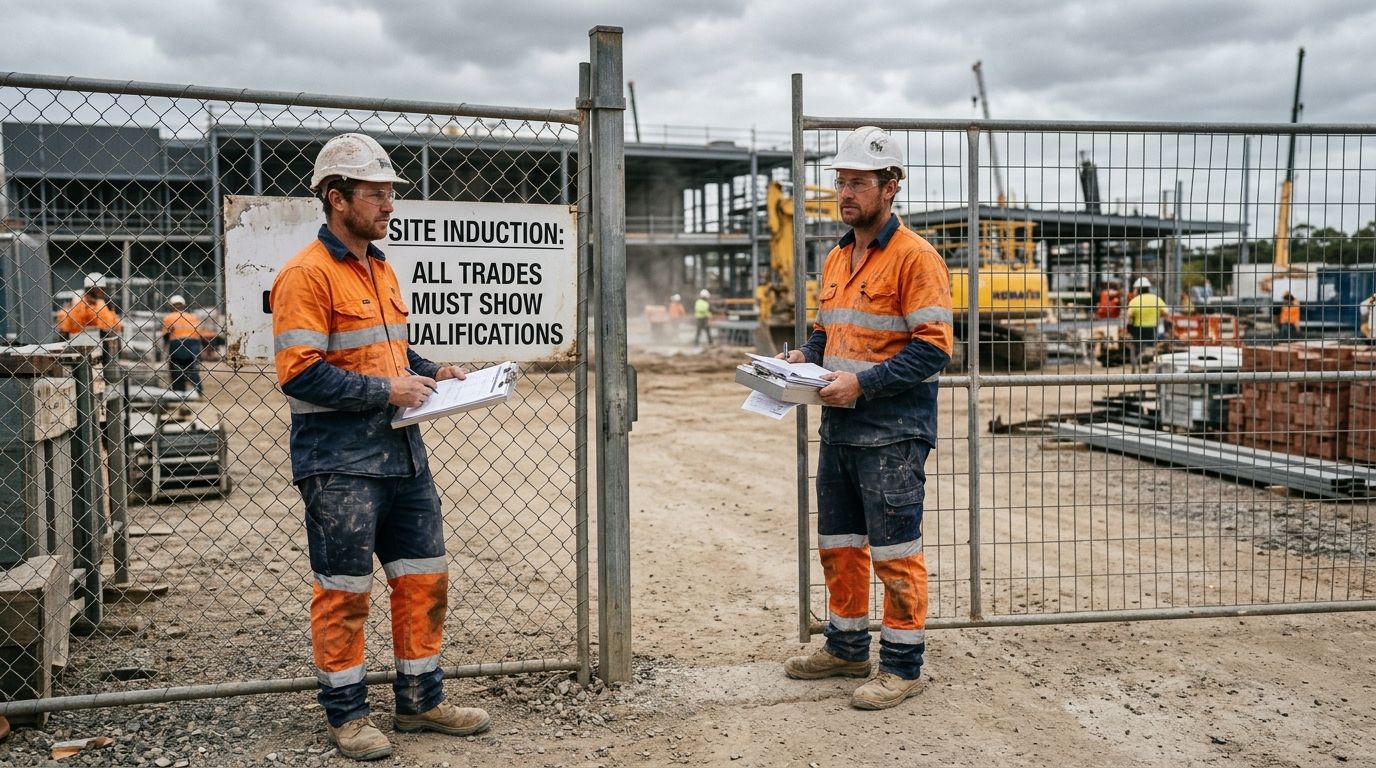
Something Changed on Site — And It Wasn't Your Skills
You've noticed it. The site that didn't ask for your ticket last year is asking now. The contract that used to be straightforward has a new clause about workforce qualifications. The induction process has a new question. Nothing about your ability to lay bricks has changed. But something has changed around you, and it has a name. Call it the Compliance Cliff. It is the specific moment when informal tolerance ends and formal qualification requirements begin. And it is arriving on construction sites across Australia right now.
What Is the Compliance Cliff?
The Compliance Cliff is the point in an industry's regulatory maturation when informal competence tolerance is replaced by mandatory formal qualification requirements. It is not a gradual slope; it is a cliff edge. Workers who were compliant yesterday are non-compliant today. The credential that was optional last year is now a condition of engagement. For bricklayers across Australia, that credential is the Certificate III in Bricklaying and Blocklaying (CPC33020).
This shift is not about whether you can do the work. It is about whether you can prove it in a form the system recognises. That distinction matters, and understanding it is the first step to getting on the right side of the cliff.
The Three Forces Driving the Mandate
Three converging forces are pushing qualification requirements down through the construction supply chain and onto individual tradespeople.
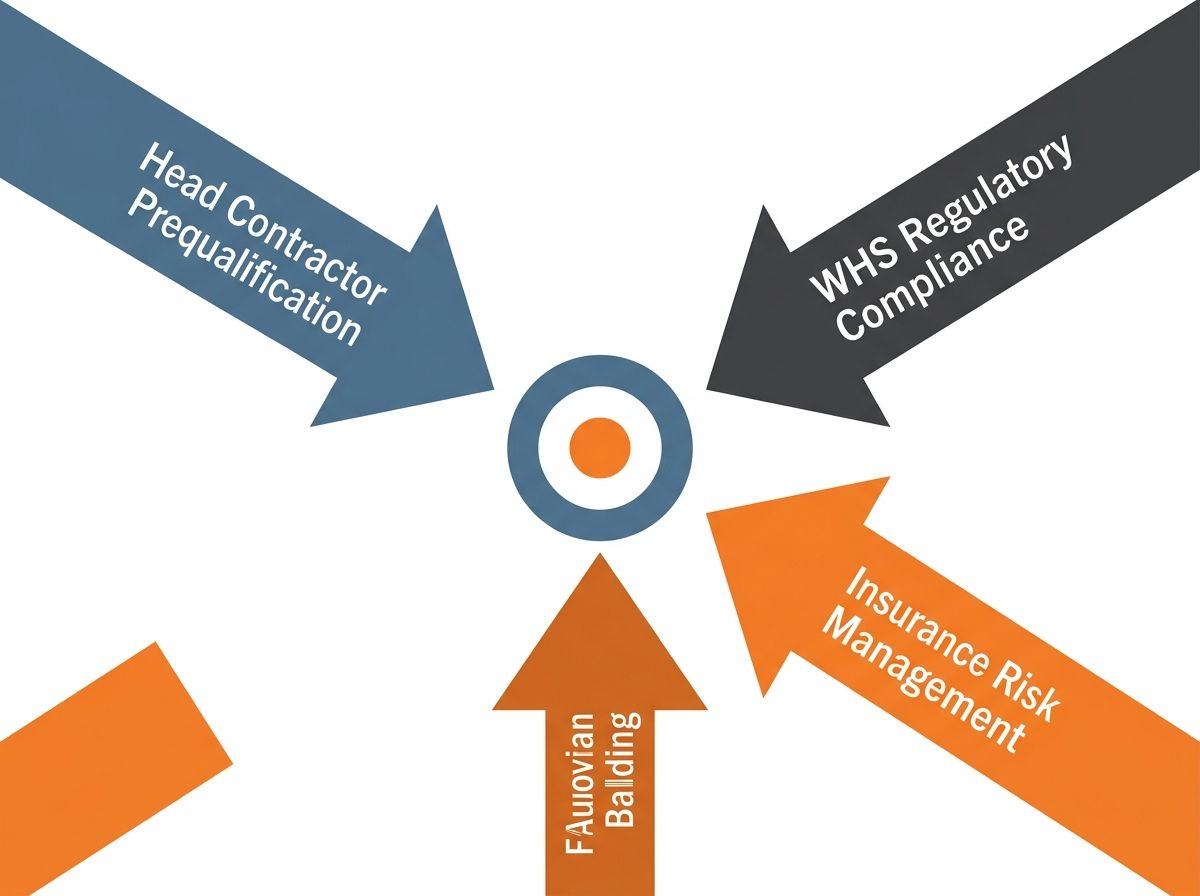
- Head contractor prequalification requirements. Government procurement frameworks and major contractors are increasingly requiring subcontractors to demonstrate qualified workforces as a condition of engagement. The Victorian Government's Construction Supplier Register, for example, requires suppliers in certain construction categories to hold professional qualifications or be registered building practitioners. This kind of requirement flows down the supply chain, from head contractor to subcontractor to individual tradesperson.
- Work health and safety regulatory pressure. Under Australia's model Work Health and Safety framework, principal contractors carry significant responsibility for the safety of all workers on site. Construction is consistently among the industries with the highest rates of work-related fatalities — Safe Work Australia's 2025 statistics confirm it remains in the top six industries for traumatic injury deaths. This creates downstream pressure on site managers and subcontractors to verify that workers are formally competent, not just practically capable.
- Insurance and liability scrutiny. Insurers assessing risk on construction projects are paying closer attention to workforce qualification status. An unqualified workforce is a liability exposure. As compliance culture tightens across the industry, the informal tolerance that once existed for experienced-but-uncredentialled workers is narrowing.
These three forces are not new. But they are converging more visibly, and the effect is felt most acutely by experienced tradespeople who built their careers before formal qualifications were routinely checked.
Why Sites Are Checking Now — When They Weren't Before
The regulatory framework hasn't changed overnight. What has changed is the rigour with which existing frameworks are being applied. Several factors have accelerated this. State-based building reform programs have introduced greater accountability across the construction supply chain. Licensing requirements for bricklayers vary by state — in Western Australia, for instance, a bricklayer contracting on building work valued over $20,000 must register as a builder with the relevant authority, and all construction workers are required to hold a Construction Induction Card regardless of employment type. Each Australian state and territory has its own licensing framework, and workers moving between states should check the validity of their existing credentials in the new jurisdiction.
Licensing requirements for bricklayers differ across Australia's states and territories. The Western Australian government's Build a Life in WA resource outlines the specific requirements for bricklayers working in that state, including when builder registration is required.
The Compliance Cliff isn't a single new law. It is the cumulative effect of existing frameworks being enforced more consistently, and of head contractors and insurers responding to that enforcement culture by tightening their own requirements.
What This Means for Experienced Bricklayers
Experienced bricklayers who have been doing the work for years — sometimes decades — are now being asked to prove what they already know. According to data from Jobs and Skills Australia based on the 2021 Census, around 58 per cent of bricklayers and stonemasons hold a Certificate III or IV as their highest qualification. That means a significant proportion of the workforce, roughly four in ten, do not hold a formal trade certificate, even though many have years of practical experience on the tools.
The Compliance Cliff does not care how good you are. It cares whether you have the credential. That is the reality. It is not a reflection of your competence; it is a structural requirement that has arrived at a specific moment in the industry's development.
Why Traditional Study Isn't the Answer for Working Bricklayers
The obvious alternative is to enrol in a course. But traditional study for the Certificate III in Bricklaying and Blocklaying is designed for apprentices, not for experienced tradespeople who are already working full-time. Victoria University, for example, lists a three-year part-time duration for the apprenticeship-based course, with indicative 2026 fees ranging from around $3,100 for a subsidised domestic place to over $16,000 for a full-fee place, plus materials. Federation University similarly indicates a three-year duration with 24 blocks of attendance per year.
Victoria University's course listing for the Certificate III in Bricklaying and Blocklaying (CPC33020) provides indicative fees and duration for the apprenticeship-based pathway.
For an experienced bricklayer, sitting in a classroom learning how to lay bricks is not a recognition of competence; it is a repetition of it. Recognition shouldn't require starting over. And for someone who can't afford three years away from the tools, traditional study simply isn't a realistic path to compliance.
RPL: The Pathway Built for the Compliance Cliff
Recognition of Prior Learning — RPL — is the assessment pathway designed for exactly this situation. Rather than requiring you to re-learn what you already know, RPL assesses what you can demonstrate. Your years of experience on the tools become evidence. A qualified assessor from a registered training organisation (RTO) evaluates that evidence against the units of competency in the Certificate III in Bricklaying and Blocklaying (CPC33020). Where competency is demonstrated, the qualification is issued.
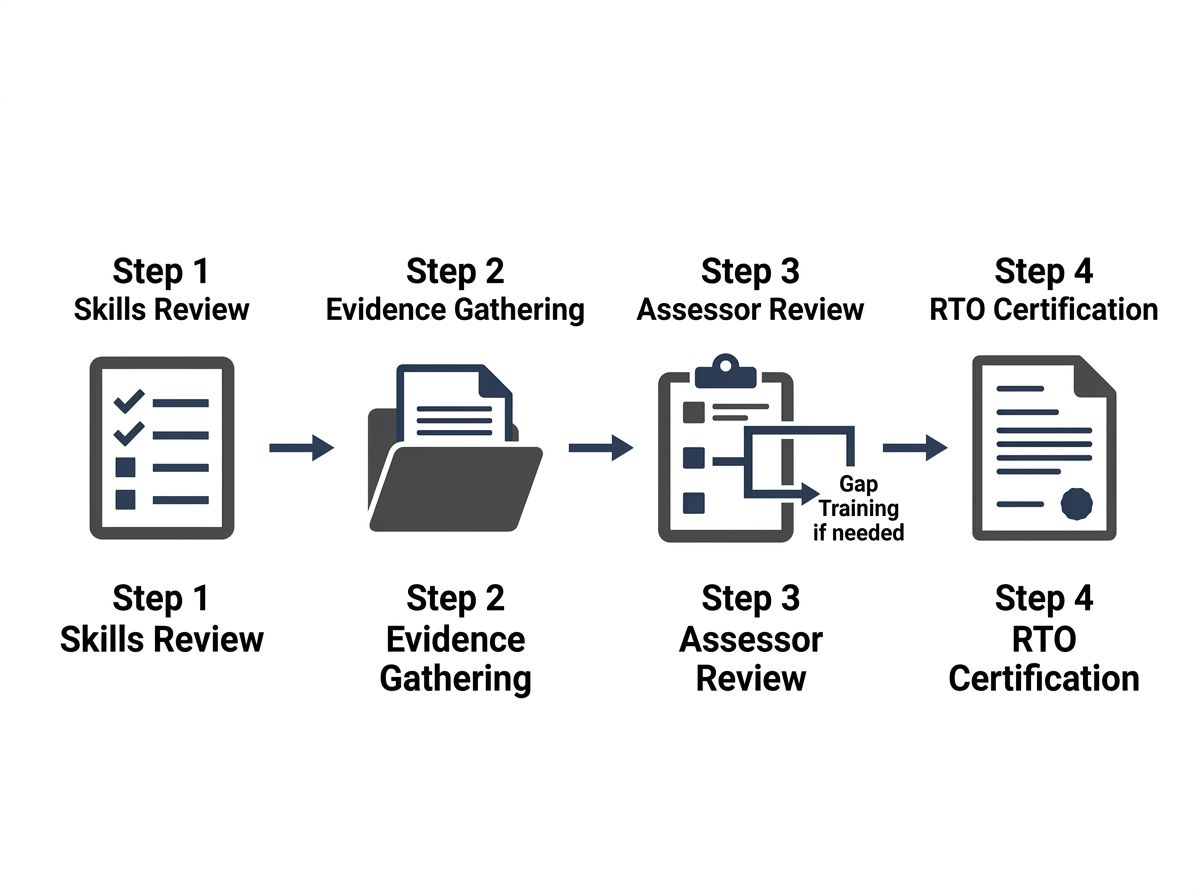
It's important to be clear about what RPL involves. It is a rigorous assessment process, not a shortcut. You will need to gather evidence of your skills and experience, and a qualified assessor will evaluate it. If gaps are identified during assessment, gap training is provided to address them. RPL it guides candidates through this process; the RTO conducts the assessment and issues the qualification.
For an experienced bricklayer facing a compliance deadline, RPL through the Certificate III in Bricklaying and Blocklaying is the pathway that honours existing competence while meeting the formal requirement, without requiring you to leave the job site.
Safe Work Australia's Model Code of Practice for Construction Work outlines the risk management framework that underpins WHS obligations on Australian construction sites — obligations that flow through to subcontractors and individual tradespeople.
The Compliance Cliff Is Coming for Every Construction Site — Here's How to Be on the Right Side of It
The Compliance Cliff is not going away. The trend toward mandatory qualifications in construction reflects a broader shift in how the industry manages risk, contracts, and accountability. If anything, that trend will continue. The question for experienced bricklayers is not whether to get qualified, but when and how.
For those who have built their skills on the job, RPL is the pathway that makes sense. It recognises what you already know. It keeps you on the tools. And it gets you to the right side of the cliff without requiring you to start over.
If you're weighing up your options, it's worth understanding
The decision is yours. But the starting point is finding out whether RPL is the right pathway for your specific situation, and that costs nothing.
Ready to Get Recognised?
Start with a free skills review to find out if RPL is right for you.