You've designed civil infrastructure for years: RII60520 is how to get it recognised
Experienced in civil design but missing the formal Advanced Diploma? RII60520 may match your existing work. Learn how RPL recognises your experience.
By RPL it Australia9 min read
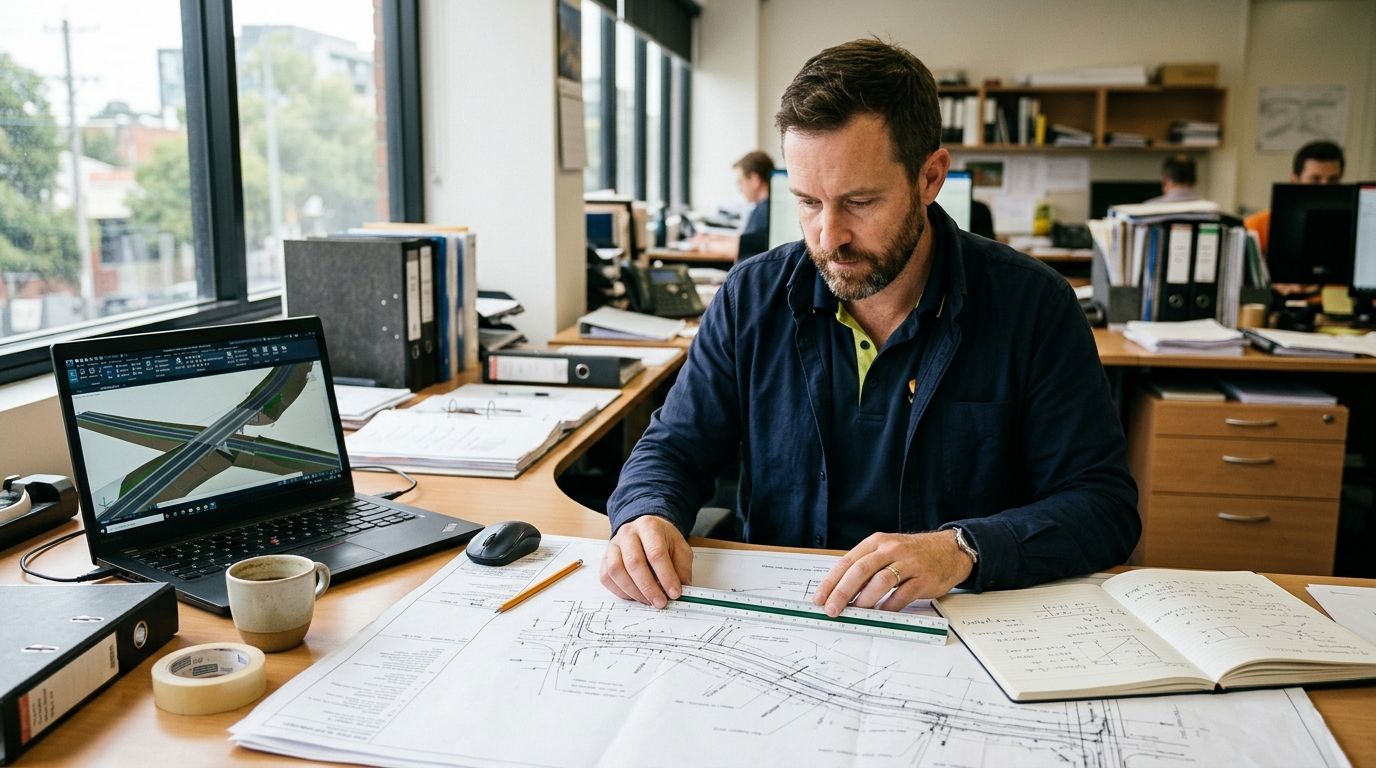
You have spent years producing civil design work. You regularly map road alignments, design complex drainage systems, draft infrastructure documentation, and compile technical design reports. This is work that is successfully delivered, approved by authorities, and built on-site. Other professionals rely daily on your designs.
Yet, over the last few years, a specific qualification has started appearing in key places that affect your career. It is listed in senior role descriptions, noted in tender pre-qualification requirements, and specified for project team personnel. That qualification is the Advanced Diploma of Civil Construction Design, known as RII60520.
The work you do every day, and the responsibilities you have successfully managed for years, is exactly what this qualification describes. However, the commercial procurement systems demanding this credential do not automatically recognize your practical experience.
This gap is common in the infrastructure sector, but there is a practical pathway to resolve it.
The credential that keeps appearing in job advertisements
Civil design professionals in Australia follow a clear career path. You enter the industry, develop technical skills through practical project work, take on increasingly complex design deliverables, and eventually become the senior professional others consult for design decisions. You are trusted with the project work, but you may not have the formal title.
The Advanced Diploma of Civil Construction Design sits directly at this intersection. It regularly appears in senior civil technician and design engineer job descriptions. It appears in pre-qualification frameworks for major infrastructure projects. It is also found in the technical requirements of tenders where clients require verified proof of a design team's qualifications.
If you have worked at this level for eight or more years, this credential does not describe things you still need to learn. It describes the tasks you perform daily. The issue is not your professional capability; it is that your capability exists in a practical form that administrative systems cannot easily verify.
What RII60520 covers and why it will sound familiar
RII60520 is the formal qualification code for the Advanced Diploma of Civil Construction Design. This is a nationally recognised qualification within the Resources and Infrastructure Industry Training Package, delivered by registered training organisations across Australia.
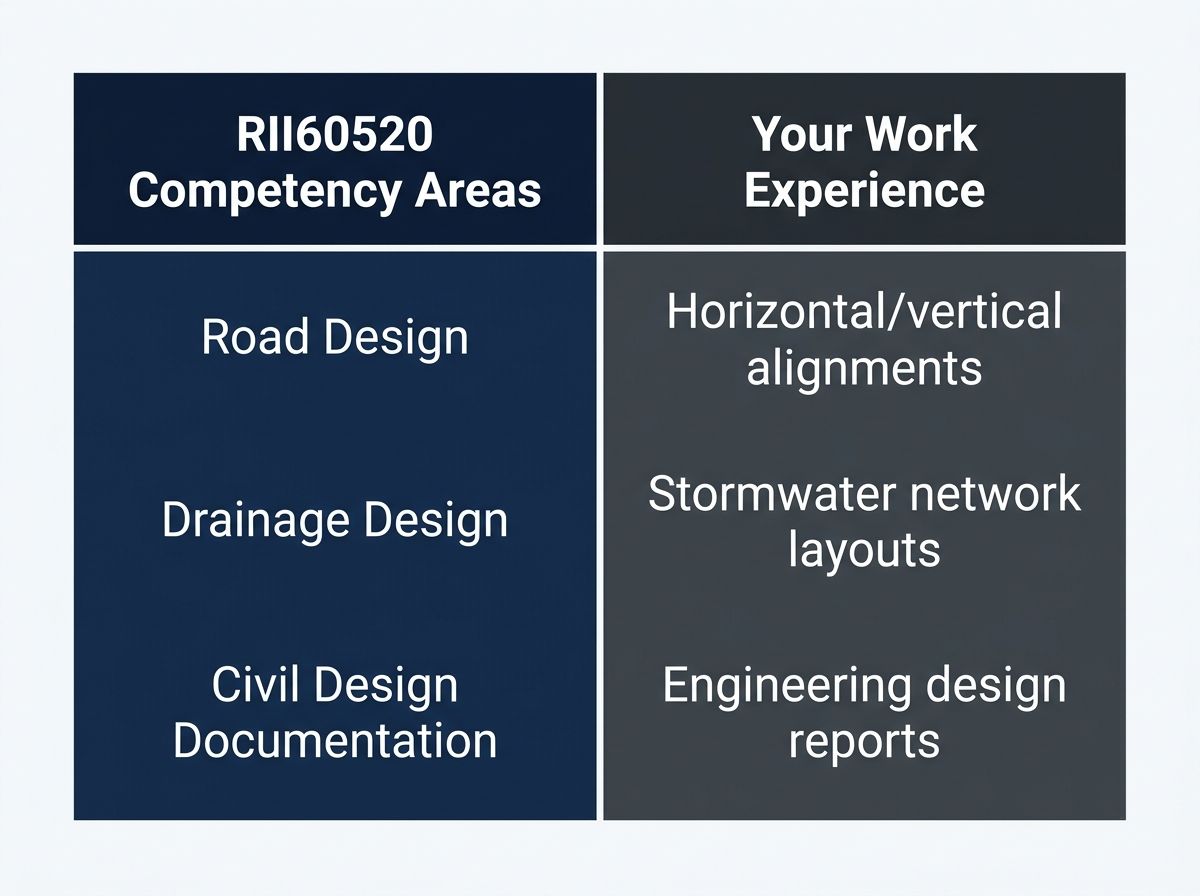
The qualification covers the technical and professional competencies required to plan, design, and document civil construction projects. In practice, this encompasses several core areas:
- Civil design principles and engineering fundamentals applied directly to infrastructure projects
- Road design, including horizontal and vertical alignment, pavement design, and intersection layouts
- Drainage design, including stormwater management, culverts, open channels, and pipe networks
- Infrastructure planning and detailed site analysis
- Design documentation, including drawings, specifications, reports, and engineering calculations
- Project coordination and formal design review processes
- Work health and safety requirements in technical design contexts
If you have been producing this work on live projects rather than studying it in a classroom, these competency descriptions are likely to read like your current job description rather than a syllabus for a course you need to take.
The pattern of senior work paired with entry-level recognition
A predictable cycle plays out regularly across the civil construction design sector in Australia.
A technician or designer develops genuine technical expertise on the job. They take on complex deliverables, mentor junior staff, and act as the first point of contact when a design issue arises on site. They operate, in every practical sense, at an advanced level.
Then they apply for a promotion, their company tenders for a major contract, or a client requests the design team's formal qualifications. The Advanced Diploma appears as a mandatory requirement, but it is missing from their CV.
The experience and capability are both real. However, the administrative systems that process job applications, evaluate competitive tender submissions, and validate project teams do not assess raw experience directly. They look for formal credentials. Without that qualification, your practical experience remains formally unrecognized by assessors.
This is a recognition gap rather than a skills gap. You have already completed the work; the only question is whether that work has been formally acknowledged.
You designed the infrastructure and delivered the project, but you do not hold the document that proves it.
What RPL means for professionals already doing the work
Recognition of Prior Learning (RPL) is a formal, established assessment pathway within the Australian vocational education and training (VET) system. It is neither a shortcut nor a workaround. It is a legitimate, nationally recognised process designed to evaluate your existing skills and practical knowledge against formal educational qualification standards.
For experienced civil design professionals, RPL means your drawings, reports, technical specifications, calculations, and active project documentation serve as the core evidence for your assessment. You do not need to start your education from scratch. Instead, you present your existing professional output in a structured format for a qualified assessor to evaluate against RII60520 standards.
RPL is a rigorous assessment process. A qualified assessor from a registered training organisation (RTO) systematically reviews your evidence, conducts a professional conversation or technical interview if needed, and determines whether your experience meets the national standard. The RTO conducts this assessment and issues the final credential. RPL it guides you through this entire process, helping you find, arrange, and present your portfolio clearly.
RPL is not suitable for everyone. If your experience does not cover all required competencies, or if you cannot produce documentation to support your claims, the assessment will identify gaps. You may need to complete targeted gap training. The final decision rests with the assessor, not the applicant.
The first step is determining whether your experience aligns with the qualification standards before you make any financial or time commitments.
The evidence you already generate in your daily work
When exploring RPL, experienced civil designers often realize that their standard daily work outputs are exactly what assessors look for.
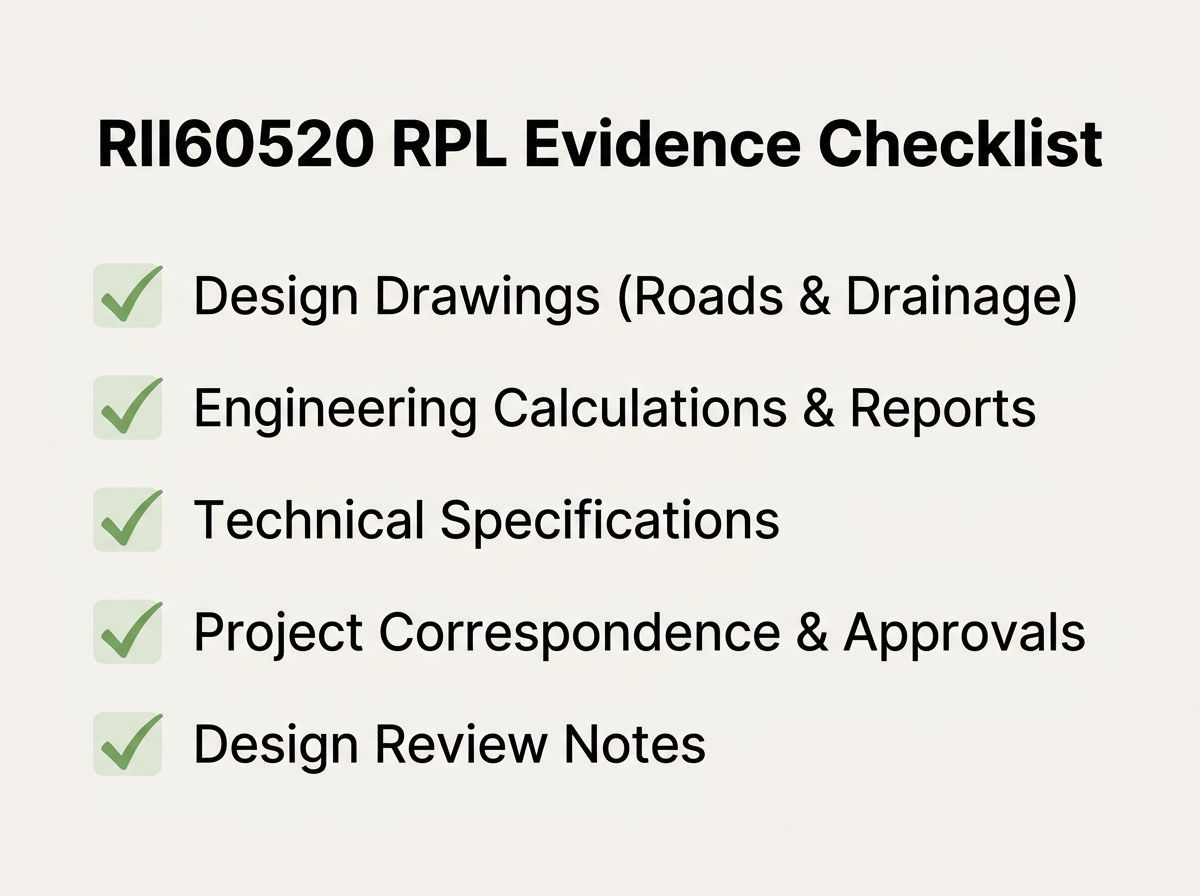
An RPL assessment for a qualification like RII60520 relies directly on the professional documentation that senior civil design work naturally produces. While the exact requirements depend on the specific units you are being assessed on and the guidelines of the assessing RTO, the following types of work files are highly relevant to an application:
- Design drawings, including road alignments, drainage layouts, and civil infrastructure plans from active projects
- Design reports and engineering calculations, such as hydraulic reports or pavement design documentation
- Project specifications and technical clauses you have authored, edited, or reviewed
- Employer references or statutory declarations verifying your role and hands-on responsibilities on specific projects
- Records of design review participation, including peer reviews, verification checklists, and client approval processes
- Project records, including original design briefs, scopes of work, and coordination files showing your direct involvement
- Digital software outputs, such as CAD files, design model exports, or alignment data showing your technical work
- Professional development records, including CPD hours, technical training courses, or industry association memberships
If you have been working in the civil design sector for many years, you have likely accumulated files across most of these categories. The challenge is rarely whether the evidence exists; it is organizing and mapping these engineering files so they align clearly with the specific RII60520 competency standards.
This is where a structured, guided process helps. You do not need to know how to compile an RPL portfolio before you begin. We assist you with that organization.
Why the Advanced Diploma is appearing more frequently
The civil construction sector in Australia has seen sustained investment in major infrastructure over recent years. This level of funding has brought strict formalisation across procurement processes, project team requirements, and the specific qualifications demanded of design professionals.
Formal qualifications are now standard in pre-qualification frameworks, project delivery requirements, and client specifications. Because civil construction is entirely project-based, these credential requirements often arise during the tender process, where the stakes are high and all compliance documentation is closely audited.
For civil design professionals, a missing credential that was manageable earlier in your career can become a real commercial barrier for you and your employer. A technical team that cannot demonstrate the required qualifications may find themselves excluded from bidding for certain projects, regardless of the team's actual field capability.
The Advanced Diploma has always been important for career progression. What has changed is how often it acts as a formal gatekeeper in procurement, project delivery, and the basic expectations of clients and project principals.
Is RPL the right pathway for your career?
RPL is not the correct path for everyone, and we do not claim that it is.
An RPL pathway for RII60520 is generally suited to professionals who:
- Have substantial, documented experience in civil construction design, typically with several years spent working directly on live infrastructure projects
- Perform tasks that directly match the competency standards of the Advanced Diploma, rather than holding a general support or junior drafting role
- Can produce concrete project documentation demonstrating their output, including engineering drawings, calculations, design reports, and written employer references
- Work within Australia or possess relevant Australian-context project experience that can be assessed against national RII training package standards
This pathway is not suitable for those early in their careers, professionals working in drafting or support roles without direct design responsibility, or individuals who cannot document their work history.
The honest answer to whether you are suitable depends entirely on your specific work history and what you can document. The Free Skills Review is designed to answer this question directly, with no obligation and before you commit to the process.
We will tell you frankly if RPL is not the right fit for your situation. We do not guide professionals into assessments that do not match their experience. Our advice is built on that transparency.
Frequently asked questions
What is RII60520?
RII60520 is the qualification code for the Advanced Diploma of Civil Construction Design, a nationally recognised qualification within the Australian vocational education system. It covers the competencies required to plan, design, and document civil construction projects, including road design, drainage systems, infrastructure planning, and design documentation.
Can I obtain the Advanced Diploma of Civil Construction Design via RPL?
Recognition of Prior Learning (RPL) is a formal assessment pathway available for RII60520. Your suitability depends on your specific design experience and your ability to document it against national standards. A Free Skills Review is the first step to assess whether RPL is appropriate for your situation.
What experience is required for RII60520 RPL?
While there is no single fixed threshold, RPL for an Advanced Diploma requires substantial, documented experience performing work that matches the qualification standards. For RII60520, this typically means several years of experience in civil design roles where you have personally produced design drawings, reports, and calculations for active infrastructure projects.
What evidence is needed for civil construction design RPL?
Evidence requirements depend on the specific units being assessed and the requirements of the assessing RTO. Common evidence types for civil construction design RPL include your design drawings, engineering reports, technical specifications, employer references, and project records. A Free Skills Review helps you determine which files are relevant to your situation.
Find out if your civil design experience qualifies
You already have the professional experience. The next step is to determine whether your work matches the standards of RII60520 and can be compiled into an assessment portfolio for an RTO.
You do not have to navigate these technical standards alone, and you do not need to make any financial commitment to find out where you stand.
The Advanced Diploma of Civil Construction Design (RII60520) qualification page provides more details about the qualification units and the formal RPL process.
The decision is yours.
General information only, current at the date shown. Licensing rules change, so check the current requirements with the relevant regulator before you rely on them. RPL it Australia is a student support service, not a Registered Training Organisation; qualifications are assessed and issued by our partner RTOs.