AUR30320 RPL: How Experienced Auto Electricians Get Certified Without an Apprenticeship
Experienced auto electricians can get the AUR30320 Certificate III via RPL. Learn how your daily work serves as evidence for trade recognition.
By RPL it Australia8 min read
The assumption most experienced auto electricians make about AUR30320
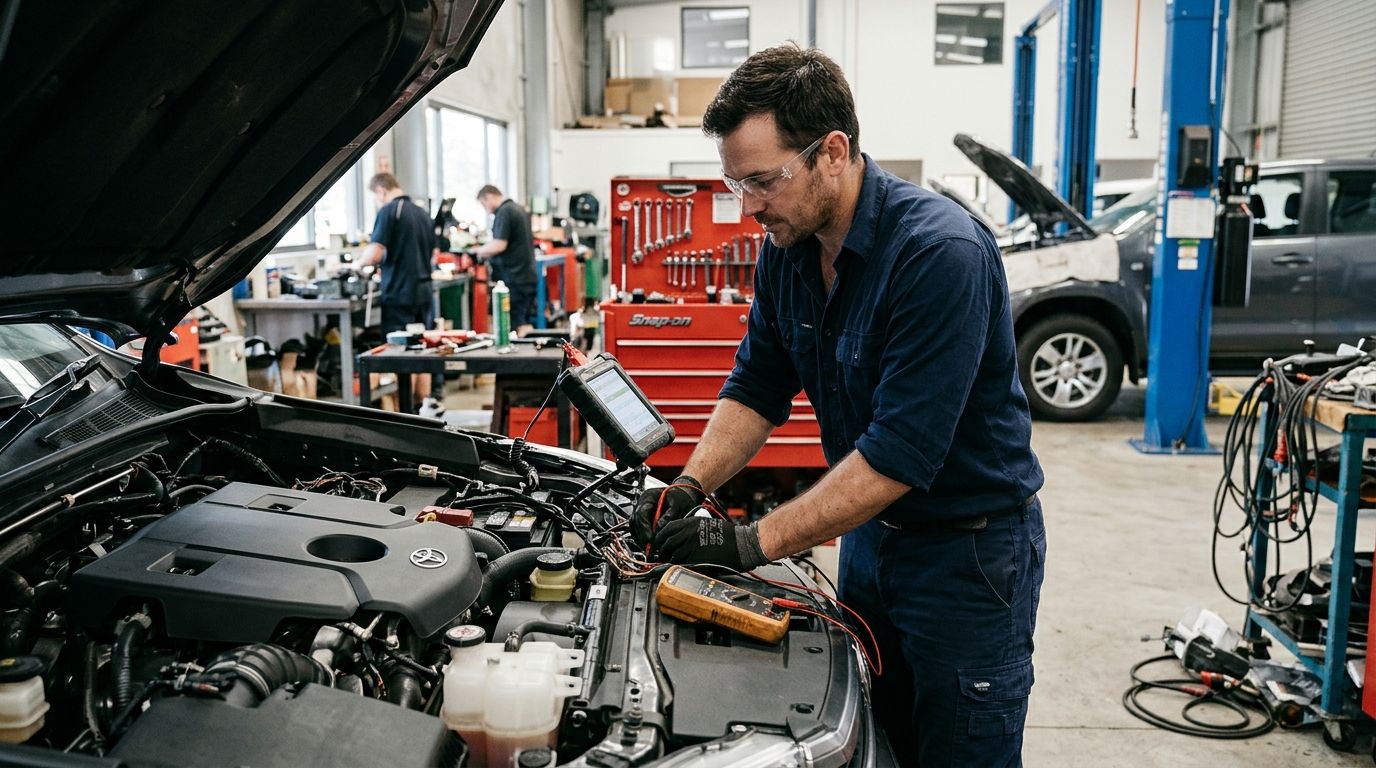
If you have spent years diagnosing faults, running wiring harnesses, and fitting automotive electrical systems, you may have looked up AUR30320 (the Certificate III in Automotive Electrical Technology) and assumed it is out of reach. This is usually not because you lack the skills, but because you did not complete a formal apprenticeship.
That assumption makes sense. Most people with an AUR30320 qualification completed a traditional apprenticeship, and the trade is heavily associated with that route. However, the qualification itself does not require one. AUR30320 is a nationally recognised credential under the Australian Qualifications Framework (AQF). Like any AQF qualification, it can be attained through Recognition of Prior Learning (RPL).
This guide is for experienced auto electricians who know the trade but are unsure if they can obtain the formal credential. You can. Here is how the RPL pathway works.
What AUR30320 covers and how your experience maps to it
The AUR30320 Certificate III in Automotive Electrical Technology assesses competency in automotive electrical work. Its units cover the standard tasks you likely perform every day, such as diagnosing electrical faults with specialised equipment, installing and repairing wiring harnesses, working on vehicle communication networks, fitting aftermarket accessories, and maintaining workplace safety.
If you have been doing this work in a workshop, on a fleet, in a dealership, or as an independent contractor, your skills should align with these requirements. The assessment does not test your ability to learn these tasks. It verifies that you can already perform them to industry standard.
This distinction is important. RPL is not a training course. It is an assessment of your current skills. Instead of asking if you can study the material, the assessor asks if you can prove you already do the work.
You can review the full qualification details and unit structure on the RPL it qualification page.
Why the apprenticeship assumption exists and why it does not apply to you
Assuming you need an apprenticeship is reasonable. Apprenticeships are the traditional pathway to trade qualifications in Australia, and most people holding an AUR30320 completed a formal training contract. This link is so strong that many experienced trade professionals assume there is no other option.
However, the trade qualification and the apprenticeship are not the same thing. An apprenticeship is simply one pathway to demonstrating competency, while RPL is another. Under the Australian Qualifications Framework, every AQF qualification must be accessible through RPL. Registered Training Organisations are required to offer RPL as a pathway to any qualification they deliver. This is not a workaround or a secondary option; it is a formal, regulated part of the Australian VET system.
AUR30320 is a competency standard, not an apprenticeship-only credential. The pathway to meeting this standard is flexible. The assessment focuses entirely on whether you can prove your competency, regardless of where or how you learned the trade.
Licensing requirements for auto electricians vary by state and territory. If you need AUR30320 for licensing purposes, you should verify the current rules with your local authority, as regulations can change. RPL it can help you understand how this qualification fits into your state's framework.
If you developed your skills on the job rather than through an apprenticeship, our guide on how experienced auto electricians use RPL to access AUR30320 covers the practical aspects of this transition in more detail.
Who the RPL pathway is designed for
RPL for AUR30320 is not designed for people with minimal exposure to automotive electrical work. It is a structured, rigorous assessment process meant for professionals with substantial, demonstrable skills. A qualified assessor from a registered training organisation reviews your application, and they are looking for genuine, practical proof of competency rather than just a basic summary of your employment history.
However, the range of eligible candidates is broad. You are likely a good candidate for RPL if you fit one of these profiles:
- You qualified and worked as an auto electrician overseas and now work in Australia without local recognition
- You transitioned into automotive electrical work from a related trade, such as mechanics or general electrical, and developed deep technical skills on the job
- You have spent years in a workshop or fleet environment doing complex diagnostics and wiring without a formal contract
- You started an apprenticeship but did not complete it, though you have continued working in the industry ever since
- You run your own automotive electrical business and have the records to prove your technical history
The primary requirement is verified skill. If your daily work matches the units in the AUR30320 syllabus, this pathway is designed for your situation.
What evidence experienced auto electricians already have
The main obstacle to RPL is rarely a lack of skill. Usually, it is simply knowing what evidence to collect, and many tradespeople find they already possess most of what they need.
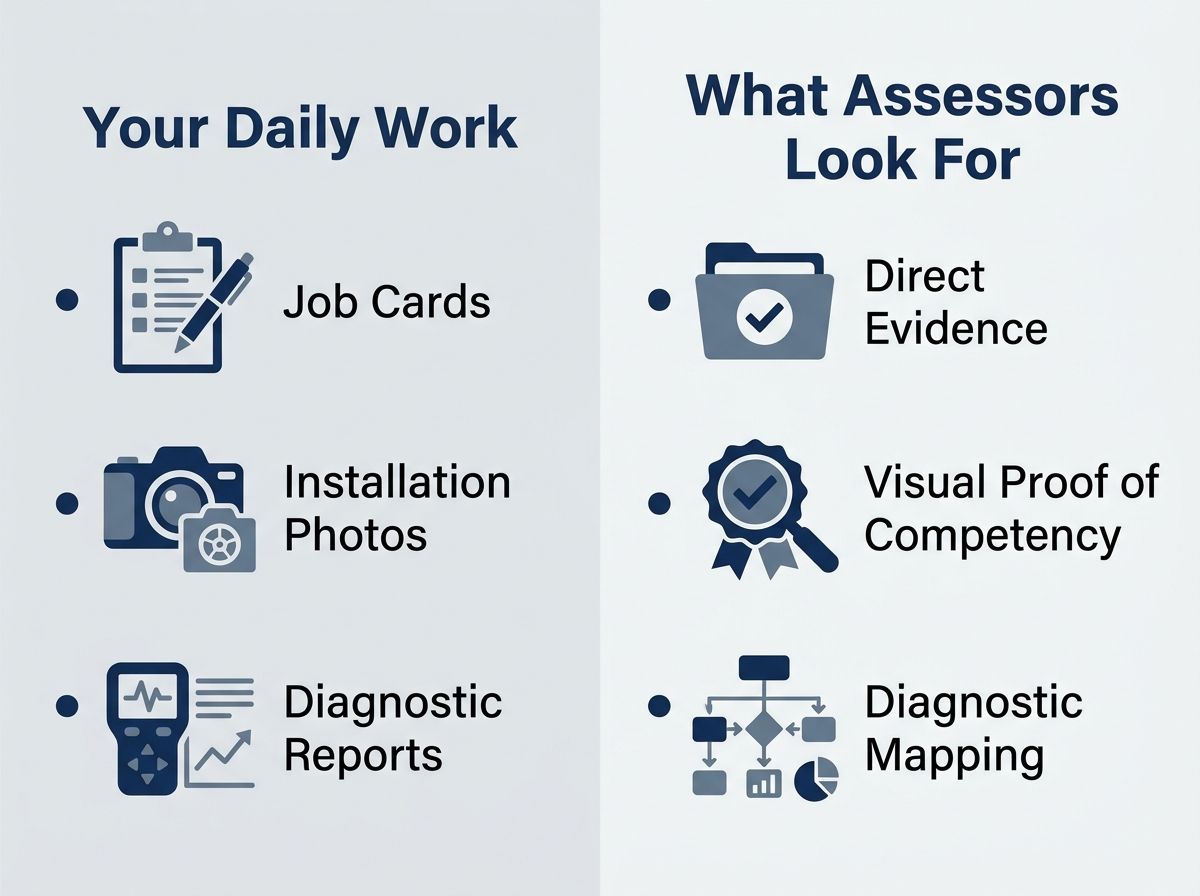
RTO assessors work with several distinct categories of evidence. Direct evidence is the strongest: actual work samples, photos of completed installations, job sheets, diagnostic reports, and wiring diagrams you have completed or annotated. Indirect evidence supports this material, including employment records, payslips, employer or client references, and letters confirming your daily responsibilities. Supplementary evidence helps fill any remaining gaps, such as statements from colleagues, training records, or trade memberships.
For experienced professionals, this typically includes:
- Job cards from completed electrical tasks, including fault diagnoses and accessory installations
- Photos of your work, such as wiring harness setups, custom installations, and diagnostic runs
- Employer references or detailed letters confirming your specific duties and daily electrical tasks
- Evidence of using diagnostic tools, such as scan tools, oscilloscopes, and multimeters
- Records of work on vehicle systems, including CAN bus, body control modules, and alarm setups
- Business documents if you are self-employed, such as client invoices and photo portfolios of your work
You do not need to create a portfolio from scratch. You simply need to gather documentation of work you have already completed. Most trade professionals have this material saved on their phones, in workshop management systems, or across their email accounts.
If the assessor identifies any gaps in your evidence, such as lack of experience with a specific vehicle system, you can usually complete targeted gap training. This is a standard part of the process, not a failure of your application.
The RPL process for AUR30320
The pathway to getting certified is structured. Knowing how the process works from the start makes it easier to take the first step.
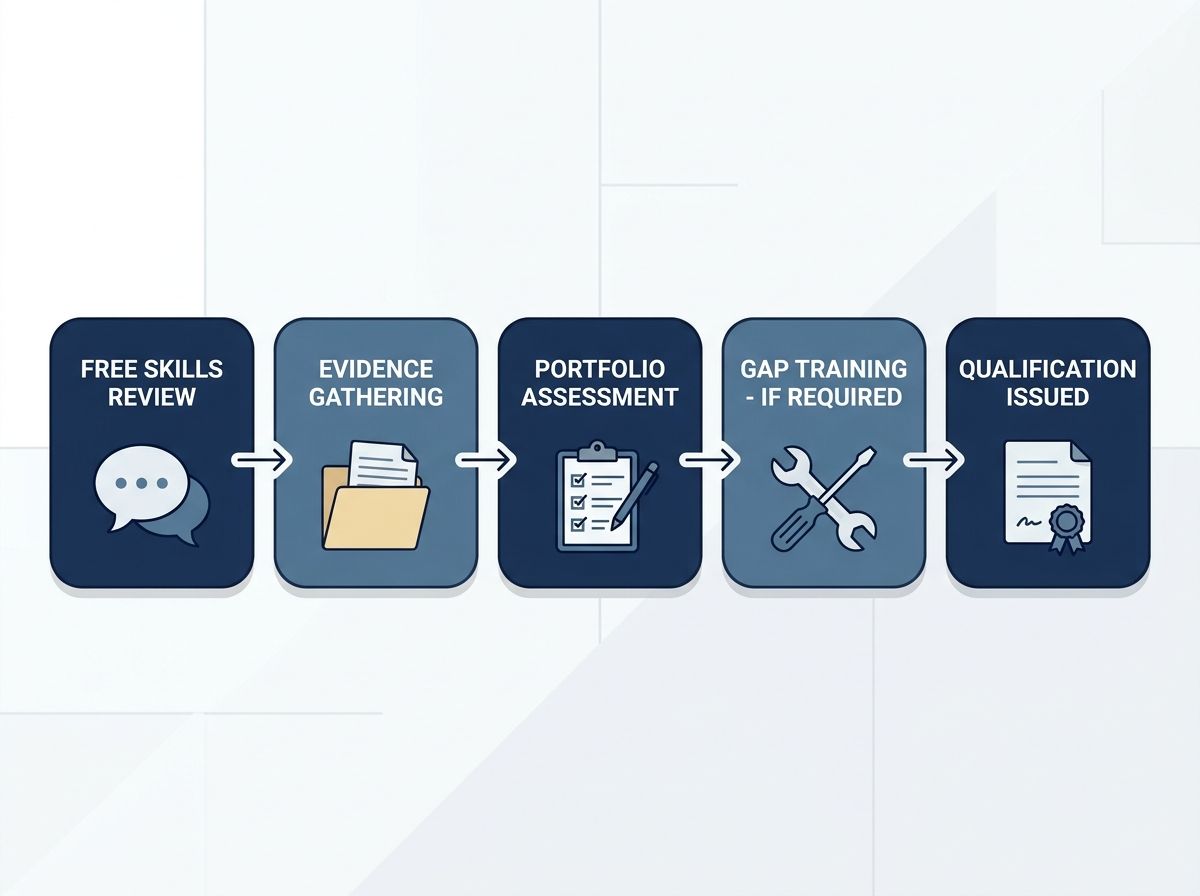
- Skills review: The process begins with a practical assessment of whether your experience aligns with the units AUR30320 covers. This starts with a free, no-obligation discussion about your work history and what the qualification requires.
- Evidence gathering: If your skills review indicates you are a suitable candidate, you will begin collecting your work documents. RPL it helps guide you through this process, identifying what documents you have and what areas might need support.
- Assessment: A qualified assessor from a registered training organisation reviews your documents against the qualification units. This step may include a practical demonstration component, depending on the RTO and the evidence supplied.
- Gap training: If the assessor identifies specific areas where your evidence is thin, you can complete targeted training to address those units. This is built into the overall process and does not mean starting your studies from scratch.
- Qualification issued: Once the assessor is satisfied that you have demonstrated competency across the required units, the RTO issues your nationally recognised Certificate III in Automotive Electrical Technology.
Timeframes depend on the quality of your evidence, RTO processing schedules, and whether you need gap training. While it is not an instant process, it is far more practical for experienced technicians than enrolling in a classroom course.
When RPL for AUR30320 may not be the right choice
RPL is not a suitable option for everyone. The assessment is demanding because the trade qualification is highly regarded. If your hands-on experience does not match the required competencies, the assessment process will highlight those gaps.
RPL may not be appropriate if your experience is limited to basic tasks, such as replacing globes or installing simple accessories, without exposure to complex fault diagnosis, wiring layouts, or vehicle network communication. It is also more difficult if you are a general mechanic with minimal electrical work, or if you cannot produce written or photographic evidence of your trade history.
This should not discourage you from applying. Instead, it highlights why you should begin with a realistic assessment rather than guessing your eligibility. The Free Skills Review answers these questions before you make any financial or time commitments.
Your experience is already evidence: The next step is presenting it
You already have the experience. The faults you have diagnosed, the wiring you have run, and the systems you have repaired serve as your evidence. The AUR30320 process does not test if you can do the job; it is simply a way to formally recognize that you already do it.
Recognition of Prior Learning is the formal mechanism for this verification. It is a robust, legitimate path designed so that qualified professionals do not have to sit through classes on skills they use every day.
The qualification is within your reach, and the pathway is well-established. The next step is evaluating your daily tasks against the formal units of competency.
You can also view the complete list of AUR30320 units on our qualification page.
General information only, current at the date shown. Licensing rules change, so check the current requirements with the relevant regulator before you rely on them. RPL it Australia is a student support service, not a Registered Training Organisation; qualifications are assessed and issued by our partner RTOs.