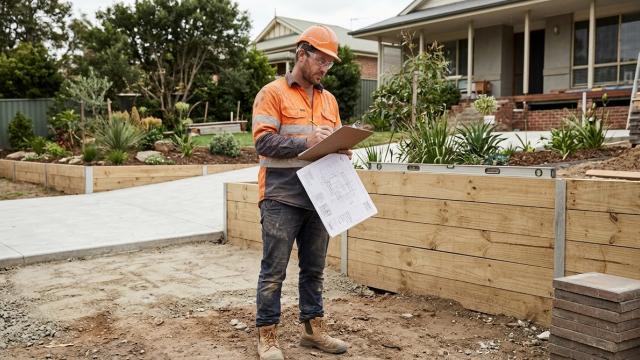
The QBCC two-year on-tools rule: What counts, what doesn't, and whether you've already met it
The QBCC requires two years of site experience for a builders licence. Find out what counts, what does not, and how to assess your background.
By RPL it Australia8 min read
What the QBCC actually means by 'two years on tools'
You have the experience, with years spent on site. The question is whether the Queensland Building and Construction Commission can see it, and whether your on-site work actually satisfies their specific requirement.
The QBCC requires applicants for a Queensland builders licence to show relevant on-site experience before they can get licensed. This is commonly called the 'two years on tools' requirement, though the precise threshold and how it applies varies depending on the specific licence category you want.
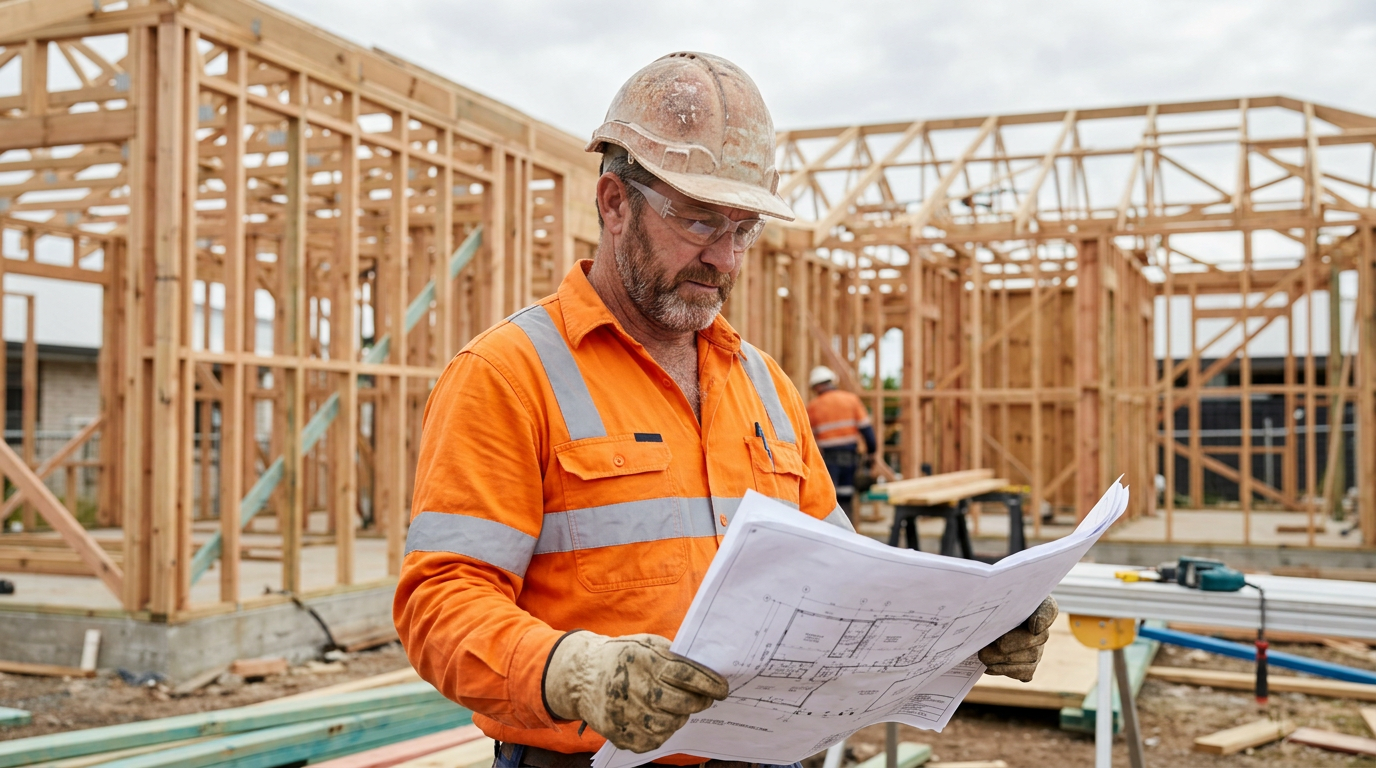
The QBCC is not looking simply for time spent in the construction industry. They require hands-on, trade-level involvement in building work. This means you were directly responsible for the physical construction itself, rather than managing it from an office or supporting it administratively.
Most experienced builders searching for this information have done exactly that kind of work for years. The requirement has a formal name and threshold, but the underlying question is straightforward: have you been working on building sites, doing the physical work? If so, you have likely met the standard. The main challenge is usually not eligibility, but rather gathering the evidence.
Important caveat: the QBCC publishes its own licensing requirements, and those rules are the authoritative source. This article explains the general framework to help you self-assess, but you should verify the specific requirements for your category directly with the QBCC before making any application decisions.
Work that generally counts toward the requirement
The QBCC experience requirement focus is on direct, hands-on involvement in building work. Based on the general framework of Queensland builder licensing, these types of work are typically considered relevant:
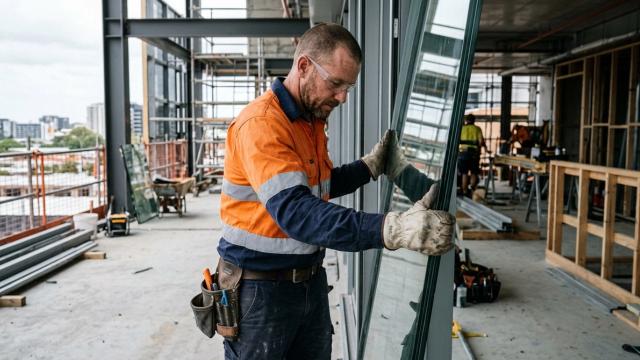
- Working as a licensed contractor or subcontractor carrying out building work such as framing, roofing, concreting, fit-out, and other trade-level tasks.
- Working under the supervision of a licensed builder in a hands-on capacity, with clear trade-level responsibility for the work rather than working as a labourer.
- Owner-builder work where you were directly involved in the physical construction, though this category often has specific documentation requirements.
- Work carried out in other Australian states or territories where the work was equivalent to Queensland licensing, subject to additional verification.
- Work carried out overseas in a building capacity, though recognition of overseas experience varies and must be confirmed directly with the QBCC.
The common factor across these categories is direct, physical involvement in building work at a trade or contractor level. If you were the person doing the work, rather than just organising, quoting, or inspecting it, that experience is likely to be relevant.
Note: the specific work types that qualify, and whether your experience meets the threshold, must be confirmed with the QBCC directly. The information above is a general guide based on the nature of the requirement, not a definitive statement of QBCC policy.
Work that may not count (even if you were on site)
Not all time spent in the construction industry satisfies the QBCC experience requirement. The following roles are less likely to count, or may only count in part:
- Purely supervisory or project management roles where you were not directly involved in the physical building work.
- Site administration, estimating, or procurement roles.
- Labouring work without trade-level responsibility, such as carrying materials, cleaning up, or providing general assistance.
- Inspection or compliance roles where you were assessing work rather than performing it.
- Design or drafting work, even if it was completed for building projects.
This section should reassure you more than it concerns you. If you have been working on building sites, doing framing, fit-out, or structural work, these exclusions are unlikely to apply to your situation. The QBCC requirement is designed to filter out people who have been adjacent to construction without actually doing the physical work, not to exclude experienced tradespeople who have been on the tools for years.
If your work history includes a mix of hands-on and supervisory roles, the key question is whether the hands-on component meets the threshold. It is worth clarifying this with the QBCC or a licensing advisor before you apply.
How to verify your experience against the requirement
Meeting the two-year threshold is necessary, but proving it is another matter. The QBCC requires documentary evidence of your experience, not just your word. This is where many competent, experienced builders face a practical obstacle that has nothing to do with their actual skill.
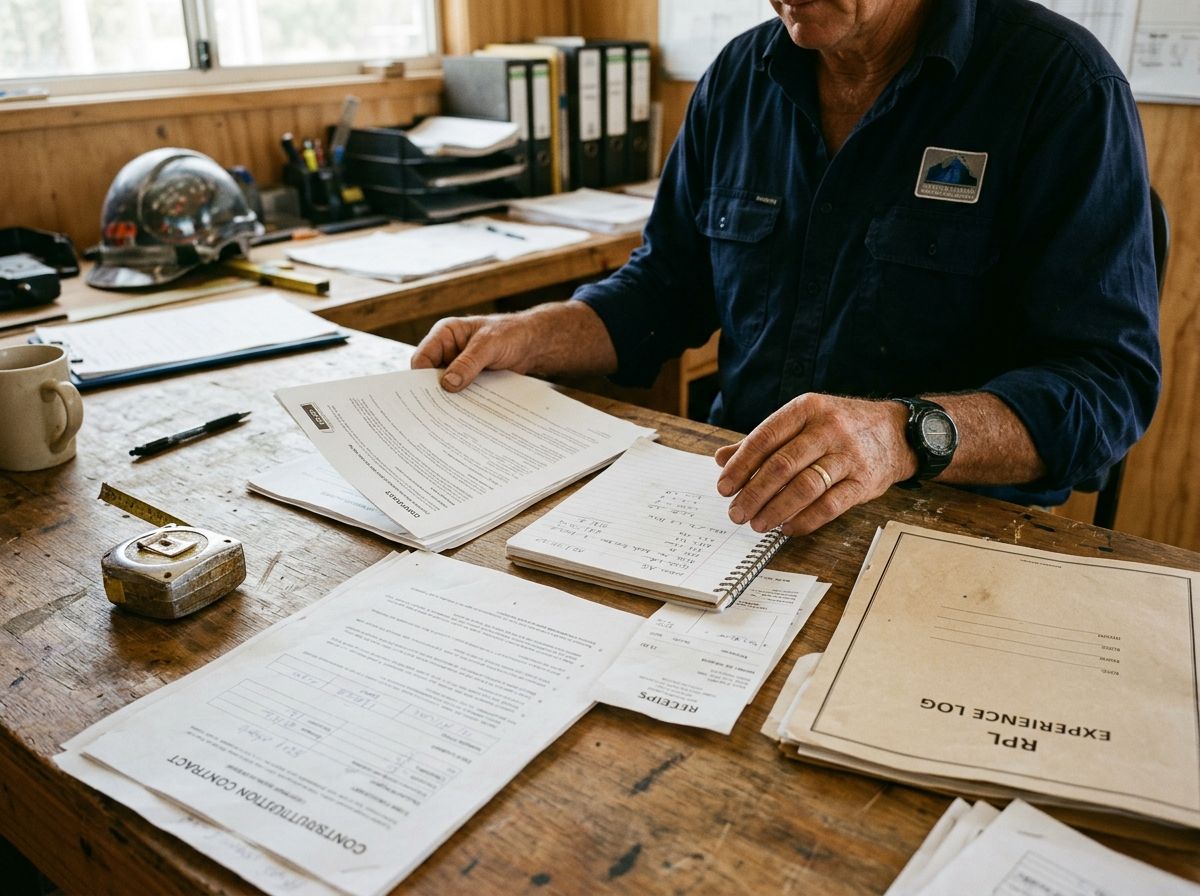
The documents that are typically useful to show relevant building experience include:
- Employment records, including payslips, tax records, or letters from employers confirming your role and the nature of the work.
- References from licensed builders or contractors you worked under, confirming your hands-on involvement in specific projects.
- Contracts, invoices, or project records from work you carried out as a contractor or subcontractor.
- Statutory declarations from supervisors, colleagues, or clients who can attest to your direct involvement in the building work.
- Photographs, site diaries, or other records that show your presence and active role on specific projects.
The challenge for many experienced builders is that they have done the work for years without keeping formal records. Payslips from a decade ago are often gone, former employers can be hard to track down, and projects completed as a sole trader may have minimal paper trails.
This is where the RPL pathway becomes relevant. Recognition of Prior Learning is a structured process where a registered training organisation (RTO) helps you gather, organise, and present your work history as formal evidence. This supports both the QBCC experience requirement and the qualification needed for a licence application. If you have the site experience, a Free Skills Review can show whether your work history is strong enough to support an RPL application, with no commitment required.
If you are ready to look at the formal pathway, the Trade Licence QLD Builders Licence page explains how RPL works for Queensland builder licensing.
The self-check: Five questions that show where you stand
Before you contact the QBCC or start gathering documents, run through these five questions. They do not replace a formal assessment, but they will give you a clear picture of where you stand.
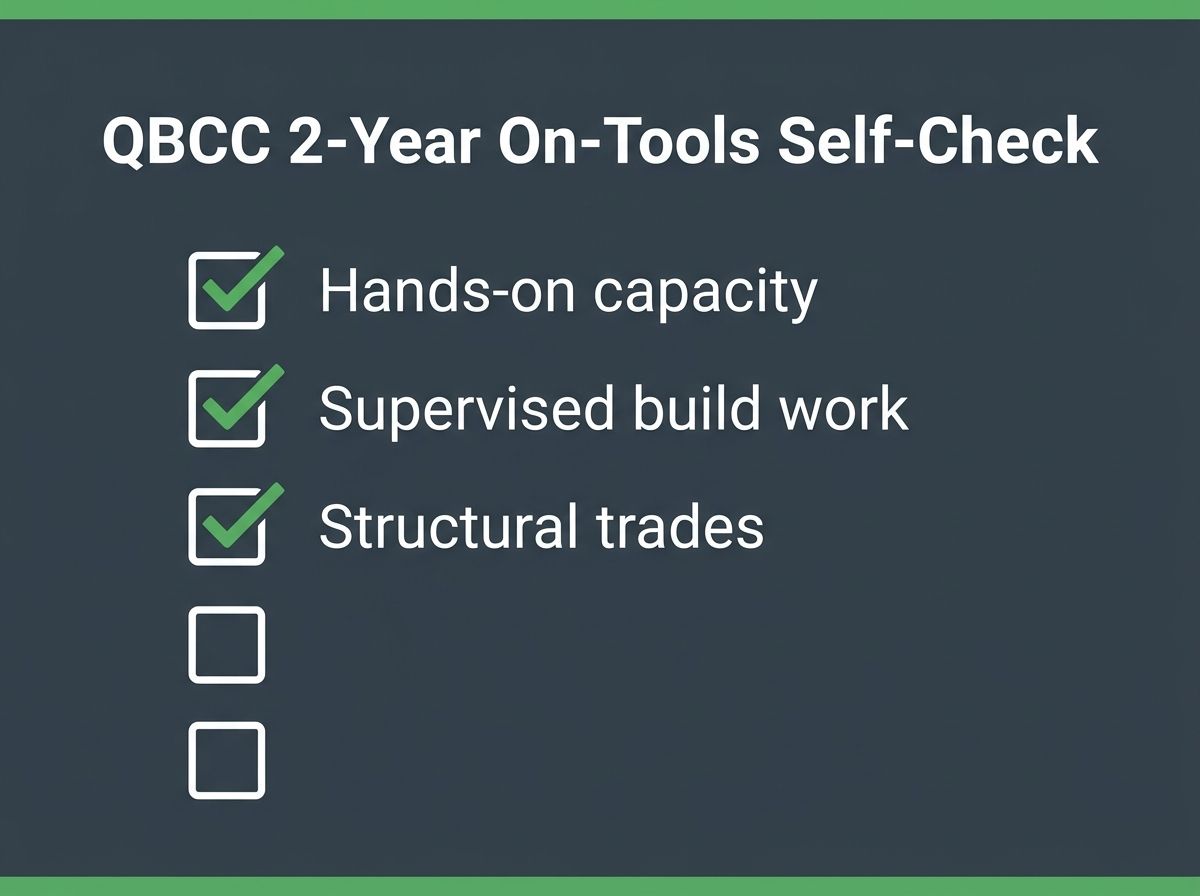
- Have you spent at least two years working directly on building sites in a hands-on capacity, rather than just visiting them, managing them, or supporting them from an office? If so, you likely have the foundational experience the QBCC is looking for.
- Was your work at a trade or contractor level, meaning you were personally responsible for the physical execution of building work, not just the coordination of others? If so, that experience is more likely to be considered relevant by the regulator.
- Can you identify some documentation that confirms your involvement, even partial records like tax returns, old contracts, or the names of former employers or supervisors who could provide a reference? If so, you have a starting point for proving your experience.
- Did your work involve the types of building activities that fall within the scope of a Queensland builders licence, such as residential construction, commercial fit-out, or structural work? If so, the work is likely relevant to the licence category you want.
- Have you been working in this capacity for at least two years in total, not necessarily continuously, but cumulatively across your career? If so, you may have already met the threshold even if your experience spans multiple employers, states, or projects.
If you answered yes to most of these questions, you have likely met the two-year requirement. The next step is not whether you qualify, but how to demonstrate that experience to the regulator.
For context on how Queensland regulators assess the difference between experience and formal recognition, the article on how QLD treats experience versus formal recognition in the glazing trade covers the same principle, which applies across licensed trades.
What happens after you have confirmed you qualify
Meeting the two-year experience threshold is a necessary part of a QBCC builder licence application, but it is not the only requirement. The QBCC also requires applicants to hold a relevant formal qualification. The specific qualification depends on the licence category you want, but for most builder licence categories, a Certificate IV in Building and Construction or equivalent is required.
This is where many experienced builders face a second challenge. They have the site experience and may even have the documentation to prove it, but they lack the formal qualification because they learned the trade on the job rather than through a classroom course.
Recognition of Prior Learning exists for this situation. RPL is a nationally recognised assessment pathway where a registered training organisation (RTO) assesses your existing skills and knowledge against the requirements of a qualification. If your experience meets the standard, the RTO can award the qualification without requiring you to complete training you have already done on site.
It is important to understand what RPL involves. It is a genuine assessment process, not a rubber stamp. An assessor from the RTO will review your evidence, including your work history, documentation, and demonstrated knowledge, to judge whether your prior learning meets the qualification standard. If gaps are identified, training is typically provided to cover them. The outcome is a nationally recognised qualification because the assessment is built on real evidence.
For builders who have spent years on Queensland sites, the RPL pathway through a registered training organisation is the recognised route to get the qualification required for their QBCC application. Whether this pathway is suitable for your situation depends on your work history, your documentation, and where your experience sits relative to the qualification standard.
The decision is yours. If you have the site experience and need the qualification, a Free Skills Review is a straightforward first step to find out if your work history is strong enough to support an RPL application toward your builders licence.
Learn more about the RPL pathway for Queensland builder licensing.
General information only, current at the date shown. Licensing rules change, so check the current requirements with the relevant regulator before you rely on them. RPL it Australia is a student support service, not a Registered Training Organisation; qualifications are assessed and issued by our partner RTOs.