Years Teaching Dance Without a Certificate IV — Here's Why Studios Are Starting to Ask
Studios, insurers and franchises are now asking for the Certificate IV in Dance Teaching. If you've taught for years, RPL may let your experience speak for itself.
By RPL it Australia8 min read
The email that changes everything
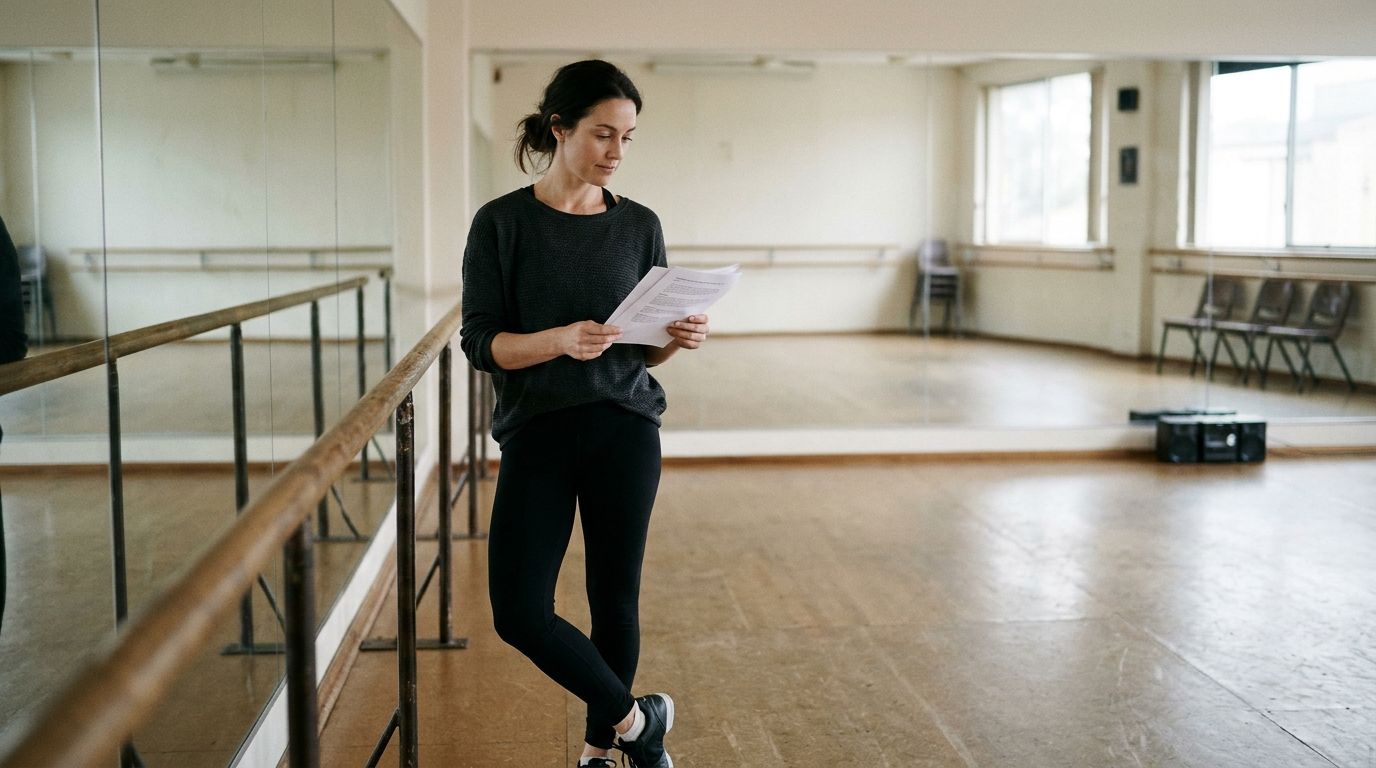
You have been teaching dance for years. Possibly decades. You have watched students progress from their first pliés to examination results you are genuinely proud of. You have managed timetables, communicated with parents, run recitals, and built a teaching practice that works — because you know what you are doing.
Then the email arrives. Or the policy update. Or the onboarding document from the studio network you are joining. And somewhere in the fine print is a line you were not expecting: teachers are required to hold the Certificate IV in Dance Teaching and Management (CUA40320), or equivalent formal qualification.
It is a strange moment. Not because the requirement is unreasonable — it is not. But because nothing about your teaching has changed. You are the same teacher you were yesterday. The students are the same students. The only thing that has shifted is that the formal system now needs a code to confirm what your students already know.
This article explains why this is happening, what the Certificate IV actually covers, and whether your years of teaching experience can form the evidence base for formal recognition — without starting from scratch.
Why the Certificate IV is appearing in more places
Dance education in Australia has been professionalising steadily. Studios, peak bodies, and insurers are increasingly using formal qualifications as the benchmark for verifying teaching competency. The Certificate IV in Dance Teaching and Management — qualification code CUA40320 — has become the credential that many organisations reference when they want to confirm a teacher meets a recognised national standard.
This shift is not unique to dance. Across the creative arts and performing arts sectors, formal qualifications have moved from optional to expected — particularly as studios grow, as franchise networks expand, and as public liability and professional indemnity insurance frameworks become more specific about what constitutes a qualified instructor.
The result is that teachers who have been working successfully for years — sometimes for the same studio that is now asking for the qualification — find themselves on the wrong side of a paperwork line they did not know existed. The requirement is not a comment on their teaching. It is a reflection of how formal systems communicate competency to third parties: through codes, not through watching someone teach.
Specific requirements vary by organisation. If you have received a requirement from a studio, insurer, or network, the best starting point is to confirm exactly what they are asking for — whether that is CUA40320 specifically, or an equivalent formal qualification — before taking any action.
What the Certificate IV in Dance Teaching and Management actually covers
CUA40320 is a nationally recognised qualification under the Australian Qualifications Framework. It covers the knowledge and skills required to teach dance effectively, manage a studio environment, assess student progress, and maintain safe teaching practice.
If you have been teaching for years, you will recognise most of this as your daily work. The qualification addresses areas including dance teaching methodology, student assessment and feedback, safe practice and injury prevention, studio and class management, and professional communication with students and families.
The gap, for most experienced teachers, is not competency. It is documentation. The qualification exists to confirm that a teacher can demonstrate these competencies to a formal standard — and that is precisely where Recognition of Prior Learning becomes relevant.
The frustration of being asked to prove what you already know
You have taught. You have assessed. You have built.
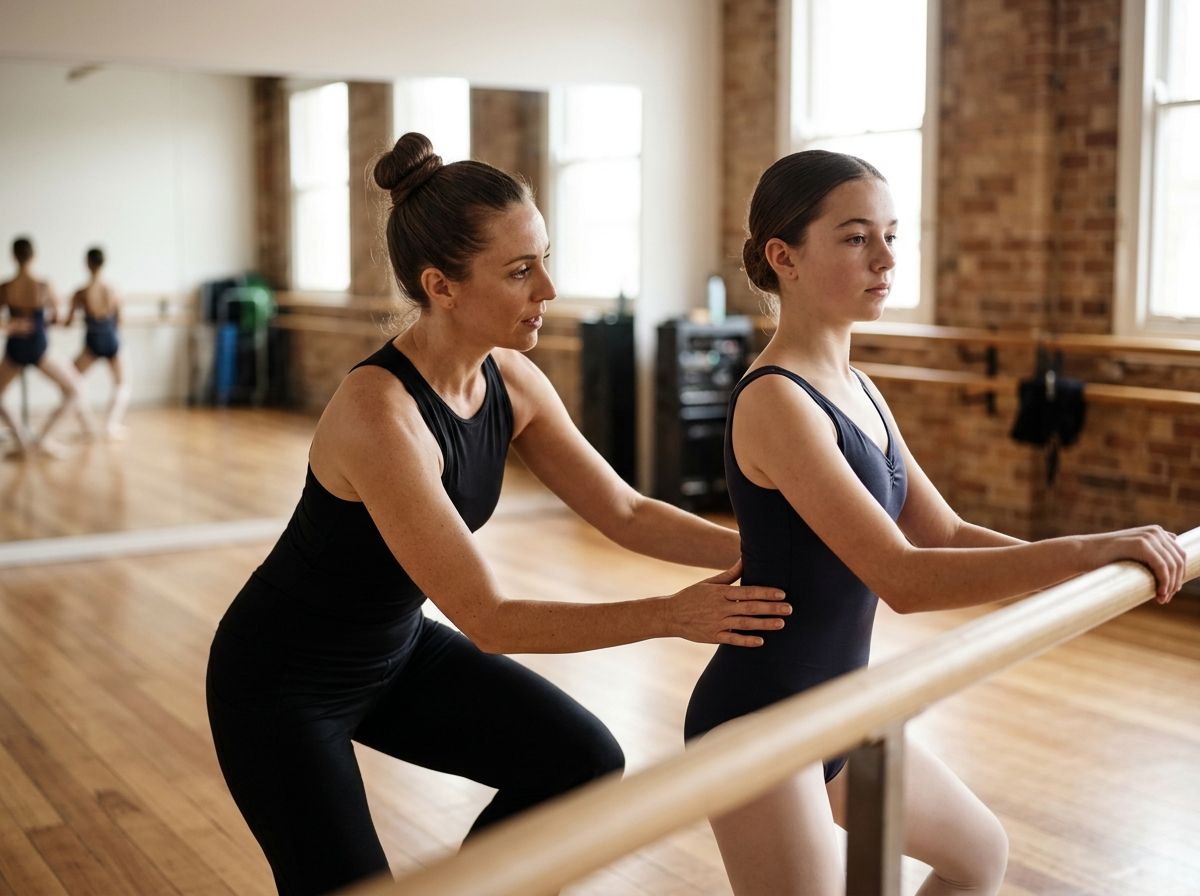
You have corrected technique in real time, in front of real students, with real consequences for getting it wrong. You have written student reports, communicated with anxious parents before examinations, adapted your teaching for students with different learning needs, and managed the particular chaos of a studio in the weeks before a concert. You have done this not once, but hundreds of times.
And now a form is asking you to prove it.
The frustration is legitimate. The system is not wrong to require a formal qualification — it is trying to communicate competency in a language that third parties can read. But you are not wrong to feel that years of demonstrated practice should count for something. That tension — between lived expertise and formal recognition — is exactly what Recognition of Prior Learning is designed to address.
Recognition, not repetition. That is the principle. Your experience is real. The question is whether it can be presented as evidence.
Recognition of Prior Learning: what it means for dance teachers
Recognition of Prior Learning — RPL — is a formal assessment pathway through which a registered training organisation (RTO) evaluates whether a candidate's existing skills and experience meet the requirements of a qualification. It is a nationally recognised pathway under the Australian Qualifications Framework.
In plain terms: instead of completing a course from the beginning, a candidate presents evidence of what they already know and can do. An assessor from the RTO reviews that evidence against the qualification's requirements. If the evidence demonstrates competency, the qualification is awarded. If gaps are identified, gap training is available to address them.
For experienced dance teachers, this means your teaching history — your records, your references, your documentation of student progress — may form the evidence base for CUA40320 assessment. The qualification is earned through assessment of what already exists, not through repeating what you already know.
Experience can be evidence. That is the principle RPL is built on.
To be clear: RPL involves genuine assessment. It is not a rubber stamp, and it is not a shortcut. The assessor's determination is independent, and the qualification is issued by the RTO — not by any intermediary. What RPL does is give your existing competency a fair hearing, through a structured and supported process.
What counts as evidence for a dance teaching RPL assessment
Experienced dance teachers typically have more evidence than they realise. RPL assessors generally look for documentation that demonstrates competency across the qualification's requirements. For a dance teaching qualification, this may include a range of materials from your teaching history.

The types of evidence typically considered in RPL assessments across the VET sector include:
- Teaching records and class registers showing the scope and duration of your teaching experience
- Student assessment records, progress reports, and examination results you have prepared or contributed to
- Studio timetables, lesson plans, or curriculum documentation you have developed or implemented
- References from studio owners, directors, or senior colleagues who can speak to your teaching competency
- Evidence of professional development activities, workshops attended, or industry memberships
- Video recordings of your teaching, where available and appropriate
- Documentation of any formal credentials or examinations you hold in your dance discipline
- Parent or student communications that demonstrate your professional practice
The specific evidence requirements for CUA40320 RPL assessment will depend on the RTO conducting the assessment. What is accepted, and how much is required, is determined by the assessor — not by any intermediary. The list above reflects general VET sector practice and should be read as indicative, not definitive.
Your teaching history is your evidence base. The process is about organising and presenting what already exists — with guidance.
Is RPL right for every dance teacher?
Honest answer: it depends on your specific experience.
RPL is not automatically suitable for every teacher. The assessment covers the full scope of CUA40320 — including studio management and student assessment components that some teachers may not have formal experience in. A teacher who has taught in a single style for a single studio, with limited documentation of their practice, may face gap training requirements. A teacher who has managed classes, assessed students, and maintained records across a range of contexts is likely to have a stronger evidence base.
Gap training is not a failure. If an assessor identifies areas where your evidence does not fully demonstrate competency, gap training is available to address those areas. The pathway is designed to be honest about what exists and what needs to be developed — not to suggest every candidate will sail through without any additional work.
The most useful thing you can do before committing to any pathway is to have an honest conversation about whether your experience qualifies. That is exactly what the Free Skills Review is designed to provide — a free, no-obligation look at your situation before you take any further steps.
What happens after the Free Skills Review
The Free Skills Review is a conversation — not an enrolment. It is designed to give you an honest picture of whether RPL is a suitable pathway for your experience, before you commit to anything.
If the review indicates that RPL is likely suitable, you are guided through the evidence-gathering process. This involves identifying, organising, and presenting the documentation that demonstrates your competency against the qualification's requirements. The process is supported — you are not left to work it out alone.
The assessment itself is conducted by a qualified assessor from the delivering RTO. Their determination is independent. If the assessment confirms competency across all required areas, the qualification is issued by the RTO. If gaps are identified, gap training is available to address them — and is typically provided at no additional cost.
The qualification that results from this process is nationally recognised. It carries the same standing as a qualification earned through any other pathway — because the assessment is genuine, and the standard is the same.
Your skills are real. The process helps them be recognised. The decision about whether to begin is yours.
General information only, current at the date shown. Licensing rules change, so check the current requirements with the relevant regulator before you rely on them. RPL it Australia is a student support service, not a Registered Training Organisation; qualifications are assessed and issued by our partner RTOs.