Why Your Years on the Tools Aren't Enough When Applying for a Contractors Licence WA
Running sites for years in WA but still can't get your contractors licence? Here's why experience alone won't satisfy WA Building and Energy — and what will.
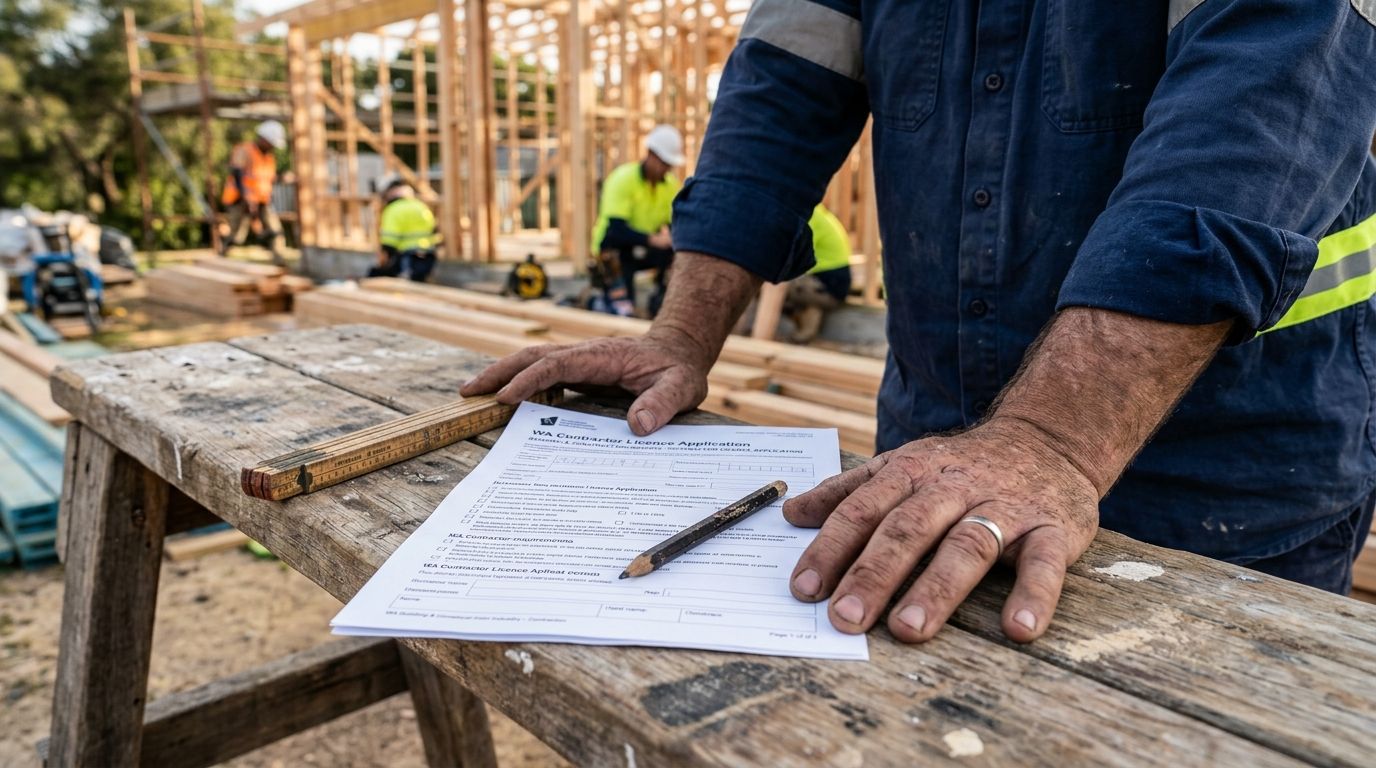
You know the trade. The system doesn't know you.
You have been on the tools for years. You have run crews, managed timelines, solved problems that apprentices wouldn't even recognise as problems. You know the trade. The work speaks for itself — or so you thought.
Here is the part that catches experienced WA tradespeople off guard: the licensing system has no way to see any of that. When you apply for a contractors licence in WA, Building and Energy is not asking how long you have been working. It is asking for documentation. Formal, verifiable, structured documentation. And years of site experience — no matter how deep — do not automatically satisfy that requirement.
The problem is not your competence. The problem is that your experience exists in the wrong form for formal recognition. That gap is real, it is common, and it is fixable. But only through a formal pathway.
What WA Building and Energy actually requires
Building and Energy — the Western Australian government body responsible for licensing in the building, electrical, plumbing, and gas industries — sets specific evidentiary requirements for contractor registration. For building trades, the pathway to a contractors licence in WA generally requires a formal qualification, documented relevant experience, and evidence of financial viability.
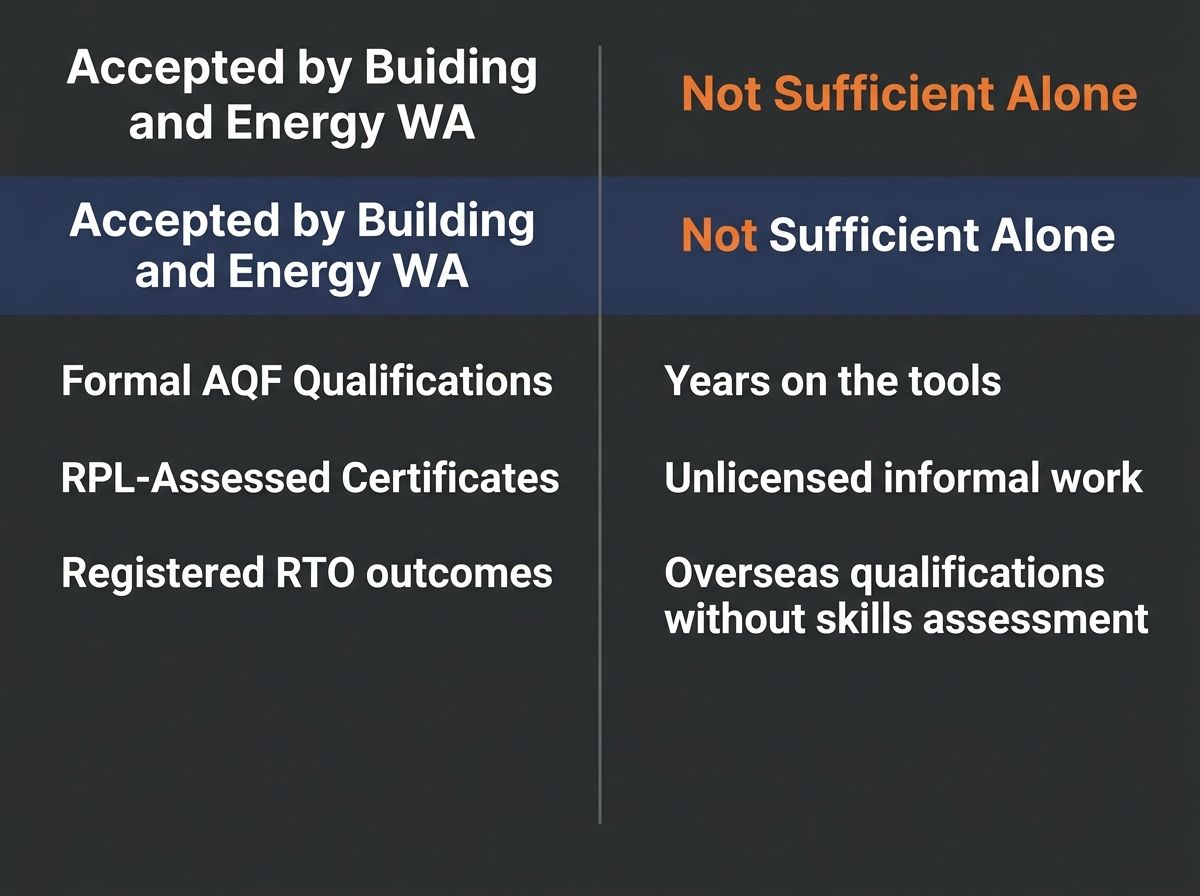
For building work, the qualification requirement is typically a Diploma of Building and Construction. This is not a preference or a guideline — it is a formal requirement. The system requires documentation, not just experience. A tradesperson who has spent a decade running residential projects but holds no formal qualification will not satisfy this requirement through experience alone.
You can explore the specific requirements for a contractors licence in WA on the RPL it Trade Licence WA page.
This matters because many experienced tradespeople assume that time on the tools is the primary currency of a licence application. It is not. The formal qualification is the currency. Experience is important — it is required alongside the qualification — but it cannot substitute for the qualification itself.
The three gaps that catch experienced tradespeople out
Most experienced WA tradespeople who struggle with the contractors licence application fall into one of three situations. Each is common. Each is solvable. But each requires a formal recognition process to resolve.
- Informal apprenticeships without a formal qualification outcome. You learned on the job, under a qualified tradesperson, and you know the work inside and out. But if that learning never resulted in a formal qualification being issued, the licensing system cannot see it. The competency is real. The documentation does not exist.
- Overseas trade qualifications not recognised in Australia. If you trained and worked in another country, your qualifications may not be directly accepted by Building and Energy. Overseas qualifications generally require a skills assessment — often through the WA Overseas Qualifications Unit or a relevant assessment body — before they can be used to satisfy the licensing requirement. The process exists, but it is not automatic.
- Years of site experience without a formal qualification pathway. This is the most common situation. You have been working in the trade for years, possibly decades. You have never needed a formal qualification because the work kept coming. Now the licensing requirement is in front of you, and the qualification gap is the only thing standing between you and the licence.
You have the experience. The system needs the evidence. That gap is what a formal recognition process is designed to bridge.
Why a site inspector doesn't care how long you've been on the tools
When a compliance officer or site inspector checks credentials, they are checking documentation. Not reputation. Not years of service. Not the quality of the work on the wall behind them. Documentation.
Operating as a building contractor in WA without the required licence carries real consequences. Building and Energy has published enforcement actions resulting in significant fines for unlicensed work — including a $12,000 fine issued for multiple cases of unlicensed electrical work. The Building Services (Registration) Act 2011 provides the legislative basis for these penalties, and Building and Energy actively enforces compliance.
Beyond fines, there are insurance implications. Work carried out without the required licence may not be covered by public liability insurance. If something goes wrong on a job — a structural issue, a safety incident, a dispute with a client — the absence of a valid licence can expose you to liability that your insurer will not cover.
The risk is not theoretical. It is a live compliance exposure that grows with every job completed without the formal credential in place. The good news is that the pathway to resolving it is clear.
How RPL turns your site experience into the evidence the system requires
Recognition of Prior Learning — RPL — is the formal mechanism within Australia's national training system that allows a qualified assessor to evaluate your existing skills and experience against the units of a formal qualification. If your competency is demonstrated through that assessment, the qualification is issued by a registered training organisation (RTO). That qualification is then used to satisfy the educational requirement for your contractors licence application.
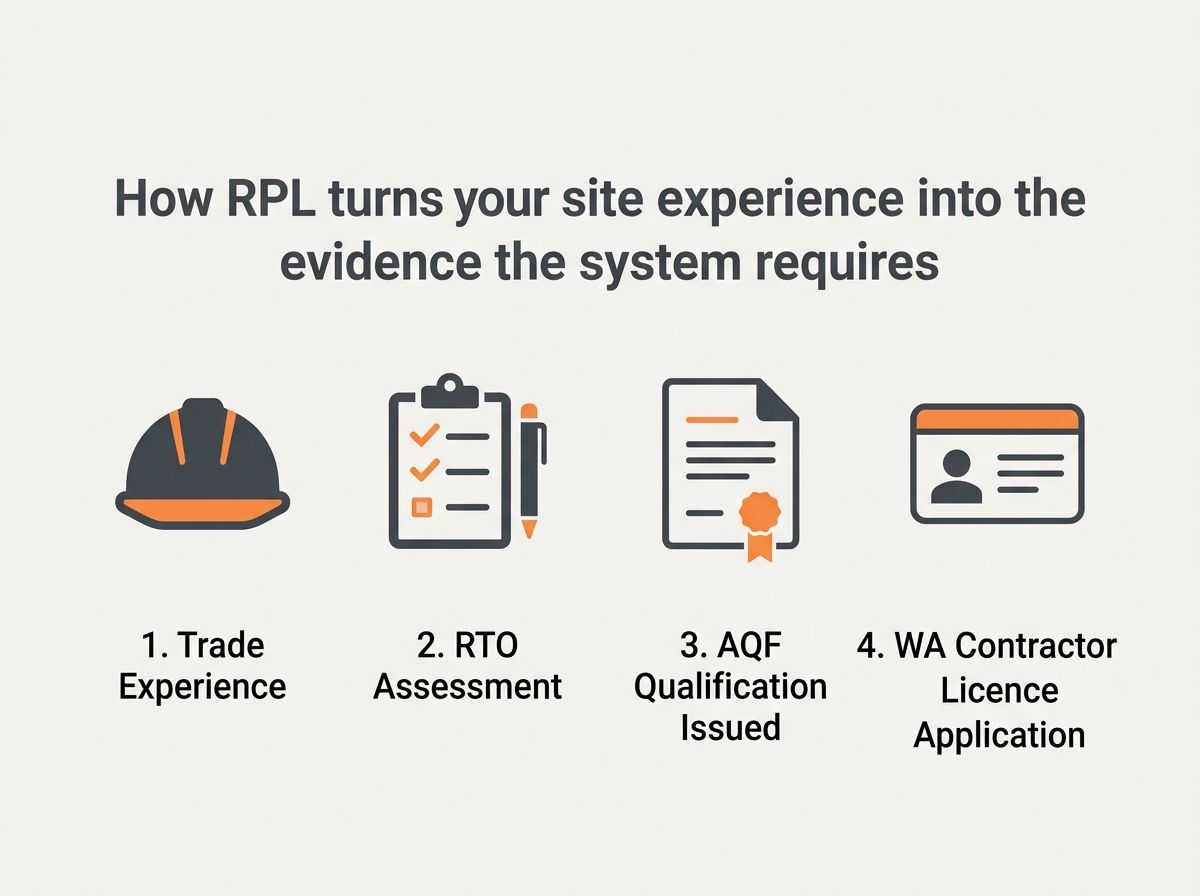
RPL is not a shortcut. It is a rigorous assessment process conducted by a qualified assessor from an RTO registered with the Australian Skills Quality Authority (ASQA). The assessor reviews evidence of your existing competency — not your years of service, but actual evidence of what you can do — and determines whether it meets the standard required by the qualification.
RPL-assessed qualifications carry the same national recognition as qualifications earned through traditional study. They are issued under the Australian Qualifications Framework (AQF) and are accepted by Building and Energy for the purposes of a contractor registration application. Experience can be evidence — but it needs to be presented in the right form, through the right process, to a qualified assessor.
If gaps are identified during the assessment — areas where your experience does not fully cover the qualification requirements — gap training is provided. This is part of the process, not a failure. It is how the system ensures the qualification is genuine.
What counts as evidence in an RPL assessment
The evidence-gathering phase is often the part that feels most daunting. It does not need to be. Most experienced tradespeople already have the majority of what an RPL assessor needs — it is just a matter of knowing what to look for and how to organise it.
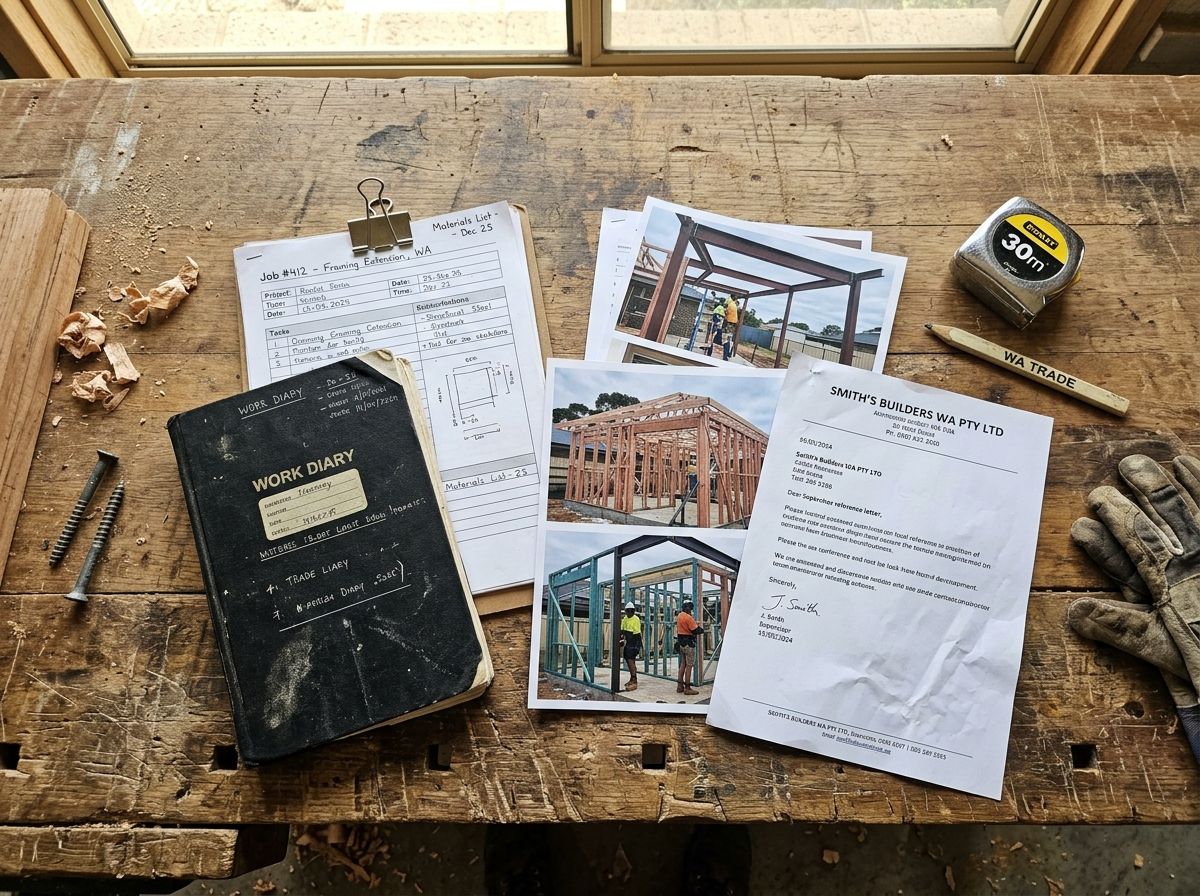
For building and construction qualifications, RPL assessors typically work with a combination of direct and indirect evidence. Direct evidence demonstrates what you have done: site photos, completed project documentation, job records, and work samples. Indirect evidence supports and contextualises that work: employment records, references from supervisors or clients, logbooks, invoices, and industry certifications.
- Employment records showing your roles, responsibilities, and duration in relevant trade work
- References or statutory declarations from supervisors, employers, or clients who can speak to the quality and scope of your work
- Site photographs of completed projects — particularly those that demonstrate the range of tasks covered by the qualification units
- Invoices, contracts, or job records that document the type and scale of work you have carried out
- Logbooks or timesheets that show consistent engagement with the relevant trade over time
- Any existing certificates, licences, or industry cards that confirm prior formal training or assessment
A guided RPL process involves working through this evidence systematically, with support at each stage. The goal is not to create documentation from scratch — it is to organise and present what you already have in a form that a qualified assessor can evaluate against the qualification requirements.
Is RPL the right pathway for you?
RPL is not suitable for everyone, and honest guidance matters more than a quick enrolment. RPL is appropriate for tradespeople who have genuine, demonstrable experience in the relevant field — people who have been doing the work, not just adjacent to it. If your experience is substantial and directly relevant to the qualification you need, RPL is worth exploring seriously.
It is not a pathway for those who are early in their trade career or who have limited hands-on experience in the specific area covered by the qualification. The assessment is genuine, and the evidence needs to support it.
If you are unsure whether your background is sufficient, that uncertainty is exactly what a Free Skills Review is designed to address. It is an honest, no-obligation conversation about your experience, the qualification requirements, and whether RPL is the right fit. There is no commitment involved — just clarity about where you stand before you decide anything.
The decision is yours. If you want to know whether your experience is enough to get started, the next step costs nothing and commits you to nothing.
Ready to Get Recognised?
Start with a free skills review to find out if RPL is right for you.