Five signs your cleaning experience qualifies for a formal certificate
If you know the difference between sanitising and disinfecting, your cleaning experience may qualify for a formal certificate. Here are five signs.
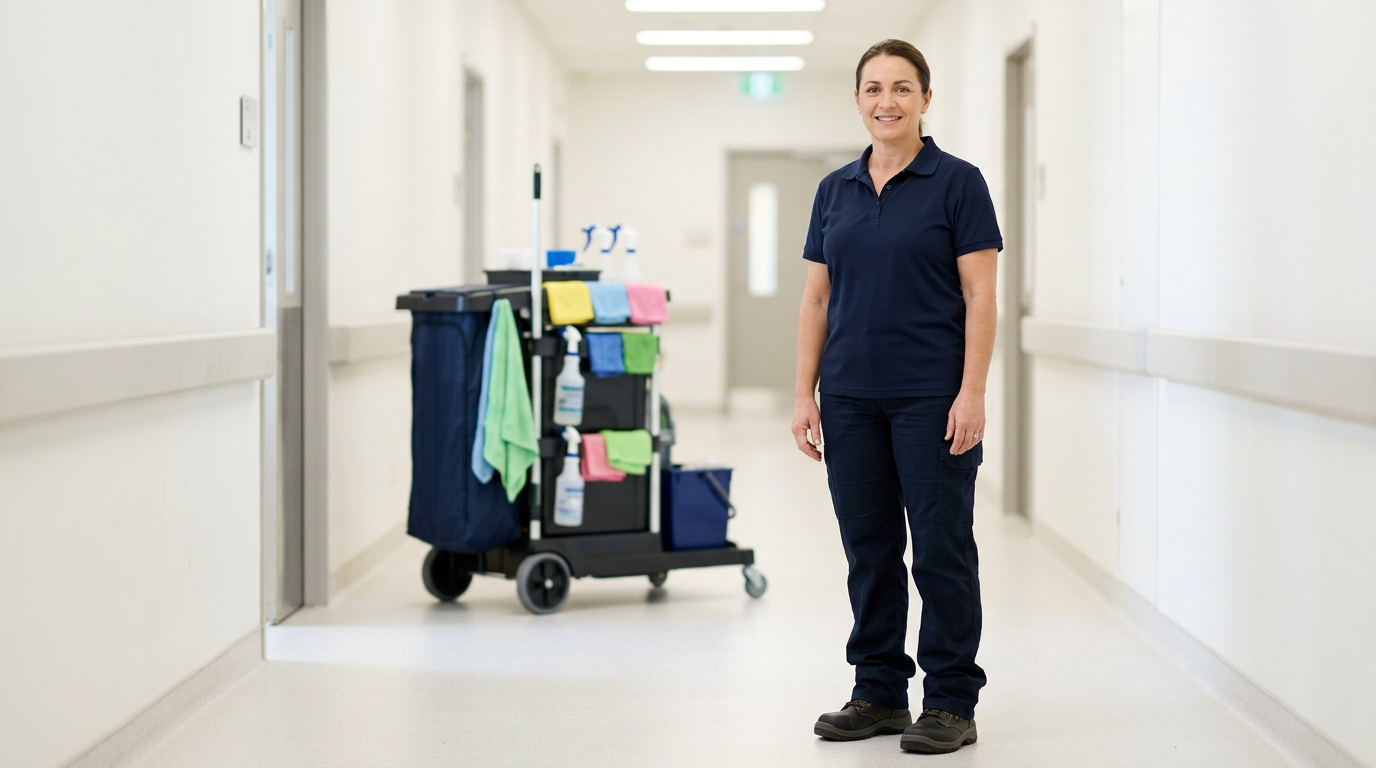
The gap between knowing and having the paperwork
You know things that took years to learn. You know which chemical to reach for in a clinical area. You know the order of operations for a kitchen clean-down. You know when a surface needs more than a wipe, and exactly what it needs instead. The question is not whether your knowledge is real. It is whether the formal system recognizes it.
For many experienced cleaning workers in Australia, the answer has been no. This is not because the expertise is missing, but because it exists in practice rather than on paper. The Certificate III in Cleaning Operations (CPP30321) is a nationally recognised qualification. It covers the exact knowledge and skills that experienced cleaning professionals use daily, such as chemical handling, infection control, risk assessment, workplace health and safety, and the planning and management of cleaning operations. The qualification is assessed against a formal standard, and you can meet this standard through Recognition of Prior Learning.
The Certificate III in Cleaning Operations (CPP30321) is the qualification that formalises the skills experienced cleaning workers already use.
Recognition of Prior Learning (RPL) is a formal assessment pathway under the Australian Qualifications Framework. It allows experienced workers to have their existing skills and knowledge assessed against qualification standards. This means you do not have to repeat training for skills you already use every day. The assessment is conducted by a registered training organisation, and RPL it helps guide candidates through this process.
The five signs below are not a study guide for a new qualification. They are a practical measure of your current skills. If you recognise your daily work in three or more of these points, your experience is ready to be assessed.
Sign 1: You know the difference between sanitising, disinfecting, and sterilising without looking it up
If you can distinguish between sanitising and disinfecting without looking it up, you are already well on your way to a formal qualification.
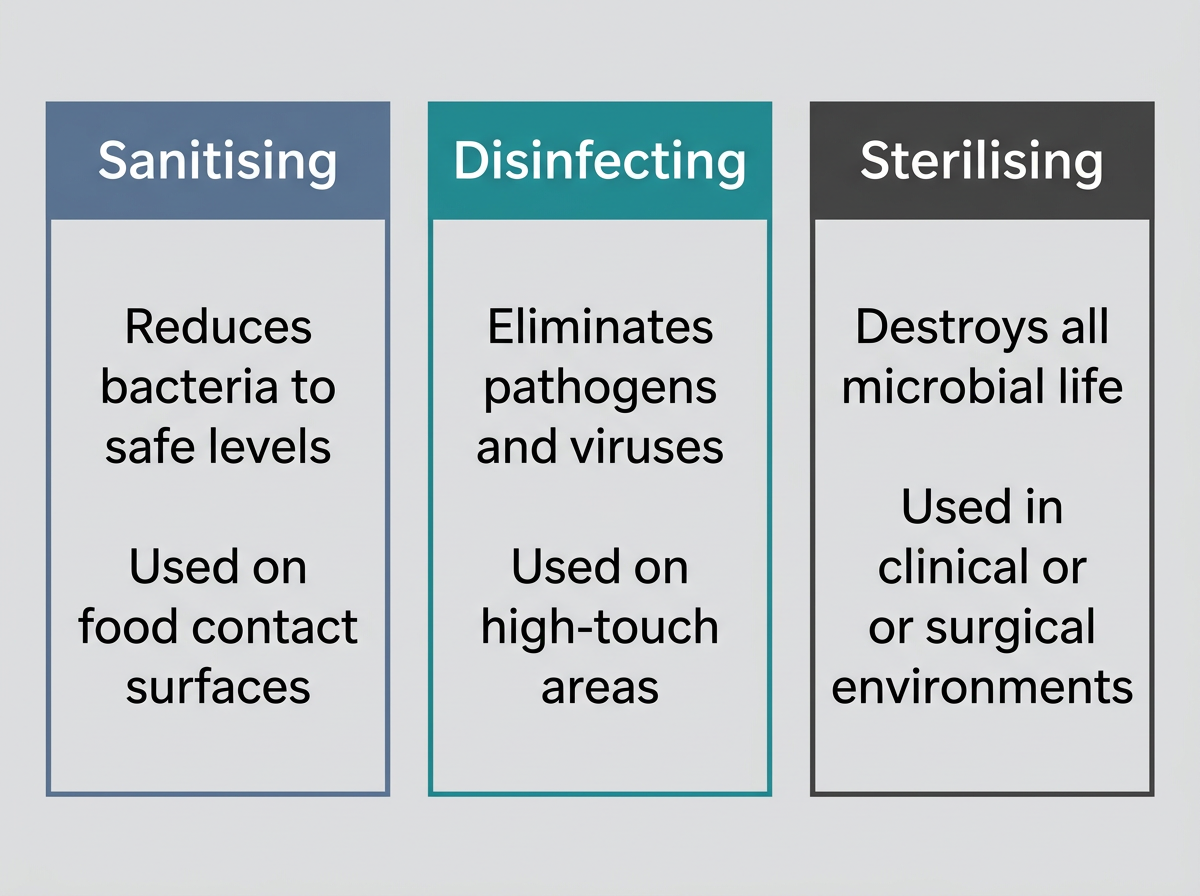
This is a key technical skill. Distinguishing between sanitising, disinfecting, and sterilising, and applying the correct method to the correct surface, is a formally assessed competency in professional cleaning. These terms are not interchangeable. Sanitising reduces microbial contamination to a safe level on a surface. Disinfecting destroys or deactivates a broader range of pathogens. Sterilising eliminates all microbial life, including spores, and is required in clinical and surgical environments.
Many workers in the cleaning industry do not make this distinction accurately. They might use whatever product is nearby without considering the surface type, risk level, or required outcome. If you automatically assess these factors before choosing your method, that is not just common sense. It is professional knowledge. This is exactly what the Certificate III in Cleaning Operations is designed to recognise.
The qualification covers infection control and chemical application as core competencies. The distinction between sanitising, disinfecting, and sterilising fits directly within this framework. If you make these choices daily, you are already demonstrating standard industry competencies. You simply do not have the paperwork to show it yet.
Sign 2: You adjust chemical dilution ratios based on the surface and the risk
You know that a 1:10 bleach solution is appropriate for a bathroom surface but not for a food preparation area. You know that the same product can damage one surface while being completely ineffective on another. You also know that certain chemicals require specific contact times to work, and that wiping them off too early defeats the purpose.
This is not down to instinct. It is an understanding of chemical properties, surface safety, and risk management. This practical knowledge forms a core part of the Certificate III in Cleaning Operations.
Chemical handling and application, which includes dilution ratios, surface compatibility, and safe handling procedures, are core competencies in the CPP30321 qualification. Selecting the right chemical, mixing it at the correct ratio, and applying it properly to the right surface is exactly what is assessed. If you do this daily, you are already meeting these requirements.
Learning these skills on the job rather than in a classroom does not make them less valuable. The assessment framework measures what you can do and what you know, regardless of where you learned it. This is the core principle of Recognition of Prior Learning.
Sign 3: You have trained someone else in cleaning procedures, even informally
Think about the last time you showed a new team member how to clean a clinical area, explained the correct steps for a kitchen clean-down, or corrected someone's chemical dilution before they made a mistake. That guidance, which you probably did not think twice about, is a demonstrable competency.
Training and supervising colleagues relates directly to the safety compliance and team coordination units of the Certificate III in Cleaning Operations. Doing this on the job rather than in a classroom does not lessen its value as evidence. RPL assessors look at informal training and supervision as part of your overall experience portfolio.
If you are the person colleagues turn to when they are unsure, or if you have corrected a technique, explained a protocol, or guided a new starter, you are performing tasks the formal system recognises. You simply have not had a way to prove it on paper.
Sign 4: You know which cleaning protocols apply in different risk environments
A hospital ward is different from an office building. A commercial kitchen has different needs than a childcare centre. Each environment has its own contamination risks, regulatory requirements, and standards that must be met to ensure safety.
If you have worked across different settings and adapted your methods without needing instruction, you are demonstrating risk assessment and compliance skills. The Certificate III in Cleaning Operations covers work in healthcare, commercial, and industrial environments. Evaluating risk and selecting the right protocols is a core part of what is assessed.
Healthcare cleaning in Australia must meet specific infection control frameworks. Commercial food cleaning is governed by strict safety standards, and childcare centres have their own compliance rules. If you have worked in these settings and understood how to apply these rules without being reminded, you have already built assessed skills, not just background knowledge.
A cleaning professional who steps into a new space and immediately reads the risk level, knowing how to adjust their approach without direction, is demonstrating the exact kind of adaptive, environment-specific knowledge the CPP30321 qualification recognises.
Sign 5: You have managed a cleaning schedule, a team, or a contract, even without the formal title
You may have coordinated a roster, managed a team informally, or overseen a commercial contract to make sure standards were met and clients were satisfied. If you did all of this without a supervisor or manager title, the title might have been missing, but your skills were not.
The Certificate III in Cleaning Operations includes planning and organising cleaning work. This involves scheduling, resource allocation, and contract oversight. If you have handled these tasks, regardless of your official job title, you have been demonstrating this competency in practice.
RPL assessments accept evidence of management work even if you did not have a formal title. Work records, employer or client references, and documentation of schedules or teams you managed are all valid. Not having a manager title does not change the fact that you did the work.
What these signs mean for you
If you recognise your daily tasks in three or more of these signs, your practical experience can be evaluated through Recognition of Prior Learning (RPL) for the Certificate III in Cleaning Operations (CPP30321).
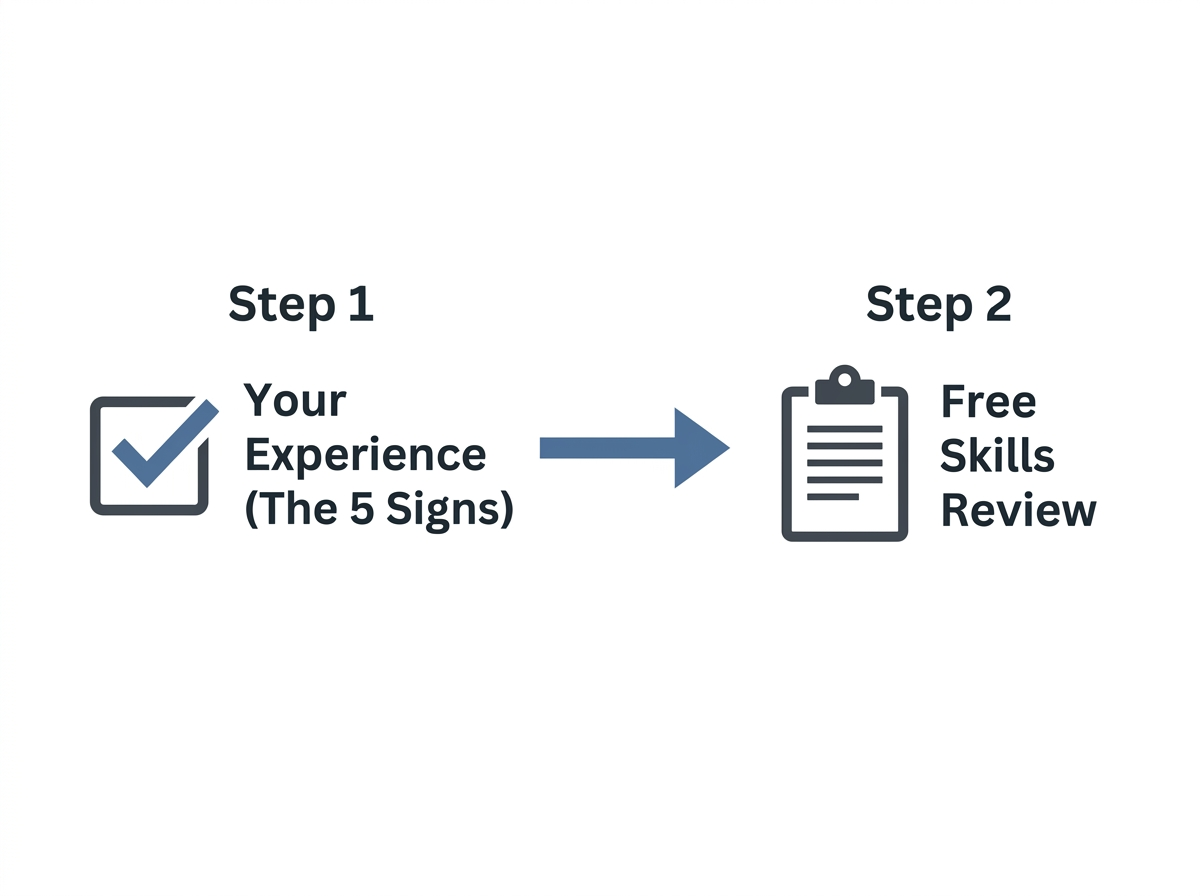
This is a measured statement. RPL is a structured assessment process where an assessor from a registered training organisation reviews your evidence against industry standards. This review might show that your experience fully meets the qualification requirements, or it might point to areas where you need a little more training. Finding skill gaps is a normal part of the process, not a setback.
These five signs suggest that your experience is ready to be assessed. They do not guarantee an automatic qualification, but they show that the skills you have built over years of cleaning work align with what the CPP30321 qualification measures.
The Certificate III in Cleaning Operations (CPP30321) is a nationally recognised qualification, and RPL provides an assessment pathway to help experienced cleaners get certified.
Your skills are real. The next step is finding out how they line up against the formal standards. You can find out with a free, no-obligation skills review.
The free skills review: Find out where you stand
The Free Skills Review is not an enrolment, a commitment, or a high-pressure sales call. It is a straightforward assessment to see if your practical experience matches the CPP30321 standard, based entirely on your existing skills and history.
Your years on the job deserve proper recognition. The Free Skills Review provides a direct assessment that costs nothing, requires no commitment, and focuses on what you already know how to do. Start there.
Ready to Get Recognised?
Start with a free skills review to find out if RPL is right for you.