Auto spray painting courses aren't built for experienced painters
If you can blend a 3-stage pearl by feel, auto spray painting courses aren't your answer. Here's how experienced painters get a Cert III without starting over.
You already know what the course teaches
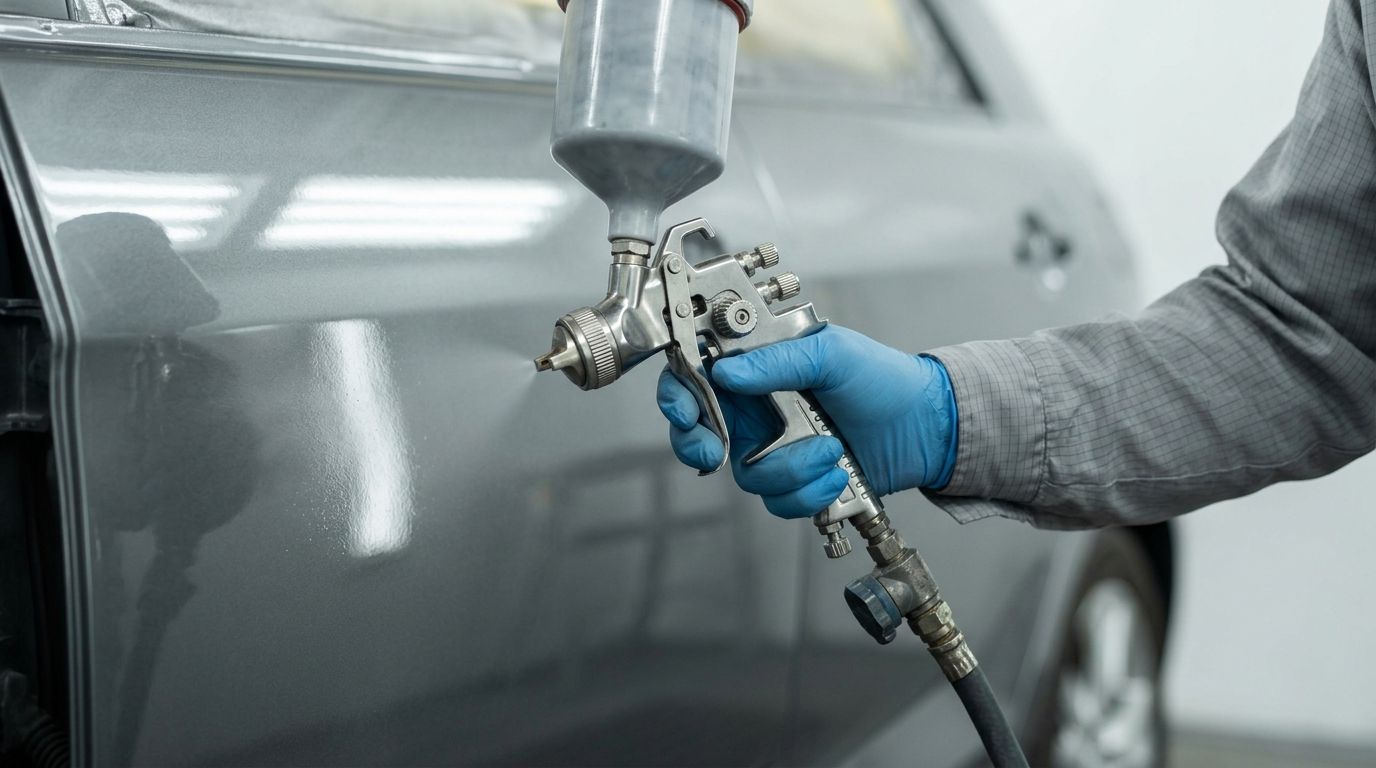
You know the smell of reducer before you open the tin. You know how far to hold the gun from the panel, not because someone told you, but because your muscles remember the motion. You have matched a three-stage pearl under workshop fluorescents, adjusted your mix ratio by feel, and laid clear coat that dried without a single run. You have done it hundreds of times, perhaps thousands.
When an apprentice asks you why the base coat looks different in direct light, you answer without thinking. That is not luck. It is the result of years of accumulated experience in surface preparation, colour matching, spray application, defect identification, and finishing techniques. It is the complete picture, but none of it is formally documented with your name on it.
That is the problem. Your skills are real, but the systems designed to recognise them were built for people who are still learning the trade.
Course listings that weren't designed for you
When experienced automotive refinishing workers search for auto spray painting courses, they usually find two options: apprenticeships for those entering the trade, and full Certificate III programs structured around classroom theory and supervised practical assessments. Both pathways assume you are starting from the beginning.
The course assumes you do not know what a reducer is, yet you have been adjusting viscosity by feel for eight years. The curriculum covers surface preparation as a foundational concept, though you have prepped more panels than the trainer has seen. The entry requirements often specify no prior experience, because the training is built for beginners.
This is not a criticism of those courses, which serve a clear purpose. But they were not built for you. Searching for an automotive painting course that recognises your actual skills, when you are already an experienced and capable painter who simply lacks a formal qualification, can feel like searching for something that does not exist.
It does exist. It is just not called a course.
What the AUR32420 covers and what you already do
The Certificate III in Automotive Refinishing Technology (AUR32420) is the nationally recognised qualification for vehicle spray painters and refinishing technicians in Australia. It is listed on the National Training Register and consists of core and elective units covering the skills required for the trade.
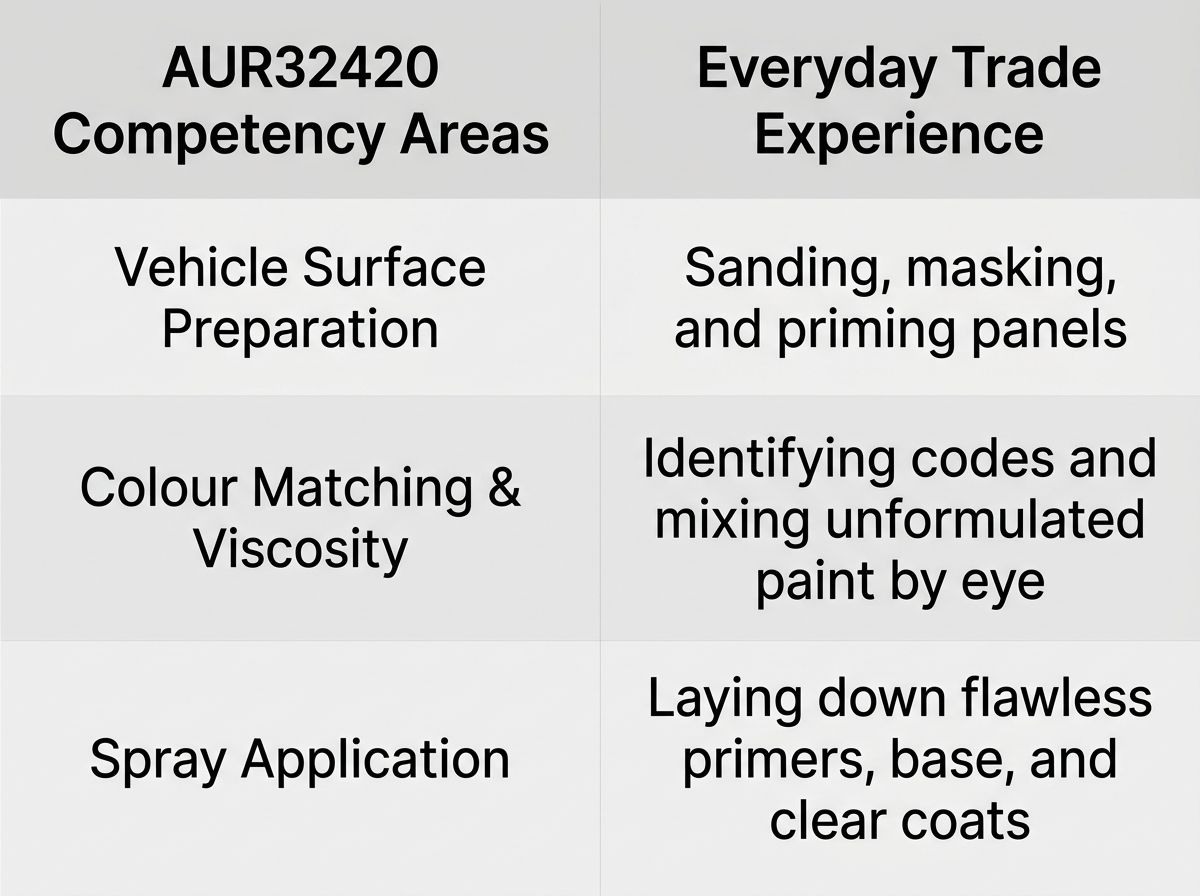
These areas include workshop environmental practices, workplace health and safety, vehicle surface preparation, and the spray application of primers, base coats, and clear coats. They also cover colour matching, defect rectification, and applying protective finishes. The qualification is built directly around what experienced refinishing workers do during every shift.
Australia's national occupation classification, ANZSCO 2022, recognises Vehicle Painter (also titled Vehicle Refinisher, occupation code 324311) as a distinct trade within the Automotive and Engineering Trades Workers group. The classification indicates that the skill level corresponds to an AQF Certificate III or IV, and notes that at least three years of relevant experience can substitute for formal qualifications.
This framework is important. The national system itself expects that workers enter and progress in this trade through practical experience, not just formal study. If your daily work has covered these areas for several years, your experience can serve as direct evidence toward the units of the AUR32420 qualification.
You can explore the Certificate III in Automotive Refinishing Technology (AUR32420) and what the RPL pathway involves on the RPL it qualification page.
Recognition of Prior Learning: the pathway that doesn't start at zero
Recognition of Prior Learning, or RPL, is a formal assessment pathway under the Australian Qualifications Framework. It allows experienced trade workers to have their existing skills and knowledge assessed against qualification units, avoiding the need to repeat training they have already completed through years of daily practice.
For an experienced automotive refinishing worker, RPL means you do not have to enroll in a beginner course. Instead, you work with a qualified assessor from a registered training organisation (RTO) to demonstrate that your current competency maps to the AUR32420 units. The assessor reviews your evidence, and if you demonstrate competency, the RTO issues the qualification.
RPL is not a shortcut. It is a rigorous assessment process that validates genuine competency. The assessor's role is to determine whether your skills meet the national standard, rather than simply rubber-stamping years of experience. If gaps are identified during your assessment, gap training is provided as a standard part of the process.
RPL does not require you to sit in a classroom learning tasks you already perform daily. That distinction is important, especially for experienced workers who have been told, directly or indirectly, that formalising their skills means starting from scratch.
What evidence looks like for an experienced spray painter
The paperwork is often what stops experienced workers from pursuing RPL, as the requirements can feel abstract. However, the evidence you need to gather is likely already part of your working life; it simply has not been collected with an assessment in mind.
Some commercial RPL providers working with automotive refinishing candidates list evidence categories that include photos, videos, or documents of refinishing work you have completed. Other examples include employer or supervisor references describing your level of responsibility, employment records showing your years in the trade, prior training certificates, work logs, and supervisor endorsements detailing your competency in specific trade tasks.
In practical terms, this might include a reference from your shop manager describing the panels you have refinished and the colour-matching work you handle daily. It can also include records showing your employment history in automotive refinishing, photos of completed repairs, and documentation of any relevant licences or prior training.
Evidence requirements vary between RTOs and are determined by the assessor. The categories listed above are examples from commercial RPL providers rather than a universal checklist. The main requirement is that your evidence is valid, authentic, current, and sufficient to demonstrate competency. An RPL provider or RTO can guide you through what is needed for your specific situation.
Australia's national occupation classification for Vehicle Painters notes that registration or licensing requirements for this occupation may vary, which is why your evidence and the RTO you choose are both important.
Is RPL the right path for you?
RPL is not suitable for everyone. It requires genuine existing competency across the qualification's units. If you are early in your automotive refinishing career, or if your experience has been limited to a narrow range of tasks, RPL may not be the right pathway at this stage.
If you have been working in automotive refinishing for several years, and your daily work covers surface preparation, spray application, colour matching, and finishing, a Free Skills Review can help you see whether your experience maps to the AUR32420 units before you commit to any pathway.
This review is a practical first step. It is not an enrolment or a commitment. It is simply an assessment of whether your experience supports an RPL pathway, and if it does not, you will get a clear answer.
Your skills speak. Here is how to make sure they are heard.
The knowledge you bring to the workshop every day is real. The ability to read a panel, adjust a mix, and match a colour that does not exist in any formula is genuine trade expertise. It was earned through years on the tools, not from a textbook.
The question is whether those skills are formally recognised. RPL is the pathway that makes recognition possible, using practical assessment, guided evidence gathering, and a qualification issued by an RTO once competency is demonstrated.
The decision is yours. If you want to see if your years in automotive refinishing can translate into a formal Certificate III, the place to start is a conversation rather than a classroom.
Ready to Get Recognised?
Start with a free skills review to find out if RPL is right for you.