7 Signs Your Plumbing Experience Qualifies You for an ACT Trade Licence — But You Haven't Formalised It Yet
If you have years of plumbing experience in the ACT without a formal licence, these 7 clear signs show you could be ready for the recognition pathway.

The Gap Between Your Practical Skills and Your Formal Qualifications
You have the experience. Years of it on the tools. You have diagnosed complex faults, completed jobs on time and on budget, and built a solid reputation in the trade. But in the ACT, formal systems recognise plumbing competence through a specific credential: a trade licence issued under the Construction Occupations (Licensing) Act 2004.
That gap between your daily practical work and your formal paperwork is a structural issue, not a personal failure. A recognition pathway exists to bridge this divide. The 7 signs below are common patterns showing your work history may align with the Recognition of Prior Learning (RPL) pathway for the Certificate III in Plumbing (CPC32420)—the qualification required for an ACT trade licence.
Review these signs. If four or more of them sound familiar, your experience is worth reviewing.
Sign 1: You Subcontract on Licensed Sites—But Use Someone Else's Licence
This is a common arrangement in the ACT plumbing sector. You do the hands-on work—rough-ins, fit-offs, drainage, and gas—while operating under a licensed contractor's ticket. You have the technical skills, but someone else holds the credential.
This arrangement is legal and common. It is a standard way many experienced plumbers work in the industry. However, it presents a specific challenge: your work history is real and verifiable, but it is tied to another person's licence number rather than your own.
If this is your situation, you likely have years of documented site experience—such as timesheets, job records, and references from licensed contractors—that can form the basis of an RPL evidence portfolio. Your skills are proven; you simply need the qualification in your own name.
This is a structural gap, not a personal shortfall. It is the exact situation the RPL pathway is designed to address.
Sign 2: You Diagnose and Fix Defects Quickly—But Cannot Sign Off on the Work
In the ACT, a Certificate of Compliance for plumbing or sanitary drainage work must be issued when jobs are completed. That certificate requires the authorisation of a licensed plumber. Without a licence, you cannot sign it, regardless of your competence or the quality of your work.
This creates a frustrating dynamic: you are the most capable person on site, you found and fixed the issue correctly, but you must hand the paperwork to someone else to sign. You have the technical capability, but not the legal authority.
If you experience this regularly, it is a clear sign. You are working at the level of a licensed plumber, but your formal qualifications have not caught up with your demonstrated skills.
RPL does not teach you how to do the job. It assesses whether you can already meet the required standards. If you can fix the defects, you can likely prove your competency. Once you have formal recognition, you can gain sign-off authority.
Sign 3: You Regularly Have to Explain Why You Do Not Hold a Licence Number
You know how the conversation goes. A new client, site supervisor, or insurance contact asks for your licence number. You have to explain that you work under a licensed contractor, that you are working on your qualifications, or that the arrangement is complex. They understand, but the paperwork stalls.
If you have a prepared explanation for this situation, it is a sign. It means you are working in environments where formal credentials are standard practice. Commercial sites, government projects, and insurance-related jobs all require a licence number.
This repeated experience is more than an administrative hassle. It is a pattern showing that your professional work has outgrown your current informal arrangements.
Sign 4: You Have Missed Out on Direct Hire Opportunities Due to Licensing Paperwork
This is a clear indicator because it shows the market values your skills. The client or employer knows you can do the job and wants to hire you directly, but they cannot proceed without a licence number.
In the ACT, employers and clients in commercial plumbing regularly require licence details for insurance and compliance. This is a mandatory requirement. When a client cannot hire you directly without a licence, they are simply complying with regulations that your current status does not meet.
If you have been the preferred candidate but could not be hired, there is no skill gap. There is only a qualification gap, which is a practical problem with a clear solution.
Sign 5: You Have Lost Tenders to Competitors With Less Experience but Active Licences
This is a frustrating experience. You know how to do the job and can complete it to a higher standard, but the contract goes to someone else simply because they have a licence number to put on the tender form.
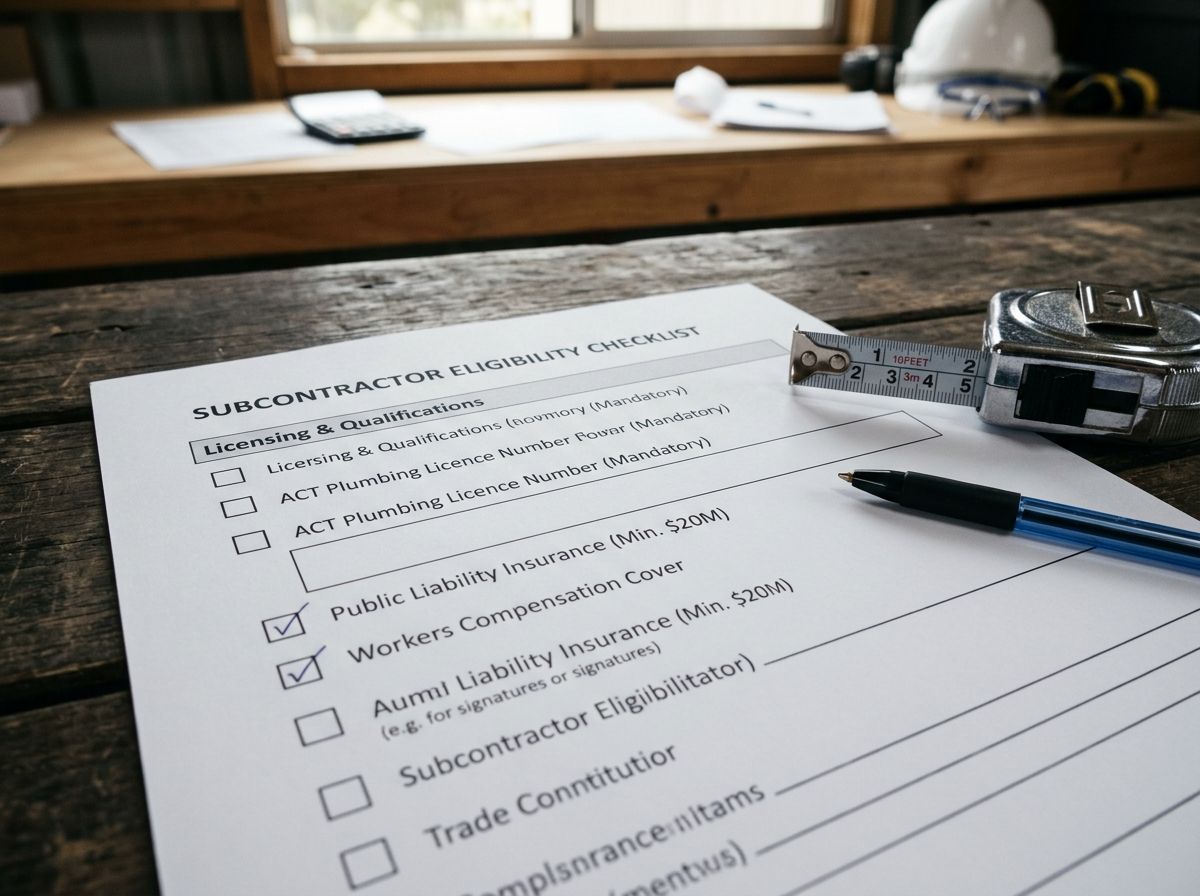
Plumbing is a licensed occupation under the Construction Occupations (Licensing) Act 2004, meaning ACT Government and commercial construction tenders require an active plumbing licence. This is a strict threshold requirement. Without it, your practical experience cannot be considered in the evaluation process.
This is a structural hurdle rather than a reflection of your ability. The tender process evaluates formal eligibility rather than uncertified skills. Obtaining your licence resolves this eligibility issue and backs up your years of experience.
Trades Recognition Australia notes that for a full licence in a trade such as plumbing, you may need a Certificate III Australian VET qualification, and that the conditions of the licence can differ depending on the state or territory.
Sign 6: Your Insurance Setup is Complex Because You Work Under Another Licence
Operating under someone else's licence complicates your business insurance. It makes it harder to clarify who holds the coverage, who is protected, and what happens if something goes wrong.
As industry guides point out, working without the correct plumbing licence can mean insurance will not cover the work, leaving the worker personally liable for any issues. While this applies directly to completely unlicensed work, it also raises important questions for those working under a licensed contractor: are you fully covered as an employee, or does the arrangement leave you exposed to personal liability?
This is not legal or insurance advice. Every business arrangement is different, and you should discuss your specific situation with a qualified insurance broker or legal professional. However, if you are unsure about your coverage, that uncertainty is a clear sign you need to address the situation.
Holding your own licence simplifies these arrangements. It establishes your independent legal standing and clarifies your insurance responsibilities, removing the main source of complexity.
Sign 7: You Want to Get Licensed But Assume It Requires Going Back to Classroom Study
This assumption is the most common reason experienced trade workers delay getting licensed. Many believe they will have to go back to TAFE, complete a standard apprenticeship, or sit through classes on topics they already understand completely. If this has held you back, it is time to look at the actual process.
RPL is an assessment pathway, not a classroom training program. It does not make you relearn your trade; it asks you to prove what you already know. A qualified assessor from a registered training organisation reviews your evidence against the national standards for the Certificate III in Plumbing (CPC32420). If your evidence meets the requirements, you receive the qualification. If there are any areas needing attention, targeted gap training is provided at no extra cost.
The focus is on recognition, not repetition. You have already completed the practical work. The RPL pathway is simply the formal process to assess and confirm your skills.
A parliamentary inquiry into skills recognition in Australia found that registered training organisations can assess trade skills through an RPL pathway, and that the resulting AQF Certificate III is accepted by some industries and licensing authorities.
If you've been carrying this assumption for years, this article explains how experienced plumbers can get recognised without going back to study.
What These Signs Mean and Your Next Practical Steps
If you recognise your own experience in four or more of these signs, you likely fit the profile for RPL. While this is not a guarantee—as suitability depends on your individual circumstances, evidence, and formal assessment—it shows that the recognition pathway is a practical option for you.

Your skills are real and your experience is documented. The formal credential is the final step, and it is a straightforward problem to solve.
A government regulatory impact statement noted that industry bodies view trade licensing as a key requirement for maintaining high work standards and consumer protection. This shows why the licence is so important, and why experienced plumbers who already work to these standards deserve a clear path to formal recognition.
The ACT plumbing trade licence recognition pathway is designed for this exact situation. It is not a shortcut or a workaround; it is a proper assessment process that respects your existing trade experience and gives it formal recognition.
The ACT plumbing trade licence recognition pathway is the natural next step for people who recognise themselves in these signs.
A Free Skills Review is the most practical first step. It is an independent assessment to see if RPL is the right option for your situation. It is a straightforward review of where you stand, not a sales call or an enrolment commitment.
Ready to Get Recognised?
Start with a free skills review to find out if RPL is right for you.