Start My Skills Review

Bricklayer in VictoriaLicence needed to contract.

  • Domestic Builder (Limited): bricklaying and blocklaying, issued by Building and Plumbing Commission (BPC)
  • The qualification can be gained through RPL. The regulator also asks for more.
  • A free skills review before you pay anything
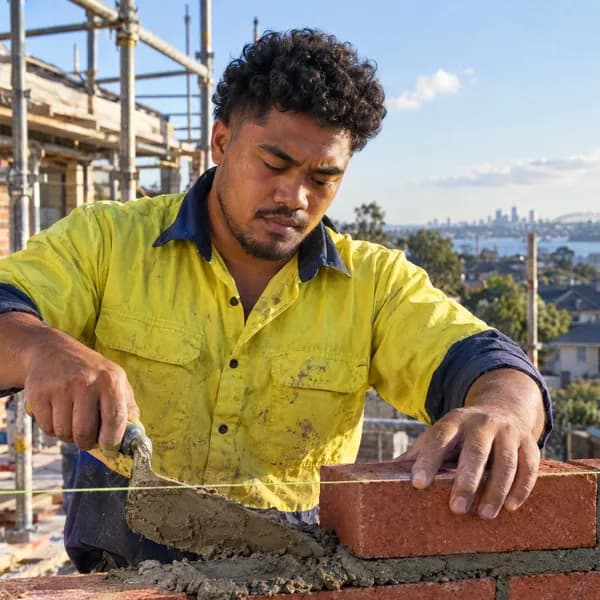
A bricklayer laying bricks on a building site

Licensing for bricklayers in Victoria

For bricklayers constructing brick and block structures, fences, retaining walls, footings, or related concrete works. Here’s what Victoria asks for.

Licence to contract

Bricklayer in Victoria

Domestic Builder (Limited): bricklaying and blocklaying

Issued by
Building and Plumbing Commission (BPC)
When you need it
To contract domestic work over $10,000 (incl GST) or be named builder on a permit. Employees don't need one.
What you need
Usually CPC33020 Cert III as evidence, plus relevant experience, a technical referee report and a BPC online exam.

If your experience meets the standard, the RTO can issue the qualification through RPL. The regulator also asks for more, such as experience, an exam or a business course.

Licensing rules change. Confirm the current requirements with the regulator before you apply.

Your experience in this trade

If you’ve been working as a bricklayer, blocklayer, or masonry tradesperson, the right qualifications are essential.

The RTO assesses your experience against the qualification standard. Confirm the separate licence requirements above with the regulator before you apply.

Delivering RTOs

The partner RTO assesses your evidence and issues your qualification.

All qualifications are nationally recognised and issued by our partner RTOs. Qualification availability and partner details are confirmed during your review. For a licence, confirm the exact accepted qualification and units with the regulator; every qualification listed here may not meet those requirements.

How to Get a Victoria Bricklayer Trade Licence

  1. Free skills review

    Tell us about your trade background, years of experience and any certificates you hold. We check which qualification fits and whether your work history suits RPL.

    Already have the qualification? We’ll confirm it’s the right one for your licence and can pass you to Trade Licence Solutions, our trade licensing team, to help prepare your application.

  2. Build your evidence portfolio

    Your RPL it account manager helps you gather a clear portfolio of evidence: resume, job history, photos of work, reference letters, certificates and more.

  3. RTO assessment

    We submit your portfolio to a partner RTO. The RTO may ask for more evidence or a short interview, and, if you are assessed as competent, issues your nationally recognised qualification.

  4. Apply for your licence

    Once your qualification is issued, you apply to Building and Plumbing Commission (BPC), yourself or through Trade Licence Solutions, our trade licensing team. Building and Plumbing Commission (BPC) decides your application.

RPL it Australia provides guidance and evidence support. The RTO makes the assessment decision; the regulator makes the licence decision.

What Could I Provide as Evidence of My Work Experience?

To support your experience, consider providing any of the following evidence:

  • Resume with industry experience & job roles
  • Employment contracts, job descriptions
  • Reference letters from employers, managers, and colleagues
  • Professional trade memberships
  • Photos or videos of completed work
  • Licences, tickets, or certifications already held
  • Training records or course completions
  • Logbooks or job diaries
  • Photos demonstrating your work
  • 2-minute video demonstration of your work
  • Safe Work Method Statements (SWMS)

During your free skills review we’ll give you a tailored evidence checklist, so you only gather what’s needed.

RPL it Australia reviews

What our clients say

Selected Google reviews. Individual experiences vary. Every applicant is assessed against the same requirements, and some require gap training or additional evidence.

Common Questions About RPL

Bricklayer in Victoria: licences, RPL and what the regulator asks for.

Got more questions?
Do bricklayers need a licence in Victoria?

Only to contract, supervise or run the work. To contract domestic work over $10,000 (incl GST) or be named builder on a permit. Employees don't need one. The licence is the domestic Builder (Limited): bricklaying and blocklaying, issued by Building and Plumbing Commission (BPC).

What do I need to get the licence?

Usually CPC33020 Cert III as evidence, plus the BPC’s prescribed licensing units, relevant experience, a technical reference and assessment. Confirm the exact accepted qualification and units for your class. If your experience meets the standard, the RTO can issue the qualification through RPL. The regulator also asks for more, such as experience, an exam or a business course.

Can I get it without completing an apprenticeship?

For the qualification, possibly: RPL can recognise your experience towards it instead of an apprenticeship, and the RTO decides. The regulator also asks for more: Usually CPC33020 Cert III as evidence, plus the BPC’s prescribed licensing units, relevant experience, a technical reference and assessment. Confirm the exact accepted qualification and units for your class.

How much does the licence cost?

The cost of obtaining a trade licence depends on factors such as the state, the licence type, and any additional training or tests required. For more information, it is advisable to consult an RPL it consultant or a partner trade licence adviser.

How long does the RPL process take?

Timing depends on how complete your evidence is and on the RTO’s assessment. After your free skills review, your RPL it consultant can give you an estimate for your trade. The time to get your licence also depends on Building and Plumbing Commission (BPC)’s processing time and any other requirements, such as experience, exams or insurance.